Source:
Hosta ‘Paul’s Glory’ short overview
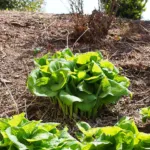
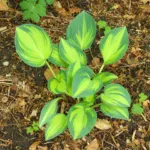
Hosta 'Paul's Glory' is a distinguished, award-winning perennial grown primarily for its bold foliage: broad leaves emerge with chartreuse to golden centers and dark green margins, often becoming more richly colored as the season progresses. The spreading mound works especially well in woodland borders, shaded beds, and large containers. In summer, upright scapes carry pale lavender flowers that can attract insect visitors, while the plant remains dormant above ground during winter.
Taxonomic classification
Hosta ‘Paul’s Glory’ care guide
Light and placement
Give bright filtered light, partial shade, or shade, with protection from hot afternoon sun. East- or north-facing beds and open woodland edges are suitable. Too much direct sun can bleach or scorch the gold foliage and increase water stress; too little light may produce greener, less vivid leaves and weaker flowering. Morning sun is usually safer than intense western exposure.
Watering and humidity
Water deeply when the upper inch of soil begins to dry, keeping the root zone evenly moist rather than constantly saturated. During hot or dry weather, check plants more often, especially in containers. Water at the base to reduce foliar disease. Reduce watering after dormancy, but do not allow container crowns to become completely desiccated.
Soil and growing medium
Use fertile, humus-rich soil that holds even moisture but drains freely. A loamy woodland-style soil is ideal, with compost or leaf mold incorporated before planting. Slightly acidic to neutral conditions are suitable. Avoid waterlogged clay and very dry, sharply draining soil, especially during leaf expansion.
Feeding
Apply a balanced, slow-release perennial fertilizer in early spring as shoots emerge, following the product label. Alternatively, top-dress with compost or well-rotted leaf mold. Avoid heavy nitrogen feeding late in the season, which can encourage soft growth and reduce winter readiness. Do not fertilize drought-stressed or newly divided plants until they re-establish.
Growth and habit
This is a long-lived, herbaceous hosta that forms a broad, gradually enlarging crown. The plant emerges from a dormant crown in spring, expands its leaves through early summer, flowers on upright scapes, and dies back after frost. Keep the crown undisturbed and divide only when propagation or rejuvenation is needed.
Planting and repotting
Plant in spring or early fall, setting the crown at the same depth it occupied in its nursery container. Spread the roots through the soil and water thoroughly after planting. Leave enough room for the mature mound to broaden, and mulch lightly without covering the crown.
Repot container-grown plants in early spring before active leaf expansion, or divide and refresh the container when the crown becomes crowded. Use a container with drainage holes and a moisture-retentive but open potting mix. Move up only one container size to avoid persistently wet soil around the dormant crown.
Propagation and pruning
Propagation
Divide established crowns in early spring as shoots emerge or in early fall after active growth. Separate crown sections with viable buds and roots using a clean knife or spade, then replant promptly and keep evenly watered. Seed is not a reliable way to reproduce the named cultivar.
Pruning
Remove yellowing or frost-damaged foliage after it collapses in fall, or leave it until late winter for shelter and habitat value. Cut flower scapes after bloom if seed production is unwanted. Avoid cutting into the crown or removing healthy leaves during the growing season.
Overwintering
Leave the plant outdoors in its hardiness range. After frost collapses the foliage, remove debris if slugs or disease have been problems and apply a light mulch over the root zone without covering the crown. Container plants are more exposed to freezing and may need protection in an unheated sheltered location.
Uses
A strong ornamental foliage plant for shaded perennial borders, woodland gardens, foundation beds, and large containers. Its contrasting gold-and-green leaves provide season-long structure where flowering plants may struggle. Do not use as an edible plant, and keep it away from pets because hostas are toxic to dogs and cats.
Appearance
The cultivar forms a broad mound of large, heart-shaped leaves with a striking golden-yellow to chartreuse center and dark green margin. Color intensity changes with light, temperature, and season. Upright flower scapes rise above the foliage in summer, making the plant recognizable even before bloom.
Flowering
Flowering scapes rise above the foliage in summer and carry racemes of pale lavender, funnel-shaped flowers. Flowering is ornamental but secondary to the foliage display. Bloom strength may vary with plant age, site conditions, and seasonal weather.
Pollination and visitors
The pale lavender flowers of hostas are visited by insect pollinators, including bees and bumblebees. Cultivar-specific visitor records for ‘Paul’s Glory’ are limited, so no single pollinator species is assigned.
Hosta 'Paul's Glory' photos
Click any photo for a larger view. Source, author and license are shown separately.
Diseases and pests
Diseases
Watch for crown rot in persistently wet soil, foliar fungal spotting during prolonged damp weather, and virus symptoms such as irregular mottling or distorted leaves. Improve drainage, water at the soil surface, remove heavily affected tissue, and discard plants with suspected Hosta Virus X rather than propagating them.
Pests
Slugs and snails commonly damage emerging shoots and leaves, leaving ragged holes or shredded margins. Reduce hiding places, water in the morning, keep mulch away from the crown, and use barriers or targeted controls where needed. Deer and rabbits may also browse hosta foliage; fencing or repellents may be necessary in heavily affected gardens.
Related diseases and pests
Only Plant Doctor profiles whose host data indicate this plant may be affected are shown here.
 DiseaseImpatiens necrotic spot virus diseaseImpatiens necrotic spot orthotospovirus
 DiseaseSouthern blightAthelia rolfsii
 PestStrawberry foliar nematodeAphelenchoides fragariae
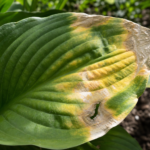 Environmental stressExcess light stress
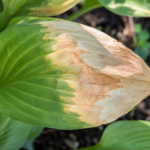 Environmental stressLeaf sunburn
 DiseasePhytophthora root and crown rotPhytophthora nicotianae
 Environmental stressFrost heaving
Toxicity and pollen
Hostas contain saponins and are listed as toxic to dogs and cats. Ingestion may cause vomiting, diarrhea, or depression. Keep pets from chewing leaves, shoots, flowers, or roots, and contact a veterinarian or poison-control service if significant ingestion occurs. Evidence for serious human toxicity from ordinary garden contact is limited, but eating the plant should be avoided.
- Typical season
- June–August
- Pollination / pollen
- Heavy, insect-carried pollen
Hosta flowers are insect-pollinated rather than adapted for abundant wind dispersal. This generally indicates low airborne pollen exposure in the garden, although individual sensitivity cannot be ruled out and pollen may be present close to blooming flowers.
Native habitat
Hostas are woodland-edge and forest-floor perennials associated with cool, shaded conditions, fertile soils, and dependable moisture. The named cultivar is a cultivated selection rather than a wild population, so its natural distribution should not be equated with the distribution of any one parent species.
Interesting fact
‘Paul’s Glory’ was selected as the 1999 Hosta of the Year.
Its foliage color changes noticeably with light and season.
The cultivar is valued more for leaves than for its summer flowers.
Hostas die back to a dormant crown during winter.
Frequently asked questions (FAQ)
The most relevant questions about this plant, with short and direct answers.
🌱Quick care
How do you care for Hosta 'Paul's Glory'?⌄
Grow Hosta 'Paul's Glory' in partial shade to shade, fertile humus-rich soil, and evenly moderate moisture. Protect it from harsh afternoon sun and prolonged drought.
Is Hosta 'Paul's Glory' easy to grow?⌄
Yes, Hosta 'Paul's Glory' is generally easy to grow once established. Consistent moisture, rich soil, and protection from intense afternoon sun are the main requirements.
🌤️Environment and placement
How much sun does Hosta 'Paul's Glory' need?⌄
Hosta 'Paul's Glory' grows best in partial shade to shade, with gentle morning sun often tolerated. Too much hot afternoon sun can scorch or fade its leaves.
Can Hosta 'Paul's Glory' grow in full shade?⌄
Yes, it can grow in full shade, although the foliage may develop stronger color with some filtered or morning light. Avoid sites that remain dry beneath dense tree roots.
Can Hosta 'Paul's Glory' grow in full sun?⌄
It may tolerate limited morning sun in cooler climates, but full sun is generally unsuitable. Hot afternoon exposure can cause leaf scorch and reduce foliage quality.
What soil is best for Hosta 'Paul's Glory'?⌄
Use fertile, humus-rich loam that holds moisture without becoming waterlogged. Improve poor soil with compost or other well-decomposed organic matter before planting.
What USDA hardiness zones can grow Hosta 'Paul's Glory'?⌄
Hosta 'Paul's Glory' is a cold-hardy perennial suitable for many temperate U.S. gardens, including cold-winter regions. Exact performance can vary with local moisture, winter protection, and summer heat.
💧Care and problems
How often should you water Hosta 'Paul's Glory'?⌄
Water when the soil surface begins to dry, keeping the root zone evenly moderately moist. Newly planted divisions and plants in hot weather need more frequent watering than established plants.
Why are the leaves of Hosta 'Paul's Glory' turning brown?⌄
Brown leaf edges usually result from drought, hot sun, wind, or root competition from trees. Improve moisture consistency and provide more shade, while removing badly damaged foliage if desired.
Why is Hosta 'Paul's Glory' losing its yellow color?⌄
Reduced yellow coloring is commonly caused by too much shade, seasonal changes, or stress. Brighter filtered light can improve color, but intense sun may instead cause scorching.
How do you protect Hosta 'Paul's Glory' from slugs?⌄
Reduce damp hiding places, water at the soil line, and inspect plants regularly for feeding damage. Use a slug-control method labeled for ornamental plants and follow its directions.
Do deer eat Hosta 'Paul's Glory'?⌄
Yes, deer commonly browse hostas, including Hosta 'Paul's Glory'. If deer are present, use fencing, repellents, or another reliable deer-management method.
Should you mulch around Hosta 'Paul's Glory'?⌄
Yes, apply a thin layer of organic mulch to conserve moisture and moderate soil temperature. Keep mulch away from the crown to reduce the risk of rot and pest problems.
🪴Planting and repotting
When is the best time to plant Hosta 'Paul's Glory'?⌄
Plant Hosta 'Paul's Glory' in spring or early fall when temperatures are moderate and soil moisture is reliable. Avoid planting during periods of extreme summer heat or frozen soil.
How far apart should Hosta 'Paul's Glory' be planted?⌄
Allow roughly 30 to 36 inches between plants so mature clumps have room to spread. Use wider spacing for a specimen effect and closer spacing for quicker visual coverage.
Can Hosta 'Paul's Glory' be grown in a container?⌄
Yes, it can grow in a container with drainage holes, moisture-retentive potting mix, and partial shade. Choose a container wide enough for the mature clump and protect the roots from severe winter temperature swings.
✂️Propagation and pruning
How do you propagate Hosta 'Paul's Glory'?⌄
Propagate Hosta 'Paul's Glory' by dividing established clumps in spring or early fall. Separate sections with healthy roots and shoots, then replant them promptly at the original depth.
When should Hosta 'Paul's Glory' be divided?⌄
Divide it in early spring as shoots emerge or in early fall after hot weather has passed. Division is rarely urgent because established hostas can remain productive for years without splitting.
Should you cut back Hosta 'Paul's Glory' in fall?⌄
Cut back the foliage after it collapses or becomes frost-damaged, usually in late fall. Removing dead leaves helps tidy the bed and can reduce overwintering hiding places for pests.
⚠️Toxicity and safety
Is Hosta 'Paul's Glory' toxic to dogs and cats?⌄
Yes, Hosta 'Paul's Glory' is toxic to dogs and cats if eaten. Keep pets from consuming the leaves or flowers, and contact a veterinarian if ingestion occurs.
🌸Flowering and special interest
When does Hosta 'Paul's Glory' bloom?⌄
Hosta 'Paul's Glory' typically flowers in summer, producing pale lavender to near-white flowers on upright scapes. Bloom timing varies with climate and growing conditions.
Does Hosta 'Paul's Glory' need to flower to stay healthy?⌄
No, flowering is not necessary for plant health. You may remove flower scapes for appearance, or leave them in place if you enjoy the summer display.
How large does Hosta 'Paul's Glory' get?⌄
Hosta 'Paul's Glory' forms a large mound that can reach roughly 18 inches tall and about 36 inches wide when mature. Final size depends on age, climate, soil, and growing conditions.