 Source:
 Hosta ‘Guacamole’ short overview
Hosta 'Guacamole' is a vigorous, mound-forming perennial grown for glossy chartreuse to avocado-green leaves edged in dark green. Its tall summer scapes carry large, sweetly fragrant white to pale lavender flowers. Give it partial shade, evenly moist but well-drained soil, and protection from harsh afternoon sun in hot climates. This fast-growing cultivar is effective in shade borders, woodland plantings, containers, and as a specimen.
Taxonomic classification
Hosta ‘Guacamole’ care guide
Light and placement
Grow in partial shade with morning sun or bright open shade. In cooler climates, some additional morning light can intensify the chartreuse centers, but hot afternoon sun may scorch leaves and bleach the variegation. Too little light can produce greener, less vivid foliage and a looser appearance. In hot regions, favor east-facing or north-facing exposure and filtered light.
Watering and humidity
Keep soil evenly moist, especially from spring through late summer and during establishment. Water slowly and deeply when the surface begins to dry, directing water to the soil rather than the leaves. Increase attention during hot, windy weather; reduce watering after foliage dies back, but do not allow containers or newly planted crowns to become completely dry.
Soil and growing medium
Use fertile, humus-rich soil that holds moisture without staying waterlogged. A loam amended with compost is ideal. Good drainage helps prevent crown and root problems; a slightly acidic to neutral reaction is suitable. Avoid very dry, compacted, or chronically saturated soil.
Feeding
Apply a balanced, slow-release perennial fertilizer in spring as shoots begin growth, or top-dress with compost. A second light feeding is optional in poor soil, but avoid heavy late-season nitrogen, which can produce soft growth and delay dormancy. Water after applying granular fertilizer and do not fertilize drought-stressed plants.
Growth and habit
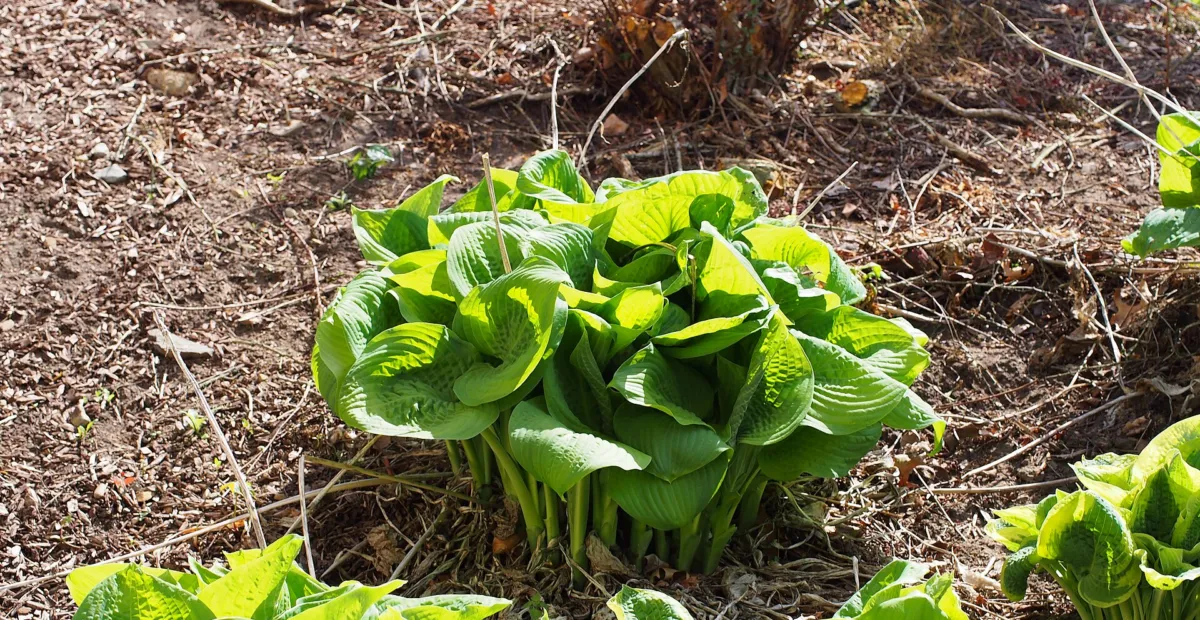
This cultivar forms a broad, dense, arching mound from a slowly enlarging crown. Growth is vigorous once established, and the clump can become substantial over several seasons. Its main maintenance needs are consistent moisture, division only when crowded, and protection from slug, snail, deer, and rabbit damage.
Planting and repotting
Plant in spring or early fall, setting the crown at soil level rather than burying it deeply. Space mature plants about 3–4 feet apart for a full clump. Water deeply after planting and maintain even moisture while roots establish. Morning sun or bright open shade usually gives the best foliage color.
Repot container-grown plants in early spring as new shoots emerge, moving them into a container only one size larger. Use a moisture-retentive but well-drained potting mix, keep the crown at the same depth, and water thoroughly after transplanting.
Propagation and pruning
Propagation
Divide established clumps in spring as shoots emerge or in early fall. Use a sharp spade or knife to separate sections with viable roots and at least one or two buds. Division is the reliable way to preserve the named cultivar; seed does not reproduce 'Guacamole' true to type.
Pruning
Remove spent flower scapes at the base after flowering if seed production is unwanted. Cut frost-collapsed foliage to the ground in late fall or early spring before new shoots emerge. Avoid cutting healthy leaves during the growing season unless removing disease or severe damage.
Overwintering
Leave the plant outdoors in the ground within its hardiness range. After frost collapses the foliage, remove it and keep the crown covered only with a light, breathable mulch if needed. Container plants are more exposed to cold; group pots in a sheltered location and prevent repeated freeze-thaw drying, while avoiding saturated winter media.
Uses
Use as a foliage specimen, shade-border plant, woodland-edge perennial, foundation planting, or large container specimen. The bright leaf centers contrast well with ferns, blue-leaved hostas, astilbes, and dark-leaved perennials. It is ornamental rather than a food crop, and its foliage should be kept away from pets that may chew plants.
Appearance
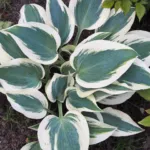
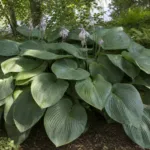
Leaves are broad, glossy, slightly corrugated, and heart-shaped to broadly oval, with luminous chartreuse or avocado-green centers enclosed by irregular dark green margins. The foliage forms a rounded to arching mound. Tall scapes rise well above the leaves and carry pale, fragrant flowers, making the cultivar identifiable both by foliage contrast and late-summer bloom.
Flowering
Tall scapes rise above the foliage in mid to late summer, commonly July and August in much of the United States. The flowers are funnel-shaped and borne in racemes; color ranges from pale lavender to white. Fragrance is strongest in warm conditions and may be especially noticeable later in the day.
Pollination and visitors
The fragrant, showy flowers may be visited by insects, but cultivar-specific documentation of pollinator frequency is limited. Treat animal attraction as low rather than assuming that every flowering hosta is a major pollinator plant.
Hosta 'Guacamole' photos
Click any photo for a larger view. Source, author and license are shown separately.
Diseases and pests
Diseases
Reduce crown rot risk with good drainage and avoid burying the crown. Remove declining foliage and clear plant debris after frost. Leaf spots can occur in wet conditions; improve air circulation, avoid overhead watering, and remove badly affected leaves. Persistent symptoms may warrant local extension diagnosis.
Pests
Slugs and snails commonly rasp irregular holes in the leaves, especially during cool, wet spring weather. Reduce hiding places, keep mulch away from the crown, water at soil level, and inspect after dusk. Deer and rabbits may remove leaves or entire shoots; fencing or repellents may be needed where pressure is high.
Related diseases and pests
Only Plant Doctor profiles whose host data indicate this plant may be affected are shown here.
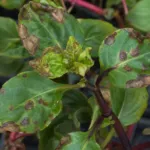 DiseaseImpatiens necrotic spot virus diseaseImpatiens necrotic spot orthotospovirus
 DiseaseSouthern blightAthelia rolfsii
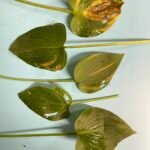 PestStrawberry foliar nematodeAphelenchoides fragariae
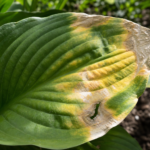 Environmental stressExcess light stress
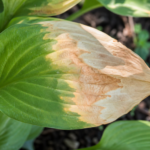 Environmental stressLeaf sunburn
 DiseaseAlternaria leaf spot and fruit rotAlternaria alternata
 DiseasePhytophthora root and crown rotPhytophthora nicotianae
 DiseasePear Decline‘Candidatus Phytoplasma pyri’
Toxicity and pollen
Hosta foliage and other plant parts contain saponins and are listed by ASPCA as toxic to dogs and cats. Ingestion commonly causes gastrointestinal upset such as vomiting, diarrhea, or depression. Keep pets from chewing the plant and seek veterinary advice if significant ingestion or symptoms occur. Evidence for serious human toxicity is limited, but plant material should not be eaten.
- Typical season
- Flowering season, typically July–August
- Pollination / pollen
- Insect-borne pollen
Hosta flowers release pollen from exposed anthers, but the plant is insect-pollinated and is not generally regarded as a major source of airborne seasonal pollen. Individual sensitivity is still possible, especially during peak bloom or when handling flowers. Avoid claiming zero allergy risk.
Native habitat
The cultivar itself is a garden selection rather than a wild population. Its Hosta lineage is associated with temperate East Asian woodland habitats, where plants grow in humus-rich soils with reliable moisture, filtered light, and seasonal dormancy. Garden specimens perform best when these woodland conditions are approximated.
Interesting fact
'Guacamole' is a sport of the fragrant cultivar 'Fragrant Bouquet'.
The American Hosta Growers Association named it Hosta of the Year for 2002.
Its leaf centers can brighten toward chartreuse with more morning light.
Hostas may take several years to reach their mature clump size.
Frequently asked questions (FAQ)
The most relevant questions about this plant, with short and direct answers.
🌱Quick care
What is Hosta 'Guacamole'?⌄
Hosta 'Guacamole' is a shade-loving herbaceous perennial with chartreuse-to-avocado green leaves and darker green margins. It is grown mainly for its bold foliage and fragrant white summer flowers.
How big does Hosta 'Guacamole' get?⌄
Hosta 'Guacamole' typically grows about 22 inches tall and 38 inches wide, with flower scapes reaching roughly 3 feet. Mature size varies with climate, soil, and growing conditions.
Is Hosta 'Guacamole' easy to grow?⌄
Yes, Hosta 'Guacamole' is generally easy to grow when planted in moist, fertile soil and protected from harsh afternoon sun. Regular watering is most important during establishment and summer heat.
🌤️Environment and placement
Does Hosta 'Guacamole' need shade or sun?⌄
Hosta 'Guacamole' grows best in partial shade to shade, especially with filtered or morning light. It can tolerate more sun than many hostas if the soil stays evenly moist, but hot afternoon sun can scorch the leaves.
Can Hosta 'Guacamole' grow in full sun?⌄
Hosta 'Guacamole' can tolerate some full sun in cooler climates or with reliable moisture, but full sun is risky in hot parts of the United States. Morning sun and afternoon shade are usually safer.
What USDA hardiness zones are suitable for Hosta 'Guacamole'?⌄
Hosta 'Guacamole' is commonly listed as hardy across approximately USDA Zones 3 through 8, with some sources extending the range farther. Heat, winter protection, and local growing conditions can affect performance at the range limits.
What soil is best for Hosta 'Guacamole'?⌄
The best soil is fertile, humus-rich, moist but well-drained loam. Incorporating compost can improve moisture retention and soil structure, especially in sandy or heavy clay soil.
Can Hosta 'Guacamole' grow under trees?⌄
Yes, Hosta 'Guacamole' can grow under trees in dappled shade, provided competing tree roots do not leave the soil dry. Water more consistently and add organic matter when necessary.
💧Care and problems
How often should I water Hosta 'Guacamole'?⌄
Water Hosta 'Guacamole' whenever the top inch of soil begins to dry, keeping the root zone evenly moist but not waterlogged. Plants in sun, containers, or hot climates may need more frequent watering.
Why are holes appearing in my Hosta 'Guacamole' leaves?⌄
Irregular holes in Hosta 'Guacamole' leaves are most often caused by slugs or snails. Check plants at night or early morning, reduce hiding places and leaf debris, and use a control method labeled for your garden.
Do deer eat Hosta 'Guacamole'?⌄
Yes, deer may eat Hosta 'Guacamole' even though some gardeners find it slightly less palatable than certain hostas. Repellents, fencing, or protected planting are more reliable than depending on cultivar resistance.
Why are Hosta 'Guacamole' leaves turning brown?⌄
Brown leaf edges or patches usually indicate drought stress, excessive sun, heat, wind, or inconsistent watering. Improve soil moisture and provide afternoon shade, but remove severely damaged leaves if they do not recover.
Should I fertilize Hosta 'Guacamole'?⌄
Apply a moderate balanced fertilizer or compost in spring as new growth emerges. Avoid excessive nitrogen, which can produce soft growth and may increase pest or disease problems.
Should I cut back Hosta 'Guacamole' in fall?⌄
Yes, remove the foliage after frost has flattened it and the plant has gone dormant. Clearing the leaves in late fall or early winter improves garden sanitation and removes hiding places for pests.
🪴Planting and repotting
When is the best time to plant Hosta 'Guacamole'?⌄
Spring or early fall is generally the best time to plant Hosta 'Guacamole'. Planting during cooler weather gives the roots time to establish before summer heat or winter dormancy.
Can Hosta 'Guacamole' grow in a container?⌄
Yes, Hosta 'Guacamole' can grow in a large container with drainage holes and moisture-retentive, well-drained potting mix. Containers dry out faster than garden soil, so check moisture frequently during warm weather.
How deep should I plant Hosta 'Guacamole'?⌄
Plant Hosta 'Guacamole' with the crown at soil level, not buried deeply. Spread the roots through the planting hole, water thoroughly, and add a thin mulch layer without covering the crown.
✂️Propagation and pruning
How do I divide Hosta 'Guacamole'?⌄
Divide Hosta 'Guacamole' by digging up the clump and separating it into sections, each with healthy roots and several growth buds or eyes. Replant the divisions promptly and keep them consistently moist while they establish.
When should I divide Hosta 'Guacamole'?⌄
Divide Hosta 'Guacamole' in early spring as shoots emerge or in early fall when temperatures are cooler. Mature clumps can remain undivided for years unless they become crowded or need rejuvenation.
Can I grow Hosta 'Guacamole' from seed?⌄
You can grow hostas from seed, but seedlings of Hosta 'Guacamole' will not reliably reproduce the named cultivar. Division is the preferred method when you want plants identical to the parent.
Should I remove the flower stalks from Hosta 'Guacamole'?⌄
Remove the flower stalks after flowering if you prefer a tidier appearance or want the plant’s energy directed toward foliage. Leaving them in place does not normally harm an established plant.
⚠️Toxicity and safety
Is Hosta 'Guacamole' toxic to dogs and cats?⌄
Yes, Hosta 'Guacamole' is toxic to dogs and cats if eaten, with mild gastrointestinal upset such as vomiting or diarrhea being typical. Contact a veterinarian or animal poison service if a pet consumes a significant amount or develops symptoms.
Is Hosta 'Guacamole' deer-resistant?⌄
No, Hosta 'Guacamole' should not be considered reliably deer-resistant. Deer may browse the leaves, particularly when other food is scarce.
🌸Flowering and special interest
When does Hosta 'Guacamole' bloom?⌄
Hosta 'Guacamole' usually blooms in late summer, often from July into August depending on the region. Tall flower scapes carry fragrant white, lily-like flowers.
Are Hosta 'Guacamole' flowers fragrant?⌄
Yes, Hosta 'Guacamole' is known for fragrant white flowers. The fragrance is often most noticeable near the plant during warm weather.
Why is my Hosta 'Guacamole' not flowering?⌄
A young or recently divided Hosta 'Guacamole' may need time to mature before flowering well. Excessive shade, drought, transplant stress, or removal of developing scapes can also reduce blooms.