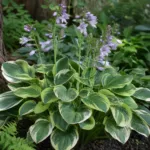
 AI-generated illustration
Hosta ‘Empress Wu’ short overview
Hosta 'Empress Wu' is a giant, deciduous perennial selected for its immense dark green leaves and dramatic scale. In a sheltered, evenly moist site with partial to full shade, mature plants can form a broad clump several feet tall and wide. Pale lavender flowers rise on tall scapes in early to midsummer. Give this cultivar generous space, rich soil, dependable moisture, and protection from harsh afternoon sun and drying winds.
Taxonomic classification
Hosta ‘Empress Wu’ care guide
Light and placement
Choose filtered light, morning sun, or open shade with protection from hot afternoon sun and drying winds. Too much direct sun can bleach or scorch the leaves, while overly deep shade may produce slower growth and less flowering. In cooler climates, some gentle morning or late-day sun may improve vigor without damaging foliage.
Watering and humidity
Water deeply when the upper soil begins to dry, keeping moisture consistent rather than alternating drought and saturation. Increase frequency during hot weather, especially for newly planted specimens and containers. Mulch the root zone lightly to reduce evaporation, but keep mulch away from the crown. Supplemental humidity is not normally required outdoors.
Soil and growing medium
Use fertile, humus-rich soil that holds steady moisture without remaining waterlogged. Loam improved with compost is ideal. Good drainage is important, especially in containers. A slightly acidic to neutral reaction is suitable; avoid compacted soil that restricts the large crown and roots.
Feeding
Top-dress with compost in spring as growth begins. If growth is weak, apply a balanced, slow-release fertilizer at label rate, keeping granules away from the crown. Avoid heavy late-season feeding, which can encourage soft growth before dormancy. Plants in rich soil may need little supplemental fertilizer.
Growth and habit
This is a very large, clumping perennial that expands from a slowly enlarging crown. Mature scale depends strongly on age, moisture, fertility, and climate. Give it room from paths and neighboring perennials, and divide only when necessary because large crowns are cumbersome to move.
Planting and repotting
Plant in spring or early fall, setting the crown at the same depth as in its nursery pot and spreading the roots outward. Water thoroughly after planting and keep the soil evenly moist during the first growing season. Allow ample room for the mature clump and avoid burying the crown beneath heavy mulch.
Container-grown plants should be moved into a larger container when the crown becomes crowded or watering becomes difficult. Repot in early spring as shoots emerge, using a moisture-retentive but well-drained potting mix. Large divisions may quickly outgrow ordinary containers.
Propagation and pruning
Propagation
Propagate primarily by division in early spring or early fall, separating crowns with viable buds and roots. Seed is possible but will not reliably reproduce the named cultivar. Use clean tools and never propagate plants showing suspicious virus-like symptoms.
Pruning
Remove flower scapes after flowering if seed production is not desired, or leave them briefly for ornamental interest. Cut the foliage to the ground after it collapses with autumn frost. Clear dead leaves from the crown in late fall or early winter to reduce shelter for pests and disease.
Overwintering
Leave the plant outdoors in USDA Zones 3–9. After frost collapses the foliage, cut it back and clear debris from the crown. A light mulch layer can buffer freeze-thaw cycles in exposed sites, but avoid heavy, wet covering that holds moisture against the crown.
Uses
Best used as a large-scale ornamental foliage plant, shade-garden focal point, woodland-border specimen, or massed background perennial. Its size makes it unsuitable for cramped beds. Do not use as an edible plant, especially where dogs or cats can chew it.
Appearance
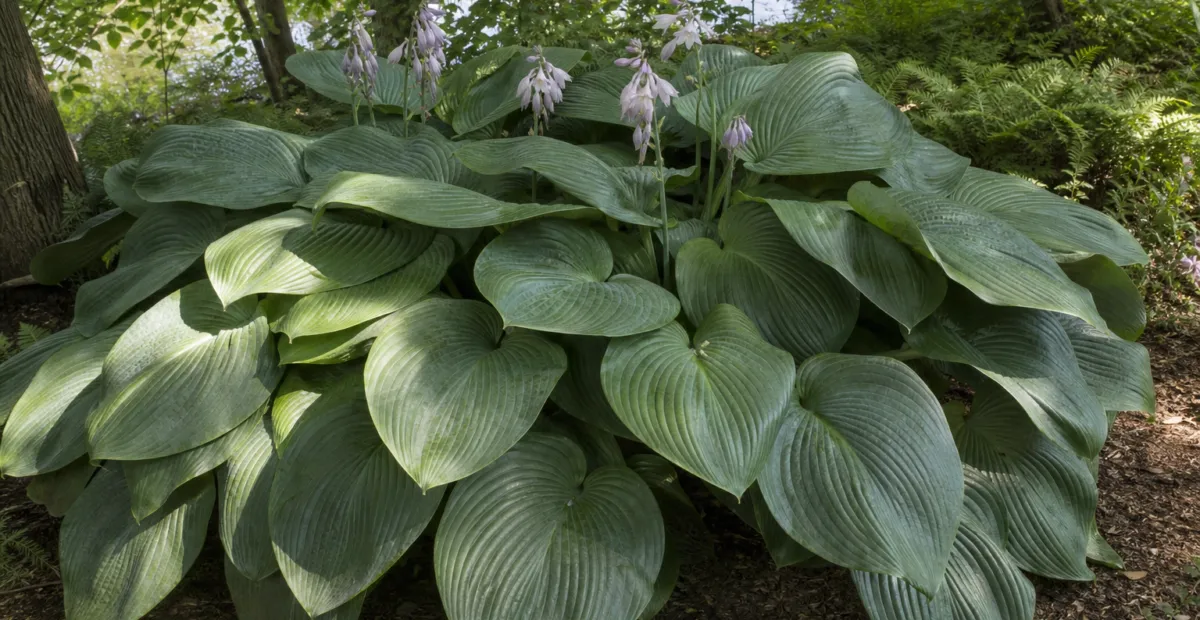
The cultivar forms a massive clump of broad, heart-shaped, dark green leaves with thick substance and prominent texture. The foliage creates a bold, architectural silhouette and is the primary identification feature. Tall scapes rise above the leaf canopy in summer, carrying pale lavender flowers.
Flowering
Tall scapes emerge above the foliage and carry pale lavender, funnel-shaped flowers in early to midsummer. Flowering is secondary to the cultivar’s foliage display, and bloom can be reduced by deep shade, drought, or young plant age.
Pollination and visitors
The pale lavender flowers may be visited by bees and bumblebees, but hosta cultivar-specific pollinator studies are limited. Treat pollinator value as supplementary rather than a primary reason to grow this plant.
Diseases and pests
Diseases
Watch for crown rot in poorly drained soil and foliar problems during prolonged wet weather. Remove badly affected tissue, improve drainage and air movement, and avoid overhead irrigation when practical. Hosta virus X can cause mottling or unusual streaking; remove and dispose of confirmed infected plants rather than propagating them.
Pests
Slugs and snails are the principal pests, causing holes and ragged leaf margins. Reduce hiding places, water at the soil surface, hand-pick where practical, and use iron phosphate bait according to the label. Deer and rabbits may also browse foliage; fencing or repellents may be needed.
Related diseases and pests
Only Plant Doctor profiles whose host data indicate this plant may be affected are shown here.
 DiseaseImpatiens necrotic spot virus diseaseImpatiens necrotic spot orthotospovirus
 DiseaseSouthern blightAthelia rolfsii
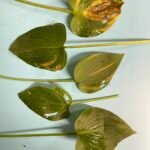 PestStrawberry foliar nematodeAphelenchoides fragariae
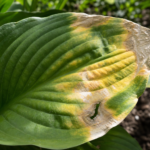 Environmental stressExcess light stress
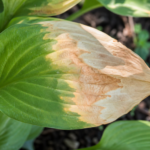 Environmental stressLeaf sunburn
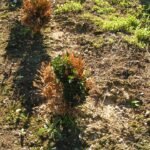 DiseasePhytophthora root and crown rotPhytophthora nicotianae
Toxicity and pollen
Hosta is listed by the ASPCA as toxic to dogs and cats because of saponins. Ingestion may cause gastrointestinal upset such as vomiting, diarrhea, or depression. Keep pets from chewing the foliage, flowers, or roots and contact a veterinarian if ingestion causes symptoms.
- Typical season
- Early to midsummer during flowering
- Pollination / pollen
- Insect-dispersed pollen
Hosta flowers release pollen within the blossom and are insect-pollinated, so airborne exposure is generally limited compared with wind-pollinated plants. Sensitive people may still react to contact with flowers or plant material; individual responses vary.
Native habitat
Hostas are temperate woodland-edge and forest-floor plants associated with fertile, moisture-retentive soils, filtered light, and seasonal dormancy. 'Empress Wu' is a cultivated garden selection rather than a wild population, so its native distribution cannot be assigned independently from its parentage.
Interesting fact
It is recognized as one of the largest commonly cultivated hostas.
Individual leaves can approach 18 inches in length and width.
The cultivar is protected under US plant patent PP20774.
It was named Proven Winners National Hosta of the Year in 2023.
Frequently asked questions (FAQ)
The most relevant questions about this plant, with short and direct answers.
🌱Quick care
How do you care for Hosta 'Empress Wu'?⌄
Grow Hosta 'Empress Wu' in partial to full shade, fertile moisture-retentive soil, and provide consistent watering. Protect it from prolonged drought and harsh afternoon sun for the largest, healthiest leaves.
How big does Hosta 'Empress Wu' get?⌄
A mature Hosta 'Empress Wu' can reach about 4–5 feet tall and 6–8 feet wide, with leaves up to roughly 28 inches long and 25 inches wide. It may take several years to approach its full size.
Is Hosta 'Empress Wu' a perennial?⌄
Yes, Hosta 'Empress Wu' is a long-lived, herbaceous perennial that dies back in winter and regrows from underground crowns in spring.
What USDA hardiness zones are suitable for Hosta 'Empress Wu'?⌄
Hosta 'Empress Wu' is generally hardy in USDA Zones 3–8. Winter performance can still vary with snow cover, exposure, drainage, and unusual temperature extremes.
🌤️Environment and placement
Does Hosta 'Empress Wu' grow in full shade?⌄
Yes, Hosta 'Empress Wu' grows well in full shade, provided the soil remains evenly moist. Some filtered light or gentle morning sun can support stronger growth without excessive leaf scorch.
Can Hosta 'Empress Wu' tolerate morning sun?⌄
Yes, it can tolerate gentle morning sun, especially where the soil stays consistently moist. Avoid intense afternoon sun, which may scorch or bleach the large leaves.
How much sunlight does Hosta 'Empress Wu' need?⌄
Hosta 'Empress Wu' performs best in partial shade to full shade, such as beneath open trees or on the north or east side of a building. Dense, dry shade may reduce growth and leaf size.
What is the best soil for Hosta 'Empress Wu'?⌄
Use fertile, humus-rich, moisture-retentive but well-drained soil. Incorporating compost or other organic matter can improve both moisture retention and drainage.
Can Hosta 'Empress Wu' grow under trees?⌄
Yes, it can grow under trees if it receives adequate moisture and is not competing heavily with shallow tree roots. Mulch can help conserve soil moisture, but keep it away from the crown.
How much space does Hosta 'Empress Wu' need?⌄
Allow approximately 6–8 feet of eventual width for a specimen planting, depending on growing conditions. Spacing based on mature size prevents the plant from crowding paths, foundations, or neighboring perennials.
💧Care and problems
How often should you water Hosta 'Empress Wu'?⌄
Water deeply whenever the soil begins to dry, aiming for consistently moist soil rather than constant saturation. During hot or dry weather, it may need watering more frequently, particularly in its first seasons.
Why are the leaves of Hosta 'Empress Wu' turning brown?⌄
Brown leaves commonly result from drought, hot afternoon sun, wind, hail, or inconsistent watering. Check soil moisture first and protect the plant from prolonged exposure to intense heat and drying conditions.
How do you prevent slugs on Hosta 'Empress Wu'?⌄
Reduce hiding places, avoid wet mulch directly around the crown, and inspect plants regularly for feeding damage. Hand removal and appropriately labeled slug controls can help when damage is severe.
Do deer and rabbits eat Hosta 'Empress Wu'?⌄
Yes, deer and rabbits may eat Hosta 'Empress Wu', especially when other food is scarce. Use fencing, repellents, or protective barriers if browsing is a recurring problem.
Why does Hosta 'Empress Wu' have holes in its leaves?⌄
Jagged holes are most often caused by slugs or snails, while larger tears may result from hail or animal browsing. Inspect the plant at night and check nearby foliage and mulch for pests.
Does Hosta 'Empress Wu' need fertilizer?⌄
It usually benefits from fertile soil and a light application of balanced fertilizer in spring rather than heavy feeding. Avoid excessive nitrogen, which can produce soft growth that is more vulnerable to pests and weather damage.
Should you remove damaged leaves from Hosta 'Empress Wu'?⌄
Remove badly damaged or diseased leaves with clean shears to improve appearance and reduce potential disease spread. Minor cosmetic damage can be left in place until the natural seasonal dieback.
When should Hosta 'Empress Wu' be cut back?⌄
Cut back the foliage after it has yellowed and died back naturally in late fall or early winter. Removing spent foliage helps tidy the planting and reduces overwintering debris.
🪴Planting and repotting
When is the best time to plant Hosta 'Empress Wu'?⌄
Plant Hosta 'Empress Wu' in spring or early fall while temperatures are moderate and soil moisture is reliable. Avoid planting into frozen, waterlogged, or extremely hot soil.
How do you plant Hosta 'Empress Wu' in the ground?⌄
Dig a broad hole, set the crown at the same depth it was growing in its container, backfill with amended soil, and water thoroughly. Finish with a thin mulch layer that does not touch the crown.
Can Hosta 'Empress Wu' be grown in a container?⌄
Yes, but it requires a very large, stable container with drainage and regular watering. Container plants are more vulnerable to rapid drying, winter root injury, and heat buildup than plants grown in the ground.
Can Hosta 'Empress Wu' be transplanted?⌄
Yes, transplant it in early spring before the leaves fully unfurl or in early fall. Lift as much of the root system as practical, replant promptly, and keep the soil evenly moist while it reestablishes.
✂️Propagation and pruning
How do you propagate Hosta 'Empress Wu'?⌄
The most reliable method is division of the crown in early spring or fall. Seed propagation is possible, but seedlings may not reproduce the exact characteristics of the named cultivar.
Can Hosta 'Empress Wu' be divided?⌄
Yes, divide it by separating sections of the crown that contain viable buds and roots. Division is usually easiest before the leaves unfurl in spring, although early fall can also work.
How long does Hosta 'Empress Wu' take to reach full size?⌄
Hosta 'Empress Wu' commonly takes several years to develop its characteristic giant scale, often around 3–8 years depending on climate, moisture, soil, and the size of the starting division. Young plants may look much smaller than mature specimens.
Should Hosta 'Empress Wu' be pruned?⌄
It does not need routine pruning beyond removing damaged leaves, spent flower scapes, and dead foliage. Avoid cutting healthy leaves during the growing season because they supply energy to the crown.
⚠️Toxicity and safety
Is Hosta 'Empress Wu' toxic to dogs?⌄
Yes, Hosta 'Empress Wu' should be considered toxic to dogs because hostas contain saponins. Ingestion may cause vomiting, diarrhea, or depression, so contact a veterinarian or animal poison service if your dog eats the plant.
Is Hosta 'Empress Wu' toxic to cats?⌄
Yes, Hosta 'Empress Wu' should be considered toxic to cats because hostas contain saponins. Keep cats away from the foliage and contact a veterinarian promptly if ingestion occurs or symptoms develop.
Is Hosta 'Empress Wu' safe for pets?⌄
No, Hosta 'Empress Wu' is not considered pet-safe for dogs or cats. Prevent chewing and seek veterinary advice if a pet consumes leaves, flowers, stems, or other plant material.
🌸Flowering and special interest
When does Hosta 'Empress Wu' bloom?⌄
Hosta 'Empress Wu' typically blooms in early to mid-summer, with timing varying by climate. Its pale lavender flowers rise on scapes above the foliage.
What color are the flowers of Hosta 'Empress Wu'?⌄
The flowers are generally pale lavender to light violet. The cultivar is grown primarily for its enormous foliage, while the flowers provide a secondary summer display.
Should you cut off Hosta 'Empress Wu' flower stalks?⌄
Remove flower stalks after blooming if you prefer a tidier appearance or want to direct the plant’s energy toward foliage. Leaving them in place does not usually harm an established plant.