
 Source:
 Pear Decline
‘Candidatus Phytoplasma pyri’Pear Decline overview
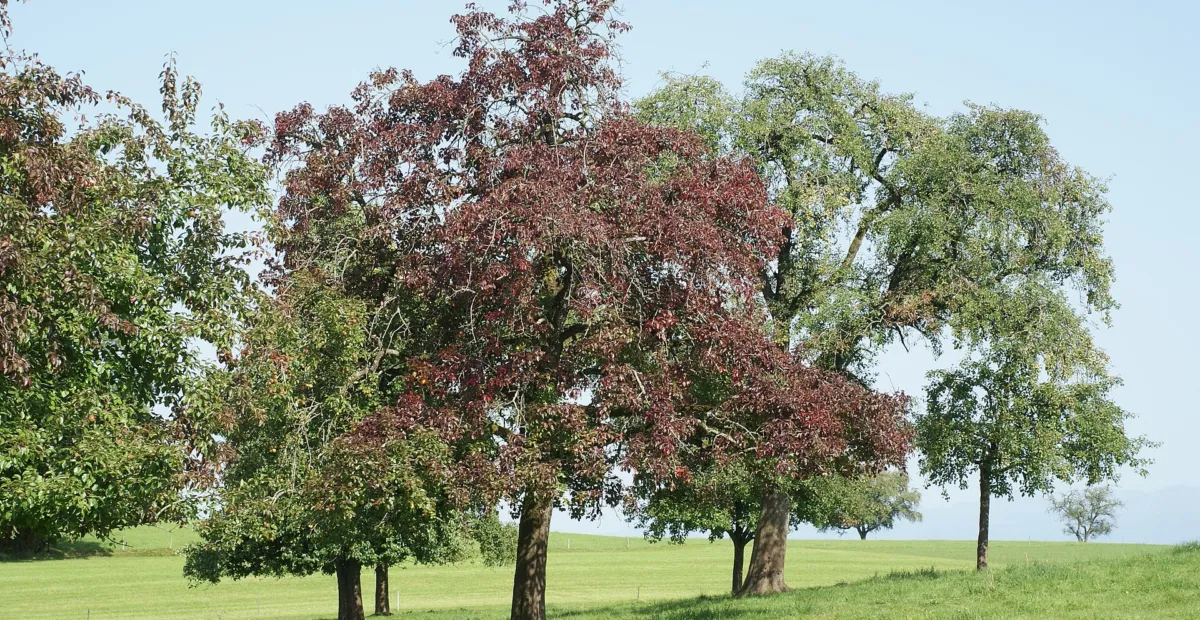
Pear decline is a phloem-limited disease caused by ‘Candidatus Phytoplasma pyri’. In the United States, it is mainly spread by pear psylla (Cacopsylla pyricola) as the insect feeds on pear foliage. Symptoms include pale or prematurely reddening leaves, leaf curl, reduced shoot growth, smaller fruit, premature defoliation, and—on highly susceptible Asian rootstocks—rapid tree collapse.
Typical conditions
Overview
Pear decline affects pear trees throughout important pear-growing regions, including parts of the United States. The causal organism is a wall-less, phloem-associated bacterium-like pathogen that cannot be cultured by ordinary methods and is normally confirmed with molecular testing.
Symptoms may be subtle on tolerant rootstocks but can become severe on susceptible Asian rootstocks. Affected trees often lose vigor gradually; trees on highly susceptible rootstocks may wilt and die rapidly during hot weather. Several nutritional, water-stress, root, graft-union, and virus-like disorders can resemble pear decline, so visual symptoms alone are not definitive.
Symptoms and identification
Common symptoms include:
- slow spring leaf-out and pale green to yellowish foliage;
- undersized leaves, weak shoot and spur growth, and shoot dieback;
- premature upward or downward rolling and thickening of leaves;
- premature bronze, red, or purple coloration, especially on Bartlett and Bosc pears;
- premature leaf drop, reduced fruit size, and lower yield;
- reduced root growth and fibrous-root death caused by impaired phloem transport.
On susceptible Asian rootstocks, rapid wilt and collapse may occur during hot weather. A brown line or necrotic phloem at the graft union can sometimes be found beneath the bark, although its absence does not rule out the disease.
Causes and spread
In the United States, pear decline is primarily spread when infected pear psylla, Cacopsylla pyricola, feeds on pear foliage and transfers the phytoplasma through its piercing-sucking mouthparts. The phytoplasma multiplies in both the pear tree and the vector. An infected pear tree is the principal documented source from which noninfected pear psylla acquire the pathogen.
Long-distance introduction can also occur through infected propagation material. Disease expression is increased by susceptible rootstocks, drought or other stress, poor nutrition, weed competition, inadequate pruning, and high psyllid populations early in the growing season.
Life cycle and persistence
The phytoplasma survives in living pear phloem and in infected pear psylla. After feeding on an infected tree, a psylla requires time for the pathogen to multiply and reach its salivary glands before it can efficiently transmit the disease. Following inoculation, symptoms commonly appear during the following growing season rather than immediately.
During winter dormancy, phytoplasma populations in the upper canopy may decline or be eliminated, while some pathogen can persist in roots and lower tissues, particularly on tolerant rootstocks. New spring phloem can then be recolonized, and feeding by infected psylla may reintroduce the pathogen into the canopy. This seasonal pattern helps explain recurring symptoms and variable severity.
Treatment and control
There is no dependable curative treatment that eradicates ‘Ca. P. pyri’ from an established pear tree. On tolerant rootstocks, improve irrigation, nutrition, soil conditions, and general vigor, while reducing pear psylla transmission. Mildly affected trees may remain productive for years, but symptoms can recur or intensify when psylla pressure or environmental stress is high.
Severely declining trees, especially those on susceptible Asian rootstocks or showing graft-union injury and rapid wilt, are usually best removed and replaced with a tolerant-rootstock tree. Confirm suspicious cases through a qualified plant diagnostic laboratory using appropriate tissue and molecular testing before making expensive orchard-wide decisions.
Low-impact and biological control
Organic and low-impact management is principally preventive and vector-focused. Regularly inspect tender pear shoots and leaf undersides for pear psylla eggs, nymphs, honeydew, and adults. Conserve natural enemies such as lady beetles, lacewings, syrphid larvae, and parasitoids by avoiding unnecessary broad-spectrum insecticide use and by maintaining flowering resources where compatible with orchard practice.
Use dormant or early-season horticultural oil only when the product is permitted for the crop and timing in the United States, and apply it according to the current label. Control weeds and water stress, prune for an open canopy, remove badly declining trees, and use tolerant rootstocks. Biological control of the phytoplasma itself is not established; biological control of pear psylla can reduce disease spread indirectly.
Prevention
- Plant nursery trees propagated from tested, reputable, disease-free stock.
- Choose pear rootstocks with documented tolerance to pear decline, such as Bartlett seedling, Winter Nelis seedling, Old Home × Farmingdale, or Pyrus betulaefolia, where locally suitable.
- Avoid highly susceptible Asian rootstocks in areas where pear psylla and pear decline occur.
- Monitor pear psylla from dormancy through early summer and manage populations using an integrated program.
- Maintain adequate irrigation, balanced nutrition, good weed control, and appropriate pruning to reduce stress.
- Remove and replace trees with severe, persistent decline when recovery is unlikely; disinfect pruning tools between visibly diseased and healthy plant material.
- Do not move scionwood, budwood, or nursery trees from suspect trees.
Interesting facts
- ‘Candidatus Phytoplasma pyri’ belongs to the apple proliferation phytoplasma group, 16SrX-C.
- Pear psylla is both a damaging pear insect and the most important U.S. transmission pathway for pear decline.
- Bartlett and Bosc pears often show conspicuous red to purple premature leaf coloration, while Asian pear cultivars may show less leaf curling.
- Rapid collapse is associated particularly with susceptible Asian rootstocks, whereas tolerant rootstocks more often show a slow decline.
- The same phytoplasma has also been documented in peach, where it is associated with peach yellow leafroll.
Chemical products do not cure an infected pear tree. Any insecticide, horticultural oil, or other pesticide used against pear psylla must be legally authorized for pears and the stated use in the United States, applied only according to the current product label, including rate, timing, bee-protection precautions, reentry interval, and preharvest interval. Because registrations and labels change, consult current state extension guidance and the product label before use.