
 Source:
 Chinese Fountain-bamboo (Fargesia nitida) short overview
Chinese Fountain-bamboo is a hardy, clump-forming bamboo with slender, dark purplish culms and dense, glossy green leaves that form an elegant arching or fountain-like silhouette. Native to temperate China, it prefers partial shade, organic soil, and consistent moisture. Unlike running bamboos, it expands gradually from a compact rhizome system, making it useful for woodland borders, informal screens, hedges, and large containers in suitable US climates.
Taxonomic classification
Chinese Fountain-bamboo (Fargesia nitida) care guide
Light and placement
Grow in partial shade or bright filtered light, ideally with morning sun and protection from intense afternoon sun. An east-facing bed, open woodland edge, or sheltered north-facing position is often suitable. Scorched leaf tips, bleached foliage, and curled leaves indicate excessive heat or drying exposure; sparse, weak growth can indicate overly deep shade.
Watering and humidity
Water deeply when the upper inch of soil begins to dry, then allow excess water to drain. Keep the root zone consistently moist during establishment and during summer heat, but never saturated. Container plants may need watering more often than in-ground clumps. Mulch helps reduce evaporation and keeps shallow roots cooler; humidity is less important than reliable soil moisture.
Soil and growing medium
Use fertile, humus-rich loam that remains evenly moist but drains freely. The species tolerates clay and a broad pH range, including acidic, neutral, and alkaline soils, but compacted or stagnant soil can reduce vigor. Mulch with organic matter while keeping it away from the culm bases.
Feeding
Apply compost or a balanced slow-release fertilizer in early spring as growth begins. A second light feeding in early summer may help plants in poor soil, but avoid heavy late-season nitrogen, which can produce soft growth and reduce winter resilience. Do not fertilize drought-stressed, newly divided, or waterlogged plants until they recover.
Growth and habit
This is a non-running, clump-forming bamboo with a gradual expansion pattern. New culms rise from the base, branch higher up, and arch outward as the clump matures. Remove only damaged, weak, or overcrowded culms; excessive division or cutting can slow establishment and reduce the dense fountain effect.
Planting and repotting
Plant in spring or early fall, setting the root ball level with the surrounding soil rather than burying the culm bases. Space plants about 3–6 feet apart for a relatively dense screen, allowing more room for large specimens. Water deeply during the first two growing seasons and mulch to moderate soil temperature.
Repot container plants in spring when roots fill the pot or growth slows. Move into a wide, heavy container with drainage holes, refreshing the outer portion of the root ball and replacing depleted mix. Divide mature clumps only when necessary, since repeated disturbance delays establishment.
Propagation and pruning
Propagation
Divide established clumps or take rhizome/root cuttings in spring as new growth begins. Each division should contain viable rhizome sections, roots, and several culms. Keep divisions evenly moist and shaded until new growth indicates establishment; propagation is slower and less predictable than for many herbaceous perennials.
Pruning
Remove dead, broken, weak, or badly crowded culms at ground level in late winter or spring. Thin selectively to reveal the culm structure and preserve airflow. Avoid shearing the entire clump, which removes the natural arching habit. If flowering occurs, remove spent flowering shoots promptly and monitor the clump for post-flowering decline.
Overwintering
Established plants are cold hardy in much of USDA Zone 6 and warmer, but winter wind can desiccate evergreen foliage. Apply a 2–3 inch organic mulch layer after the ground cools, keep it off the culms, and water before prolonged freezes if soil is dry. Protect containers from hard freezes because exposed roots are less insulated than in-ground roots.
Uses
Use as an ornamental screen, informal hedge, woodland-edge accent, foundation planting, or large-container specimen. Its clumping habit is useful where a non-running bamboo is preferred, although mature plants still require adequate width. It is not recommended here as a food or medicinal plant because species-specific safety and culinary-use evidence was not established.
Appearance
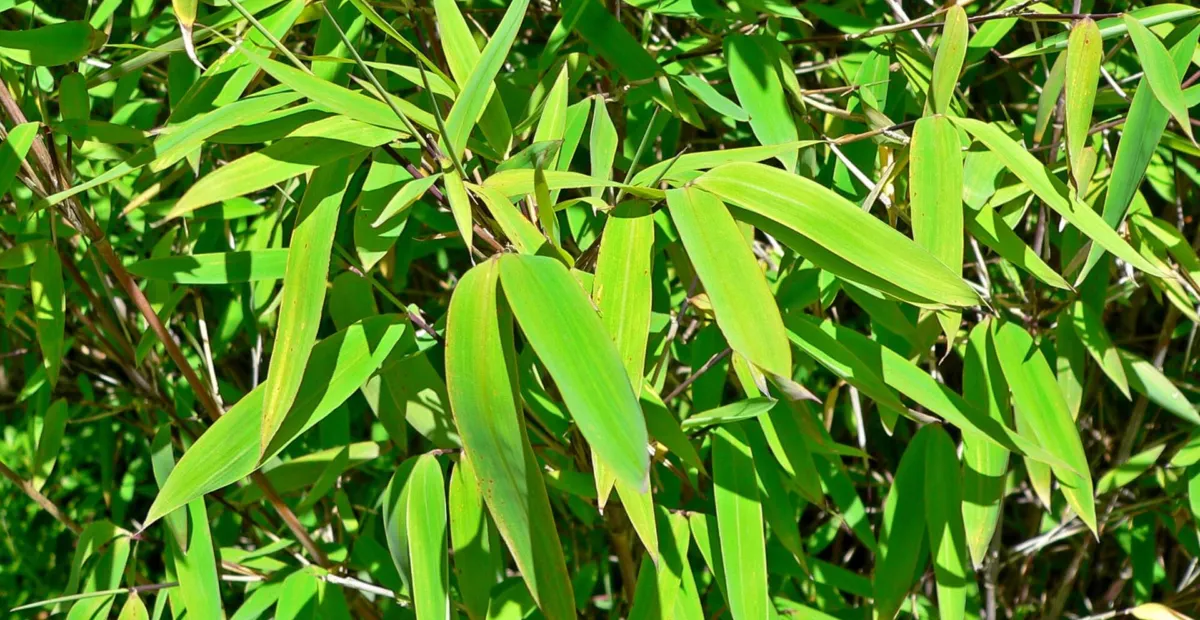
The plant forms dense clumps of slender, cane-like culms. New culms may appear dark purple or purplish-black, while older stems become less intensely colored. Narrow linear leaves are glossy green and concentrated toward the upper branches. The culms arch outward, creating the characteristic fountain or weeping outline.
Flowering
Flowers are produced very infrequently after long vegetative intervals. The small flowers occur in racemose inflorescences and are wind-pollinated. Flowering can consume substantial energy; affected clumps may look sparse or decline afterward, although recovery is possible. A dependable annual flowering season is not established for US gardens.
Pollination and visitors
The documented flowering description identifies wind pollination rather than animal-mediated pollination. No reliable species-specific record establishing regular bee, butterfly, bird, or other animal visitation was found.
Fargesia nitida photos
Click any photo for a larger view. Source, author and license are shown separately.
Diseases and pests
Diseases
No significant disease problems are consistently reported for this species. Prevent decline by avoiding waterlogged soil, improving air circulation, and removing weak or damaged culms with clean tools. Root stress from drought, heat, or poor drainage can resemble disease and should be corrected before applying treatments.
Pests
Watch for aphids, scale, mites, and occasional bamboo mite damage, especially on stressed or sheltered plants. Inspect leaf undersides and new growth, wash minor infestations away with water, and improve plant vigor through consistent irrigation. Use labeled horticultural oils or soaps only when necessary and according to the product label.
Toxicity and pollen
A reliable species-specific toxicity assessment for humans, dogs, cats, and children was not found in the reviewed authoritative sources. Do not treat the plant as proven edible or proven toxic; discourage chewing, supervise children and pets, and seek professional advice after substantial ingestion or an adverse reaction.
- Typical season
- No dependable US exposure season; flowering is highly irregular
- Pollination / pollen
- Wind-dispersed grass pollen during rare flowering
Bamboo pollen is released during the species' rare flowering events, but Fargesia nitida does not have a predictable yearly pollen season in US gardens. Species-specific airborne-allergy evidence was not located, so allergy risk is left unknown rather than assumed absent.
Native habitat
Native populations occur in temperate regions of China, including north-central and south-central areas and Qinghai. The species is associated with cool mountain environments and organic, moisture-retentive soils. In cultivation, performance is usually best where summers are not excessively hot and roots remain cool and evenly watered.
Interesting fact
The species epithet nitida means shining or bright, referring to its glossy appearance. Young culms can be dark purple before aging to a more subdued color. Fargesia bamboos are clump-forming rather than aggressively running. The species is associated with temperate mountain habitats in China and has been important in discussions of periodic bamboo flowering and panda food supply.
Frequently asked questions (FAQ)
The most relevant questions about this plant, with short and direct answers.
🌱Quick care
What is Chinese Fountain-bamboo (Fargesia nitida)?⌄
Chinese Fountain-bamboo is a slow-growing, evergreen, clumping bamboo with slender purplish-green canes and arching, fountain-like foliage. It is valued as a non-invasive screen, hedge, container plant, or specimen.
How big does Chinese Fountain-bamboo get?⌄
Chinese Fountain-bamboo typically grows about 10–15 feet tall and 3–5 feet wide in suitable garden conditions. Its mature size varies with climate, moisture, soil, and available growing space.
Is Fargesia nitida a clumping or running bamboo?⌄
Fargesia nitida is a clumping bamboo, not a running bamboo. Its rhizomes expand gradually near the parent plant, so it is generally easier to contain in a landscape.
Is Chinese Fountain-bamboo evergreen?⌄
Yes, Chinese Fountain-bamboo is generally evergreen in mild climates. Cold, drying winter winds or severe exposure can cause leaf curl, browning, or temporary foliage loss.
Is Fargesia nitida invasive?⌄
Fargesia nitida is considered a non-invasive, clumping bamboo. Even so, give the mature clump adequate room and remove unwanted divisions if it becomes crowded.
🌤️Environment and placement
Does Chinese Fountain-bamboo grow in full sun?⌄
Chinese Fountain-bamboo performs best in partial shade or bright filtered light rather than intense full sun. Protect it from strong afternoon sun, especially where summers are hot and dry.
Where should I plant Fargesia nitida?⌄
Plant Fargesia nitida in a sheltered location with partial shade, fertile organic soil, and reliable moisture. A site protected from harsh winter wind and hot afternoon sun is usually best.
What USDA hardiness zones can grow Chinese Fountain-bamboo?⌄
Chinese Fountain-bamboo is commonly listed for USDA Zones 5b through 9a, although winter protection may be needed in colder or exposed locations. Local performance depends heavily on wind, snow cover, and moisture.
Can Fargesia nitida grow in containers?⌄
Yes, Fargesia nitida can grow in a large container with fertile, well-drained potting mix and consistent moisture. Containers expose roots to greater winter cold and summer drying, so choose a protected location and use an adequately sized pot.
Can Chinese Fountain-bamboo grow in shade?⌄
Yes, Chinese Fountain-bamboo tolerates partial to dappled shade and often appreciates filtered light. Very dense shade may reduce vigor and produce a less full plant.
💧Care and problems
How often should I water Fargesia nitida?⌄
Water Fargesia nitida whenever the upper soil begins to dry, keeping the root zone evenly moist but not waterlogged. Newly planted and container-grown plants need more frequent checks during hot or windy weather.
What soil is best for Chinese Fountain-bamboo?⌄
The best soil is fertile, rich in organic matter, well drained, and able to remain evenly moist. Fargesia nitida tolerates several soil types, but it performs poorly when roots stay stagnant and waterlogged or become persistently dry.
Why are the leaves on my Fargesia nitida curling?⌄
Leaf curling usually indicates moisture stress, intense sunlight, heat, or drying wind. Check the soil, water deeply if needed, and improve protection from direct afternoon sun and exposed winter conditions.
Why is my Chinese Fountain-bamboo turning brown?⌄
Brown foliage can result from drought, winter wind, intense sun, root damage, or occasionally root rot. Confirm that the soil is moist but well drained and prune only foliage or canes that are clearly dead.
Does Fargesia nitida need fertilizer?⌄
Fargesia nitida usually grows well with fertile soil and a light spring application of a balanced fertilizer formulated for grasses. Avoid excessive fertilizer, which can encourage weak growth or contribute to salt buildup in containers.
What pests affect Chinese Fountain-bamboo?⌄
Chinese Fountain-bamboo usually has few serious pest problems, but slugs, aphids, mealybugs, and spider mites may occur. Inspect new growth and treat problems promptly with methods appropriate for the specific pest.
Can Fargesia nitida get root rot?⌄
Yes, Fargesia nitida can develop root rot in persistently waterlogged soil. Improve drainage, avoid standing water, and allow excess irrigation to drain freely.
🪴Planting and repotting
When is the best time to plant Chinese Fountain-bamboo?⌄
Plant Chinese Fountain-bamboo in spring or early fall when soil moisture is dependable and temperatures are moderate. Avoid planting during active shooting, extreme heat, or periods of frozen soil.
How far apart should I plant Fargesia nitida for a screen?⌄
For a screen, space Fargesia nitida according to the desired mature width, commonly about 3–5 feet apart for a relatively quick, dense effect. Wider spacing reduces competition but takes longer to fill.
How do I plant Chinese Fountain-bamboo in the ground?⌄
Set the root ball at the same depth it was growing, backfill with improved organic soil, and water thoroughly. Apply a few inches of mulch while keeping it slightly away from the canes, then maintain even moisture during establishment.
How do I grow Fargesia nitida in a pot?⌄
Use a heavy, wide container with drainage holes and a fertile, well-drained potting mix. Water when the surface begins to dry, refresh or divide the plant when root-bound, and protect the container from severe winter exposure.
✂️Propagation and pruning
How do you propagate Chinese Fountain-bamboo?⌄
The most practical method is division in spring as growth begins. Each division should include healthy roots and several canes, then be replanted promptly and kept evenly moist in light shade while it establishes.
Can Fargesia nitida be grown from seed?⌄
Fargesia nitida can be grown from seed when fresh seed is available, but seed is uncommon because the species flowers at long intervals. Sow fresh seed promptly in a moist, well-drained medium because stored bamboo seed may lose viability quickly.
Can I propagate Chinese Fountain-bamboo from cuttings?⌄
Propagation from rhizome or basal cane cuttings is possible, but it is generally less reliable for home gardeners than division. Use healthy material, keep it warm and evenly moist, and provide protection from strong sun until roots develop.
When should I divide Fargesia nitida?⌄
Divide Fargesia nitida in spring as new growth begins, when moderate temperatures and active root growth improve recovery. Keep divisions shaded and consistently moist until they show stable new growth.
How do I prune Chinese Fountain-bamboo?⌄
Prune by removing dead, damaged, weak, or unwanted canes at ground level. You can also thin crowded stems or remove lower branches to show the canes, but topping a cane permanently limits its height.
⚠️Toxicity and safety
Is Chinese Fountain-bamboo toxic to dogs, cats, or people?⌄
No reliable species-specific toxicity classification was found for Chinese Fountain-bamboo. Because plant-identification and toxicity data can vary, prevent pets and children from chewing unfamiliar plant material and contact a veterinarian or poison-control service if ingestion occurs.
Does Fargesia nitida spread aggressively?⌄
No, Fargesia nitida does not spread aggressively like many running bamboos because it forms a clump. Regular inspection and occasional division can still help maintain its intended size.
🌸Flowering and special interest
Does Chinese Fountain-bamboo flower?⌄
Yes, Chinese Fountain-bamboo flowers very infrequently, often after a long vegetative interval. Flowering can consume substantial energy, and the plant may decline or die afterward, although recovery is sometimes possible.
What should I do if my Fargesia nitida is flowering?⌄
Remove developing flower shoots promptly if they appear and keep the plant well watered and healthy. If widespread flowering occurs, consider collecting viable seed when available and preserving healthy divisions because recovery is uncertain.
Similar plants
 Fargesia ʽRufa’ (Fargesia rufa) care guideFargesia rufa
 Umbrella Bamboo (Fargesia murielae) care guideFargesia murielae
 Chusquea culeou care guideChusquea culeou
 Giant timber bamboo (Bambusa oldhamii) care guideBambusa oldhamii
 Alphonse Karr Bamboo (Bambusa multiplex) care guideBambusa multiplex
 Walking-stick bamboo (Fargesia robusta) care guideFargesia robusta