
 Source:
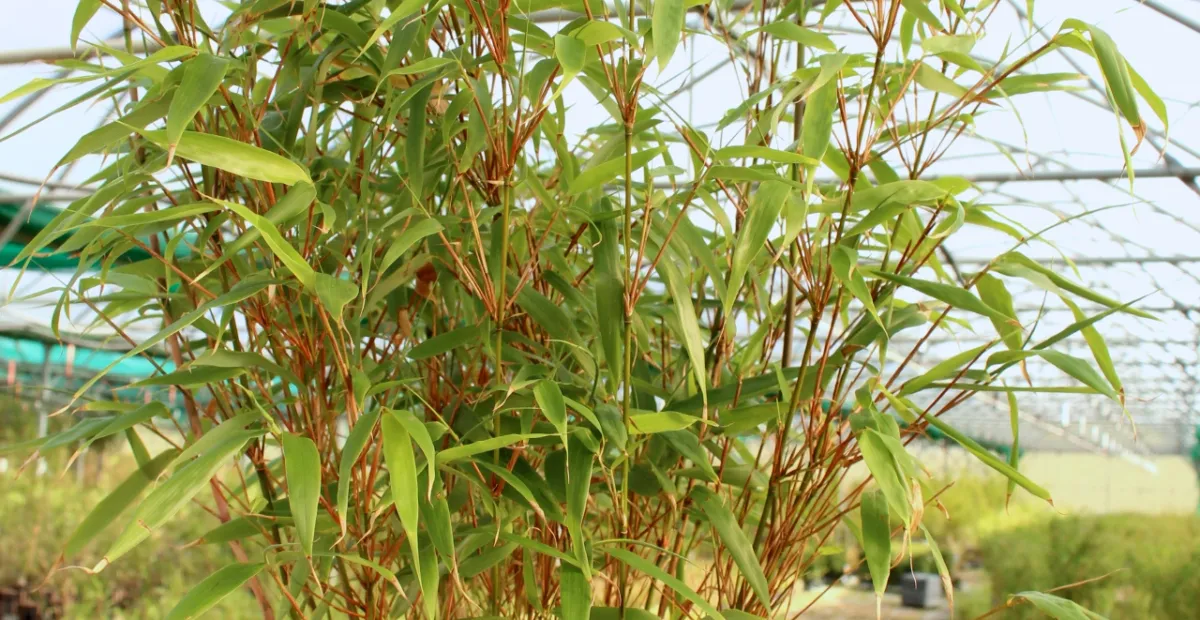
 Fargesia ʽRufa’ (Fargesia rufa) short overview
Fargesia ʽRufa’ is an evergreen, clump-forming bamboo valued for its compact habit, cold tolerance, and non-running growth. New culms show bluish-green tones with rusty red sheaths before maturing green, while dense foliage creates a soft screen or specimen display. Grow it in organically rich, well-drained soil with regular moisture, filtered light or morning sun, and shelter from intense afternoon heat, especially in hot summer regions.
Taxonomic classification
Fargesia ʽRufa’ (Fargesia rufa) care guide
Light and placement
Give bright filtered light, morning sun, or light to moderate afternoon shade. An east-facing or north-facing position is often suitable, while a west-facing site can be too hot in much of the United States. Excess sun and heat may cause pale, curled, or scorched leaves; insufficient light can produce a thinner, less vigorous clump.
Watering and humidity
Water deeply when the upper inch of soil begins to dry, keeping the root zone evenly moist but never saturated. Increase frequency during establishment, container culture, drought, and hot weather; reduce it during cool winter periods while preventing complete drying. A 2–3 inch organic mulch layer helps stabilize moisture and root temperature.
Soil and growing medium
Use organically rich, moisture-retentive but well-drained soil. A loam amended with compost is suitable, while compacted clay should be loosened before planting. Slightly acidic to neutral conditions are preferred. Avoid chronically waterlogged ground, which can damage the dense rhizome system and reduce winter performance.
Feeding
Apply compost or a balanced slow-release fertilizer in spring as new shoots begin. A second light feeding in early summer can support container plants or vigorous screening plantings. Do not fertilize drought-stressed, freshly divided, or late-season plants, since soft late growth is more vulnerable to winter damage.
Growth and habit
The plant develops upright to gently arching leafy culms from a dense, non-running clump. It establishes steadily and can grow quickly when soil moisture, organic matter, and summer temperatures are favorable. In hot climates, afternoon stress may slow growth and cause leaf curl or scorch, making sheltered placement important.
Planting and repotting
Plant in spring or early fall so roots can establish before severe heat or cold. Set the rootball at the same depth it occupied in its nursery container, then water thoroughly and mulch without covering the culms. Space plants about 5–7 feet apart for a developing screen, or closer for faster visual coverage with more frequent maintenance.
Container plants should be shifted into a larger pot when roots fill the existing container or growth slows. Repot in spring, preserving the rootball where possible, and use a sturdy container with generous drainage. Large clumps can be divided during repotting, although recovery is slower than for small divisions planted directly in the ground.
Propagation and pruning
Propagation
Division is the practical method for named garden plants. Divide established clumps in spring as new growth begins, keeping several culms and a substantial section of rhizome and roots in each division. Water divisions carefully during the first growing season. Seed propagation is uncommon in ordinary horticulture because flowering is infrequent.
Pruning
Cut dead, weak, or damaged culms to ground level in late winter or early spring before vigorous new growth. Thin crowded stems selectively to show the culm colors and improve airflow. Avoid shearing the whole clump unless a formal hedge is required, because repeated indiscriminate cutting can reduce its natural arching form.
Overwintering
Plants in the ground are generally hardy in USDA Zones 5–8. Mulch the root zone before severe cold, especially during the first two winters. In exposed sites, winter wind can desiccate evergreen leaves; temporary wind protection and thorough watering before the ground freezes can reduce damage. Container plants need insulation or a sheltered, unheated location.
Uses
Useful as an evergreen specimen, informal screen, hedge, patio-container plant, or soft architectural accent in shade and woodland-style borders. Its clumping habit reduces the spread concerns associated with running bamboos, but adequate space is still needed for mature crown expansion.
Appearance
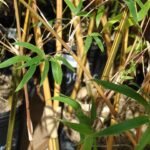
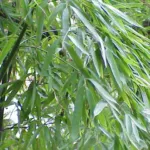
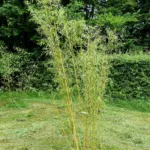
Dense evergreen foliage is carried on slender leafy branches that sway in the breeze. Young culms may be bluish green, with conspicuous rusty red to reddish-brown sheaths around the nodes; mature culms become green. The overall effect is soft and fountain-like rather than rigid, and the non-running clump is useful where a restrained bamboo habit is wanted.
Flowering
Flowering is rare and unpredictable in cultivation. As a grass, the plant produces inconspicuous grass flowers rather than showy ornamental blooms. A reliable flowering season for garden specimens is not documented.
Pollination and visitors
No reliable evidence was found that Fargesia rufa is a significant resource for bees, butterflies, or other animal visitors. Bamboo flowering is rare in cultivation, and its reproductive biology is not a reason to plant it specifically for pollinators.
Fargesia rufa photos
Click any photo for a larger view. Source, author and license are shown separately.
Diseases and pests
Diseases
No serious disease problems are consistently reported. Prevent stress by providing good drainage, steady moisture, adequate air circulation, and clean tools. Remove badly damaged or dead culms at the base. Persistent leaf spotting, dieback, or soft rhizomes usually warrant checking irrigation, drainage, winter injury, and planting depth before applying treatments.
Pests
Watch for aphids, scale, spider mites, and occasional mites during hot, dry weather. Inspect leaf undersides and culm joints, rinse light infestations with water, and improve plant vigor through regular irrigation and mulch. Avoid unnecessary broad-spectrum insecticides, particularly because this species is not documented as a major pollinator resource.
Toxicity and pollen
Reliable authoritative sources do not establish a specific toxicity profile for Fargesia rufa. Do not treat the plant as edible or medicinal without verified identification and appropriate guidance. Wear gloves when dividing clumps, keep plant debris away from children and pets, and seek professional advice after ingestion or an unusual reaction.
- Pollination / pollen
- Wind-dispersed grass pollen when flowering occurs
Bamboo pollen is produced during flowering, but Fargesia rufa rarely flowers in cultivation, so routine airborne exposure from an established landscape plant is likely limited. Exact-species allergenicity is not sufficiently documented; sensitive individuals should avoid handling flowering material and monitor personal symptoms.
Native habitat
Fargesia rufa is native to mountainous western Sichuan, China, where it is associated with cool, elevated temperate environments. Garden performance is best in climates that provide reliable moisture, moderate summer temperatures, and winter protection for newly planted clumps. It dislikes prolonged heat combined with dry soil.
Interesting fact
This bamboo forms a dense, slowly creeping clump rather than invasive running stems. New culms can show bluish-green coloration with rusty red sheaths. The species is native to mountainous western Sichuan, where it grows in cool conditions at substantial elevation. Its flexible leafy stems generally tolerate snow better than many taller bamboos.
Similar plants
 Uddha bamboo and Buddha Belly Bamboo (Bambusa ventricosa) care guideBambusa ventricosa
 Chinese Fountain-bamboo (Fargesia nitida) care guideFargesia nitida
 Scabrida bamboo (Fargesia scabrida) care guideFargesia scabrida
 Alphonse Karr Bamboo (Bambusa multiplex) care guideBambusa multiplex
 Monk’s belly bamboo (Phyllostachys aurea) care guidePhyllostachys aurea
 Walking-stick bamboo (Fargesia robusta) care guideFargesia robusta