
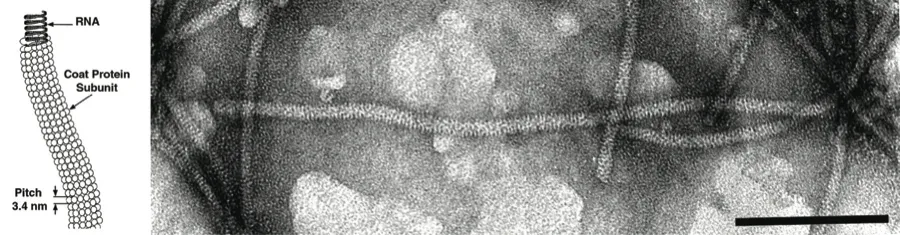
Apple stem grooving virus
Capillovirus maliApple stem grooving virus overview
Apple stem grooving virus is a graft-transmitted viral disease of apple and other woody fruit crops. Most commercial apple cultivars remain symptomless, but susceptible scion–rootstock combinations can develop grooves or pits in the wood, reduced vigor, decline, or occasional leaf and fruit abnormalities. Because symptoms overlap with other viruses, laboratory testing and certified clean planting material are essential for a reliable diagnosis.
Typical conditions
Overview
ASGV is primarily a disease of propagated woody plants rather than a foliage disease that can be identified reliably from appearance alone. In many commercial apple cultivars, infection remains latent. Sensitive combinations may show longitudinal grooves or pits in the wood, reduced trunk development, phloem or xylem abnormalities, weakened growth and eventual decline.
Symptoms can be confused with apple stem pitting virus, apple chlorotic leaf spot virus, graft incompatibility, mechanical injury or other causes of poor vigor. Confirmation should therefore be based on laboratory testing, preferably using a plant diagnostic laboratory familiar with fruit-tree viruses.
Symptoms and identification
- Many infected apple trees show no obvious external symptoms.
- On sensitive scion–rootstock combinations, narrow longitudinal grooves, furrows or pits may occur in the wood beneath the bark, especially near the graft union or lower trunk.
- Severe infections can be associated with reduced trunk diameter, weak growth, decline and lower productivity.
- Some host combinations may develop leaf chlorotic lines, flecks, blotches, vein-associated patterns or premature leaf drop, although these symptoms are not specific to ASGV.
- Fruit symptoms are uncommon in many commercial apple cultivars but may occur in particular host combinations or mixed infections.
A positive laboratory result does not by itself prove that every observed symptom is caused by ASGV; mixed infections and rootstock sensitivity are common diagnostic complications.
Causes and spread
The main route of spread is vegetative propagation: infected scionwood, buds, rootstocks and grafted nursery plants can transmit the virus. Budding and grafting tools may also move sap between plants if contaminated tissue is carried directly into fresh wounds.
No consistently confirmed natural insect vector is known for ASGV. Chance root grafts can contribute to local tree-to-tree spread in established orchards. ASGV has also been detected in seeds from infected apple fruit, but the practical importance of seed transmission and reliable vertical establishment remains uncertain; seed should not be treated as a dependable sanitation method.
Life cycle and persistence
After entering through a graft or other sap-contact wound, ASGV multiplies in living plant tissues and moves systemically through the host. It can persist for the life of a perennial tree and remain symptomless while infected propagation material is collected and distributed.
Expression is influenced by virus isolate, cultivar, rootstock, tree age, environmental stress and coinfection with other viruses. Sensitive indicator combinations can reveal infection more clearly than the original commercial cultivar. Laboratory detection may use ELISA, RT-PCR or sequencing, with the choice of tissue and test affecting reliability.
Treatment and control
There is no curative treatment that eliminates ASGV from an established infected tree. In a home orchard, monitor vigor and productivity and obtain a laboratory diagnosis before removing a valuable tree. In nurseries, mother blocks and commercial orchards, rogue confirmed infected plants where practical and replace them with certified clean stock.
Do not propagate, bud or graft from a confirmed infected tree. Remove infected trees and major roots when feasible, particularly where regrowth or root graft contact could maintain the source. Because ASGV often occurs with other viruses, management decisions should consider the complete diagnostic report rather than ASGV alone.
Low-impact and biological control
Organic production relies on exclusion and sanitation rather than a spray treatment. Use certified or laboratory-tested virus-free rootstock and scionwood, maintain clean mother plants, sanitize grafting tools, isolate new material until its health status is known and remove confirmed infected propagation sources.
Compost, biological controls and insecticides do not cure a virus infection. Avoid moving sap between trees during budding, grafting or pruning, and replace infected plants with clean material when maintaining a productive organic planting.
Prevention
- Purchase apple, pear and other host plants from reputable nurseries operating under applicable virus-certification or clean-stock programs.
- Use virus-tested scionwood, buds and rootstocks for grafting and topworking.
- Disinfect knives and other propagation tools between trees and avoid carrying sap from suspect plants into fresh cuts.
- Do not propagate from trees with unexplained decline, wood grooves or a history of virus problems unless the material has been tested.
- Remove severely affected or confirmed infected trees when they threaten a clean propagation block, especially before collecting scionwood.
- Record plant sources and test results so infected lots can be traced and isolated.
Interesting facts
- ASGV is the type species of the genus Capillovirus.
- The virus is widespread internationally and has been reported from a broad range of hosts, although the importance of individual host records varies and some are based on indicator-plant tests or molecular detection.
- Apple, pear, citrus and several stone-fruit hosts may carry ASGV without obvious symptoms.
- The name refers to characteristic grooves that may be revealed in the stem or trunk wood of sensitive apple combinations, not to a symptom seen on every infected tree.
- Virus certification and clean propagation material are more important management tools than pesticide applications.
No pesticide cures or suppresses an established ASGV infection. Use only products legally authorized for the specific crop and problem in the United States, and follow the current label exactly. Chemical products should not be used as a substitute for clean planting material, testing and sanitation.
Affected plants
The plants below are linked to this problem by structured host-plant data. The list updates automatically as new plant profiles are added.
 Hardy Kiwi (Actinidia arguta) care guideActinidia arguta
 Kiwifruit (Actinidia chinensis deliciosa) care guideActinidia chinensis deliciosa
 Apple tree (Malus domestica) care guideMalus domestica
 Umbrella Bamboo (Fargesia murielae) care guideFargesia murielae
 Chinese Fountain-bamboo (Fargesia nitida) care guideFargesia nitida
 Walking-stick bamboo (Fargesia robusta) care guideFargesia robusta
 Fargesia ʽRufa’ (Fargesia rufa) care guideFargesia rufa
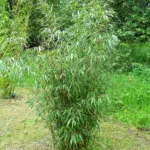 Scabrida bamboo (Fargesia scabrida) care guideFargesia scabrida
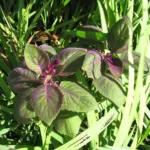 Gynura aurantiaca care guideGynura aurantiaca
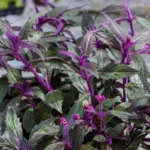 Gynura bicolor care guideGynura bicolor
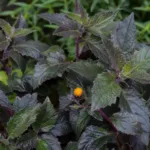 Gynura procumbens care guideGynura procumbens
 Giant bamboo or dragon bamboo (in China) (Dendrocalamus asper) care guideDendrocalamus asper