
 Source:
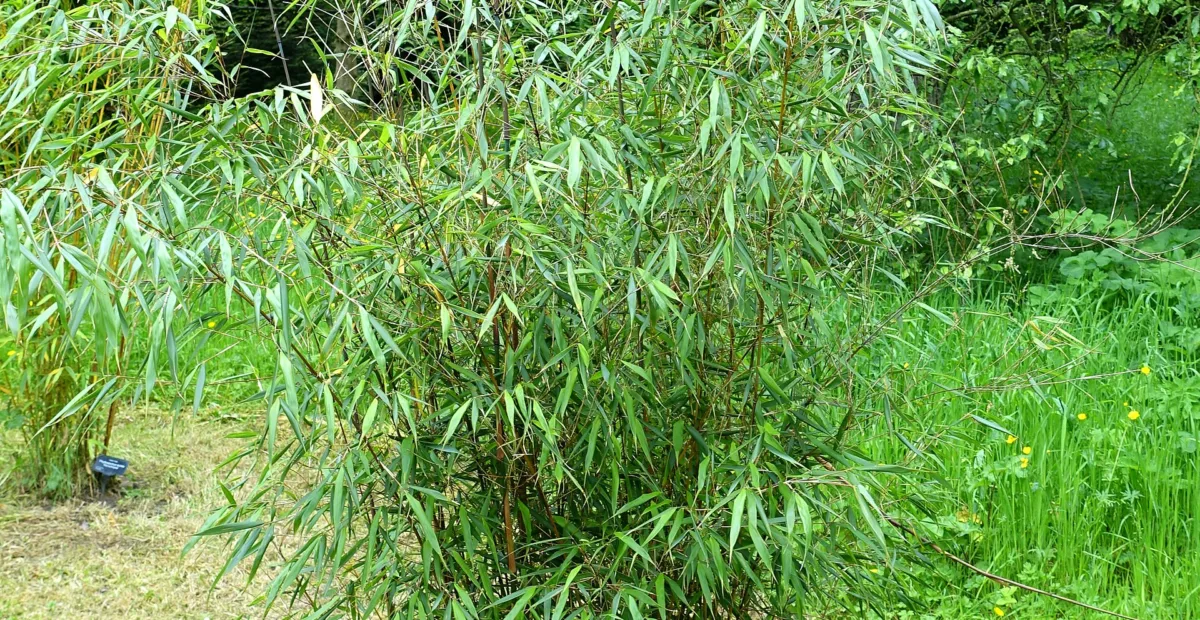
 Scabrida bamboo (Fargesia scabrida) short overview
Scabrida bamboo is a vigorous, evergreen clumping bamboo from the mountain forests of Sichuan and southern Gansu, China. Its upright culms emerge with striking orange sheaths, mature through blue and lavender tones, and finally age green above narrow, dark foliage. In U.S. gardens it is valued as a non-running screen, specimen, or Asian-style border plant, especially where soil stays evenly moist but drains well.
Taxonomic classification
Scabrida bamboo (Fargesia scabrida) care guide
Light and placement
Grow in full sun to partial shade. In cooler or humid regions, morning sun and afternoon protection help preserve foliage and reduce winter stress; in mild climates it can take more sun than many Fargesia. Pale, sparse growth may indicate insufficient light, while scorched leaf margins, curled leaves, or bleached foliage suggest excessive sun, heat, or drought.
Watering and humidity
Water deeply when the upper 1–2 inches of soil begins to dry, then allow excess water to drain. Keep new plantings consistently moist through their first growing season and increase frequency during hot, windy weather. Reduce watering in cool weather, but do not let the root zone become chronically dry; leaf rolling is an early drought signal.
Soil and growing medium
Use fertile loam or amended clay that retains moisture without becoming stagnant. Incorporate compost into compact ground, but avoid creating a sharply different planting pocket from the surrounding soil. Good drainage is essential in winter, while a 2–3 inch organic mulch layer helps maintain even moisture and moderates root temperatures.
Feeding
Apply compost or a balanced slow-release fertilizer in early spring as growth begins. A second, lighter feeding in early summer can support vigorous established clumps in poor soil. Avoid heavy nitrogen applications late in the season, which can produce soft growth and reduce winter readiness; do not fertilize drought-stressed or waterlogged plants.
Growth and habit
This is a clump-forming bamboo rather than an aggressively running Phyllostachys. New culms rise from the established base and gradually fill the clump, making it useful where a vertical screen is wanted without a spreading grove. Remove damaged or overcrowded culms at ground level to improve air circulation and show the colored stems.
Planting and repotting
Plant after severe frost has passed, or in early fall with enough time for roots to establish before the ground freezes. Set the root ball level with the soil surface, water thoroughly, and mulch without burying the culms. Space more closely for a faster screen and more widely for specimen form; maintain consistent moisture during establishment.
Grow in a large, heavy container with drainage holes and a moisture-retentive but well-aerated potting mix. Repot or root-prune in spring when roots fill the container. Refresh the upper layer of mix annually, and move container plants to a sheltered location before severe winter cold or desiccating wind.
Propagation and pruning
Propagation
Propagate established plants mainly by division or by taking young rhizome sections in spring. Divide when the soil is workable and temperatures are moderate; retain several healthy culms and a substantial root-and-rhizome section in each division. Keep divisions evenly moist until new root growth is evident. Propagation is practical but physically demanding for large clumps.
Pruning
Prune in late winter or early spring before strong new growth begins. Remove dead, weak, broken, or badly leaning culms at ground level with a clean saw or loppers. Thin selectively rather than shearing the entire canopy, and avoid topping unless a formal height reduction is essential.
Overwintering
In USDA Zone 6 and exposed parts of Zone 7, mulch the root zone deeply after the ground cools and protect containers from repeated freeze-thaw cycles. Tie foliage loosely in windy sites and use a breathable windbreak rather than airtight plastic. Expect some leaf burn after harsh winters even when the clump survives.
Uses
Use as an evergreen privacy screen, specimen, border accent, wind-filtering planting, or Asian-style garden feature. It is also suitable for large containers where winter exposure is moderate. The shoots are documented as food for giant pandas in its native range, but this does not establish culinary safety or palatability for people, pets, or home harvests in the United States.
Appearance
Upright, round culms carry several narrow leafy branches at each node. Young culm sheaths are orange and mature through blue and lavender shades before fading green. The long, slender leaves are dark emerald to blue-green and form an airy evergreen canopy. The combination of colorful juvenile culms and narrow foliage is its chief identification feature.
Flowering
Like other bamboos, Fargesia scabrida can flower gregariously after long, irregular intervals rather than producing a dependable annual display. The inflorescences are inconspicuous, and horticultural value comes from the evergreen foliage and colored culm sheaths rather than flowering. A species-specific flowering schedule for U.S. gardens is not reliably established.
Pollination and visitors
The species is a bamboo and its inconspicuous flowering structures are wind-pollinated rather than adapted for showy animal visitation. No reliable species-specific record was found demonstrating characteristic attraction of bees, butterflies, moths, hoverflies, birds, or other animal visitors.
Diseases and pests
Diseases
Prevent problems by planting in drained soil, avoiding prolonged leaf wetness, and thinning congested culms for airflow. Watch for leaf spots, sooty deposits associated with sap-feeding insects, and root decline in poorly drained sites. Remove affected tissue, correct irrigation or drainage, and avoid routine fungicide use without a confirmed diagnosis.
Pests
Inspect culms and leaf undersides for scale, aphids, mites, and bamboo-specific sap-feeding insects. Symptoms include stippling, curling, sticky honeydew, or weakened new growth. Start with water sprays, pruning of heavily infested material, and improved plant vigor; use horticultural oil or another labeled treatment only when monitoring shows a persistent problem.
Related diseases and pests
Only Plant Doctor profiles whose host data indicate this plant may be affected are shown here.
Toxicity and pollen
No authoritative, species-specific human or veterinary toxicity assessment was located for Fargesia scabrida. Bamboo identity alone is not sufficient evidence for a formal safety classification. Prevent children and pets from chewing ornamental plant material, avoid home consumption of shoots unless food safety is independently confirmed, and contact a poison center or veterinarian after a concerning ingestion.
- Pollination / pollen
- Light grass pollen released from inconspicuous bamboo inflorescences
Bamboos are grasses and can produce airborne pollen when they flower, but Fargesia scabrida flowers irregularly and species-specific U.S. pollen-monitoring data were not found. Its normal foliage is not itself airborne pollen. People with significant grass-pollen sensitivity should avoid handling flowering material and monitor symptoms during rare flowering events.
Native habitat
Fargesia scabrida is native to mountainous areas of southern Gansu and northern Sichuan, China, where it occurs in temperate forest settings. Chinese species information places it in broadleaf-forest understories at roughly 5,100–6,600 feet, indicating a cool climate, dependable moisture, and soils that drain while retaining organic matter.
Interesting fact
The species was formally published in 1985. Its young culm sheaths create an unusual orange-to-blue-purple color sequence before aging green. It is a clumping bamboo associated with giant-panda habitat and is more sun-tolerant than many other Fargesia. The genus name honors French missionary and Central China naturalist Paul Guillaume Farges.
Frequently asked questions (FAQ)
The most relevant questions about this plant, with short and direct answers.
🌱Quick care
What is scabrida bamboo?⌄
Scabrida bamboo, scientifically Fargesia scabrida, is an evergreen, upright, clumping bamboo from the mountainous regions of China. It is grown for its dense foliage, colorful new culms, and screening value.
How tall does scabrida bamboo get?⌄
Scabrida bamboo typically reaches about 12–15 feet tall, although size varies with climate, soil, watering, and age. Mature clumps may spread roughly 2–8 feet wide.
Is scabrida bamboo clumping or running?⌄
Scabrida bamboo is a clumping bamboo rather than a running bamboo. Its rhizomes expand gradually from the existing clump, so it is generally easier to contain than running types.
Is scabrida bamboo evergreen?⌄
Scabrida bamboo is generally evergreen in suitable climates, especially USDA Zones 7–9. In colder or exposed locations, winter damage may cause some leaves or culms to brown, with recovery occurring during the growing season.
🌤️Environment and placement
Is scabrida bamboo invasive?⌄
Scabrida bamboo is generally not considered invasive because it forms a dense, slowly expanding clump rather than long-running colonies. Allow adequate space for the mature clump and monitor its growth near property boundaries.
What USDA zones are suitable for scabrida bamboo?⌄
Scabrida bamboo is suited to USDA Hardiness Zones 6a–9b. Cold, exposed sites and winter drying can still cause foliage or culm damage, especially in the colder part of its range.
Does scabrida bamboo grow in full sun?⌄
Scabrida bamboo grows in full sun to partial shade and is more sun-tolerant than many other Fargesia bamboos. In hot or dry climates, protection from intense afternoon sun can reduce leaf scorch and moisture stress.
What is the best location for scabrida bamboo?⌄
Choose a site with fertile, moisture-retentive soil, reliable drainage, and shelter from drying winds. It works well as an upright screen, specimen, border planting, or poolside evergreen where irrigation is dependable.
Can scabrida bamboo grow in hot, humid areas of the United States?⌄
Scabrida bamboo may struggle in regions with prolonged high heat combined with high humidity. In the Southeast and other hot areas, provide afternoon shade, consistent moisture, good air circulation, and avoid waterlogged soil.
💧Care and problems
How often should scabrida bamboo be watered?⌄
Water scabrida bamboo whenever the soil surface begins to dry, keeping the root zone evenly moist but not waterlogged. Newly planted clumps usually need more frequent irrigation until their roots become established.
Should scabrida bamboo be mulched?⌄
Yes, apply a 2–4-inch layer of organic mulch around scabrida bamboo to conserve moisture and moderate soil temperature. Keep mulch slightly away from the culms to reduce the risk of rot.
How fast does scabrida bamboo grow?⌄
Scabrida bamboo is considered a rapid-growing plant once established, producing new culms during the growing season. Growth is slower after planting and may be reduced by drought, heat stress, poor soil, or heavy shade.
Why are the leaves of my scabrida bamboo turning brown?⌄
Brown leaves commonly result from drought, winter wind, intense heat, or root stress. Check soil moisture and drainage first, then protect the plant from drying winds and harsh afternoon exposure if conditions are severe.
What pests affect scabrida bamboo?⌄
Scabrida bamboo has few major reported disease problems, but slugs may attack young shoots. Inspect emerging shoots regularly and use locally approved slug-management methods if damage is significant.
Does scabrida bamboo need fertilizer?⌄
Scabrida bamboo benefits from fertile soil and can receive a balanced, slow-release fertilizer in spring if growth is weak. Avoid excessive nitrogen, which can promote soft growth and increase watering demands.
🪴Planting and repotting
What soil does scabrida bamboo need?⌄
Use fertile soil that retains moisture but drains reliably. It tolerates several soil types, including clay, when the planting site is improved with organic matter and does not remain saturated.
When is the best time to plant scabrida bamboo?⌄
Plant scabrida bamboo in spring or early fall when soil moisture is reliable and temperatures are moderate. Spring planting is especially useful in colder USDA Zone 6 locations because it allows more time for root establishment before winter.
How far apart should scabrida bamboo be planted for a screen?⌄
For a dense screen, space scabrida bamboo about 4–6 feet apart on center, depending on the starting plant size and desired time to fill in. Wider spacing creates a looser screen but reduces initial planting cost.
Can scabrida bamboo be grown in a container?⌄
Scabrida bamboo can be grown in a large, sturdy container with drainage holes, but it needs regular watering and periodic root management. Choose a container at least 24 inches wide for a young plant and protect the roots from severe winter cold.
Does scabrida bamboo need a root barrier?⌄
A root barrier is usually unnecessary for scabrida bamboo in ordinary garden beds because it is clumping. A barrier or container can still be useful where space is tight or where the planting must remain strictly confined.
✂️Propagation and pruning
How do you propagate scabrida bamboo?⌄
Propagate scabrida bamboo primarily by dividing established clumps or taking cuttings from young rhizomes in spring. Each division should include healthy rhizomes, roots, and viable culms, followed by consistent moisture during establishment.
When should scabrida bamboo be divided?⌄
Divide scabrida bamboo in spring as new growth begins and soil temperatures are rising. Avoid dividing during periods of extreme heat, drought, or freezing weather because recently separated sections can lose moisture quickly.
Does scabrida bamboo need pruning?⌄
Pruning is optional because scabrida bamboo naturally forms an upright clump. In spring, remove unwanted, damaged, weak, or overcrowded culms at ground level to improve appearance and airflow.
Can you cut scabrida bamboo shorter?⌄
You can remove individual culms at ground level, but cutting the tops of culms usually produces a blunt appearance and does not make them branch into a shorter hedge. For height control, selectively remove the tallest culms instead.
⚠️Toxicity and safety
Are scabrida bamboo shoots edible?⌄
The shoots are documented as food for giant pandas in the plant’s native habitat, but reliable species-specific guidance for harvesting and preparing scabrida bamboo for human consumption is limited. Do not eat shoots unless identification and preparation safety have been professionally confirmed.
Is scabrida bamboo toxic to dogs, cats, or people?⌄
Species-specific toxicity data for scabrida bamboo is unavailable. Because bamboo identification and chemical treatment can vary, prevent pets and children from chewing the plant and contact a veterinarian or poison-control service if ingestion causes symptoms.
Is scabrida bamboo safe to plant near a pool?⌄
Scabrida bamboo can be used near a pool when planted in well-drained soil and kept evenly watered. Its clumping habit makes it more manageable than running bamboo, but fallen leaves and routine maintenance should still be expected.
🌸Flowering and special interest
What colors do scabrida bamboo culms have?⌄
Young culms may emerge with orange tones and develop blue or lavender hues before aging toward green or olive green. Color intensity depends on light, age, climate, and growing conditions.
Does scabrida bamboo flower?⌄
Scabrida bamboo can flower, but flowering is uncommon and difficult to predict. Species-specific flowering intervals and the effects of flowering on individual clumps are not well documented in reliable horticultural sources.
Similar plants
 Azure Monkshood (Aconitum carmichaelii) care guideAconitum carmichaelii
 Monkshood (Aconitum ‘Stainless Steel’)Aconitum 'Stainless Steel'
 Monkshood (Aconitum ‘Bressingham Spire’)Aconitum 'Bressingham Spire'
 Golden full moon maple (Acer shirasawanum ‘Aureum’)Acer shirasawanum 'Aureum'
 Globosum (Acer platanoides ‘Globosum’)Acer platanoides 'Globosum'
 Striped maple (Acer pensylvanicum) care guideAcer pensylvanicum