
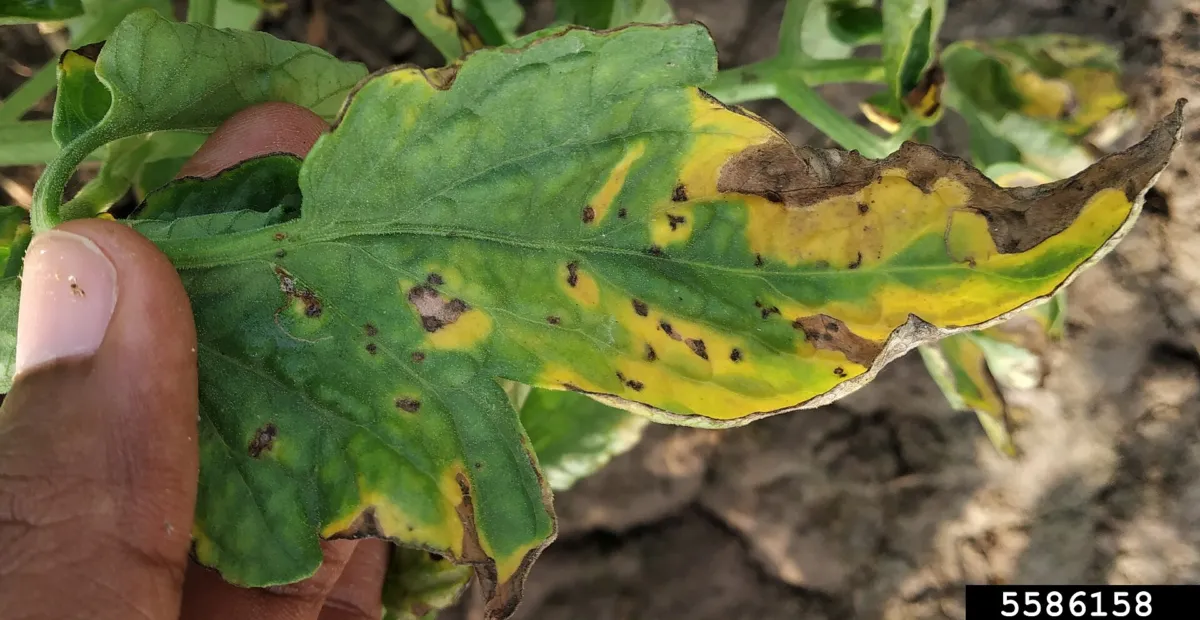
Septoria leaf spot of tomato
Septoria lycopersici Speg.Septoria leaf spot of tomato overview
Septoria leaf spot is a common fungal disease of tomato foliage caused by Septoria lycopersici. It usually begins on the oldest, lowest leaves as many small circular spots with tan to gray centers, dark margins, and tiny black fruiting bodies. In wet, humid weather, lesions multiply and leaves yellow and drop, exposing fruit to sunscald. Early blight and bacterial spot can look similar, so confirmation may be needed.
Typical conditions
Overview
Septoria leaf spot is one of the most common tomato leaf diseases in the United States, particularly where summers are humid and rainfall or irrigation repeatedly wets foliage. It primarily damages leaves but may also occur on petioles, stems, sepals, and occasionally blossoms. Fruit is generally not affected directly.
Symptoms can resemble early blight, bacterial spot, or bacterial speck. The combination of numerous small lesions, tan centers, dark margins, and black pycnidia is strongly suggestive, but a plant diagnostic laboratory is appropriate when management decisions depend on a firm identification.
Symptoms and identification
Initial lesions are small, circular to angular, water-soaked or dark spots, usually less than 1/8 inch across, on the undersides or surfaces of older lower leaves. They develop tan, gray, or whitish centers with dark brown margins. As lesions mature, tiny black, pimple-like pycnidia may become visible in the centers.
Spots can enlarge and merge. Severely affected leaves turn yellow, dry, and fall from the plant, with defoliation commonly progressing upward from the base. Loss of foliage can cause sunscald and poorer fruit color, flavor, and yield. Unlike early blight, Septoria usually produces many small spots without prominent concentric target rings; unlike bacterial spot, it typically does not produce the characteristic fruit lesions.
Causes and spread
The disease is caused by the fungus Septoria lycopersici. It spreads most efficiently when spores are moved by rain, overhead irrigation, splashing soil, wet plant contact, tools, hands, or infected transplants. Dense canopies, volunteer tomatoes, solanaceous weeds, and undecomposed crop residue maintain humidity and inoculum near susceptible foliage.
Life cycle and persistence
Septoria lycopersici survives between crops mainly in infected tomato residue and can persist on some related solanaceous weeds and contaminated stakes or equipment. Infected seed has also been reported as a possible source.
During wet weather, the fungus produces pycnidia in leaf lesions. Spores are released in moisture and spread primarily by rain splash, irrigation splash, contact between wet plants, workers, tools, and contaminated plant material. Spores enter mainly through natural openings such as stomata. Repeated cycles of infection can move the disease from lower leaves into the upper canopy.
Treatment and control
At the first confirmed signs, remove badly infected lower leaves and any fallen diseased foliage. Make cuts with clean tools, avoid removing more than about 20% of the total leaf area at one time, and keep enough healthy foliage to shade developing fruit. Improve airflow, apply mulch, and keep leaves dry during irrigation.
For valuable plantings or persistent disease, a labeled protectant fungicide may help protect new foliage when combined with sanitation and moisture management. Begin only after confirming the diagnosis and checking the current U.S. product label. Rotate fungicide groups when the label and local recommendations call for it, and observe all harvest and worker-safety restrictions.
Low-impact and biological control
Organic management is based primarily on prevention and sanitation because no treatment can make existing lesions disappear.
- Remove the most heavily spotted lower leaves as soon as practical, especially when foliage is dry. Avoid stripping excessive leaf area at one time.
- Bag and discard diseased material or remove it from the garden; do not place infected tomato debris in a home compost pile unless the composting system reliably reaches pathogen-killing temperatures.
- Use clean transplants and seed from reputable sources. Sanitize stakes, cages, clippers, and other reusable equipment.
- Apply a thick mulch layer to reduce soil splash, stake or cage plants, and prune selectively to improve airflow without over-pruning.
- Water at the base in the morning and avoid handling wet plants.
- Where permitted by the current U.S. organic-production rules and product label, an OMRI-listed copper product may provide suppression or protection. Copper does not cure established lesions and can injure foliage if misused.
Prevention
- Start with disease-free seed and transplants, and inspect new plants before bringing them into the garden.
- Rotate tomatoes away from the same bed for several seasons where space allows; use non-host crops during the rotation period.
- Remove tomato debris promptly after harvest and control volunteer tomatoes and relevant solanaceous weeds, especially horsenettle and nightshade where they occur.
- Use mulch to limit splash, provide adequate plant spacing, stake or cage plants, and avoid creating a continuously wet canopy.
- Use drip irrigation or a soaker hose rather than overhead watering, and irrigate early enough for foliage and soil surfaces to dry.
- Select cultivars described by a reliable seed source as having tolerance or improved resistance when available, recognizing that resistance is not universal and many cultivars remain susceptible.
Interesting facts
- The pathogen is named after the tomato genus name used in older botanical classifications, although cultivated tomato is now classified as Solanum lycopersicum.
- Black dots in mature lesions are pycnidia, fungal fruiting bodies that produce spores; they help distinguish Septoria from some abiotic leaf spots.
- Fruit usually remains uninfected, but severe leaf loss can expose developing tomatoes to intense sunlight and cause sunscald.
- Reported alternate hosts include some solanaceous weeds and cultivated relatives, but host susceptibility and the importance of each alternate host can vary by region and pathogen population.
Use fungicides only when a product is currently legally authorized and labeled in the United States for tomato and Septoria leaf spot or the applicable disease group. Follow the current label for crop, rate, timing, reentry interval, preharvest interval, personal protective equipment, and maximum applications. Product registrations and labels can change; do not rely on an old recommendation or use a product off-label. Fungicides protect healthy tissue and generally do not restore already spotted leaves.
Affected plants
The plants below are linked to this problem by structured host-plant data. The list updates automatically as new plant profiles are added.
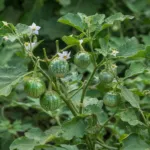 Solanum aethiopicum care guideSolanum aethiopicum
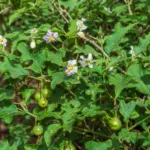 Solanum macrocarpon care guideSolanum macrocarpon
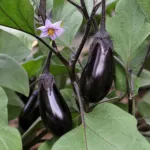 Eggplant (Solanum melongena) care guideSolanum melongena
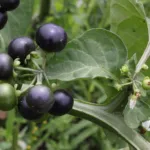 Garden Huckleberry (Solanum scabrum) care guideSolanum scabrum
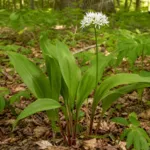 Ramp (Allium tricoccum) care guideAllium tricoccum
 Hosta ‘Blue Angel’Hosta 'Blue Angel'
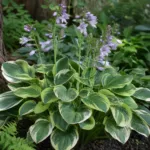 Hosta ‘Captain’s Adventure’Hosta 'Captain's Adventure'
 Hosta ‘Liberty’Hosta 'Liberty'
 Hosta ‘Red October’Hosta 'Red October'
 Hosta ‘White Feather’Hosta 'White Feather'