Hail damage
Hail damage overview
Hail damage is a noninfectious weather injury caused when ice pellets strike leaves, stems, flowers, fruit and growing points. Severity depends on hail size, wind, plant age and crop stage. Damaged plants may recover when buds or growing points remain alive, but wounds can increase water loss and provide entry points for bacterial and fungal pathogens. Careful assessment, sanitation and monitoring are more useful than routine spraying.
Typical conditions
Overview
Hail injury varies from cosmetic spotting to complete defoliation, stand reduction or plant death. Young plants may recover if the growing point, crown or viable buds remain intact. Perennial trees and shrubs can often replace damaged leaves, although severe bark or branch injuries may have lasting effects.
Inspect plants after immediate hazards have passed. Record photographs and, for insured commercial crops, contact the crop-insurance agent before removing or replanting damaged plants. Avoid making an early final judgment: some crops show meaningful regrowth only after several days of favorable weather.
Symptoms and identification
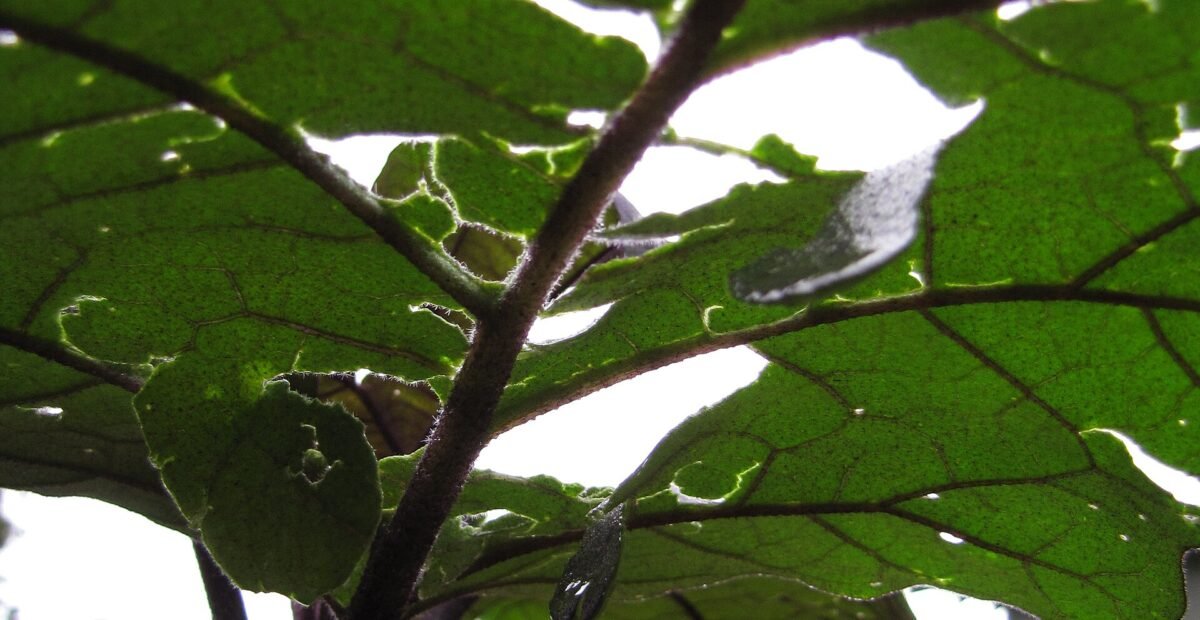
Typical symptoms appear suddenly and are usually irregularly distributed in the direction of the storm. Look for shredded or ragged leaves, round to irregular holes, bruised petioles and stems, broken shoots, stripped bark, fallen flowers, scarred or punctured fruit, split pods, damaged ears and lodged or uprooted plants.
In corn, inspect the growing point and stalk interior rather than judging survival from leaf damage alone. A healthy growing point is firm and light colored; a water-soaked, brown or soft growing point indicates severe injury. In soybean, remaining green cotyledons or leaf tissue can support regrowth from axillary buds. Symptoms that develop later—soft rot, dark lesions, ooze or wilting—may indicate a secondary pathogen rather than hail itself.
Causes and spread
The initiating cause is hail impact, usually intensified by wind. Damage is not contagious and cannot spread from plant to plant. However, the storm can spread or create conditions for secondary problems: rain splash moves bacteria and fungi, insects may be attracted to wounded tissue, and wet debris can remain in contact with healthy tissue.
Additional stress from drought, waterlogged soil, heat, root disturbance or unnecessary pruning can reduce recovery. Hail-damaged crops should therefore be monitored for secondary disease and insect injury rather than treated automatically.
Life cycle and persistence
Hail damage has no biological lifecycle. It occurs during a storm when ice impacts plant tissue. The immediate injury is followed by a recovery or decline phase: intact meristems and buds may produce new growth, while crushed tissue dries, dies or becomes colonized by opportunistic microorganisms.
Secondary bacterial and fungal problems are more likely when hail wounds remain wet, foliage stays dense, or rain splashes contaminated material onto injured tissue. The timing of the storm is important: early-season vegetative crops often have more time to regrow, while late-season crops have less opportunity to replace lost leaf area or mature fruit.
Treatment and control
Wait until the storm has passed and immediate hazards are controlled. Photograph damage, then assess each plant for viable roots, crowns, growing points and buds. Do not replant or remove marginal plants immediately; many annuals show their recovery potential after several days, and crop-specific decisions may require waiting about 3–7 days or longer.
- Water normally, but do not overwater or fertilize heavily in an attempt to force recovery.
- Remove loose, crushed and irreversibly broken tissue with sanitized, sharp tools.
- Leave partially damaged leaves when they still contain substantial green tissue.
- Repair supports, mulch exposed roots lightly, and protect fruit from soil contact.
- Inspect commercial stands for plant population, spacing, growth stage and growing-point injury before deciding whether to replant.
- Monitor for secondary rot, bacterial ooze, fungal lesions, insect infestation and stem breakage through the remainder of the season.
Low-impact and biological control
There is no organic spray that reverses physical hail injury. Use nonchemical recovery measures:
- After the storm, remove only tissue that is fully detached, badly split, crushed or clearly dead. Make clean cuts just above a healthy bud or branch collar; do not leave long stubs.
- Stake or gently support leaning plants when roots and stems remain viable, avoiding tight ties that constrict expanding stems.
- Harvest usable wounded produce promptly and discard fruit with deep cracks, extensive bruising or decay.
- Remove severely damaged annual plants that cannot regrow, and compost them only where the material is not showing a suspected infectious disease.
- Improve airflow, avoid overhead irrigation when practical, and monitor wounds for soft rot, expanding lesions, ooze or sudden wilt.
Prevention
Hail cannot be prevented in open-field production, but injury can sometimes be reduced. Use properly anchored hail or bird netting where appropriate, protect high-value container plants before severe-weather events, and grow tender crops in a sturdy greenhouse or screened structure when economically practical.
- Maintain balanced nutrition and irrigation so plants are vigorous but not excessively succulent.
- Stake tomatoes, peppers and other tall plants before storms; secure trellises and containers.
- Prune weak, dead or structurally unsafe branches during routine maintenance, while avoiding unnecessary pruning before severe weather.
- Keep drainage functional and avoid compacting wet soil, which increases lodging risk during wind-driven storms.
- Use weather alerts to move containers and temporary covers into place, ensuring covers are securely anchored and removed when conditions improve.
Interesting facts
- Small hail combined with strong wind can cause substantial injury even when hailstones are not large.
- Leaf shredding alone does not always mean a plant is dead; surviving green tissue and protected meristems can drive regrowth.
- In corn, the growing point remains below the soil surface until approximately the V5 stage, which can protect young plants from some aboveground injury.
- Hail wounds can increase the risk of later bacterial or fungal infection, but preventive pesticide applications are not automatically beneficial.
- Bruised stems may appear to recover yet remain more vulnerable to later breakage or lodging.
Do not apply a pesticide solely because hail occurred. Use only products legally authorized for the specific crop and problem in the United States, and follow the current product label, including crop, rate, timing, reentry and preharvest requirements. Hail wounds do not automatically justify a fungicide or bactericide; confirm a secondary disease and use an appropriately labeled product only when warranted.
Affected plants
The plants below are linked to this problem by structured host-plant data. The list updates automatically as new plant profiles are added.