Giant bamboo or dragon bamboo (in China) (Dendrocalamus asper) short overview
Dendrocalamus asper is a massive, clump-forming tropical bamboo valued for its exceptionally large edible shoots and substantial culms. Native from Bangladesh through southern China, Taiwan, and Malesia, it thrives in warm, humid climates with fertile, well-drained soil and dependable moisture. In the United States it is mainly a specialty outdoor plant for frost-free regions or a protected conservatory specimen, because sustained freezing can seriously damage the clump.
Taxonomic classification
Giant bamboo or dragon bamboo (in China) (Dendrocalamus asper) care guide
Light and placement
Give full sun for the strongest culms and most vigorous shoot production, ideally with an eastern or southern exposure and shelter from drying winds. Light partial shade is acceptable in very hot climates, especially with afternoon protection. Sparse, weak culms and slow shoot emergence suggest insufficient light; scorched leaf margins, curled foliage, and bleached leaves indicate excessive heat, reflected light, or drought stress.
Watering and humidity
Water deeply whenever the upper few inches of soil begin to dry, then allow excess water to drain freely. Keep the root zone consistently moist during warm-season shoot production; do not let a newly planted clump dry out. Reduce frequency during cool weather, but do not permit prolonged dryness. Mulch helps stabilize moisture and root temperature. High humidity benefits foliage, although good air movement is still important.
Soil and growing medium
Use deep, fertile soil with reliable drainage and substantial organic matter. A loam amended with compost is suitable; compacted clay should be opened with organic matter and drainage improvements rather than left waterlogged. Sandy soils need more frequent irrigation and mulch. A slightly acidic to neutral reaction is appropriate. Avoid shallow, sterile, chronically saturated sites, which restrict the rhizome system and encourage root problems.
Feeding
Feed in spring and through the warm growing season with a complete fertilizer, or top-dress established clumps with mature compost and a slow-release granular formulation. Use label rates rather than heavy applications; excessive nitrogen can produce soft, weak growth. Water after fertilizing. Stop routine feeding when temperatures fall and growth slows, and do not fertilize drought-stressed, recently transplanted, or cold-damaged plants until they resume active growth.
Growth and habit
This is a pachymorph, clump-forming bamboo rather than a long-running bamboo. New culms emerge from the edge of an expanding clump and reach most of their final height in a single growing season, then gradually harden. Mature clumps become very substantial and need generous clearance from buildings, paths, overhead utilities, and neighboring plants. Remove weak or crowded culms at ground level to improve access and airflow.
Planting and repotting
Plant during warm weather when soil is workable and active growth can establish before cool conditions. Dig a broad hole no deeper than the root ball, backfill with native soil improved with compost, and water thoroughly. Apply a 3–4 inch organic mulch layer while keeping it away from culm bases. Irrigate regularly through the first growing season. In marginal climates, choose a wind-sheltered microclimate and protect the root zone before winter.
Use a very large, heavy container with strong drainage for young plants, because the root and rhizome system becomes powerful quickly. Repot or shift to a larger container in warm weather before vigorous shoot growth. Do not bury the rhizome neck. Refresh compacted mix, water thoroughly after transplanting, and provide temporary shade if roots were disturbed. Container plants require more frequent irrigation and feeding than in-ground clumps.
Propagation and pruning
Propagation
Propagation is practical from divisions, culm cuttings, branch cuttings, or seed when fresh seed is available; tissue culture is used commercially. Divide actively growing clumps in warm weather, retaining viable rhizome sections and shoots, then keep them evenly moist while establishing. Cuttings require warm, humid conditions and reliable sanitation. Seed availability is limited because flowering is infrequent.
Pruning
Prune after the main growth flush or during the dry, less-active season. Cut unwanted, damaged, or weak culms cleanly at ground level with a saw or loppers suited to thick bamboo. Remove lower branches only when clearance is needed, and avoid topping healthy culms because it produces an unnatural cut stem and does not restore height. Thin crowded interior culms to improve access and airflow.
Overwintering
Protect from freezing temperatures, cold winds, and saturated winter soil. In containers, move the plant into a bright, frost-free greenhouse, conservatory, or warm sheltered space before hard freezes. Maintain modest moisture without keeping the mix constantly wet. Outdoor plants in marginal climates benefit from a thick root-zone mulch, wind protection, and frost cloth during brief cold events, but severe freezes may still kill culms or the clump.
Uses
The young shoots are an important edible bamboo vegetable in parts of Asia and should be harvested while tender, then properly prepared according to food-safety guidance. Mature culms are used for construction, furniture, baskets, boards, pulp, and other practical products. In suitable frost-free landscapes it provides a dramatic specimen, dense screen, wind buffer, or tropical-style planting. It is not a dependable choice for ordinary temperate gardens.
Appearance
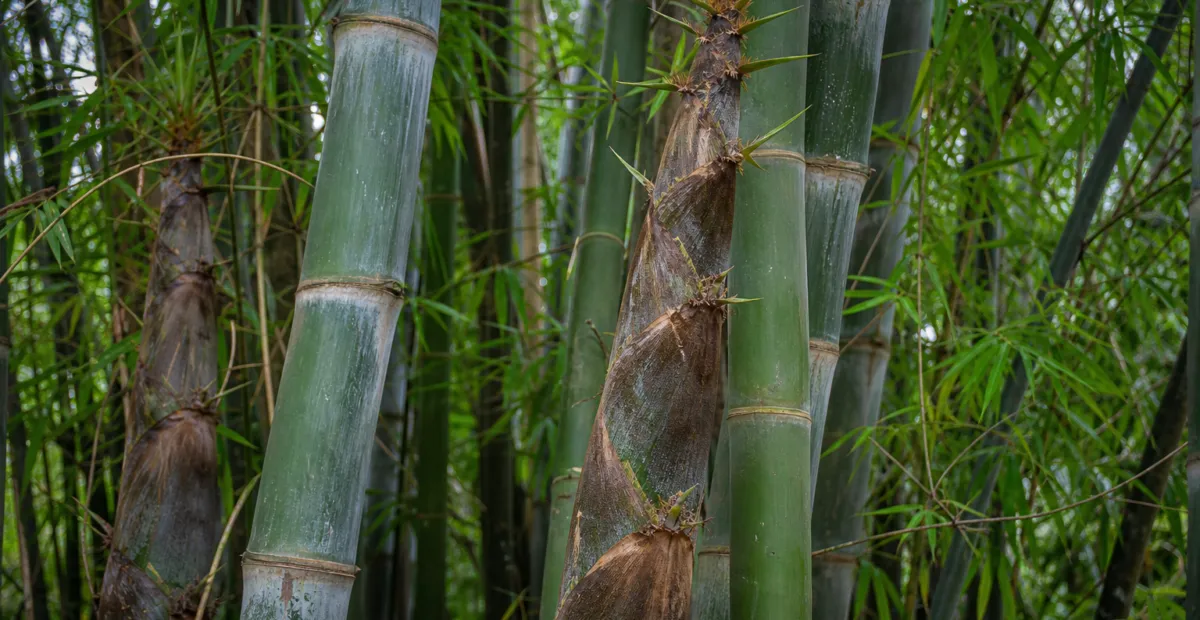
The plant forms a dense, upright clump of thick, green to gray-green culms with prominent nodes and large, narrow lance-shaped leaves. Culms can become exceptionally stout, giving the plant a monumental architectural appearance. New shoots rise from the rhizome edge and elongate rapidly. The combination of massive culms, dense foliage, and tight clumping habit distinguishes it from smaller ornamental bamboos.
Flowering
Like other bamboos, Dendrocalamus asper flowers infrequently and unpredictably rather than on a dependable annual schedule. The flowers are small and visually insignificant compared with the culms and foliage. Flowering may involve many related plants at once and can be followed by decline of flowering culms or clumps, but the timing and severity are not sufficiently predictable for routine cultivation planning.
Pollination and visitors
The species is a grass and its tiny florets are wind-pollinated. It should not be promoted as a dependable nectar or pollen source for bees, butterflies, or other animal visitors. Any insect presence around a flowering clump would not establish characteristic animal pollination without species-specific evidence.
Dendrocalamus asper photos
Click any photo for a larger view. Source, author and license are shown separately.
Diseases and pests
Diseases
Prevent disease by planting in well-drained soil, avoiding persistent leaf wetness, removing dead culms, and disinfecting cutting tools. Watch for root and rhizome decline in waterlogged sites, leaf spots under prolonged wetness, and sooty mold associated with honeydew-producing insects. Improve drainage and airflow first; remove affected material and use only locally labeled products when a confirmed diagnosis warrants treatment.
Pests
Inspect new shoots, culm nodes, and leaf undersides for scale insects, mealybugs, aphids, mites, and bamboo borers. Yellowing, stippling, honeydew, frass, or exit holes can indicate infestation. Favor irrigation consistency, sanitation, and physical removal of light infestations. Use horticultural oil or another labeled treatment only when necessary, following the product label and avoiding heat-stressed plants.
Toxicity and pollen
The young shoots are documented as a food product in traditional and commercial use, but edible bamboo shoots generally require proper preparation because raw shoots can contain cyanogenic compounds. Do not eat raw or unidentified shoots, and do not assume that every plant part is food. Handle sharp culms carefully and keep harvested material away from children and pets until correctly prepared.
- Typical season
- No regular US season; flowering is rare and unpredictable
- Pollination / pollen
- Light, wind-dispersed grass pollen released during rare flowering events
The species produces grass pollen only when it flowers, and bamboo flowering is infrequent and irregular. Because the flowers are wind-pollinated, airborne pollen exposure is possible during a flowering event, but a useful routine US pollen season or species-specific allergy profile is not established. People with grass-pollen sensitivity should avoid handling flowering material and monitor symptoms.
Native habitat
Dendrocalamus asper is associated with wet tropical environments across South and Southeast Asia and Malesia. It performs best in warm conditions, high rainfall or irrigation, deep fertile soils, and sites with ample root moisture but adequate drainage. Its clumping rhizomes support dense stands, while rapidly elongating culms compete strongly for light and space.
Interesting fact
Its young shoots are among the larger edible bamboo shoots traded and prepared as food. New culms can achieve nearly their full height in one warm growing season. Unlike running bamboos, its short-necked rhizomes produce expanding clumps rather than long-distance underground runners. Mature culms are valued for both structural and craft uses.
Frequently asked questions (FAQ)
The most relevant questions about this plant, with short and direct answers.
🌱Quick care
What is Dendrocalamus asper called in the United States?⌄
Dendrocalamus asper is commonly called giant bamboo, and it is also documented as dragon bamboo in China. It is a tropical, clumping bamboo in the grass family Poaceae.
Is Dendrocalamus asper a running or clumping bamboo?⌄
Dendrocalamus asper is a clumping bamboo that expands from a compact rhizome base rather than producing long-running rhizomes. It is generally easier to contain than running bamboo, but its mature clump still needs substantial space.
How big does Dendrocalamus asper get?⌄
Dendrocalamus asper can reach roughly 60–100 feet tall in a warm, suitable climate, with very large culms. Garden-grown plants may remain smaller where temperatures, moisture, or growing season length are limiting.
🌤️Environment and placement
Is Dendrocalamus asper invasive?⌄
Dendrocalamus asper is generally considered a low-risk, clumping bamboo rather than an aggressively running species. Local conditions can still allow a large clump to expand, so avoid planting it beside structures, utilities, or property boundaries.
What USDA zones can grow Dendrocalamus asper outdoors?⌄
Dendrocalamus asper is best suited to the warmest parts of USDA Zones 9–10, with some listings extending it to Zone 11 or 12. Frost and freezes can damage foliage and culms, so colder areas usually require winter protection or container culture.
How cold hardy is Dendrocalamus asper?⌄
Dendrocalamus asper is frost-tender and is not a reliable choice for regions with regular freezing weather. Brief temperatures around the low 20s°F may cause damage, while prolonged or colder freezes can kill young plants or aboveground growth.
Does Dendrocalamus asper grow in Florida?⌄
Dendrocalamus asper can grow outdoors in warm parts of Florida, especially Central and South Florida. Choose a spacious site, maintain irrigation during dry periods, and check local rules before establishing a commercial-scale planting.
How much sunlight does Dendrocalamus asper need?⌄
Dendrocalamus asper grows best in full sun but tolerates light partial shade. Aim for at least six hours of direct sunlight when possible, while protecting young plants from intense reflected heat or drying wind.
What soil is best for Dendrocalamus asper?⌄
Use fertile, deep, well-drained loam enriched with compost or other organic matter. The plant tolerates several soil textures but performs poorly in shallow, depleted, compacted, or persistently waterlogged soil.
💧Care and problems
How often should I water Dendrocalamus asper?⌄
Keep Dendrocalamus asper evenly moist, particularly while it is establishing and during active shoot production. Water deeply when the soil surface begins to dry, but do not leave the roots standing in saturated soil.
Does Dendrocalamus asper need fertilizer?⌄
Yes, annual feeding with compost, well-rotted manure, or a balanced fertilizer can support vigorous culm and shoot production. Apply nutrients to moist soil and avoid excessive fertilizer in poor-draining locations.
Why are the leaves of my Dendrocalamus asper turning yellow?⌄
Yellow leaves may result from normal aging, drought, cold injury, poor drainage, or nutrient stress. Check soil moisture and drainage first, then protect the plant from freezes and correct deficiencies only after ruling out root problems.
Why is my Dendrocalamus asper not producing large culms?⌄
Large culms require heat, abundant water, fertile deep soil, and enough room for the clump to mature. Young plants naturally produce smaller culms, and cool weather, drought, crowding, or repeated cold damage can limit size.
How fast does Dendrocalamus asper grow?⌄
Dendrocalamus asper can grow very rapidly during warm, wet weather, with new culms reaching much of their eventual height in a single growing season. The overall clump takes several years to develop its largest culms.
🪴Planting and repotting
How far apart should I plant Dendrocalamus asper?⌄
For large landscape or production plantings, spacing of about 16–33 feet apart is commonly used, depending on the desired density and available space. A specimen plant should be placed even farther from buildings, overhead wires, and boundaries.
Can Dendrocalamus asper be grown in a pot?⌄
Dendrocalamus asper can be grown temporarily in a very large container, but it is not a practical long-term houseplant or small-patio bamboo. Use a heavy, well-drained pot, keep it evenly moist, and expect regular root and top-growth management.
When is the best time to plant Dendrocalamus asper?⌄
Plant Dendrocalamus asper during the warmest part of the growing season after the risk of cold weather has passed. In areas with seasonal rainfall, planting near the beginning of the wet season helps reduce establishment stress.
Should Dendrocalamus asper have a root barrier?⌄
A root barrier is not usually essential for this clumping species, but it can help define the planting area and protect nearby hardscape. Leave adequate room for the mature clump rather than relying on a barrier to compensate for a cramped site.
✂️Propagation and pruning
How do you propagate Dendrocalamus asper?⌄
Dendrocalamus asper can be propagated by rhizome divisions, culm cuttings, branch cuttings, and tissue culture. Propagation success depends strongly on the age and condition of the material, warmth, humidity, and careful aftercare.
Can Dendrocalamus asper be grown from seed?⌄
It can be grown from seed, but seed is rarely available and seedlings may vary from the parent plant. Fresh, viable seed should be sown in a warm, sterile medium and kept consistently moist.
How do you prune Dendrocalamus asper?⌄
Remove dead, damaged, weak, or unwanted culms at ground level using clean, sharp tools. You can also thin crowded growth, but topping a culm permanently reduces its natural appearance and does not make it regrow taller.
⚠️Toxicity and safety
Are Dendrocalamus asper shoots edible?⌄
The young shoots of Dendrocalamus asper are eaten in several regions, but they should never be consumed raw. Proper peeling and thorough boiling or cooking are necessary because raw bamboo shoots can contain cyanogenic compounds.
Is Dendrocalamus asper toxic to dogs, cats, or people?⌄
There is no well-established species-specific toxicity classification for ordinary contact with Dendrocalamus asper. However, raw shoots should not be eaten, and children and pets should be prevented from chewing unidentified plant material.
Is Dendrocalamus asper safe to plant near a house?⌄
It can be planted near a house only when sufficient room is available for a giant mature clump. Keep it well away from foundations, gutters, rooflines, driveways, septic systems, and overhead utilities because the culms and roots can become difficult to manage at full size.
🌸Flowering and special interest
Does Dendrocalamus asper flower?⌄
Dendrocalamus asper does flower, but flowering is infrequent and may occur at intervals measured in many years or decades. Bamboo flowering can be followed by heavy seed production and death of the flowering clump.
What happens to Dendrocalamus asper after flowering?⌄
A Dendrocalamus asper clump may decline or die after flowering and seed production, as occurs with many large bamboos. The timing is unpredictable, and vegetative replacement plants may be needed if the clump does not recover.
When does Dendrocalamus asper produce new shoots?⌄
New shoots typically emerge during the warm, rainy, or actively irrigated growing season. Mulch, consistent moisture, fertile soil, and protection from cold help support stronger shoot production.