
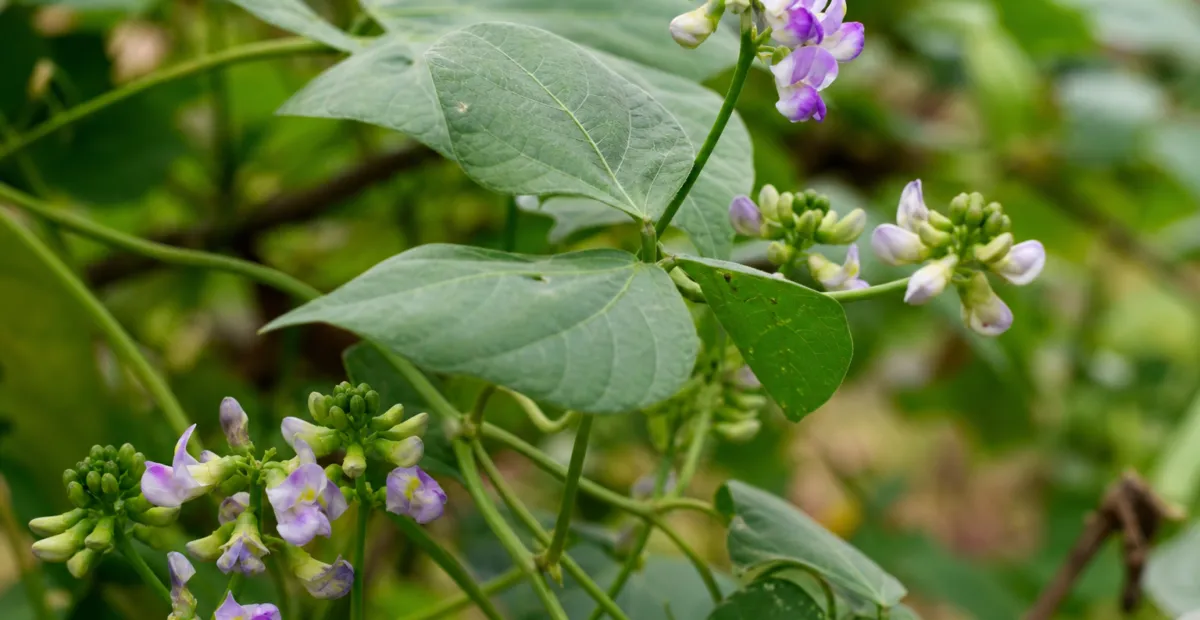
 AI-generated illustration
Rice Bean (Vigna umbellata) short overview
Rice bean is a warm-season legume from tropical and subtropical Asia, grown mainly as an annual in the United States. Its twining or scrambling stems carry trifoliate leaves, yellow pea-shaped flowers, and slender pods containing small beans in varied colors. Provide full sun, fertile well-drained soil, steady moisture, and a trellis or other support for productive growth. A warm-season, short-lived perennial legume usually cultivated as an annual for edible immature pods, mature beans, foliage and forage. It is native to tropical and subtropical Asia and has yellow papilionaceous flowers, trifoliate leaves and slender pods.
Taxonomic classification
Rice Bean (Vigna umbellata) care guide
Light and placement
Grow in the brightest available position, ideally with at least 6–8 hours of direct sun. A south-facing bed or unobstructed container location encourages compact growth, flowering and pod set. Pale foliage, stretched stems and sparse flowering suggest inadequate light; scorched leaf edges or severe midday wilting indicate heat or root-zone moisture stress rather than a need for shade alone.
Watering and humidity
Keep the root zone evenly moist during establishment and flowering, watering deeply when the surface begins to dry. Reduce frequency slightly after the plant is established, but do not allow prolonged drought while pods are forming. Mulch helps moderate soil temperature and moisture. Water at the base in the morning and avoid persistently wet foliage, especially in humid weather.
Soil and growing medium
Use fertile soil with good drainage and enough organic matter to hold moisture without becoming saturated. Loam or sandy loam is suitable; compacted clay should be amended or raised. A slightly acidic to neutral reaction is appropriate. Avoid waterlogged sites, which can restrict roots and encourage damping-off or root disease.
Feeding
Incorporate finished compost before planting. Because rice bean is a legume, avoid heavy nitrogen fertilizer, which can produce excessive foliage at the expense of pods. If growth is weak in poor soil, use a balanced fertilizer at half strength after establishment and again near early flowering. Do not feed drought-stressed plants or apply strong fertilizer directly against stems.
Growth and habit
Rice bean is variable in habit, ranging from erect or semierect plants to twining and scrambling forms. Cultivated plants are commonly grown as annuals even though the species can persist briefly in warm climates. Support climbing types with a trellis, netting or sturdy stakes, and harvest pods regularly to maintain production.
Planting and repotting
Sow directly after frost danger has passed and the soil has warmed. Plant seeds about 1 inch deep in a prepared bed, then keep the seedbed evenly moist until emergence. Thin crowded seedlings early. Install trellis support at sowing or soon afterward because young stems can become tangled and difficult to train.
For container culture, use a deep container with drainage holes and a free-draining potting mix. Move seedlings only when young and handle the root ball gently. Repotting is rarely needed during one growing season; instead, sow into the final container and provide support from the beginning.
Propagation and pruning
Propagation
Propagate from seed. Direct-sow after frost danger when soil is warm, or start seeds indoors several weeks earlier if the growing season is short. Transplant carefully because legumes can be sensitive to root disturbance. Use fresh, properly stored seed and avoid sowing into cold, saturated soil.
Pruning
Pruning is usually unnecessary. Pinch or shorten excessively wandering shoots only when needed to keep plants on their support or improve access for harvesting. Remove diseased or badly damaged growth promptly with clean tools, and clear spent annual vines after the final harvest.
Overwintering
Rice bean is frost tender and is normally harvested and removed at the end of the growing season in the United States. In frost-free areas, plants may persist briefly, but cold protection and reduced winter growth should not be expected to preserve reliable production. Containers can be moved into a warm, bright protected space, although overwintering is uncommon.
Uses
Rice bean is cultivated for immature green pods, mature dry beans, edible shoots or leaves in some food traditions, and livestock forage. Dry seeds should be thoroughly cooked; as with other beans, preparation reduces naturally occurring antinutritional compounds. It can also serve as a warm-season legume in diversified cropping systems.
Appearance
The plant has slender, branched, often finely hairy stems and alternate trifoliate leaves. Leaflets are generally entire and oval to lance-shaped. Yellow pea-family flowers arise in axillary clusters or racemes. Mature pods are narrow, cylindrical and often curved, changing from green to brown or black as seeds mature.
Flowering
The yellow flowers are typical of legumes, with a banner, wings and keel surrounding the reproductive organs. They are borne in axillary clusters during warm-season growth. Flower initiation is sensitive to temperature and photoperiod, so timing varies substantially with latitude, sowing date and cultivar.
Pollination and visitors
Rice bean is generally described in crop literature as capable of self-pollination. The available sources reviewed did not establish a consistent, species-specific animal pollinator or visitor assemblage for United States gardens, so no animal visitor code is assigned.
Vigna umbellata photos
Click any photo for a larger view. Source, author and license are shown separately.
Diseases and pests
Diseases
Good drainage, crop rotation, clean seed and adequate spacing help reduce damping-off, root rots and foliar disease. Avoid overhead irrigation and remove infected plant debris. Improve airflow through dense growth, but use only pesticides labeled for edible beans and follow the product’s preharvest interval.
Pests
Inspect young plants and undersides of leaves for aphids, leafhoppers, bean beetles, caterpillars and spider mites. Hand-pick larger pests, use row cover before flowering where appropriate, and wash or manage small infestations with proportionate measures. Remove weeds that harbor pests and follow all edible-crop pesticide labels.
Related diseases and pests
Only Plant Doctor profiles whose host data indicate this plant may be affected are shown here.
 PestChilli thripsScirtothrips dorsalis Hood
 DiseaseBacterial blight and cankerPseudomonas syringae pv. syringae
 PestSouthern Green Stink BugNezara viridula
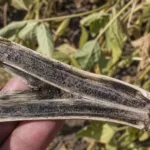 DiseaseCharcoal rotMacrophomina phaseolina (Tassi) Goid.
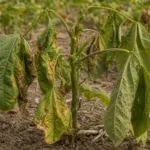 DiseaseBacterial Wilt of Dry BeanCurtobacterium flaccumfaciens pv. flaccumfaciens
 DiseaseCucumber mosaic virusCucumber mosaic virus
 PestMelon aphid (cotton aphid)Aphis gossypii Glover
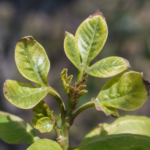 Environmental stressNickel deficiency
Toxicity and pollen
Rice bean is a documented food legume, but reliable veterinary and human toxicology information specific to Vigna umbellata was not established in the sources reviewed. Raw or undercooked beans may contain antinutritional compounds typical of legumes, so mature seeds should be thoroughly cooked. Avoid treating unverified medicinal claims as evidence of safety.
- Typical season
- During warm-season flowering
- Pollination / pollen
- Pollen is released from anthers within the pea-type flower and is not normally dispersed as a prominent airborne cloud.
Rice bean produces pollen in its flowers, but a reliable United States airborne-pollen exposure profile or clinical allergy assessment specific to this species was not found. Its pea-type flowers and likely self-pollination do not justify calling it allergen-free. People with known legume or pollen sensitivities should use ordinary exposure precautions.
Native habitat
The species is native to tropical and subtropical Asia and is associated with warm subtropical environments, cultivated fields, forest margins and woodland contexts. It tolerates a range of soils when drainage is adequate, but productive cultivation depends on warmth, moisture during establishment and a sufficiently long frost-free season.
Interesting fact
Rice bean is usually grown as an annual although it is a short-lived perennial. Seed coats may be red, green, yellow, brown, black, speckled or mottled. The species is also valued as forage and as a food legume. Flowering responds to both temperature and day length, which helps explain regional differences in crop timing.
Frequently asked questions (FAQ)
The most relevant questions about this plant, with short and direct answers.
🌱Quick care
What is Rice Bean (Vigna umbellata)?⌄
Rice Bean is a warm-season legume grown mainly for its edible seeds, young pods, leaves, forage, and green-manure value. It is usually cultivated as an annual, although it can be short-lived perennial in frost-free climates.
Is Rice Bean a vine or a bush?⌄
Rice Bean may grow as an erect, semi-erect, or twining plant, depending on the type. Vining forms can reach roughly 5–10 feet and benefit from support.
Is Rice Bean easy to grow?⌄
Rice Bean is generally easy to grow from seed when given warm temperatures, full sun, fertile well-drained soil, and consistent moisture. It is less suitable for cool climates because it is frost tender.
🌤️Environment and placement
How much sun does Rice Bean need?⌄
Rice Bean grows best in full sun, with at least 6–8 hours of direct light daily. Shade, especially from taller companion crops, can reduce growth and pod production.
What temperatures are best for growing Rice Bean?⌄
Rice Bean grows best in warm conditions, roughly 65–95°F, and does not tolerate frost. Plant it outdoors only after the soil and air have warmed and protect it from cold snaps.
What type of soil does Rice Bean prefer?⌄
Rice Bean prefers fertile, well-drained loam that holds moderate moisture without becoming waterlogged. It can tolerate a wider range of soils, but compacted or poorly drained soil can limit root growth and pod formation.
Can Rice Bean tolerate wet soil?⌄
Rice Bean has some tolerance of temporary wet conditions, but it performs best in well-drained soil. Do not grow it in areas where water remains standing around the roots.
Can Rice Bean survive winter outdoors?⌄
Rice Bean normally cannot survive freezing temperatures and is grown as a warm-season annual in the United States. In frost-free areas it may persist longer, but cold protection is still needed during unusual freezes.
💧Care and problems
How often should Rice Bean be watered?⌄
Water Rice Bean regularly enough to keep the soil moderately and evenly moist, especially during establishment, flowering, and pod development. Avoid persistent saturation, which can encourage root problems.
Does Rice Bean tolerate drought?⌄
Established Rice Bean has some drought tolerance, but prolonged dryness can reduce flowering, pod set, and seed yield. Consistent moisture is most important during flowering and pod development.
Does Rice Bean need a trellis?⌄
Twining Rice Bean types should be given a trellis, fence, or other support as they grow. More erect types may stand without support, but staking can still improve airflow and keep pods off the ground.
When should Rice Bean pods be harvested?⌄
Harvest young Rice Bean pods while they are still tender, or wait until mature pods dry on the plant for seed harvest. Dry pods can split open readily, so collect them promptly as they mature.
Can Rice Bean be used as a cover crop or green manure?⌄
Rice Bean can be used as a warm-season cover crop, forage plant, or green manure because it is a nitrogen-fixing legume. Incorporate young, healthy growth before it becomes overly mature and woody.
What pests attack Rice Bean?⌄
Rice Bean can be affected by thrips, whiteflies, leafhoppers, pod borers, caterpillars, and bruchid beetles in stored seed. Inspect new growth and pods regularly, and store harvested dry beans in clean, airtight conditions.
Why are holes appearing in my stored Rice Bean seeds?⌄
Holes in stored Rice Bean seeds are commonly associated with bruchid or pulse-beetle infestation. Remove damaged seeds and store fully dried beans in airtight containers, with freezing used where appropriate for household seed protection.
Does Rice Bean fix nitrogen?⌄
Rice Bean is a legume capable of forming nitrogen-fixing relationships with compatible soil bacteria. Its benefit depends on effective nodulation, suitable soil conditions, and allowing the plant residue to remain or be incorporated after growth.
Does Rice Bean need fertilizer?⌄
Rice Bean generally benefits from fertile soil but does not require heavy nitrogen fertilizer. Excess nitrogen can encourage leafy growth and may reduce pod formation, so use compost or a balanced fertilizer sparingly after a soil test.
🪴Planting and repotting
Can Rice Bean grow in containers?⌄
Rice Bean can grow in a large container if it receives full sun, has reliable drainage, and includes a trellis for vining growth. Use a container at least 12 inches deep and wide enough to support the plant’s root system.
When should I plant Rice Bean in the United States?⌄
Plant Rice Bean after the last spring frost, when soil temperatures are consistently at least 65°F. In most of the United States, this means late spring or early summer, while warm Southern areas may have a longer growing window.
How deep should Rice Bean seeds be planted?⌄
Plant Rice Bean seeds about 1–1½ inches deep in prepared soil. Firm the soil gently over the seeds and keep the seedbed evenly moist until emergence.
How far apart should Rice Bean plants be spaced?⌄
Space Rice Bean according to its growth habit, generally about 6–12 inches apart for plants trained vertically and farther apart for sprawling types. Leave enough room for airflow and harvesting between rows.
✂️Propagation and pruning
Do Rice Bean seeds need scarification?⌄
Rice Bean seeds may have a hard seed coat, so lightly nicking or scarifying them can improve and speed germination. Soaking the seeds before planting may also help, but avoid leaving them submerged long enough to rot.
How long does Rice Bean take to germinate?⌄
Rice Bean commonly germinates in about 5–14 days under warm, moist conditions. Cool soil, old seed, or an intact hard seed coat can delay or reduce emergence.
How do I save Rice Bean seeds for next year?⌄
Allow pods to mature and dry on the plant, then harvest them before they split open. Finish drying the seeds in a cool, dry place and store them in an airtight container away from heat, moisture, and insect pests.
Can Rice Bean self-seed?⌄
Rice Bean can occasionally self-sow when mature pods split and release seed, particularly in warm climates. Seedlings are unlikely to survive a freezing winter, so self-sowing is usually limited by frost.
Do I need to prune Rice Bean?⌄
Routine pruning is not usually necessary for Rice Bean. Remove damaged growth, guide vines onto their support, and trim only enough to improve access or prevent the plant from overtaking nearby plants.
⚠️Toxicity and safety
Can Rice Bean be eaten?⌄
Yes, young pods, tender leaves, and mature seeds are traditionally eaten, but the seeds should be thoroughly cooked before consumption. Do not eat raw or inadequately processed beans because legumes can contain antinutritional compounds.
Are Rice Bean seeds toxic to people?⌄
Rice Bean toxicity evidence is limited, but raw or undercooked seeds should not be eaten. Cook mature beans thoroughly, and use caution if you have a legume allergy or are feeding the plant to animals.
🌸Flowering and special interest
When does Rice Bean flower?⌄
Rice Bean produces yellow flowers during the warm growing season, often after substantial vegetative growth. Many types are sensitive to day length, so flowering time can vary with latitude, variety, and planting date.
Why is my Rice Bean flowering but not producing pods?⌄
Poor pod set can result from excessive nitrogen, heat or drought stress, inadequate sunlight, or day-length sensitivity. Keep moisture even, avoid heavy nitrogen feeding, and provide full sun and good pollinator access.
Similar plants
 Azure Monkshood (Aconitum carmichaelii) care guideAconitum carmichaelii
 Monkshood (Aconitum ‘Stainless Steel’)Aconitum 'Stainless Steel'
 Monkshood (Aconitum ‘Bressingham Spire’)Aconitum 'Bressingham Spire'
 Golden full moon maple (Acer shirasawanum ‘Aureum’)Acer shirasawanum 'Aureum'
 Globosum (Acer platanoides ‘Globosum’)Acer platanoides 'Globosum'
 Striped maple (Acer pensylvanicum) care guideAcer pensylvanicum