Sweet bamboo (Dendrocalamus latiflorus) short overview
Sweet bamboo is a large, tropical clumping bamboo valued for its broad evergreen foliage, substantial culms, ornamental presence, and edible young shoots. Native from Assam through southern China and Taiwan to Vietnam, it grows best in warm, humid conditions with fertile, well-drained soil and reliable moisture. In the United States, it is primarily a frost-tender landscape or container plant, suited to warm regions, conservatories, and protected seasonal culture.
Taxonomic classification
Sweet bamboo (Dendrocalamus latiflorus) care guide
Light and placement
Give sweet bamboo full sun in humid climates, or morning sun with light afternoon shade where summers are very hot and dry. A bright, open position encourages strong culms and dense foliage; avoid cramped corners that restrict air movement. Pale leaves, weak new culms, or wide spacing between leaves can indicate insufficient light. Scorched leaf margins and rolled foliage suggest excessive heat, reflected light, or drought.
Watering and humidity
Keep the root zone evenly and deeply moist during spring and summer, watering slowly so moisture reaches the developing rhizome and new shoots. Do not leave the plant standing in stagnant water. Reduce frequency in cool weather, but do not allow a container-grown plant to become completely dry. High humidity helps reduce leaf-edge browning, particularly in heated or air-conditioned indoor spaces.
Soil and growing medium
Use a deep, fertile substrate that retains moisture while draining freely. In the ground, incorporate compost into sandy or depleted soil, but avoid heavy compacted clay that stays saturated around the rhizomes. A slightly acidic to neutral reaction is suitable. For containers, combine quality potting mix with coarse drainage material and use a pot with ample drainage holes.
Feeding
Feed from spring through late summer while new shoots and culms are expanding. Apply a balanced slow-release fertilizer according to the product label, or top-dress with mature compost and supplement lightly if growth is pale. Water after fertilizing. Do not push soft late-season growth with high-nitrogen fertilizer, and avoid feeding a dormant, chilled, or drought-stressed plant.
Growth and habit
This species is a sympodial, clump-forming bamboo: new culms arise near the established base rather than traveling on long running rhizomes. Culms can elongate rapidly during the warm season, so provide generous overhead and lateral space. Remove weak or damaged culms at the base to open the clump, improve air circulation, and direct resources toward vigorous new growth.
Planting and repotting
Plant during warm weather so the root system can establish before winter. Dig a broad hole no deeper than the root ball, loosen surrounding soil, and set the crown at grade. Water thoroughly, apply a generous organic mulch without touching the culms, and maintain consistent moisture through the first growing season. Choose a site protected from cold winds and with enough room for a large clump.
Container plants need a large, heavy pot with excellent drainage and enough depth for a substantial root mass. Repot or divide when the container is densely root-bound, preferably in spring or early summer. Move the plant into only a modestly larger container, refresh the mix, and water thoroughly after transplanting.
Propagation and pruning
Propagation
Propagation is practical by division, culm or node cuttings, and selected branch cuttings; seed is possible but irregular because flowering is infrequent. Divide actively growing clumps in warm weather and keep divisions shaded, humid, and evenly moist until roots and new shoots establish.
Pruning
Cut dead, broken, diseased, or weak culms at ground level using clean, sharp tools. Thin crowded older culms after the main shooting flush, taking care not to injure emerging shoots. Avoid topping healthy culms unless a specific height reduction is necessary, because indiscriminate cutting can spoil the natural form.
Overwintering
Move container plants to a bright, warm location before nighttime temperatures approach 45°F. Reduce watering in cool conditions but prevent complete drying. In warm outdoor areas, protect the root zone with thick mulch and shelter the clump from cold wind. Severe or prolonged freezes may kill shoots, culms, or the entire plant.
Uses
Sweet bamboo is grown as a bold tropical ornamental, visual screen, wind buffer, and source of edible young shoots in suitable climates. Tender shoots are used as a vegetable in food-growing regions, but they must be correctly identified and properly prepared; raw bamboo shoots can contain cyanogenic compounds. Culms may also serve traditional craft and material uses. It is not a dependable outdoor crop across most of the United States.
Appearance
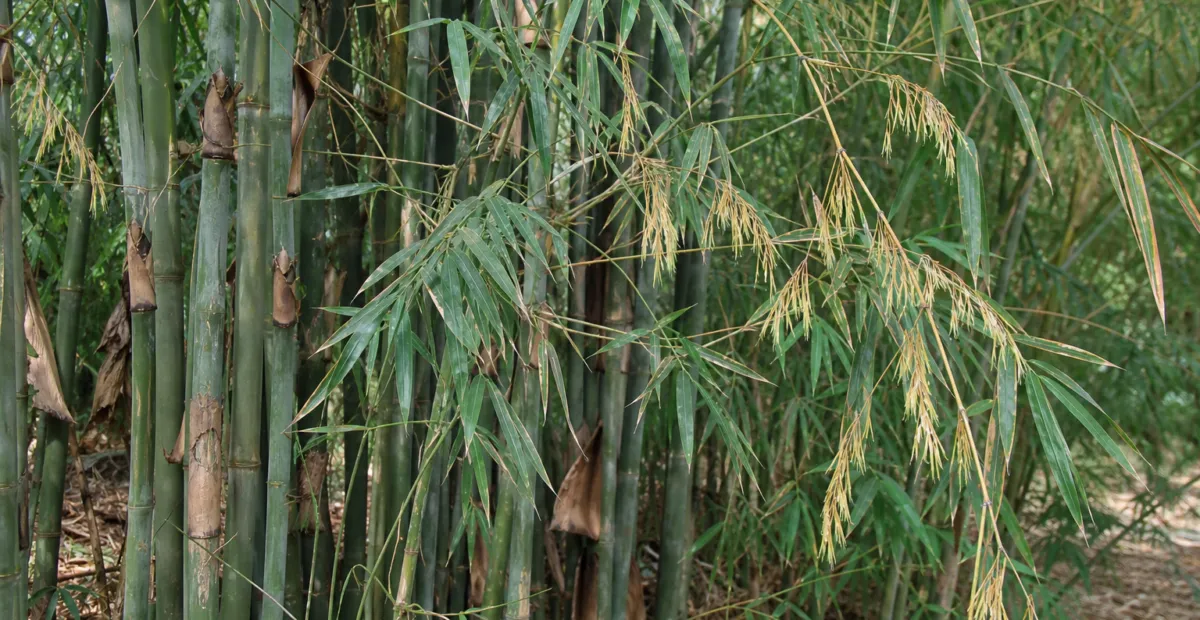
Sweet bamboo forms a substantial evergreen clump with tall, thick-walled green culms and conspicuously broad, dark-green leaves. The culm sheaths and branching pattern help distinguish it from smaller ornamental bamboos. Young shoots emerge from the clump base and expand quickly; mature plants have a bold, architectural silhouette suited to tropical or subtropical landscapes.
Flowering
Like other bamboos, sweet bamboo may flower irregularly and can show mass or gregarious flowering behavior rather than producing a dependable annual bloom. The flowers are small and inconspicuous, borne in grass-like spikelet structures. Reliable month-by-month flowering data for United States conditions are unavailable.
Pollination and visitors
The inconspicuous flowers are associated with wind pollination rather than showy, animal-attracting blooms. No characteristic bee, butterfly, bird, or other animal pollinator relationship was sufficiently documented for this exact species.
Dendrocalamus latiflorus photos
Click any photo for a larger view. Source, author and license are shown separately.
Diseases and pests
Diseases
Prevent problems with good drainage, clean planting material, adequate spacing, and removal of dead culms. Watch for leaf spots, culm rots, and root decline, especially where foliage stays wet or soil remains saturated. Remove affected tissue, improve air circulation, and avoid overhead irrigation when disease is active.
Pests
Inspect new shoots, culm sheaths, and leaf undersides for scale insects, mealybugs, mites, aphids, and bamboo borers. Use strong water sprays for light infestations, prune and discard heavily affected material, and conserve beneficial insects. Treat serious infestations only with a product labeled for bamboo and the specific pest.
Toxicity and pollen
No reliable species-specific toxicology record was located for ornamental exposure to the living plant. Edible shoots are documented, but raw bamboo shoots may contain cyanogenic compounds and should not be eaten unless correctly identified and properly processed by boiling or another established preparation method. Keep unprocessed shoots away from children and pets.
- Pollination / pollen
- Light, wind-dispersed grass pollen when flowering occurs
Sweet bamboo produces pollen only when it flowers, and flowering is irregular rather than reliably seasonal. The pollen is grass pollen and may become airborne because pollination is by wind, but species-specific United States allergy data were not found. People with significant grass-pollen sensitivity should avoid handling flowering material during dusty conditions.
Native habitat
In its native range, sweet bamboo occurs in warm, humid tropical and subtropical regions, often at lower elevations and in fertile, moisture-available soils. It performs best in deep alluvial or sandy soils that drain well but do not dry rapidly. Cold, prolonged freezes and poor drainage are major ecological limitations.
Interesting fact
It is a sympodial bamboo, so new culms arise in a clump rather than from long running rhizomes. Young shoots are an important edible crop in parts of Asia. Cultivated forms and regional selections can differ markedly in culm size, color, and shape. The species is also known under the historical synonym Sinocalamus latiflorus.
Frequently asked questions (FAQ)
The most relevant questions about this plant, with short and direct answers.
🌱Quick care
What is sweet bamboo (Dendrocalamus latiflorus)?⌄
Sweet bamboo is a large, clump-forming tropical bamboo in the grass family, Poaceae. It is valued for edible shoots, ornamental foliage, and useful culms, but it needs warmth, space, and reliable moisture.
How large does sweet bamboo get?⌄
Sweet bamboo becomes a large ornamental bamboo with tall, substantial culms when grown in a warm, moist climate. Its ultimate size varies greatly with temperature, soil depth, water, age, and available growing space.
🌤️Environment and placement
How much sun does sweet bamboo need?⌄
Grow sweet bamboo in full sun to partial shade. In very hot, dry locations, afternoon shade can reduce leaf scorch and moisture stress.
Can sweet bamboo grow in the United States?⌄
Sweet bamboo can grow outdoors year-round only in warm parts of the United States with limited or no freezing weather. In colder areas, grow it in a large container and protect it from frost and freezing temperatures.
Is sweet bamboo cold hardy?⌄
Sweet bamboo is frost-tender and should be protected from freezing temperatures. Move container plants indoors or into a protected greenhouse before freezes, and use substantial mulch and frost protection for outdoor plants in marginal climates.
Is Dendrocalamus latiflorus clumping or running bamboo?⌄
Dendrocalamus latiflorus is generally a clump-forming bamboo with short, compact rhizomes rather than a typical running bamboo. Its large mature clump still requires adequate space and should be monitored near structures and property lines.
Can sweet bamboo survive indoors?⌄
Sweet bamboo can be overwintered indoors in a bright, spacious location, but it is not an easy permanent houseplant because it becomes very large and needs high light and moisture. Reduce watering only slightly during cooler, lower-light conditions and avoid placing it near heating vents.
💧Care and problems
How often should I water sweet bamboo?⌄
Water sweet bamboo deeply and consistently so the soil remains evenly moist but not waterlogged. Newly planted clumps need especially regular irrigation until their root systems are established.
How should I fertilize sweet bamboo?⌄
Feed sweet bamboo in the growing season with compost or a balanced fertilizer according to the product label. Avoid excessive fertilizer in dry soil, because high salt levels can injure roots and worsen moisture stress.
Why are the leaves of my sweet bamboo turning brown?⌄
Brown leaves commonly result from drought, low humidity, scorching sun, cold injury, or root stress from poor drainage. Check soil moisture, improve drainage, and protect the plant from freezing and harsh afternoon exposure.
How do I control the size of a sweet bamboo clump?⌄
Control the clump by removing unwanted new shoots and cutting older or overcrowded culms at ground level. Regular thinning is more effective than repeatedly cutting the tops of culms.
Why is my sweet bamboo not producing shoots?⌄
Poor shoot production is commonly linked to insufficient warmth, drought, inadequate fertility, young age, root restriction, or excessive shade. Keep the soil evenly moist, mulch the root zone, and avoid removing too many healthy culms.
🪴Planting and repotting
What type of soil is best for Dendrocalamus latiflorus?⌄
Use fertile, deep, well-drained loam enriched with compost or other organic matter. Avoid compacted soil and sites where water remains around the rhizomes after rain.
Can I grow sweet bamboo in a container?⌄
Yes, sweet bamboo can be grown in a very large, sturdy container with drainage holes. Container plants need frequent watering, periodic root management, and winter protection because their roots are more exposed to cold.
How far from a house should I plant sweet bamboo?⌄
Plant sweet bamboo well away from foundations, utility lines, narrow paths, and property boundaries because mature culms and the expanding clump need substantial room. The exact spacing should reflect the expected local size and whether the clump will be regularly pruned.
When is the best time to plant sweet bamboo?⌄
Plant sweet bamboo during the warmest part of the growing season after the danger of freezing weather has passed. Warm soil and consistent moisture help it establish before cooler weather returns.
✂️Propagation and pruning
How do I prune sweet bamboo?⌄
Remove dead, damaged, weak, or overcrowded culms at ground level with clean, sharp tools. For edible-shoot production, selective culm cutting can keep the clump open and reduce wind damage, while topping should be used cautiously because it changes the plant’s natural form.
How is sweet bamboo propagated?⌄
Sweet bamboo is propagated by seed, rhizome division, and culm or branch cuttings. Vegetative propagation is usually preferred because viable seed is uncommon and loses viability quickly.
Can sweet bamboo be grown from cuttings?⌄
Yes, mature two-noded culm cuttings can root under warm, humid conditions, although success depends on the age and health of the culm and careful moisture management. Rhizome division is often more practical for home gardeners when a healthy parent clump is available.
How do I divide sweet bamboo?⌄
Divide sweet bamboo by separating a vigorous portion of the clump with attached rhizomes, roots, and viable culms. Replant divisions immediately in fertile, moist soil and protect them from drying out while they establish.
Can I grow sweet bamboo from seed?⌄
Yes, but fresh seed is important because sweet bamboo seed rapidly loses viability during storage. Sow fresh seed in a warm, moist medium and keep young seedlings shaded from intense heat until established.
⚠️Toxicity and safety
Is sweet bamboo invasive?⌄
Its clumping growth habit is usually easier to contain than that of running bamboos, but large tropical bamboos can still become difficult to manage if planted without space or regular maintenance. Check state and local invasive-plant guidance before planting outdoors.
Does sweet bamboo produce edible shoots?⌄
Yes, sweet bamboo is cultivated for edible shoots that are considered relatively mild and sweet. Harvest shoots while young and prepare them promptly using a reliable bamboo-shoot cooking method.
Are sweet bamboo shoots safe to eat raw?⌄
No, do not eat sweet bamboo shoots raw. Fresh bamboo shoots can contain cyanogenic compounds, so peel and thoroughly boil or otherwise properly process them before eating; do not rely on uncertain identification or preparation.
When should I harvest sweet bamboo shoots?⌄
Harvest sweet bamboo shoots when they are young, tender, and still close to the ground, commonly during the plant’s local shoot-producing season. Cut them before they elongate and become fibrous, then process them promptly.
Are sweet bamboo leaves or culms toxic to pets?⌄
Human and pet toxicity for Dendrocalamus latiflorus is not adequately established. Prevent pets and children from chewing the plant, and contact a veterinarian or poison-control service if plant material is ingested.
🌸Flowering and special interest
Does sweet bamboo flower?⌄
Yes, sweet bamboo can flower, but flowering is uncommon and difficult to predict in garden settings. Bamboo flowering may occur after long vegetative intervals and can be followed by reduced vigor or death of the flowering clump.
What should I do if my sweet bamboo flowers?⌄
If sweet bamboo flowers, remove dead or declining culms and maintain steady moisture while observing whether the clump produces viable seed or new shoots. Because flowering behavior is unpredictable, preserve healthy offsets or seedlings if you want to maintain the plant.