
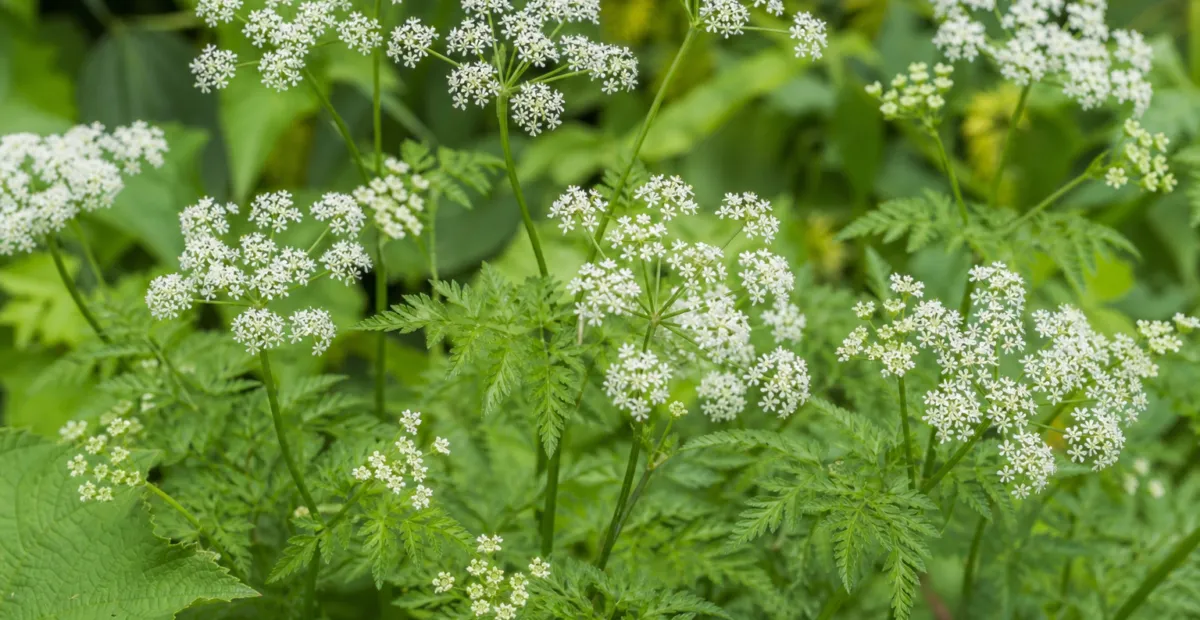
 AI-generated illustration
Parsnip Chervil (Chaerophyllum bulbosum) short overview
Parsnip Chervil is a biennial member of the carrot family, grown mainly for its swollen edible taproot rather than for ornamental display. It forms a leafy rosette in its first season, storing reserves underground, then sends up a taller flowering stem in the second year. Native across much of Europe and into Central Asia, it prefers cool conditions, fertile soil, steady moisture, and a long growing season. It is uncommon in United States gardens and should be identified carefully before eating.
Taxonomic classification
Parsnip Chervil (Chaerophyllum bulbosum) care guide
Light and placement
Grow in full sun for the strongest root development, especially in cooler regions, or use light afternoon shade where summers are hot. An east-facing or southeast-facing bed can provide morning sun with some protection from intense afternoon heat. Sparse, pale growth may indicate insufficient light; scorched foliage and rapid wilting suggest excessive heat or drought rather than simple sun exposure.
Watering and humidity
Keep the root zone evenly moist but never waterlogged. Water deeply when the soil surface begins to dry, and water at the soil line to reduce disease spread through dense foliage. Maintain more consistent moisture during root enlargement and during hot weather; reduce watering after foliage dies back, while avoiding prolonged drought in the first growing season.
Soil and growing medium
Use a deep, stone-free, fertile loam or sandy loam so the swollen taproot can enlarge without forking. Incorporate mature compost before sowing, but avoid fresh manure and excessive nitrogen. Drainage is important because saturated soil can rot the root, while very compact soil restricts development. A near-neutral pH is generally appropriate.
Feeding
Prepare the bed with mature compost before planting. If plants are pale or slow-growing, apply a balanced vegetable fertilizer at label rate while the first-year rosette is actively developing. Avoid heavy nitrogen feeding, which can favor leaves over the storage root. Do not fertilize dormant plants or plants already entering their second-year flowering stage.
Growth and habit
This is a monocarpic biennial: it stores carbohydrates in the enlarged root during year one, flowers in year two, sets seed, and then dies. First-year plants are best managed as a root crop; second-year plants need room for the flowering stalk and should be allowed to mature if seed is wanted.
Planting and repotting
Use fresh seed because germination can decline in storage. Sow in a prepared, finely textured bed in late summer or fall, or provide an appropriate cold period before early-spring sowing. Cover lightly, keep the seedbed evenly moist, and thin young plants promptly so roots develop without competition. Avoid transplanting when possible because the taproot can be disturbed.
Container culture is possible only in a deep container that accommodates the taproot. Transplanting is best avoided after seedlings establish; if necessary, move young plants with minimal root disturbance and use loose, well-drained soil.
Propagation and pruning
Propagation
Propagate by seed, preferably using fresh seed. Sow in late summer or fall where natural winter chilling is available, or sow in early spring after an appropriate cold period. Thin seedlings rather than transplanting whenever possible to avoid taproot deformation.
Pruning
No routine pruning is needed. Remove damaged leaves only when necessary. If growing for roots, harvest before the second-year flowering stem develops; if growing for seed, leave the flowering plant intact until fruits mature.
Overwintering
Plants sown in late summer or fall can overwinter outdoors in cool temperate regions. Mulch lightly in exposed sites, but do not cover the crown with heavy, wet material. Good drainage is more important than warmth. In severe climates, protect the root zone with loose mulch after the ground cools.
Uses
The principal documented use is as a specialty root vegetable. The swollen root is traditionally cooked after storage, when its flavor is reported to improve. It is not a common U.S. commercial crop, and all edible use requires accurate identification because several Apiaceae species are difficult to distinguish and some relatives are toxic.
Appearance
The plant forms a low-to-moderate basal rosette of finely divided, fernlike leaves. The second-year stem becomes erect, branched, and leafy, bearing flat-topped clusters of small white flowers. The defining underground feature is a swollen, dark-skinned taproot with pale interior flesh, although root shape varies with soil and cultivation.
Flowering
Flowering occurs after overwintering, normally in the second growing season. Numerous tiny flowers are arranged in compound umbels on a tall, branched stem. After flowering, the plant develops dry fruits and completes its biennial life cycle.
Pollination and visitors
The open compound umbels provide accessible nectar and pollen to a range of small flower-visiting insects, especially flies such as hoverflies, beetles, wasps, and other generalist insects. A species-specific primary pollinator was not reliably documented in the sources reviewed.
Chaerophyllum bulbosum photos
Click any photo for a larger view. Source, author and license are shown separately.
Diseases and pests
Diseases
Watch for crown or root rots in saturated soil and foliar fungal problems during prolonged wet weather. Use clean seed, rotate Apiaceae crops, provide airflow, avoid overhead watering, and remove badly affected plants. Improve drainage rather than relying on repeated chemical treatments.
Pests
Possible problems include aphids, carrot-family caterpillars, and root-feeding insects. Inspect new growth and leaf undersides, use physical removal or strong water sprays for light infestations, and maintain crop rotation. Avoid broad-spectrum insecticides during flowering because open umbels attract beneficial insects.
Toxicity and pollen
Reliable species-specific toxicology information was not located in the sources reviewed. The root has a documented culinary history, but safe use depends on correct identification and proper preparation. Do not eat wild-harvested material unless the plant has been confirmed by an experienced botanist, because poisonous Apiaceae relatives can resemble edible species.
- Typical season
- Typically June–July in temperate U.S. conditions
- Pollination / pollen
- Insect-released pollen from small open flowers
This is an insect-pollinated flowering plant, so its pollen is not expected to disperse like strongly wind-pollinated grasses or trees. However, species-specific airborne-pollen and clinical allergy data were not located. Sensitive people may still react through direct contact with flowers or plant material.
Native habitat
The species occurs in temperate habitats including moist grassland, woodland margins, riverbanks, field edges, and disturbed fertile ground. It generally favors deep soils with dependable moisture rather than dry, nutrient-poor sites. Its broad native range extends from Europe through Türkiye and into Central Asia.
Interesting fact
The swollen root is a storage organ formed during the first year. The plant is monocarpic and dies after seed production. It belongs to the same botanical family as carrots, parsnips, and celery. Fresh seed is important because stored seed may germinate poorly.
Frequently asked questions (FAQ)
The most relevant questions about this plant, with short and direct answers.
🌱Quick care
What is Parsnip Chervil (Chaerophyllum bulbosum)?⌄
Parsnip Chervil is a cold-hardy biennial root vegetable in the Apiaceae family, grown mainly for its small, parsnip-like storage root. It forms the root in its first year and flowers and sets seed in its second year.
Is Parsnip Chervil edible?⌄
The storage root of cultivated Parsnip Chervil is traditionally eaten cooked, and the young foliage may also be edible. Because Apiaceae plants can resemble toxic species, eat it only when the plant has been positively identified and grown from a reliable source.
What does Parsnip Chervil taste like?⌄
Parsnip Chervil roots are commonly described as tasting like a combination of parsnip, carrot, celery, and chestnut. Their flavor is reported to improve substantially after cold storage.
Is Parsnip Chervil annual or perennial?⌄
Parsnip Chervil is normally biennial, not perennial. It produces a storage root during the first growing season, then flowers and dies after setting seed in the second season.
🌤️Environment and placement
How much sun does Parsnip Chervil need?⌄
Grow Parsnip Chervil in full sun to partial shade. Full sun generally supports stronger growth and better root development, while some afternoon shade can help maintain even moisture in hot climates.
What soil is best for Parsnip Chervil?⌄
Use fertile, deep, loose soil that drains well but stays evenly moist. Remove stones and compacted layers because the plant develops a taproot and deformed roots are more likely in shallow or heavy soil.
Can Parsnip Chervil grow in containers?⌄
Parsnip Chervil can grow in a container at least 1 gallon in size, but a deeper, wider container is preferable for root development. Several containers may be needed to produce a useful kitchen harvest.
What USDA zones can grow Parsnip Chervil?⌄
Parsnip Chervil is cold-hardy and can be grown as a biennial in many parts of the United States. Success depends more on providing a sufficiently cool germination period and reliable soil moisture than on a single hardiness-zone cutoff.
💧Care and problems
How often should I water Parsnip Chervil?⌄
Water Parsnip Chervil whenever the soil surface begins to dry, keeping moisture moderate and even throughout root development. Avoid both prolonged drought and waterlogged soil, which can reduce root quality or encourage decay.
Why is my Parsnip Chervil seed not germinating?⌄
The most common reason is insufficient cold, moist stratification before sowing. Fresh seed exposed to several weeks of consistently cold, damp conditions usually performs better than old, dry-stored seed.
How long does Parsnip Chervil seed remain viable?⌄
Parsnip Chervil seed is short-lived and may lose viability quickly, especially when stored warm or dry. Use fresh seed each season when possible, or store it cool and slightly moist if delayed sowing is unavoidable.
What pests and diseases affect Parsnip Chervil?⌄
Parsnip Chervil can experience problems similar to carrots and other Apiaceae crops, including carrot fly, root aphids, storage rot, aphids, and fungal or viral diseases. Crop rotation, good drainage, and removing damaged roots can reduce problems.
Why are my Parsnip Chervil roots small?⌄
Small roots may result from poor soil preparation, crowding, drought, early flowering, or the plant’s naturally modest root size. Deep loose soil, steady moisture, adequate spacing, and selecting strong first-year plants can improve results.
🪴Planting and repotting
When should I plant Parsnip Chervil in the United States?⌄
Sow Parsnip Chervil directly in late fall or during a naturally cold period so the seed receives the chilling it needs before spring germination. In regions without suitable winter conditions, provide cold, moist stratification before spring sowing.
Should Parsnip Chervil be direct-sown or transplanted?⌄
Direct sowing is preferred because Parsnip Chervil develops a taproot and does not transplant reliably once that root begins to form. If started in a container, move seedlings while they are still very young and disturb the roots as little as possible.
How deep should I sow Parsnip Chervil seeds?⌄
Sow Parsnip Chervil seeds shallowly, about ¼ inch deep or less, in finely prepared soil. Keep the seedbed evenly moist and mark the row because emergence may be slow and uneven.
How far apart should Parsnip Chervil plants be?⌄
Thin Parsnip Chervil seedlings to roughly 2 to 3 inches apart within rows, with about 8 to 10 inches between rows when space allows. Wider spacing can make weeding easier and may support better root development.
When can I harvest Parsnip Chervil roots?⌄
Harvest Parsnip Chervil roots after the first growing season, when the foliage begins to yellow and the roots have reached usable size. Lift them carefully with a fork because the roots can break in firm soil.
How should Parsnip Chervil roots be stored after harvest?⌄
Store the harvested roots in cool, humid conditions, such as in slightly damp sand or another suitable root-storage medium. Allow about one month of cold storage before eating because the flavor is reported to improve during this period.
✂️Propagation and pruning
How do you propagate Parsnip Chervil?⌄
Propagate Parsnip Chervil primarily by seed. Vegetative propagation is not a practical method, so allow selected second-year plants to flower, mature seed, and release or collect it for future sowing.
Can Parsnip Chervil self-seed in the garden?⌄
Yes, Parsnip Chervil can self-seed if second-year plants are left to mature their flower heads. Allowing seed to fall may simplify future planting, but remove unwanted seedlings before they become established.
How do I save Parsnip Chervil seeds?⌄
Save seed from healthy second-year plants with desirable first-year roots, allowing the umbels to dry before collection. Because the species is an outbreeder, saving seed from many plants is preferable to relying on only one or two.
Should I prune Parsnip Chervil?⌄
Routine pruning is not necessary for Parsnip Chervil. Remove damaged foliage and cut off flower heads only when you want to prevent seed production; otherwise, leave selected second-year plants to flower for seed saving.
⚠️Toxicity and safety
Is Parsnip Chervil toxic to people?⌄
Human toxicity for Chaerophyllum bulbosum is not firmly established in the supplied evidence. Do not consume wild or uncertainly identified plants, and use extra caution because toxic Apiaceae species can resemble edible root vegetables.
Is Parsnip Chervil toxic to dogs or cats?⌄
Pet toxicity for Parsnip Chervil has not been firmly established. Prevent pets from eating unidentified plant material, and contact a veterinarian or animal poison service if a pet consumes the plant and develops symptoms.
Can Parsnip Chervil be confused with poison hemlock?⌄
Yes, Parsnip Chervil can be confused with other Apiaceae plants, including dangerous species such as poison hemlock. Do not forage it based on foliage or flower shape alone; confirm the full botanical identity before handling or eating it.
🌸Flowering and special interest
When does Parsnip Chervil flower?⌄
Parsnip Chervil generally flowers during its second year after overwintering. It produces tall stems topped with flat, spreading clusters of small white flowers.
What pollinates Parsnip Chervil flowers?⌄
Flies and beetles appear to be important pollinators of Parsnip Chervil. The flowers are structured to favor cross-pollination, so multiple flowering plants are useful when producing seed.
Can Parsnip Chervil flower in its first year?⌄
Occasionally, Parsnip Chervil may flower prematurely during its first year. Early-flowering plants often produce poorer-quality roots, so they are generally not the best plants to keep for eating or seed selection.
Similar plants
 Azure Monkshood (Aconitum carmichaelii) care guideAconitum carmichaelii
 Monkshood (Aconitum ‘Stainless Steel’)Aconitum 'Stainless Steel'
 Monkshood (Aconitum ‘Bressingham Spire’)Aconitum 'Bressingham Spire'
 Golden full moon maple (Acer shirasawanum ‘Aureum’)Acer shirasawanum 'Aureum'
 Globosum (Acer platanoides ‘Globosum’)Acer platanoides 'Globosum'
 Striped maple (Acer pensylvanicum) care guideAcer pensylvanicum