
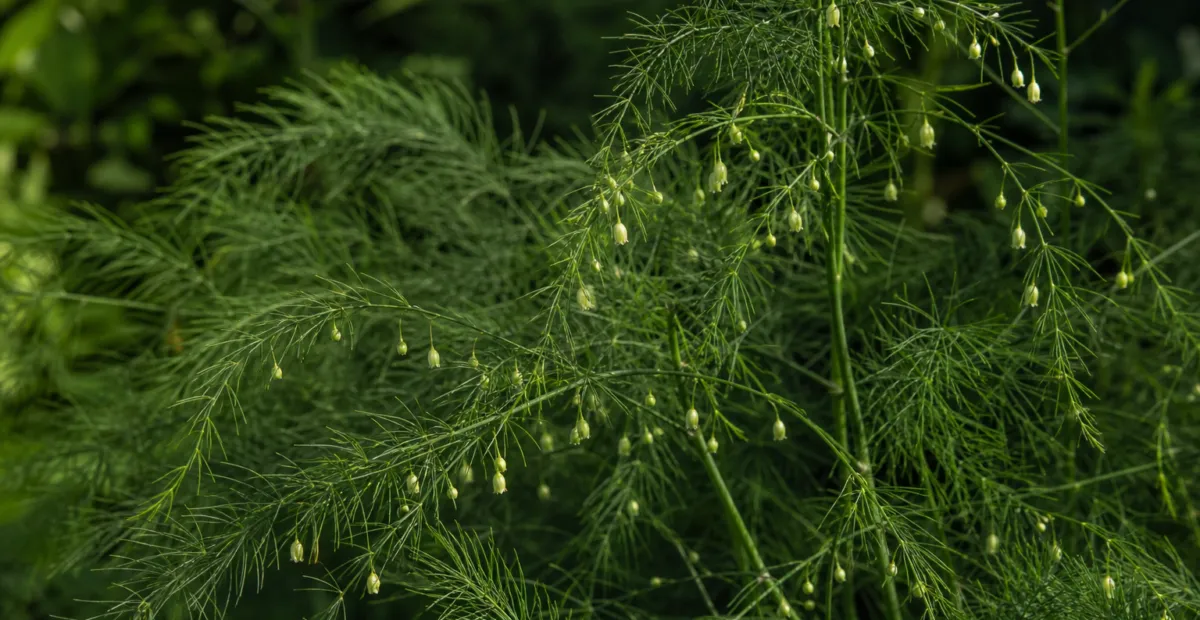
 AI-generated illustration
Asparagus (Asparagus officinalis) short overview
Asparagus officinalis is the familiar garden asparagus, a long-lived perennial vegetable cultivated for tender spring spears. It forms a permanent crown and extensive roots, then develops tall, finely textured summer foliage that replenishes the plant for future harvests. Full sun, fertile well-drained soil, consistent moisture, and careful weed control support reliable production. Female plants may produce red berries after flowering.
Taxonomic classification
Asparagus (Asparagus officinalis) care guide
Light and placement
Give asparagus at least 6 hours of direct sun, ideally in an open bed with southern or southeastern exposure. Full sun supports strong spear production and the dense summer fern growth needed to recharge the crown. Excessive shade produces thin, weak growth and reduced yields; intense heat is tolerated when roots remain evenly moist. Avoid low, poorly drained locations.
Watering and humidity
Water deeply enough to moisten the soil to roughly 6–8 inches, especially during establishment, spear production, and dry summer weather. Keep moisture reasonably even without saturating the crown. Reduce irrigation after foliage dies back and the plant enters dormancy, but do not allow newly planted crowns to dry out. Average outdoor humidity is adequate.
Soil and growing medium
Use deep, fertile, well-drained soil with abundant organic matter. Sandy loam is especially suitable because crowns and roots dislike prolonged saturation. A slightly acidic to neutral soil is preferred; a practical target is about pH 6.0–6.7, although asparagus tolerates mildly alkaline conditions. Improve heavy clay with organic matter and drainage rather than planting in a wet site.
Feeding
Base fertilization on a soil test. Incorporate compost before planting and provide moderate fertility rather than heavy nitrogen, which can encourage weak, overly lush growth. In established beds, feed in early spring before spears emerge and again after the harvest period if soil tests indicate a need. Do not fertilize drought-stressed plants, and avoid applying fresh manure directly over crowns.
Growth and habit
This perennial develops from a crown with storage roots and returns from dormancy each spring. Spears are harvested briefly, then allowed to mature into tall, highly branched fernlike stems that restore crown reserves. Keep the bed weed-free and avoid early overharvesting, especially during establishment, because the foliage is essential for long-term vigor.
Planting and repotting
Plant dormant crowns in early spring when the soil can be worked. Set crowns in a trench with roots spread over a low ridge, initially covering them with about 2 inches of soil and gradually filling the trench as shoots develop. Finish with crowns roughly 6–8 inches below the final soil surface. Space crowns about 12–18 inches apart, with rows 4–5 feet apart.
Usually grown in a permanent outdoor bed rather than a pot. Containers must be large, deep, and well drained, but they generally limit root development and long-term yield. If transplanting crowns, move them while dormant in early spring and disturb the roots as little as possible.
Propagation and pruning
Propagation
Propagate by seed or by dividing dormant crowns. Seed-grown plants require more time before dependable harvest and may produce both sexes. Crown division is faster for establishing a named planting, but divisions should be taken from healthy dormant material and replanted promptly in early spring.
Pruning
Do not cut fern growth during the active season. Allow stems to remain until they yellow or brown after frost, when the plant has moved reserves back into the crown. Cut dead fern near ground level and remove it from the bed to reduce overwintering disease and pest habitat.
Overwintering
After frost turns the fern brown, cut it back near ground level and remove the debris. A light mulch of clean straw, shredded leaves, or compost can moderate freeze-thaw cycles, especially for new plantings or exposed sites. Established plants are very cold hardy when planted in well-drained soil; avoid winter-wet beds.
Uses
Primarily grown as an edible perennial vegetable for fresh eating, freezing, and preserving. The feathery summer foliage can also be used in floral arrangements. A permanent asparagus bed provides seasonal structure and flowers for insect visitors, but female berries should be kept away from children and pets.
Appearance
Young shoots are thick, erect, and usually green, though purple-stemmed forms exist. Mature stems become slender and much branched, carrying fine, needlelike cladodes that create an airy fernlike texture. Triangular bracts occur along the stems. Female plants may carry shiny red berries in late summer, making them easy to distinguish once fruit develops.
Flowering
Small yellow-green flowers appear mainly in June and July in U.S. gardens. Plants are commonly dioecious, with male and female flowers on separate plants, although flower sexuality can vary. Female plants may develop conspicuous red berries later in summer. The flowers are visually modest compared with the tall, feathery summer growth.
Pollination and visitors
The small flowers are insect-pollinated, with bees documented as characteristic visitors in broader pollination references. Flowering is not the main horticultural purpose of the crop, and the species should not be treated as a high-impact pollinator plant. Separate male and female plants may be needed for seed production.
Asparagus officinalis photos
Click any photo for a larger view. Source, author and license are shown separately.
Diseases and pests
Diseases
The principal disease concern is asparagus rust, which causes orange-brown to dark pustules and premature browning of fern growth. Choose a sunny, airy site, avoid overhead irrigation, remove and dispose of infected fern after it has fully died back, and grow resistant cultivars where available. Good drainage and weed control reduce general stress and disease pressure.
Pests
Common pests include asparagus beetles and, in some regions, Japanese beetles. Scout emerging spears and fern growth regularly for chewing damage, eggs, larvae, and defoliation. Remove heavily infested beetles by hand where practical, keep the bed weed-free, and clear dead fern after frost. Use pesticides only when damage is substantial and follow the product label and local recommendations.
Related diseases and pests
Only Plant Doctor profiles whose host data indicate this plant may be affected are shown here.
Toxicity and pollen
The young shoots are a widely eaten vegetable, but the mature plant can produce red berries that should not be eaten. Available horticultural references describe low-severity poisonous characteristics, while species-specific evidence for serious human poisoning is limited. Prevent children and pets from chewing berries, and seek medical or veterinary advice after ingestion or if symptoms occur.
- Typical season
- No reliable U.S. exposure season established
- Pollination / pollen
- Insect-associated floral pollen
Asparagus releases pollen from small insect-pollinated flowers rather than large wind-borne pollen clouds. However, reliable U.S.-specific clinical allergy information for Asparagus officinalis is limited, so its airborne allergy risk is best recorded as unknown rather than assumed negligible. Sensitive people should avoid handling flowering plants if symptoms appear.
Native habitat
The species is native to parts of Europe, North Africa, and Asia and is associated with open, sunny habitats such as coastal areas, sandy ground, roadsides, and disturbed sites. It performs best in loose, fertile soils that drain freely but retain enough moisture for active spring growth. It has naturalized in parts of the United States.
Interesting fact
Asparagus is usually dioecious, so male and female plants may occur separately. The edible spears are young shoots harvested before the foliage expands. After harvest, the fernlike stems photosynthesize and rebuild the crown for the following year. Female plants can produce red berries in late summer. Established beds can remain productive for many years.
Frequently asked questions (FAQ)
The most relevant questions about this plant, with short and direct answers.
🌱Quick care
Is asparagus a perennial vegetable?⌄
Yes, asparagus is a long-lived perennial vegetable that can remain productive for 15 years or more with proper care. Because it occupies the same bed for many seasons, choose and prepare the site carefully.
When can I harvest asparagus after planting?⌄
Do not harvest asparagus during the planting year. With strong crowns, begin a light harvest in the second year, while seed-grown plants generally need about three years before harvesting.
🌤️Environment and placement
How much sun does asparagus need?⌄
Asparagus needs full sun, ideally at least 8 hours of direct sunlight daily. Choose an open, well-drained location because shade and poor drainage reduce vigor and harvests.
What type of soil is best for asparagus?⌄
Asparagus grows best in deep, fertile, well-drained soil amended with compost. A soil test is useful because this long-lived crop benefits from proper fertility before planting.
Can asparagus grow in cold climates?⌄
Asparagus is very frost hardy and performs well in many cold-winter regions of the United States. It still needs a sunny, well-drained bed and sufficient summer foliage to build energy before winter.
Can asparagus be grown in partial shade?⌄
Asparagus can survive in partial shade but grows and yields best in full sun. Inadequate light may produce weaker fern growth and fewer or thinner spears over time.
💧Care and problems
How often should I water asparagus?⌄
Water asparagus regularly to maintain consistent soil moisture, especially during establishment and dry weather. Keep the soil moist but not saturated, since waterlogged conditions can promote root diseases.
How long can I harvest asparagus each season?⌄
A mature asparagus bed can generally be harvested for about 6 to 8 weeks each spring. Stop earlier on young plantings or whenever most new spears become thinner than a pencil.
How tall should asparagus spears be before harvesting?⌄
Harvest asparagus spears when they are about 6 to 9 inches tall and still firm, before the tips open widely. Snap or cut them close to the soil surface without damaging emerging spears.
How often should asparagus be harvested?⌄
During peak spring growth, check and harvest asparagus daily because spears can lengthen rapidly. Frequent harvesting helps maintain quality and prevents large spears from becoming tough and overgrown.
Why should I stop harvesting asparagus in early summer?⌄
Stopping harvest allows the remaining spears to develop into tall, fernlike foliage that photosynthesizes and replenishes the crown’s energy reserves. This foliage supports the following year’s harvest.
Should asparagus ferns be cut back?⌄
Cut asparagus ferns back after they have yellowed or died following a hard freeze. Remove the old foliage before the next growing season because it can harbor pests and diseases.
How should I fertilize asparagus?⌄
Apply compost or a soil-test-based fertilizer in early spring, and consider another fertility application after harvest if plants need support. Avoid excessive nitrogen, which can produce lush foliage without solving underlying problems.
Why are my asparagus spears thin?⌄
Thin asparagus spears can result from young crowns, drought, weed competition, overharvesting, poor fertility, or disease. Maintain moisture, control weeds, fertilize according to a soil test, and allow adequate fern growth after harvest.
Why is my asparagus turning yellow?⌄
Yellowing asparagus may be a normal late-season response as the fern dies back, but premature yellowing can indicate drought, root disease, pests, or nutrient stress. Check drainage, watering, roots, and foliage for additional symptoms.
What are the most common asparagus pests?⌄
Asparagus beetles and aphids are common pests that can damage spears or weaken fern growth. Remove plant debris, monitor plants regularly, and use only control products labeled for asparagus when treatment is necessary.
What diseases affect asparagus?⌄
Asparagus may be affected by fungal root rots, rust, and other diseases that reduce vigor and yield. Good drainage, weed control, careful harvest practices, and removal of diseased foliage help reduce disease pressure.
How do I keep weeds out of an asparagus bed?⌄
Remove weeds regularly by hand or shallow cultivation, especially while crowns are becoming established. Mulch can conserve moisture and suppress weeds, but keep it from burying emerging spears or crowns too deeply.
Why did my asparagus produce fewer spears this year?⌄
Reduced spear production commonly follows drought, overharvesting, weed competition, poor nutrition, pest damage, or crown disease. Review the previous season’s care and make sure plants were allowed to develop healthy ferns after harvest.
🪴Planting and repotting
When should I plant asparagus crowns?⌄
Plant dormant asparagus crowns in early spring, about 2 to 4 weeks before your area’s average last frost date. Local timing varies across the United States, so use your regional frost date as a guide.
How deep should asparagus crowns be planted?⌄
Plant asparagus crowns in a trench about 6 to 8 inches deep, then gradually fill the trench as shoots emerge. The crowns should finish just below the soil surface rather than being buried excessively deeply.
How far apart should asparagus crowns be planted?⌄
Space asparagus crowns about 18 to 24 inches apart within rows, with roughly 5 feet between rows. This allows the mature fern growth and expanding roots enough room.
Can I transplant established asparagus?⌄
Established asparagus is difficult to transplant successfully because its roots spread deeply and are easily damaged. It is usually better to establish a new bed from fresh crowns in a suitable permanent location.
Can asparagus grow in containers?⌄
Asparagus is generally not a good long-term container plant because it develops a large, deep root system and occupies the same site for many years. A permanent garden bed is usually more productive and practical.
✂️Propagation and pruning
Can asparagus be grown from seed?⌄
Yes, asparagus can be grown from seed, but seed-grown plants usually take an additional year to reach harvestable maturity. Most home gardeners use healthy one-year-old crowns for faster establishment.
⚠️Toxicity and safety
Are asparagus berries poisonous?⌄
Asparagus berries are considered low-severity poisonous and should not be eaten. Keep berries away from children and pets, and contact Poison Control or a medical professional if someone consumes an unknown or substantial amount.
Are asparagus spears safe to eat?⌄
The young asparagus spears are the edible part commonly grown as a vegetable. Do not eat the mature berries, and avoid consuming unidentified plants that merely resemble asparagus.
🌸Flowering and special interest
Do asparagus plants have male and female plants?⌄
Yes, asparagus is dioecious, meaning male and female flowers occur on separate plants. Male plants often produce more numerous spears, while female plants can produce berries and volunteer seedlings.
Why does my asparagus plant have red berries?⌄
Red berries form on female asparagus plants after flowering and contain seeds. They are ornamental but inedible, so remove them if children or pets might eat them or if you want to limit volunteer seedlings.
Similar plants
 Azure Monkshood (Aconitum carmichaelii) care guideAconitum carmichaelii
 Monkshood (Aconitum ‘Stainless Steel’)Aconitum 'Stainless Steel'
 Monkshood (Aconitum ‘Bressingham Spire’)Aconitum 'Bressingham Spire'
 Golden full moon maple (Acer shirasawanum ‘Aureum’)Acer shirasawanum 'Aureum'
 Globosum (Acer platanoides ‘Globosum’)Acer platanoides 'Globosum'
 Striped maple (Acer pensylvanicum) care guideAcer pensylvanicum