
 Source:
 Walking-stick bamboo (Fargesia robusta) short overview
Walking-stick bamboo is an evergreen, clump-forming bamboo from Sichuan, China, valued for its upright, dense habit, slender arching canes, and attractive green foliage. In U.S. gardens it performs best in fertile, consistently moist but well-drained soil with partial shade and shelter from drying winds. It is generally non-running, container-suitable, and hardy across much of USDA Zones 5–8, although exposed plants may need winter protection.
Taxonomic classification
Walking-stick bamboo (Fargesia robusta) care guide
Light and placement
Give walking-stick bamboo bright filtered light or partial shade, ideally with morning sun and afternoon protection. It can tolerate more sun where summers are cool and soil never dries, but hot reflected light and drying wind may scorch foliage. Too little light produces a looser, weaker screen; excessive exposure commonly causes curled, browned leaf margins and winter burn.
Watering and humidity
Water deeply when the upper 1–2 inches of soil begin to dry, keeping the root zone consistently moist rather than saturated. Newly planted clumps may need watering once or twice weekly during dry weather; established plants need less in cool seasons but should not experience prolonged drought. Apply mulch, while keeping it slightly away from the culms.
Soil and growing medium
Use fertile loam amended with compost, or improve heavy clay with organic matter and drainage. The root zone should hold moisture without remaining waterlogged. A slightly acidic to neutral reaction is suitable. Avoid chronically compacted soil and sites where winter water stands around the rhizomes.
Feeding
Top-dress with compost or apply a balanced slow-release fertilizer in early spring as new shoots begin. A second light feeding in late spring can support vigorous screening in poor soil. Do not fertilize drought-stressed, newly divided, or late-season plants heavily; excess late nitrogen can encourage soft growth before winter.
Growth and habit
This species forms a dense clump rather than long, widely running rhizomes, making it more manageable than many running bamboos. New shoots emerge in late spring through summer and mature into upright to arching culms. Give the clump room to broaden, and thin older or crowded culms at ground level when ventilation or a clearer silhouette is needed.
Planting and repotting
Plant after the soil has warmed in spring, or in early fall with enough time for root establishment before hard freezes. Dig a broad hole, set the root ball level with the surrounding soil, backfill without burying the crown, water thoroughly, and mulch 2–3 inches deep. Keep the root zone evenly moist during the first growing season.
Grow in a large, heavy container with drainage holes and a moisture-retentive but airy potting mix. Repot or divide when roots fill the container, preferably in spring. Refresh part of the mix and reduce the clump if necessary; do not let the container dry completely or remain waterlogged.
Propagation and pruning
Propagation
Divide established clumps in spring as new growth begins, using a sharp spade or saw and retaining viable rhizomes, roots, and shoots in each section. Young rhizome or culm cuttings may also be used, but establishment is less predictable than division. Keep divisions shaded and evenly moist until rooted.
Pruning
Prune in late spring through summer after new culms have hardened, or remove damaged culms whenever necessary. Cut unwanted, weak, or oldest culms at ground level rather than topping the whole clump. Light thinning preserves airflow and keeps a screen dense without creating a ragged outline.
Overwintering
In Zones 5–6 and exposed sites, mulch the root zone deeply after the ground cools and protect foliage from drying wind with a sheltered placement or temporary windbreak. Containers are more vulnerable than in-ground plants and may need insulation or an unheated, protected location. Avoid warm indoor rooms, which encourage weak growth.
Uses
Use it as an evergreen screen, informal hedge, foundation planting, border accent, woodland-garden plant, or large-container specimen. Its clumping habit is generally more manageable than running bamboo, but mature plants still need adequate space. It is ornamental rather than a documented culinary or medicinal crop.
Appearance
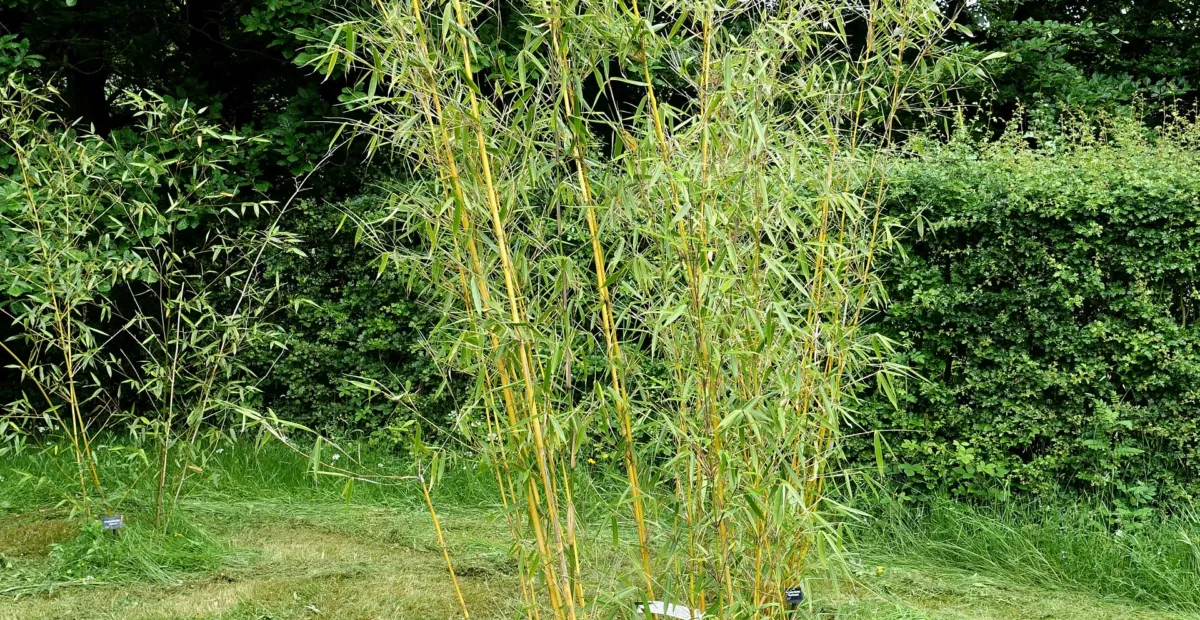
The plant has slender green to olive-green culms, narrow dark-green lanceolate leaves, and several small branches at each node. Young shoots and culm sheaths can be hairy and rusty red, while persistent fading sheaths may create a pale checkerboard effect on spring culms. Its dense, upright outline is a useful identification feature.
Flowering
The inflorescence consists of small green spikelets in condensed racemes, with several florets per spikelet. Flowers are botanically real but visually insignificant and are not a dependable seasonal display in cultivation. A normal flowering month range for U.S. gardens is not established from the available sources.
Pollination and visitors
Bamboo flowers are adapted primarily to wind pollination, and this species has no well-supported record here of attracting a characteristic animal pollinator group. Its dense foliage may provide general garden structure, but that is not evidence of flower visitation.
Fargesia robusta photos
Click any photo for a larger view. Source, author and license are shown separately.
Diseases and pests
Diseases
Good drainage, adequate spacing, and removal of damaged foliage reduce general disease pressure. Watch for leaf spots, root problems in saturated soil, and dieback after severe winter injury. Remove affected material, improve airflow and irrigation practices, and avoid routine fungicide use without a confirmed diagnosis.
Pests
Inspect culms and leaf undersides for scale, aphids, mites, and occasional chewing damage. Stress from drought, heat, or winter wind can worsen mite and scale problems. Rinse foliage when practical, improve growing conditions, and use targeted horticultural oil or another labeled treatment only when an infestation is confirmed.
Related diseases and pests
Only Plant Doctor profiles whose host data indicate this plant may be affected are shown here.

Toxicity and pollen
Authoritative sources reviewed did not establish a species-specific human or pet toxicity profile for Fargesia robusta. Avoid treating it as edible, and prevent children and pets from chewing plant material or contacting sharp leaf margins. Seek medical or veterinary advice after a significant ingestion or unusual reaction.
- Typical season
- Not established in the United States
- Pollination / pollen
- Light, wind-dispersed grass pollen when flowering occurs
Bamboo belongs to the grass family, and its pollen is wind-dispersed when flowering occurs. However, Fargesia robusta flowers infrequently and species-specific airborne-allergy data were not located. People with severe grass-pollen sensitivity should use ordinary exposure precautions during any observed flowering event.
Native habitat
The species is native to Sichuan in south-central China, where it occurs in a temperate mountain environment. It favors fertile, moist soils and cooler conditions than many tropical bamboos. In cultivation, shelter from hot afternoon sun, reflected heat, and desiccating wind improves foliage quality.
Interesting fact
Fargesia robusta is accepted as a distinct species in current major taxonomic databases. Its rhizome system is clumping rather than strongly running. New shoots are reported from June through August in botanical descriptions, while U.S. horticultural sources commonly describe the plant as a dense 10–15-foot evergreen bamboo.
Similar plants
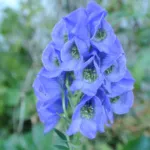 Azure Monkshood (Aconitum carmichaelii) care guideAconitum carmichaelii
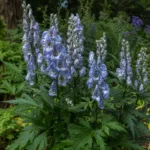 Monkshood (Aconitum ‘Stainless Steel’)Aconitum 'Stainless Steel'
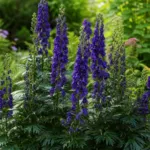 Monkshood (Aconitum ‘Bressingham Spire’)Aconitum 'Bressingham Spire'
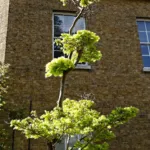 Golden full moon maple (Acer shirasawanum ‘Aureum’)Acer shirasawanum 'Aureum'
 Globosum (Acer platanoides ‘Globosum’)Acer platanoides 'Globosum'
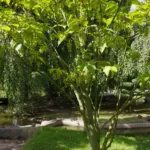 Striped maple (Acer pensylvanicum) care guideAcer pensylvanicum