Alphonse Karr Bamboo (Bambusa multiplex) short overview
Alphonse Karr Bamboo is a graceful, clumping bamboo valued for dense evergreen screening and arching stems. The species forms a tight, non-running clump rather than spreading aggressively by long rhizomes, making it useful for hedges, privacy screens, containers, and warm-climate landscapes. In the United States it performs best in well-drained, moisture-retentive soil with full sun to light shade and protection from severe winter cold.
Taxonomic classification
Alphonse Karr Bamboo (Bambusa multiplex) care guide
Light and placement
Give Bambusa multiplex full sun in humid or coastal climates, with afternoon shade in very hot, dry locations. A bright east- or south-facing position is suitable for containers; protect foliage from reflected heat and drying wind. Pale, sparse growth usually indicates insufficient light, while scorched leaf margins, curled leaves, and bleached foliage suggest excessive heat, drought, or intense reflected sun rather than simple light excess.
Watering and humidity
Water deeply when the upper inch of soil begins to dry, then allow excess water to drain. Keep newly planted clumps consistently moist during the first three to four months; established plants generally need about 1–1½ inches of water weekly on well-drained soil, with more during hot, dry weather. Reduce frequency in cool weather but do not allow containers or root zones to remain bone-dry. Humidity is helpful but good drainage is essential.
Soil and growing medium
Use fertile loam or a high-organic-matter soil that drains freely while retaining some moisture. In containers, combine quality potting mix with pine bark and coarse material rather than using dense garden soil alone. Slightly acidic to neutral conditions are suitable. Avoid permanently waterlogged ground, compacted clay, and sites where irrigation water stands around the rhizomes.
Feeding
Top-dress outdoor plants with compost or aged manure in spring, then apply a balanced slow-release fertilizer as new shoots develop. A second light feeding in early summer can support vigorous growth in long-season climates. Water fertilizer in thoroughly. Do not heavily fertilize drought-stressed, newly transplanted, or dormant plants, and avoid late-season high-nitrogen applications that can encourage tender growth before cold weather.
Growth and habit
This is a rapid-growing, dense clumper with many branches arising near the lower culm nodes. It gradually expands as a compact crown rather than sending long-distance running rhizomes, but an old clump can become broad and crowded. Thin selected older culms at ground level to preserve airflow, reveal the stems, and keep paths and windows clear. The species is usually easier to manage than running Phyllostachys bamboos.
Planting and repotting
Plant in spring before the main shooting period when possible, especially in regions with winter cold. Set the root ball level with the surrounding soil, firm the soil gently, mulch without covering the crown, and irrigate deeply. Give hedge plantings enough spacing for mature clump width rather than crowding young divisions. In marginal climates, choose a warm, wind-sheltered site against a south- or east-facing wall.
Move container plants in spring before active shooting. Shift to a pot only modestly larger than the root mass, or divide a crowded clump into sections. Use a heavy, stable container with large drainage holes and a porous, moisture-retentive mix. After repotting, keep the root zone evenly moist, provide bright filtered light for recovery, and delay strong fertilizer until new growth resumes.
Propagation and pruning
Propagation
Division is the most practical method: separate a vigorous portion of the clump with rhizome, roots, and several culms just before new shoots emerge, then replant immediately. Layering and stem or culm cuttings are also documented, but results are less uniform than division. Seed is possible but uncommon because bamboo flowering and viable seed production are irregular.
Pruning
Prune in late winter or spring before strong new shooting, or remove selected culms whenever access is needed. Cut unwanted, damaged, or aging culms cleanly at ground level rather than shearing the entire canopy. Thin the outer edge to control spread and remove low branches if a more open trunk display is desired. Disinfect tools between clumps when disease is suspected.
Overwintering
Outdoor plants near the cold limit benefit from a sheltered site, a thick organic mulch over the root zone, and protection from drying winter wind. Leaves may brown after freezes even when the rhizomes survive. Container plants are more cold-sensitive; move them to a bright, cool, frost-free location before hard freezes and water sparingly without allowing the root ball to dry completely.
Uses
Useful as an evergreen privacy screen, hedge, windbreak, specimen clump, patio container plant, or warm-climate architectural accent. The culms have traditional craft and paper-making uses, and young shoots are reported as edible, but food use requires reliable identification and appropriate preparation. Its clumping habit is preferable where a less invasive bamboo is wanted, although space and maintenance are still necessary.
Appearance
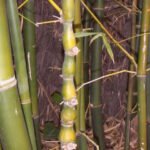
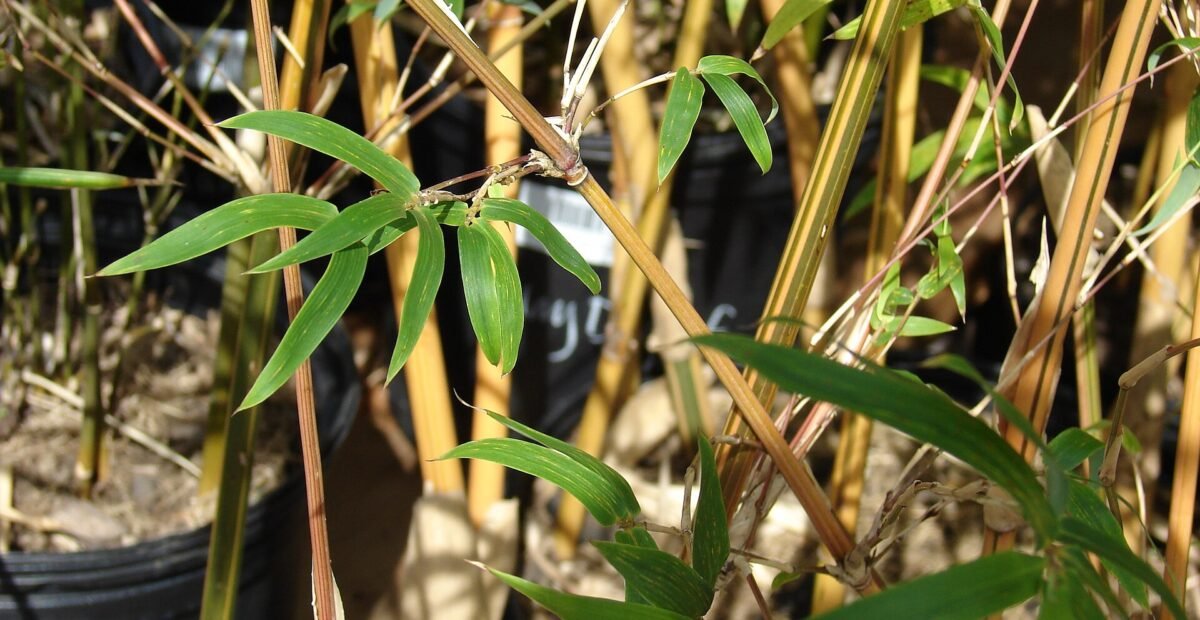
Bambusa multiplex has slender, jointed green culms and narrow, evergreen leaves carried in dense sprays. The many branches around each node create a full hedge-like texture. The cultivar commonly called ‘Alphonse Karr’ is recognized by bright yellow culms and branches marked with irregular narrow green stripes; ordinary green forms of the species lack that striping. Culms may arch slightly toward the tips as the clump matures.
Flowering
Bambusa multiplex is an angiosperm, but flowering is unusual and not a normal seasonal garden display. Documented observations include sporadic flowering, and flowering culms may weaken or die afterward. A reliable United States flowering month range is not established, so month codes are intentionally omitted.
Pollination and visitors
The species is not documented here as a dependable nectar or pollen resource for animal visitors. When bamboo flowering occurs, pollen is dispersed primarily by wind rather than by bees, butterflies, or other animal pollinators.
Bambusa multiplex photos
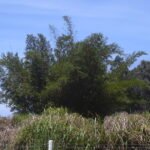
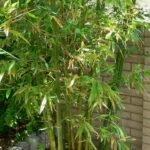
Click any photo for a larger view. Source, author and license are shown separately.
Diseases and pests
Diseases
Prevent problems with good drainage, adequate spacing, clean pruning tools, and irrigation directed at the soil rather than the foliage. Root rot is favored by saturated soil. Remove badly damaged culms and improve drainage. Leaf spots can be reduced by removing affected debris and improving air movement; avoid routine fungicide use unless a disease is positively identified.
Pests
Watch for scale insects, aphids, mealybugs, mites, and bamboo-specific sap-feeding insects, especially on stressed container plants. Inspect leaf undersides and culm nodes. Start with a strong water spray or hand removal, then use horticultural oil or insecticidal soap only as labeled and when temperatures are suitable. Avoid broad-spectrum insecticides that can harm beneficial insects.
Toxicity and pollen
No authoritative source reviewed identifies Bambusa multiplex as poisonous to people or pets. General bamboo references report edible young shoots, but raw or improperly prepared shoots should not be eaten. Handle sharp culm fragments carefully, prevent choking by children or pets, and seek poison-control or veterinary advice after an unusual ingestion or reaction.
- Pollination / pollen
- Light grass pollen released from small bamboo spikelets when flowering occurs
Bambusa multiplex is a grass and can produce airborne pollen when it flowers, but flowering is uncommon and a United States exposure season is not established. Do not assume zero allergy risk during a flowering event. People with strong grass-pollen sensitivity should avoid handling flowering material and consider local medical guidance if symptoms occur.
Native habitat
Bambusa multiplex is native from Nepal and parts of South and East Asia to Taiwan, where it occurs in warm, humid tropical or subtropical environments. It favors fertile soils with reliable moisture and drainage. In cultivation it tolerates a range of soils and some coastal exposure, but prolonged freezing, desiccating wind, and waterlogged roots reduce performance.
Interesting fact
The species is a clumping bamboo rather than a long-running Phyllostachys-type bamboo. Its dense branching at the lower culm nodes helps create a living screen. Kew accepts Bambusa multiplex as the species name, while several older horticultural references use Bambusa glaucescens for related cultivated forms. Flowering can be sporadic and may weaken flowering culms.
Frequently asked questions (FAQ)
The most relevant questions about this plant, with short and direct answers.
🌱Quick care
How do you care for Alphonse Karr Bamboo?⌄
Grow Alphonse Karr Bamboo in full sun to light shade, water it when the soil begins to dry, and use well-drained soil enriched with organic matter. Keep moisture reasonably even, especially during establishment and hot weather.
Is Alphonse Karr Bamboo clumping or running?⌄
Alphonse Karr Bamboo is a clumping bamboo, so it expands from a gradually widening base rather than sending long underground runners like many running bamboos. It can still become a substantial plant and should have adequate room.
How tall does Alphonse Karr Bamboo get?⌄
Alphonse Karr Bamboo commonly reaches about 15–20 feet in many U.S. landscapes, although mature size varies with climate, soil, irrigation, and cultivar selection. In especially favorable conditions, plants may grow taller.
Is Alphonse Karr Bamboo evergreen?⌄
Alphonse Karr Bamboo is generally evergreen in mild climates, but cold, wind, drought, or sudden temperature changes can cause leaf browning or seasonal leaf drop. Damaged foliage may recover as conditions improve.
What does Alphonse Karr Bamboo look like?⌄
Alphonse Karr Bamboo has upright golden-yellow culms marked with green stripes and dense, narrow evergreen foliage. New shoots or culms may show a pinkish blush before developing their mature coloration.
🌤️Environment and placement
What USDA hardiness zone is Alphonse Karr Bamboo suitable for?⌄
Alphonse Karr Bamboo is best suited to warm parts of the United States, generally USDA Zones 8–10 and selected protected locations in Zone 7. Protect it when temperatures approach or fall below about 12°F.
Can Alphonse Karr Bamboo grow in full sun?⌄
Yes, Alphonse Karr Bamboo grows well in full sun and usually develops stronger color and denser growth there. Light shade is also acceptable, particularly in very hot or dry climates.
Can Alphonse Karr Bamboo grow in shade?⌄
Alphonse Karr Bamboo tolerates light shade but is not a strong choice for deep shade. Too little light can produce thinner, less vigorous growth and reduce the intensity of the culm coloration.
Where should I plant Alphonse Karr Bamboo for privacy?⌄
Plant Alphonse Karr Bamboo in a sunny or lightly shaded location with enough horizontal and vertical space for a large clump. It works well as a screen, but avoid placing it directly against structures, narrow paths, or utility access areas.
How cold hardy is Alphonse Karr Bamboo?⌄
Alphonse Karr Bamboo can suffer foliage or culm damage in severe freezes, especially when temperatures fall below about 12°F. Mulch the root zone and protect young or container-grown plants during cold events.
Can Alphonse Karr Bamboo survive winter in colder states?⌄
It may survive in a protected microclimate where winters are mild, but sustained freezing conditions can cause severe damage or kill the plant. In colder states, grow it in a container that can be sheltered or overwintered indoors.
💧Care and problems
Does Alphonse Karr Bamboo tolerate drought?⌄
Alphonse Karr Bamboo has limited drought tolerance and performs best with moderate, even moisture. Established plants may withstand short dry periods, but prolonged drought can cause leaf curl, browning, and slower growth.
How often should I water Alphonse Karr Bamboo?⌄
Water Alphonse Karr Bamboo deeply when the upper portion of the soil begins to dry, adjusting frequency for rainfall, temperature, soil type, and container size. Newly planted bamboo usually needs more frequent watering than established plants.
Why are the leaves on my Alphonse Karr Bamboo turning brown?⌄
Brown leaves commonly result from drought, cold or drying winds, root stress, or excessive water in poorly drained soil. Check soil moisture and drainage first, then protect the plant from severe cold and remove only clearly dead material.
Why is my Alphonse Karr Bamboo losing leaves?⌄
Leaf loss can follow winter injury, drought, transplant shock, or natural replacement of older foliage. If the culms remain green and firm, the plant may recover when warmth, moisture, and root activity return.
How do you fertilize Alphonse Karr Bamboo?⌄
Feed Alphonse Karr Bamboo during active growth with a balanced fertilizer or a product labeled for ornamental grasses, following the package directions. Avoid excessive nitrogen or fertilizing drought-stressed, newly transplanted, or frozen plants.
🪴Planting and repotting
What soil does Alphonse Karr Bamboo need?⌄
Use well-drained loam enriched with organic matter for Alphonse Karr Bamboo. Avoid persistently waterlogged soil, because poor drainage can damage the roots even when the plant appears to need more water.
When is the best time to plant Alphonse Karr Bamboo?⌄
Plant Alphonse Karr Bamboo during the warm growing season, preferably in spring or early summer after severe cold has passed. This gives the roots time to establish before winter.
How far apart should Alphonse Karr Bamboo be planted for a screen?⌄
For a privacy screen, spacing often ranges from about 5 to 8 feet on center, depending on the desired density and the size of the plants. Closer spacing fills in faster but increases competition for water and maintenance needs.
Can Alphonse Karr Bamboo be grown in a container?⌄
Yes, Alphonse Karr Bamboo can be grown in a large, sturdy container with drainage holes, but it will need regular watering and periodic root management. Container plants are also more vulnerable to freezing than plants in the ground.
✂️Propagation and pruning
How do you prune Alphonse Karr Bamboo?⌄
Remove dead, damaged, weak, or overcrowded culms at ground level, preferably during the growing season. Thin selected culms to improve appearance and airflow, and shorten side branches only when needed for shape or clearance.
Can Alphonse Karr Bamboo be cut back hard?⌄
Alphonse Karr Bamboo can tolerate substantial pruning, but hard cutting reduces the current screen and does not make an individual culm regrow taller. For best results, remove unwanted culms selectively and preserve healthy new growth.
How do you propagate Alphonse Karr Bamboo?⌄
The most dependable home method is division of an established clump, ideally in spring or early summer. Culm or branch cuttings can work under controlled conditions, but results are less consistent than division.
Can you divide Alphonse Karr Bamboo?⌄
Yes, divide Alphonse Karr Bamboo by separating a rooted section of the clump that includes viable rhizomes, roots, and culms. Replant divisions promptly, keep them evenly moist, and shelter them from intense stress while they establish.
⚠️Toxicity and safety
Does Alphonse Karr Bamboo spread aggressively?⌄
Alphonse Karr Bamboo is clumping rather than running, so it is generally easier to contain than running bamboo. Its clump can nevertheless become large, and pruning or a root barrier may be useful in confined landscapes.
Does Alphonse Karr Bamboo damage foundations or pipes?⌄
Its clumping growth habit makes foundation or pipe damage less likely than with running bamboo, but no large plant should be installed directly beside foundations, drains, or buried utilities. Allow room for the mature clump and verify utility locations before digging.
Is Alphonse Karr Bamboo toxic to dogs, cats, or people?⌄
No specific toxicity has been established for Alphonse Karr Bamboo, but formal safety data for every cultivar and exposure route are limited. Prevent pets and children from chewing ornamental plants, and contact a veterinarian or poison-control service after a concerning ingestion.
🌸Flowering and special interest
Does Alphonse Karr Bamboo flower?⌄
Alphonse Karr Bamboo can flower, but flowering is unusual and difficult to predict in cultivated plants. Bamboo flowering may involve many plants of the same genetic line and can lead to decline afterward, so unexpected flowering should be monitored rather than assumed to be normal seasonal growth.
What should I do if my Alphonse Karr Bamboo starts flowering?⌄
Remove flowering shoots if they are isolated and the plant otherwise looks healthy, while continuing normal watering and monitoring the clump. If widespread flowering occurs, recovery is uncertain because some bamboos decline after flowering.