
 Source:
 Common Ladyfern (Athyrium filix-femina) short overview
Common Ladyfern is a graceful, deciduous fern for cool woodland borders, shaded rain gardens, stream edges, and other sites with dependable moisture. Its vase-shaped clump produces soft, finely divided green fronds, while brown sori develop on the undersides rather than true flowers. Give it organic, moisture-retentive but well-drained soil and protection from hot afternoon sun; established plants are notably cold hardy and spread slowly by rhizomes.
Taxonomic classification
Common Ladyfern (Athyrium filix-femina) care guide
Light and placement
Grow in dappled shade, bright open shade, or partial shade, with east- or north-facing exposure preferred in warmer regions. It can tolerate more direct sun only when the soil remains reliably moist. Bleached fronds, crispy margins, and rapid browning indicate excessive sun or dryness; sparse, floppy growth may indicate very deep shade combined with poor moisture or fertility.
Watering and humidity
Water deeply whenever the surface begins to dry, keeping the root zone consistently moist but not stagnant. Increase frequency during hot weather, drought, or periods of direct morning sun, and reduce only after dormancy. Mulch with leaf mold or compost to moderate soil temperature and reduce evaporation; do not allow container plants to dry completely.
Soil and growing medium
Use humus-rich, moisture-retentive soil that still drains freely. Loam amended with leaf mold or compost is suitable. The species tolerates somewhat acidic through neutral conditions; avoid chronically waterlogged, stagnant soil and very dry, compacted ground.
Feeding
Top-dress with compost, leaf mold, or well-rotted organic matter in spring. If growth is pale or weak in a container, use a balanced fertilizer at half the label strength during active growth. Avoid heavy feeding, concentrated fertilizer, and applications to dry soil, which can damage shallow roots.
Growth and habit
This is a tufted, arching fern that slowly enlarges through short, stout rhizomes rather than becoming an aggressive runner. Fronds emerge from a central crown and usually die back after hard frost. Consistent moisture produces fuller growth; drought, heat, and exposed wind can shorten frond life and reduce vigor.
Planting and repotting
Plant in spring or early fall while temperatures are moderate. Set the crown and rhizome at soil level rather than burying them. Space plants about 18–36 inches apart, depending on the desired density, and water consistently until new growth is established.
Repot container plants in spring before vigorous frond expansion, moving them only one container size larger. Keep the rhizome at the same level it was growing, use a moisture-retentive organic mix with drainage, and water thoroughly after transplanting.
Propagation and pruning
Propagation
Divide established clumps in early spring as growth resumes or in early fall. Replant divisions immediately with the crown at soil level. Spores can be sown on a sterile, moist surface, but the fern life cycle is slow and requires careful humidity and cleanliness.
Pruning
Cut back frost-damaged or fully dormant fronds in late fall or late winter before new croziers unfurl. In mild climates, old fronds can remain through winter for habitat value, then be removed carefully without disturbing the crown.
Overwintering
Leave healthy fronds in place until frost or dormancy, then cut them back if desired. In Zones 3–7, a thin mulch of shredded leaves or compost helps protect shallow rhizomes, especially during snowless cold. Container specimens need insulation or a sheltered location so the root ball does not freeze and thaw repeatedly.
Uses
Useful as an ornamental foliage plant in shade borders, woodland gardens, stream margins, pond edges, rain gardens, and large containers. Its arching fronds provide a soft ground-layer texture and it can form a slowly expanding clump. It is not a substitute for edible ostrich fern fiddleheads; do not harvest for food without expert identification and preparation guidance.
Appearance
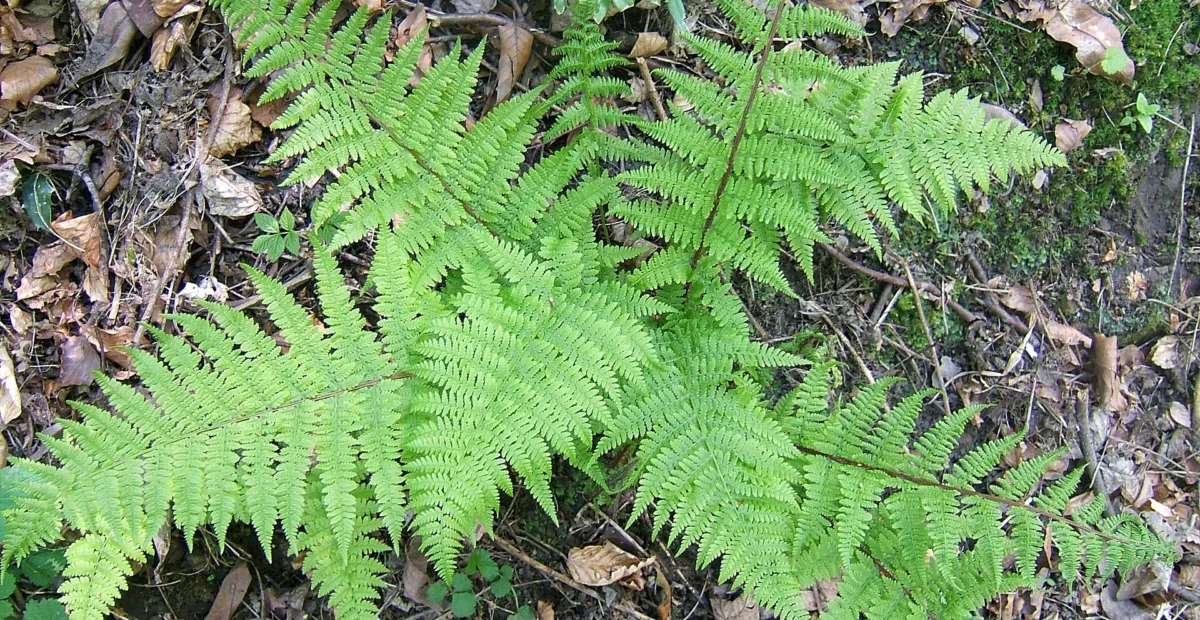
The plant forms a vase-like tuft of soft, arching, light-green fronds. Each frond is finely divided, often three times pinnate, with shorter lower pinnae and a tapered overall outline. Stipes may be green, reddish, or brown and bear papery scales near the base. Elongate or curved sori covered by brown indusia on the underside help distinguish it from some Dryopteris ferns.
Pollination and visitors
This fern has no flowers or nectar and is not documented as an animal-pollinator plant. Its reproductive spores are dispersed primarily by air rather than by bees, butterflies, or other flower visitors.
Athyrium filix-femina photos
Click any photo for a larger view. Source, author and license are shown separately.
Diseases and pests
Diseases
Usually trouble-free. Prevent crown and root problems by avoiding stagnant water, burying the crown, or using contaminated potting media. Remove badly damaged fronds and improve air movement if foliar spotting develops; severe cases are uncommon in suitable shade.
Pests
Watch for slugs and snails feeding on emerging croziers or tender fronds, especially in damp gardens. Hand-pick, reduce hiding places, and use barriers where appropriate. Inspect container plants for scale or mites if stressed by dry air; correct watering and humidity before considering treatment.
Toxicity and pollen
No authoritative evidence located that classifies this exact species as poisonous to people or pets. Do not treat that absence as proof that large quantities are edible. Avoid using unidentified fern fiddleheads as food, and seek medical or veterinary advice after substantial ingestion or an adverse reaction.
- Pollination / pollen
- Airborne fern spores, not pollen
Ferns do not produce pollen; Athyrium filix-femina reproduces through spores. Spores may become airborne when fertile fronds dry or are disturbed, but species-specific allergy risk in the United States is not well established. People with respiratory sensitivities should avoid inhaling concentrated spore dust.
Native habitat
It occurs in cool, moist woodlands, riparian areas, wet meadows, stream margins, and rocky crevices across temperate parts of the Northern Hemisphere. Natural sites commonly have organic soils, filtered light, and dependable moisture, with air movement dispersing mature spores.
Interesting fact
The name Athyrium refers to the slowly opening, hinged indusium that covers the sori. Fronds arise from a stout, scaly rhizome and may reappear after severe disturbance when the rhizome remains protected and moist. The species can colonize rock crevices as well as wet forest soils.
Frequently asked questions (FAQ)
The most relevant questions about this plant, with short and direct answers.
🌱Quick care
How do you care for Common Ladyfern (Athyrium filix-femina)?⌄
Grow Common Ladyfern in shade or dappled light, keep the soil evenly moist, and use humus-rich, well-drained soil. Protect it from drying winds, especially where fronds are exposed.
Is Common Ladyfern easy to grow?⌄
Yes, Common Ladyfern is generally an easy-care, low-maintenance perennial fern when grown in moist, shaded soil. It may need more frequent watering if planted in brighter light.
How big does Common Ladyfern get?⌄
Common Ladyfern typically grows about 2 to 3 feet tall and 1 to 3 feet wide, although size varies with moisture, climate, and growing conditions. Its arching fronds can extend considerably beyond the central crown.
Is Common Ladyfern evergreen?⌄
No, Common Ladyfern is deciduous and usually dies back after hard frost. New fiddleheads emerge from the crown in spring.
🌤️Environment and placement
How much light does Common Ladyfern need?⌄
Common Ladyfern grows best in shade to dappled or partial shade. It can tolerate more sun only when the soil remains consistently moist.
Can Common Ladyfern grow in full shade?⌄
Yes, Common Ladyfern can grow in deep shade, although growth may be less vigorous and the fronds may be less full. Bright filtered light is often ideal.
Can Common Ladyfern tolerate morning sun?⌄
Yes, Common Ladyfern can usually tolerate gentle morning sun if its soil does not dry out. Avoid intense afternoon sun, which can scorch or desiccate the fronds.
What soil is best for Common Ladyfern?⌄
Use humus-rich, moisture-retentive, well-drained loam for Common Ladyfern. Soil amended with compost or leaf mold helps maintain moisture without becoming stagnant.
How much water does Common Ladyfern need?⌄
Keep Common Ladyfern evenly moist, particularly during establishment and hot, dry weather. Do not allow the root zone to dry repeatedly, but avoid permanently waterlogged soil.
Is Common Ladyfern hardy in winter?⌄
Yes, Common Ladyfern is cold hardy and survives winter in many temperate U.S. gardens. Its fronds usually collapse or disappear after frost, while the crown remains dormant underground.
Where should I plant Common Ladyfern in the landscape?⌄
Plant Common Ladyfern in a shaded woodland garden, along a moist border, beside a stream or pond, or beneath a tree canopy. Choose a sheltered site because strong wind can tear its delicate fronds.
💧Care and problems
Why are my Common Ladyfern fronds turning brown?⌄
Brown fronds usually indicate dry soil, excessive sun, hot wind, or low humidity around the planting. Increase moisture and provide more shade, while removing badly damaged fronds.
Why is my Common Ladyfern wilting?⌄
Common Ladyfern commonly wilts when its root zone becomes too dry or when the plant is exposed to excessive heat and sun. Water deeply and improve shade, but check that poor drainage is not causing root stress.
Should I cut back Common Ladyfern?⌄
Cut back Common Ladyfern after the fronds turn brown in fall or winter, or remove individual damaged fronds during the growing season. Avoid cutting green fronds unnecessarily because they are still feeding the crown.
Does Common Ladyfern have serious pests or diseases?⌄
Common Ladyfern has no major pest or disease problems under normal garden conditions. Poor moisture, wind damage, and sun scorch are more common causes of decline.
Is Common Ladyfern deer resistant?⌄
Common Ladyfern is often considered relatively resistant to deer and rabbits, but browsing can still occur when other food is scarce. Protection may be needed in areas with heavy wildlife pressure.
🪴Planting and repotting
When is the best time to plant Common Ladyfern?⌄
Plant Common Ladyfern in spring or early fall when temperatures are moderate and soil moisture is reliable. Water it regularly until new roots are established.
How far apart should Common Ladyfern be planted?⌄
Space Common Ladyfern about 18 to 36 inches apart, depending on the mature size of the form and how quickly you want the planting to fill. Leave enough room for its arching fronds.
Can Common Ladyfern grow under trees?⌄
Yes, Common Ladyfern is well suited to planting beneath trees where it receives filtered shade and consistent moisture. Keep it away from the driest spots near thirsty tree roots unless irrigation is available.
✂️Propagation and pruning
How do you propagate Common Ladyfern?⌄
The easiest method is to divide established clumps in spring, ensuring each division includes healthy roots and a portion of the crown. Common Ladyfern can also reproduce from spores, but spore propagation is slower and more exacting.
Can Common Ladyfern be grown from spores?⌄
Yes, Common Ladyfern can be grown from spores produced in sori on the undersides of mature fronds. Spore propagation requires consistently moist, sterile conditions and usually takes longer than division.
When should Common Ladyfern be divided?⌄
Divide Common Ladyfern in spring as new growth begins, when the plant can recover quickly. Replant the divisions with their crowns level with the soil surface rather than buried.
⚠️Toxicity and safety
Is Common Ladyfern toxic to people or pets?⌄
No documented toxicity was located for Common Ladyfern, but the plant should not be intentionally eaten. Accurate identification is essential because other ferns may have different safety profiles.
Can you eat Common Ladyfern fiddleheads?⌄
Do not treat Common Ladyfern fiddleheads as a routine edible crop because safety information is not sufficiently uniform for a general recommendation. Avoid intentional ingestion unless identification and local expert guidance specifically support it.
🌸Flowering and special interest
Does Common Ladyfern produce flowers?⌄
No, Common Ladyfern does not produce flowers or seeds in the usual flowering-plant sense. It reproduces through spores formed in sori on the undersides of its fronds.
When does Common Ladyfern emerge in spring?⌄
Common Ladyfern usually emerges in spring as tightly curled fiddleheads that gradually unfurl into delicate, divided fronds. The exact timing depends on local temperatures and winter conditions.
What are the brown spots under Common Ladyfern fronds?⌄
The brown spots are sori, which are clusters of spore-producing structures on the undersides of the fronds. They are a normal part of the fern’s reproductive cycle, not usually a sign of disease.
Similar plants
 Azure Monkshood (Aconitum carmichaelii) care guideAconitum carmichaelii
 Monkshood (Aconitum ‘Stainless Steel’)Aconitum 'Stainless Steel'
 Monkshood (Aconitum ‘Bressingham Spire’)Aconitum 'Bressingham Spire'
 Golden full moon maple (Acer shirasawanum ‘Aureum’)Acer shirasawanum 'Aureum'
 Globosum (Acer platanoides ‘Globosum’)Acer platanoides 'Globosum'
 Striped maple (Acer pensylvanicum) care guideAcer pensylvanicum