
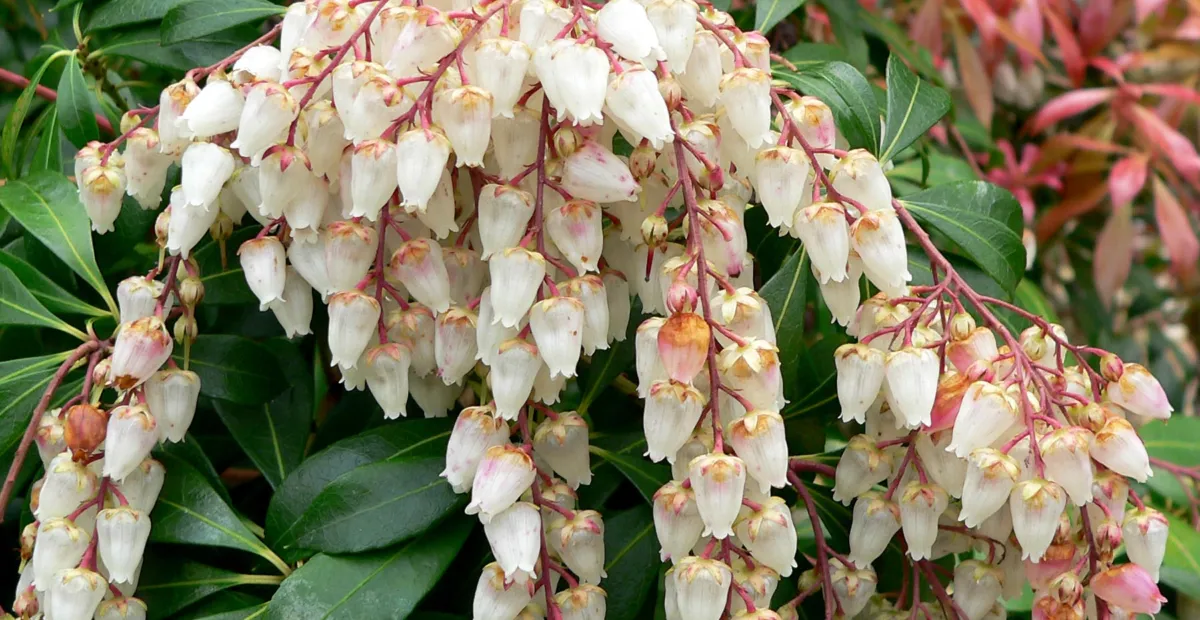
 Source:
 Pieris japonica short overview
Pieris japonica is an evergreen shrub in the heath family, native to Japan, eastern China, and Taiwan. In U.S. gardens it is grown for glossy, narrow leaves, vivid bronze or red new growth, and pendulous racemes of small bell-shaped flowers in early spring. Give it acidic, well-drained soil, steady moisture, and protection from hot afternoon sun, drought, and drying winter winds. Evergreen, acid-loving shrub with glossy foliage, colorful new growth, and pendulous early-spring flower racemes.
Taxonomic classification
Pieris japonica care guide
Light and placement
Grow in bright filtered light or partial shade, ideally with morning sun and protection from hot western or southern afternoon exposure. An east- or north-facing site, woodland edge, or high open shade is suitable. Scorched margins, bleached leaves, and wilt despite moist soil suggest excessive sun or heat; sparse growth and weak flowering indicate overly dark conditions.
Watering and humidity
Water deeply when the upper inch of soil begins to dry, keeping the root zone consistently moist but never saturated. Newly planted shrubs may need regular irrigation through the first two growing seasons; established plants need more during drought, heat, and bud development. Apply water at the soil line and mulch to moderate temperature and evaporation.
Soil and growing medium
Use a porous, organic-rich acidic soil with reliable drainage. A loamy woodland mix amended with pine bark or leaf mold suits the shallow, fibrous root system. Avoid lime, alkaline irrigation buildup, and compacted clay. Maintain an acidic root zone rather than repeatedly applying amendments without testing.
Feeding
Feed in late winter or early spring with a fertilizer labeled for acid-loving shrubs, following the product rate rather than applying heavily. A thin annual layer of acidic organic mulch can support soil structure. Do not fertilize drought-stressed, newly transplanted, or late-season plants, since soft late growth may be more vulnerable to winter injury.
Growth and habit
This long-lived, multi-stemmed evergreen shrub develops a dense, upright-to-rounded habit and usually grows slowly to moderately. It branches from low on the plant and responds poorly to severe cutting into old wood. Good site selection is more important than frequent intervention; keep the root zone cool, acidic, and evenly moist.
Planting and repotting
Plant in spring or early fall while temperatures are moderate. Set the root ball level with or slightly above the surrounding soil; do not bury the trunk flare. Space plants according to cultivar size, generally about 4–8 feet apart for the species. Mulch with pine bark or leaf mold, keeping mulch away from stems, and irrigate deeply during establishment.
Container-grown plants can be shifted in early spring after flowering or in early fall. Move up only one pot size, disturb the fine roots as little as possible, and use an acidic, well-drained ericaceous mix. Ensure the container has drainage holes and do not allow the pot to stand in water.
Propagation and pruning
Propagation
Seed requires patience and controlled conditions because germination can be slow and seedlings are variable. Semi-ripe cuttings may be attempted in summer with rooting hormone, bottom heat, high humidity, and a sterile, sharply drained medium. Cultivar selections are usually maintained vegetatively; practical propagation is moderate to difficult.
Pruning
Prune only to remove dead, damaged, crossing, or badly positioned branches, preferably just after flowering. Lightly shorten selected shoots to maintain shape, but avoid hard rejuvenation cuts because older wood may produce weak or no regrowth. Remove spent flower clusters only when convenient; they are not necessary for plant health.
Overwintering
Plants in Zones 5–6 benefit from a sheltered site, a 2–3 inch organic mulch layer, and protection from drying winter winds. Water before the ground freezes if autumn is dry. Avoid heavy nitrogen late in the season. Container plants are more exposed to root freezing and may need an insulated, protected location rather than a warm indoor room.
Uses
Used primarily as an evergreen specimen, foundation shrub, woodland-edge planting, or container accent in acidic soil. It provides year-round foliage, colorful young shoots, and early-season flowers. Do not use any part for culinary or medicinal purposes because the plant is toxic if eaten.
Appearance
The species is recognized by glossy, leathery, narrow oval to oblanceolate leaves with shallow teeth and reddish or bronze young growth. Leaves are arranged alternately but often cluster toward shoot tips. Slender branches carry terminal, pendulous racemes, while older stems develop gray-brown bark. The evergreen canopy gives the shrub structure throughout winter.
Flowering
Small, urn- or bell-shaped flowers hang in terminal racemes from the previous season’s growth. Flower buds often develop during the preceding summer and may be pink, red, or green before opening white or pinkish. Bloom is typically early spring, with timing varying by region and winter conditions.
Pollination and visitors
The pendant flowers are visited by bees and bumblebees seeking nectar and pollen in early spring. Visitor activity is strongest during mild weather when flowers are open and accessible. Documentation supports general bee and bumblebee visitation rather than a single consistently recorded pollinator species.
Pieris japonica photos
Click any photo for a larger view. Source, author and license are shown separately.
Diseases and pests
Diseases
Provide drainage and avoid prolonged leaf wetness. Watch for Phytophthora root rot in poorly drained sites, leaf spot, and occasional fungal dieback. Remove affected tissue, improve air circulation, correct irrigation problems, and sanitize pruning tools. Severely declining plants in wet soil may not recover.
Pests
Monitor for lace bugs, scale insects, spider mites, and root-feeding problems in stressed plants. Symptoms may include stippled or bronzed leaves, sticky residue, premature leaf drop, or weak growth. Reduce stress first, use water spray for light infestations, conserve beneficial insects, and choose targeted controls only when monitoring shows they are needed.
Toxicity and pollen
Pieris japonica contains grayanotoxin-related compounds characteristic of several Ericaceae plants. Ingestion of leaves, flowers, or other tissues can cause gastrointestinal and neurologic or cardiovascular signs. Keep plant material away from children and pets, do not use it as food, and seek poison-control or veterinary advice after suspected ingestion.
- Typical season
- Late winter to spring in the United States
- Pollination / pollen
- Insect-dispersed floral pollen
This is an insect-pollinated shrub with flowers that generally release pollen within the floral structure rather than dispersing large airborne clouds. Airborne exposure is therefore expected to be relatively low, but sensitive people may still react to pollen carried by visitors or disturbed plant material. Individual allergy responses vary.
Native habitat
In its native range, the species occurs in temperate mountain forests, thickets, and woodland margins of Japan, eastern and south-central China, and Taiwan. It is associated with cool, humid conditions, acidic soils, organic matter, and filtered light. In cultivation, hot exposed sites and alkaline soils commonly cause stress.
Interesting fact
The species was formerly associated with the name Andromeda japonica. Its flower buds are formed before winter, so severe cold or late frosts can reduce the following spring display. New foliage may emerge bronze, copper, red, or pink before maturing green. The woody fruit is a capsule that releases many small seeds.
Frequently asked questions (FAQ)
The most relevant questions about this plant, with short and direct answers.
🌱Quick care
How do you care for Pieris japonica?⌄
Grow Pieris japonica in bright filtered light or partial shade, acidic organic-rich soil, and moderate, even moisture. Protect it from drying winds, hot afternoon sun, and poorly drained ground, especially during winter and summer stress.
Is Pieris japonica evergreen?⌄
Yes, Pieris japonica is a broadleaf evergreen shrub that normally retains its glossy foliage year-round. Severe winter exposure, drought, disease, or other stress can cause partial or substantial leaf drop.
🌤️Environment and placement
How much light does Pieris japonica need?⌄
Pieris japonica grows best in partial shade or bright filtered light, with protection from intense afternoon sun. It can tolerate more sun in cool, humid climates when the soil remains consistently moist.
Can Pieris japonica grow in full shade?⌄
Pieris japonica can tolerate fairly heavy shade, but flowering and plant density may be reduced. Bright filtered light or dappled shade usually provides a better balance of healthy foliage and spring blooms.
How large does Pieris japonica get?⌄
The species commonly reaches about 9 to 12 feet tall and 6 to 8 feet wide, although growth varies by cultivar and climate. Dwarf selections are available for smaller gardens and containers.
Is Pieris japonica cold hardy?⌄
Pieris japonica is cold hardy in roughly USDA Zones 5 through 8, with some sources and cultivars extending slightly beyond that range. Winter wind, reflected sun, and exposed sites can still cause foliage and bud damage.
💧Care and problems
How often should you water Pieris japonica?⌄
Water Pieris japonica whenever the soil surface begins to dry, keeping the root zone evenly moist without making it soggy. Newly planted shrubs and plants near walls or roof overhangs may need more frequent watering during dry weather.
Why are the leaves on my Pieris japonica turning yellow?⌄
Yellow foliage can result from unsuitable soil pH, nutrient deficiency, drought stress, excessive sun, or root problems from wet soil. Test the soil first, then correct moisture, drainage, and acidity rather than applying fertilizer automatically.
Why does Pieris japonica have brown leaf spots or edges?⌄
Brown spots or margins commonly reflect sun scorch, drought, wind, winter injury, or leaf-spot disease. Check whether the plant is stressed by hot exposure or dry soil, and remove badly damaged leaves while improving site conditions.
Why is my Pieris japonica losing leaves?⌄
Leaf loss may follow winter injury, drought, excessive sun, root disease, or severe pest damage. Scratch a suspect stem lightly to check for green tissue, and inspect the roots and soil if branches are dying back progressively.
What pests attack Pieris japonica?⌄
Lace bugs are the most notable pest, especially in the eastern United States, and can cause yellow stippling or bronzed foliage. Spider mites, scale, and nematodes may also occur, particularly when plants are stressed by drought or excessive sun.
How do you treat lace bugs on Pieris japonica?⌄
Reduce stress with afternoon shade, even moisture, and suitable soil, then inspect leaf undersides for insects and dark deposits. Manage infestations according to current local extension guidance, because treatment choice depends on severity and timing.
Is Pieris japonica susceptible to root rot?⌄
Yes, Pieris japonica can develop Phytophthora and other root or crown problems in poorly drained soil. Plant it in well-drained ground, avoid persistent saturation, and do not overwater a shrub that is already declining.
🪴Planting and repotting
What soil does Pieris japonica need?⌄
Use moist, well-drained, organic-rich soil that is acidic, ideally around pH 5.0 to 6.0. A soil test is preferable before adding sulfur or fertilizer, because unsuitable pH and poor drainage commonly cause decline.
When is the best time to plant Pieris japonica?⌄
Plant Pieris japonica in spring or fall when temperatures are moderate and the soil can be kept evenly moist. Avoid planting during extreme heat, drought, or frozen conditions, and water thoroughly after planting.
How far apart should Pieris japonica be planted?⌄
Space standard Pieris japonica plants about 6 to 8 feet apart to allow for their mature spread, adjusting for the cultivar’s expected size. Dwarf varieties need less room, so follow the mature dimensions on the plant label.
Can Pieris japonica grow in a container?⌄
Yes, compact Pieris japonica cultivars can grow in containers with drainage holes and acidic, well-drained potting mix. Containers dry and freeze faster than garden soil, so monitor moisture closely and provide winter protection in colder areas.
✂️Propagation and pruning
How do you prune Pieris japonica?⌄
Prune Pieris japonica mainly to remove dead, damaged, or crossing branches and to shape the shrub after flowering. Avoid heavy pruning late in the season because flower buds for the following spring form on older growth.
When should you prune Pieris japonica?⌄
The best time for routine shaping is shortly after flowering, before new flower buds develop for the next season. Dead or damaged wood can be removed whenever it is noticed, provided the plant is not under severe weather stress.
How do you propagate Pieris japonica?⌄
Pieris japonica is commonly propagated from stem cuttings, although rooting can be slow and cultivar results are most reliable from nursery-grown material. Take healthy cuttings during the appropriate active-growth period and use a sterile, well-drained rooting medium.
⚠️Toxicity and safety
Is Pieris japonica toxic to dogs and cats?⌄
Yes, Pieris japonica is toxic to dogs and cats because it contains grayanotoxins. Eating leaves, flowers, or other plant parts can cause vomiting, weakness, drooling, low blood pressure, neurologic signs, or potentially life-threatening complications.
Is Pieris japonica poisonous to humans?⌄
Yes, Pieris japonica should be considered poisonous if eaten because its tissues contain grayanotoxins. Keep children and pets from chewing the plant, and contact Poison Control or a medical professional promptly after suspected ingestion.
🌸Flowering and special interest
When does Pieris japonica bloom?⌄
Pieris japonica usually blooms in early to mid-spring, producing drooping clusters of small, urn-shaped flowers. Exact timing varies with cultivar, climate, and winter conditions, and flower buds are formed during the preceding growing season.
Why is my Pieris japonica not flowering?⌄
Poor flowering can result from insufficient light, drought, excessive shade, winter damage, immature growth, or pruning that removed developing flower buds. Maintain even moisture and prune immediately after flowering rather than during late summer or fall.
Does Pieris japonica have fragrant flowers?⌄
Yes, the flowers of Pieris japonica are generally fragrant, although the scent may be subtle and more noticeable up close. Flowering is usually strongest when the plant receives bright filtered light, adequate moisture, and suitable acidic soil.