
 Source:
 Norfolk Island Pine (Araucaria heterophylla) short overview
Norfolk Island Pine is an elegant evergreen conifer native to Norfolk Island in the South Pacific. In the United States it is best known as a long-lived houseplant and living Christmas tree, although mature outdoor specimens can become very large in frost-free regions. Give it bright filtered light or gentle sun, evenly moist but well-drained soil, moderate humidity, and protection from freezing temperatures.
Taxonomic classification
Norfolk Island Pine (Araucaria heterophylla) care guide
Light and placement
Provide bright filtered light or several hours of gentle morning or late-day sun. An east window is usually suitable; a bright south or west exposure may work if harsh midday sun is filtered. Rotate indoor pots periodically for even growth. Too little light causes sparse, stretched whorls and lower-branch loss; excessive abrupt sun can scorch foliage, especially after indoor cultivation.
Watering and humidity
Water thoroughly when the surface has begun to dry, allowing excess to drain completely. Keep the root zone moderately and evenly moist during active growth, but never leave the pot standing in water. Reduce frequency in winter as evaporation and growth slow. Dryness can cause browning and branch loss, while persistent saturation encourages root decline. Moderate humidity is helpful in heated homes.
Soil and growing medium
Use a loose, well-drained, loam-based container mix with added perlite, pumice, or coarse bark. The species tolerates a fairly broad pH range, from acidic through neutral to mildly alkaline, but compacted or waterlogged soil can cause root problems. Containers must have drainage holes.
Feeding
Feed during active spring and summer growth with a balanced houseplant fertilizer diluted to about half strength, following the product label. Apply to already-moist soil and reduce or stop feeding in winter when light and growth decline. Excess fertilizer can damage roots and produce weak, overly soft growth.
Growth and habit
Young plants maintain a neat, layered, pyramidal silhouette. With age, the trunk becomes more substantial and the plant develops into a large, high-canopy tree outdoors. Indoors, growth is constrained by light, root volume, and ceiling height. Avoid cutting the central leader because replacement growth may not restore the original symmetry.
Planting and repotting
Plant outdoors only in frost-free locations, ideally in spring after cold weather has passed. Set the root ball level with the surrounding soil and water deeply during establishment. Allow ample clearance for the mature trunk and root system; this species is unsuitable for small patios or confined beds.
Repot in spring only when roots have filled the container or growth has clearly slowed. Move up one pot size rather than making a large jump, and preserve the root ball as much as practical. A heavy, stable container helps prevent tall plants from tipping.
Propagation and pruning
Propagation
Propagate from fresh seed as soon as ripe, or from upright shoot-tip cuttings taken during active growth. Upright cuttings can preserve a central leader; horizontal side-branch cuttings may produce plants with a poor or non-upright form. Seed and suitable cuttings both require patience and controlled moisture.
Pruning
Little pruning is normally needed. Remove dead, damaged, or diseased material cleanly, but do not routinely shear the leader or cut back main whorled branches because the distinctive symmetrical form may not recover. Outdoors, establish one central leader early if competing leaders develop.
Overwintering
Bring container plants indoors before nighttime temperatures approach 45°F. Place them in bright light away from radiators, heat vents, and cold drafts. Water less often in winter but do not allow the root ball to become bone dry. Outdoor plants are appropriate only where hard freezes are not expected; frost-damaged growth may not recover symmetrically.
Uses
Used primarily as an indoor foliage plant, living Christmas tree, container specimen, and architectural outdoor tree in warm coastal or subtropical landscapes. Mature outdoor trees need substantial space and should not be planted beneath utility lines or close to buildings. It is not a culinary or medicinal plant.
Appearance
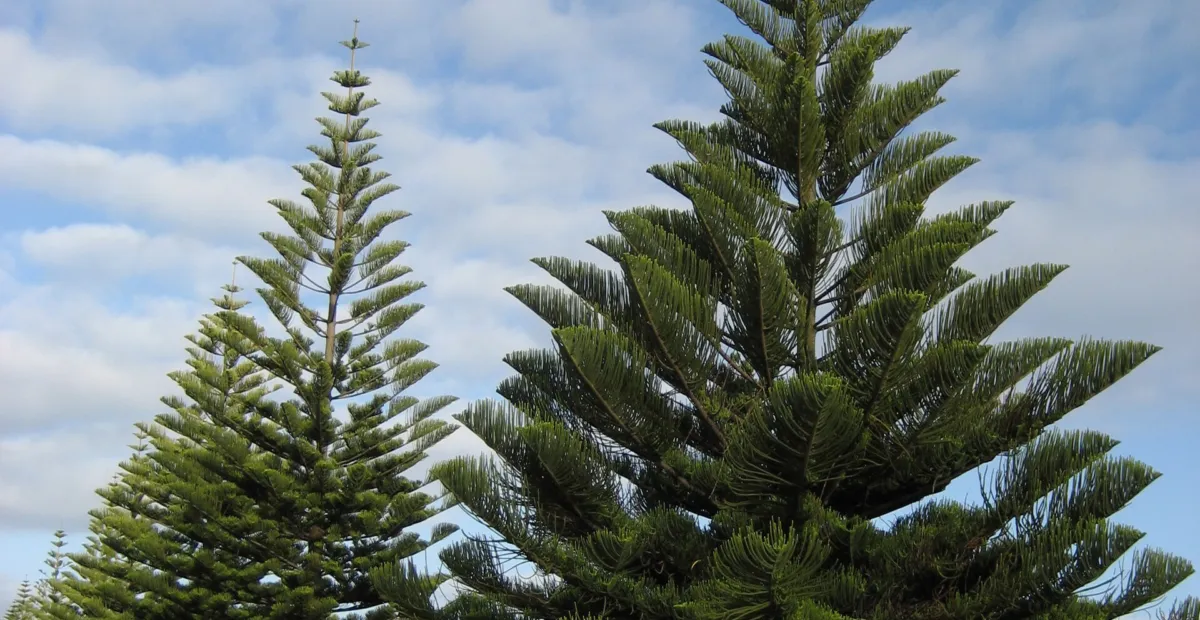
The plant has a straight trunk and regularly spaced horizontal branch whorls that create a formal, tiered outline. Juvenile leaves are short, narrow, bright green, and densely arranged around the shoots; mature foliage becomes more scale-like and spirally arranged. The bark becomes rougher with age, and the species is evergreen year-round.
Pollination and visitors
Araucaria heterophylla is a cone-producing gymnosperm whose pollination is by wind rather than by animal visitors. No characteristic bee, butterfly, bird, or other animal pollinator relationship was confirmed for this exact species.
Araucaria heterophylla photos
Click any photo for a larger view. Source, author and license are shown separately.
Diseases and pests
Diseases
Avoid chronically wet soil and poor air circulation, which favor root decline and foliar spotting. Inspect for darkened roots, tip dieback, or discolored foliage. Remove badly affected tissue where practical, correct watering and drainage first, and discard severely compromised plants to limit spread. Honey fungus has been reported outdoors in some regions.
Pests
Scale insects are the main reported indoor pest; heavy infestations may lead to yellowing, weakened growth, or sooty mold. Inspect branch junctions and undersides of foliage, isolate affected plants, remove light infestations manually, and use a labeled horticultural oil or insecticidal product according to its directions. Avoid stressing the plant with drought or stagnant wet soil.
Toxicity and pollen
Reliable veterinary toxicity references do not establish a strong, species-specific poisoning profile for Norfolk Island Pine. Nevertheless, chewing plant material may cause gastrointestinal upset or mechanical irritation, and individual pets or children can react differently. Prevent ingestion and contact a veterinarian or poison service if symptoms occur.
- Typical season
- Season varies by climate; no reliable U.S. indoor exposure season established
- Pollination / pollen
- Wind-dispersed conifer pollen
The species produces airborne pollen from male cones when mature, but reliable U.S.-specific clinical allergy data are limited. Indoor plants generally do not produce significant pollen because they remain juvenile and rarely form cones. Keep mature cone-bearing specimens away from sensitive indoor areas if airborne pollen is a concern.
Native habitat
The species is endemic to Norfolk Island, where it grows in subtropical island environments including coastal and rainforest settings. It favors well-drained soils, humid air, and mild temperatures, and is exposed to salt-laden coastal conditions in parts of its native range.
Interesting fact
Despite its common name, this species is not a true pine. It is endemic to Norfolk Island and can become a towering coastal tree outdoors, while young plants retain the compact, tiered form familiar from indoor culture. Mature trees produce cones and have foliage that changes in form with age.
Frequently asked questions (FAQ)
The most relevant questions about this plant, with short and direct answers.
🌱Quick care
How do you care for a Norfolk Island Pine indoors?⌄
Give a Norfolk Island Pine bright filtered light, evenly moist well-drained soil, moderate temperatures, and higher humidity when indoor air is dry. Water when the soil surface begins to dry, then empty excess water from the saucer.
How often should you water a Norfolk Island Pine?⌄
Water a Norfolk Island Pine whenever the soil surface feels slightly dry, rather than following a fixed schedule. Water thoroughly until excess drains from the pot, but do not leave the roots sitting in water.
How much light does a Norfolk Island Pine need?⌄
A Norfolk Island Pine grows best in bright filtered light with some gentle sun, such as near an east- or west-facing window. Too little light can cause sparse, weak, or drooping growth.
Is a Norfolk Island Pine easy to grow as a houseplant?⌄
A Norfolk Island Pine is generally manageable indoors when light, moisture, humidity, and temperature remain consistent. It is less forgiving of prolonged dry soil, hot drafts, low light, or waterlogged roots.
🌤️Environment and placement
Can a Norfolk Island Pine grow in low light?⌄
A Norfolk Island Pine can tolerate somewhat lower light for a time, but it will grow more slowly and may become thin or leggy. Place it in the brightest indirect light available for denser growth.
Can a Norfolk Island Pine grow outside?⌄
A Norfolk Island Pine can grow outdoors year-round only in warm, frost-free parts of USDA Zones 10A–11. In cooler areas, grow it in a container and move it indoors before freezing temperatures.
When should I bring a Norfolk Island Pine indoors?⌄
Bring a Norfolk Island Pine indoors before nighttime temperatures regularly fall into the 50s°F or before frost is possible. Acclimate it gradually to the indoor light level to reduce stress.
Can a Norfolk Island Pine tolerate direct sunlight?⌄
A Norfolk Island Pine can tolerate gentle morning or late-day sun, but strong afternoon sunlight may scorch foliage or dry the soil too quickly. Increase direct exposure gradually after moving it outdoors.
What temperature is best for a Norfolk Island Pine indoors?⌄
A Norfolk Island Pine prefers cool to moderate indoor temperatures, generally about 55–70°F. Keep it away from fireplaces, radiators, heating vents, air-conditioning vents, and cold drafts.
How much humidity does a Norfolk Island Pine need?⌄
A Norfolk Island Pine benefits from moderate to high humidity, especially during winter heating. A humidifier is usually more effective than occasional misting; grouping plants can also modestly increase local humidity.
💧Care and problems
Why are the tips of my Norfolk Island Pine turning brown?⌄
Brown tips on a Norfolk Island Pine are commonly associated with dry soil, low humidity, insufficient light, or hot or cold drafts. Check the root-zone moisture and placement before assuming the plant has a disease.
Why is my Norfolk Island Pine turning yellow?⌄
Yellowing foliage on a Norfolk Island Pine can result from soil that stays too wet, soil that becomes too dry, low light, or a nutrient problem. Inspect drainage and roots, and adjust watering only after checking the soil.
Why is my Norfolk Island Pine dropping needles?⌄
Needle drop on a Norfolk Island Pine is often caused by dry air, inconsistent watering, low light, temperature stress, or root problems. A few older lower branches may decline naturally, but widespread drop indicates stress.
Why are the branches on my Norfolk Island Pine drooping?⌄
Drooping branches on a Norfolk Island Pine commonly indicate insufficient light, dry soil, root damage, or temperature stress. Move it to brighter filtered light and verify that the soil is moist but not waterlogged.
How do I save a Norfolk Island Pine with brown branches?⌄
To help a Norfolk Island Pine with brown branches, remove only fully dead material and correct the underlying light, moisture, humidity, or temperature problem. Brown needles and dead branch sections will not turn green again, but healthy new growth may recover.
What pests attack Norfolk Island Pines?⌄
Norfolk Island Pines can be affected by pests such as scale insects, mealybugs, aphids, and occasionally spider mites. Inspect stems and undersides of foliage, isolate affected plants, and treat infestations promptly with a product labeled for houseplants.
How often should you fertilize a Norfolk Island Pine?⌄
Fertilize a Norfolk Island Pine lightly during active spring and summer growth, following the houseplant fertilizer label. Avoid routine fertilizing in winter or when the plant is stressed, newly repotted, or suffering from root problems.
🪴Planting and repotting
What type of soil does a Norfolk Island Pine need?⌄
A Norfolk Island Pine needs a loam-based or fertile potting mix that drains well while retaining some moisture. Avoid heavy, compacted soil that remains saturated around the roots.
Does a Norfolk Island Pine need a pot with drainage holes?⌄
Yes, a Norfolk Island Pine should be planted in a container with drainage holes. Drainage prevents excess water from accumulating around the roots and helps reduce the risk of root rot.
When should I repot a Norfolk Island Pine?⌄
Repot a Norfolk Island Pine when roots fill the container, the plant becomes unstable, or the potting mix has broken down. Move it into only a slightly larger pot because an oversized container can hold excess moisture.
Can a Norfolk Island Pine be root-bound?⌄
A Norfolk Island Pine can tolerate being somewhat root-bound, so repotting is not needed simply because roots are visible. Repot when growth, watering, or stability is clearly affected, using fresh well-drained mix.
Can I plant a Norfolk Island Pine in the ground?⌄
You can plant a Norfolk Island Pine outdoors in a warm, frost-free climate such as USDA Zones 10A–11, provided the soil drains well. In colder parts of the United States, freezing weather can seriously injure or kill it.
✂️Propagation and pruning
How do you propagate a Norfolk Island Pine?⌄
Norfolk Island Pine is propagated mainly from seed or selected shoot-tip cuttings, but home propagation is difficult and unreliable. Stem cuttings from ordinary side branches generally do not produce a properly upright tree.
Can you grow a Norfolk Island Pine from a cutting?⌄
A Norfolk Island Pine can sometimes be grown from an erect shoot-tip cutting, but ordinary lateral branch cuttings are usually unsuitable for producing a normal upright plant. Seed propagation is also possible but requires fresh, viable seed.
Can you prune a Norfolk Island Pine to make it shorter?⌄
Do not heavily top or shorten a Norfolk Island Pine because it usually will not replace a removed central leader with a normal symmetrical top. Prune only dead, damaged, or unwanted lower branches with clean tools.
Can a Norfolk Island Pine grow a new top after the leader is cut?⌄
A Norfolk Island Pine may develop competing shoots after its central leader is damaged or removed, but it generally will not recreate its original symmetrical form. Avoid cutting the central growing tip unless removal is unavoidable.
⚠️Toxicity and safety
Is Norfolk Island Pine toxic to cats and dogs?⌄
No strong species-specific toxicity classification is established for Norfolk Island Pine, but pets should not chew or ingest it. Keep the plant and fallen foliage out of reach and contact a veterinarian if substantial material is eaten.
Is Norfolk Island Pine poisonous to humans?⌄
Norfolk Island Pine does not have a strong established species-specific poisoning classification, but ingestion should still be prevented. Keep the plant away from young children and seek medical advice if plant material is swallowed or symptoms develop.
Can you decorate a Norfolk Island Pine as a Christmas tree?⌄
Yes, a Norfolk Island Pine can serve as a small living Christmas tree when decorated with lightweight ornaments and cool, low-wattage lights. Avoid heavy decorations, tightly wound cords, and placing the plant near heat sources.
🌸Flowering and special interest
Does a Norfolk Island Pine produce flowers?⌄
A Norfolk Island Pine does not produce showy flowers; it is a conifer that reproduces with cones. Indoor plants rarely become mature enough to produce cones under typical household conditions.
Does a Norfolk Island Pine produce pine cones?⌄
A mature outdoor Norfolk Island Pine can produce cones, but container-grown indoor plants rarely do. Cone production requires considerable age, suitable outdoor conditions, and usually pollination between compatible reproductive structures.