
 Source:
 Clethra fargesii short overview
Clethra fargesii is a deciduous shrub or small tree from mountainous woodlands of south-central and southeastern China. It is valued for smooth exfoliating cinnamon-brown bark, glossy serrated leaves, fragrant white flower clusters in mid to late summer, and rich bronze-red to maroon autumn color. In cultivation, it performs best in partial shade with moist, acidic, organic-rich soil and protection from hot, dry conditions.
Taxonomic classification
Clethra fargesii care guide
Light and placement
Place in bright partial shade with morning sun or filtered light beneath high tree canopy. A site receiving roughly 2–6 hours of direct sun is suitable, especially in cooler climates. Scorched margins, faded foliage and premature leaf drop indicate excessive heat or sun; weak shoots and sparse flowering suggest overly deep shade.
Watering and humidity
Water deeply when the upper inch of soil begins to dry, then maintain steady moisture through the growing season. Do not allow the root zone to become persistently dry, particularly during summer heat or while the plant is establishing. Mulch with organic material, keeping it away from the stems; reduce watering after leaf fall but do not let container plants become completely dry.
Soil and growing medium
Use a moisture-retentive but freely draining soil amended with compost, leaf mold or other organic matter. Acidic, lime-free loam is ideal; heavy alkaline or compacted soil can cause poor growth and chlorosis. Improve drainage before planting rather than compensating with frequent watering in stagnant soil.
Feeding
Apply a thin layer of compost or a balanced, slow-release shrub fertilizer in early spring as growth begins. Avoid heavy nitrogen applications, which can produce soft, leafy growth and reduce structural quality. Do not feed during drought, immediately after transplanting, or late in the season when new growth may not harden before winter.
Growth and habit
This species develops a dense, rounded to upright framework and may form colonies through suckering. Its flowering occurs on new growth, so maintenance is best timed before spring expansion. Allow adequate room for its mature spread and remove unwanted suckers early if a single-stemmed specimen is preferred.
Planting and repotting
Plant during mild weather in a wide hole no deeper than the root ball and at least twice its width. Backfill with the excavated soil improved with organic matter rather than creating a sharply different soil pocket. Water thoroughly after planting and maintain a 2–3 inch organic mulch layer, leaving a gap around the stems.
Grow in a large container only where regular moisture can be maintained. Repot in early spring when roots fill the pot, moving up one container size rather than making a large jump. Use an acidic, organic-rich but well-drained mix, and water thoroughly after transplanting.
Propagation and pruning
Propagation
Stem cuttings and suckers are practical methods. Take softwood or semi-ripe cuttings during active growth and root them in a sterile, evenly moist medium under high humidity. Suckers can be separated when dormant if they have their own roots. Layering may also work but requires patience.
Pruning
Prune in late winter or very early spring before new growth begins, because flowers are produced on new-season shoots. Remove dead, damaged or crossing branches first, then thin congested growth as needed. Rejuvenate an overgrown plant gradually rather than shearing hard every year. Remove unwanted suckers at ground level.
Overwintering
Plants in colder or exposed locations benefit from a thick organic mulch over the root zone after the ground cools. Protect young plants from drying winter winds and abrupt temperature changes. Container specimens are more vulnerable than plants in the ground; place them in a sheltered, unheated location and keep the medium slightly moist.
Uses
Useful as a woodland-garden specimen, informal hedge, screen, mixed shrub-border plant, or planting near ponds and streams where soil stays moist. Its fragrant summer flowers and autumn foliage extend seasonal interest. It is not documented here as an edible, medicinal or culinary plant.
Appearance
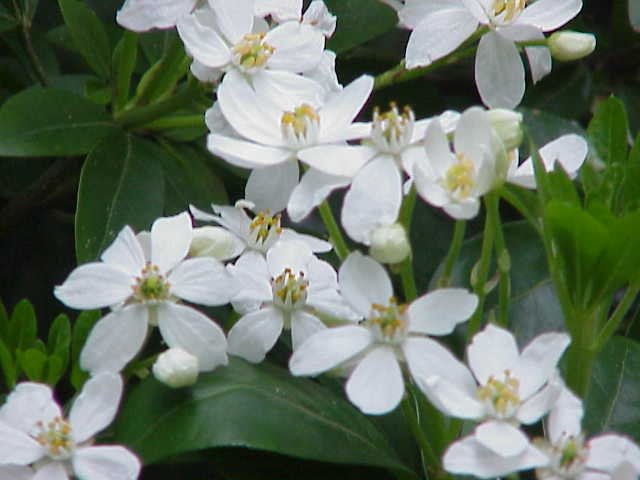
Identification features include glossy dark green, simple leaves with sharply toothed margins and downy undersides, young shoots with fine hairs, and smooth brown to cinnamon bark that exfoliates with age. Fragrant white flowers are carried in slender terminal racemes or clustered panicles. Autumn foliage can turn bronze-red to maroon.
Flowering
Numerous small, fragrant white flowers are densely arranged in slender terminal racemes or branched panicles. Flowering is concentrated in mid to late summer, when many woody shrubs have finished blooming. Individual flowers are small, but the clustered inflorescences create a conspicuous display and may arch slightly under their weight.
Pollination and visitors
The fragrant white flowers are documented as providing nectar and pollen visited by bees and butterflies. Available horticultural guidance supports these visitor groups, but a particular pollinating species has not been established for this taxon in the reviewed sources.
Clethra fargesii photos
Click any photo for a larger view. Source, author and license are shown separately.
Diseases and pests
Diseases
No major disease problems are consistently reported for this species in the reviewed horticultural guidance. Prevent stress by providing moist but well-drained soil and adequate air circulation. Remove dead foliage and avoid prolonged leaf wetness. Persistent decline in poorly drained soil may reflect root damage rather than a foliar disease.
Pests
Spider mites may become troublesome when plants are grown in hot, dry locations. Watch for stippling, bronzing, fine webbing and leaf drop. Improve irrigation and humidity around the plant, rinse foliage when appropriate, and conserve predatory mites and other beneficial organisms before considering a targeted treatment.
Related diseases and pests
Only Plant Doctor profiles whose host data indicate this plant may be affected are shown here.

Toxicity and pollen
Reliable plant-specific toxicity information for Clethra fargesii was not identified in the reviewed authoritative sources. Do not assume that the plant is edible or harmless. Prevent children and pets from chewing plant material, and contact a medical professional or poison-control service if ingestion causes symptoms.
- Typical season
- Typically mid to late summer during flowering in the United States.
- Pollination / pollen
- Insect-dispersed pollen; airborne allergy significance is not well documented.
Clethra fargesii produces pollen in its flowers, but reliable species-specific information on airborne concentration and human allergy risk was not found. The flowers are insect-pollinated, so pollen is generally presented within floral structures rather than released for wind transport; this does not establish zero allergy risk.
Native habitat
The species is native to mountainous woodland regions of south-central and southeastern China, where it occurs in a temperate setting at roughly 4,000–7,800 feet in cited horticultural and botanical accounts. It is associated with cool, moist, humus-rich soils and benefits in cultivation from conditions that resemble woodland margins or streamside habitats.
Interesting fact
The species was described by Adrien Franchet in 1895. Its bark becomes smooth, marbled and cinnamon-brown before exfoliating. It flowers later than many woody shrubs, helping extend the summer display. Several published names have been treated as synonyms of Clethra fargesii.
Frequently asked questions (FAQ)
The most relevant questions about this plant, with short and direct answers.
🌱Quick care
What is Clethra fargesii?⌄
Clethra fargesii is a deciduous flowering shrub in the Clethraceae family, native to mountainous woodlands of central and southern China. It is grown for fragrant white summer flowers, exfoliating cinnamon-brown bark, and colorful fall foliage.
How big does Clethra fargesii get?⌄
Clethra fargesii typically reaches about 6 to 10 feet tall and 3 to 6 feet wide in cultivation. Give it enough room to develop its rounded, dense form.
🌤️Environment and placement
What USDA hardiness zones are suitable for Clethra fargesii?⌄
Clethra fargesii is generally listed for USDA Zones 5a through 7b. In colder areas, plant it in a sheltered location protected from drying winter winds.
How much light does Clethra fargesii need?⌄
Clethra fargesii grows best in partial shade or dappled light, with roughly 2 to 6 hours of direct sun. Morning sun or filtered light is preferable where summers are hot.
Can Clethra fargesii grow in full sun?⌄
Clethra fargesii may tolerate more sun when the soil stays reliably moist, but partial shade is safer and usually produces less heat stress. Avoid exposed afternoon sun in hot, dry climates.
What is the best soil for Clethra fargesii?⌄
Use moist, organic-rich, well-drained loam that is acidic to neutral and low in lime. The soil should retain moisture without remaining stagnant or waterlogged.
Does Clethra fargesii tolerate wet soil?⌄
Clethra fargesii prefers consistently moist soil and can suit locations near ponds or streams if drainage remains adequate. Avoid permanently saturated soil that excludes oxygen from the roots.
💧Care and problems
How often should I water Clethra fargesii?⌄
Water Clethra fargesii whenever the soil surface begins to dry, keeping the root zone evenly moist during the growing season. Increase watering during drought, heat, and the first year after planting.
Can Clethra fargesii tolerate drought?⌄
Clethra fargesii does not tolerate prolonged drought or dry summer heat well. Mulch the root zone and provide supplemental water before the soil becomes dry.
Why are the leaves of my Clethra fargesii wilting?⌄
Wilting usually indicates insufficient moisture, excessive heat, or root stress from poor drainage. Check soil moisture several inches below the surface and correct watering or drainage conditions promptly.
What pests affect Clethra fargesii?⌄
Clethra fargesii generally has few serious pest problems, but spider mites may appear when plants are grown in hot, dry conditions. Improving moisture and reducing heat stress is usually the first response.
Does Clethra fargesii have serious diseases?⌄
No major disease problems are commonly reported for Clethra fargesii. Good drainage, adequate spacing, and avoidance of drought help maintain plant health.
🪴Planting and repotting
When should I plant Clethra fargesii?⌄
Plant Clethra fargesii in spring or fall, when temperatures are moderate and soil moisture is easier to maintain. Fall planting is useful in regions with mild winters, while spring is safer in colder areas.
How far apart should I plant Clethra fargesii?⌄
Space Clethra fargesii about 5 to 8 feet apart for individual shrubs, adjusting the distance according to the expected mature size. Use closer spacing only when a denser informal screen is desired.
How do I plant Clethra fargesii?⌄
Set Clethra fargesii at the same depth it was growing in its container, backfill with native soil amended with organic matter, and water deeply. Apply a 2- to 3-inch mulch layer while keeping mulch away from the stems.
Can Clethra fargesii be grown in a container?⌄
Clethra fargesii can be grown temporarily in a large container, but its mature size and high moisture needs make in-ground planting preferable. Use a moisture-retentive, well-drained acidic potting mix and do not allow the container to dry out.
✂️Propagation and pruning
Does Clethra fargesii spread by suckers?⌄
Clethra fargesii can produce suckers that gradually form small colonies. Remove unwanted suckers while young, or allow them to remain when a naturalized screen or grouping is desired.
How can I propagate Clethra fargesii from cuttings?⌄
Propagate Clethra fargesii from softwood or other suitable stem cuttings taken during active growth and kept under humid conditions. Rooting success is improved with a sterile, well-drained medium and consistent moisture.
Can Clethra fargesii be grown from seed?⌄
Clethra fargesii can be propagated from seed, although seed-grown plants may take longer to reach flowering size and may not be identical to the parent. Sow fresh seed in a suitable propagation medium and keep it evenly moist.
When should Clethra fargesii be pruned?⌄
Prune Clethra fargesii in late winter or very early spring because it flowers on new growth. Remove dead or damaged wood first, then shorten older stems as needed to control size and shape.
Can I prune Clethra fargesii hard?⌄
Clethra fargesii responds to pruning and can be reduced when necessary, but severe renovation is best done gradually over more than one season. Avoid late-spring or early-summer pruning if you want that year's flowers.
⚠️Toxicity and safety
Is Clethra fargesii toxic to people or pets?⌄
The toxicity of Clethra fargesii is not well established, so it should not be assumed safe to eat. Keep children and pets from chewing the plant and contact a poison-control service or veterinarian if ingestion occurs.
🌸Flowering and special interest
When does Clethra fargesii bloom?⌄
Clethra fargesii usually blooms in mid to late summer. Its white flowers are arranged in long terminal panicles or racemes and are strongly fragrant.
Are Clethra fargesii flowers fragrant?⌄
Yes, Clethra fargesii produces heavily fragrant white flowers. The scent is most noticeable when the shrub is planted where air movement carries the fragrance toward paths, patios, or windows.
Why is my Clethra fargesii not flowering?⌄
Lack of flowers may result from insufficient light, drought stress, immature growth, winter damage, or pruning at the wrong time. Because it blooms on new growth, prune in late winter rather than after spring growth begins.
Does Clethra fargesii attract bees and butterflies?⌄
Yes, the fragrant flowers provide nectar and pollen that attract bees, butterflies, and other pollinators. It is a useful choice for a woodland or pollinator-oriented planting.
What does Clethra fargesii look like in fall?⌄
The dark green leaves can turn bronze-red to maroon in fall, while dry brown seed capsules may remain after flowering. Its peeling cinnamon-brown bark also provides interest after the leaves drop.
Is Clethra fargesii evergreen?⌄
No, Clethra fargesii is deciduous and loses its leaves in fall. Its winter interest comes mainly from smooth, exfoliating brown to cinnamon-colored bark and persistent seed capsules.
Similar plants
 Azure Monkshood (Aconitum carmichaelii) care guideAconitum carmichaelii
 Monkshood (Aconitum ‘Stainless Steel’)Aconitum 'Stainless Steel'
 Monkshood (Aconitum ‘Bressingham Spire’)Aconitum 'Bressingham Spire'
 Golden full moon maple (Acer shirasawanum ‘Aureum’)Acer shirasawanum 'Aureum'
 Globosum (Acer platanoides ‘Globosum’)Acer platanoides 'Globosum'
 Striped maple (Acer pensylvanicum) care guideAcer pensylvanicum