Japanese Clethra (Clethra barbinervis) short overview
Japanese Clethra is a deciduous shrub or small tree valued for its fragrant white flower racemes, peeling bark, glossy summer foliage, and vivid yellow-to-red fall color. Native to Japan, Korea, and parts of China, it prefers moist, acidic, organically enriched soil and partial shade, although established plants can tolerate more sun when moisture is dependable. Its upright, architectural form makes it a distinctive specimen for woodland edges and sheltered shrub borders.
Taxonomic classification
Japanese Clethra (Clethra barbinervis) care guide
Light and placement
Place in bright filtered light or morning sun with afternoon protection, especially in hot climates. An east-facing or lightly shaded woodland-edge position is a strong choice. Full sun can improve flowering and fall color when the root zone stays moist. Scorched margins, limp foliage, or premature leaf drop indicate excessive heat or drought; weak growth and sparse flowering may indicate overly deep shade.
Watering and humidity
Water deeply when the upper 1–2 inches of soil begin to dry, then replenish the root zone rather than wetting the canopy. Maintain even moisture through the first two growing seasons and during summer heat; do not allow containers to dry completely. Mulch with organic material to moderate soil temperature. Humidity is not normally limiting outdoors, but sheltered sites help reduce winter and drought stress.
Soil and growing medium
Use a moisture-retentive but free-draining soil with generous compost or leaf mold. Acidic, lime-free loam is preferred; avoid alkaline, compacted, or chronically stagnant ground. In heavy clay, improve structure with organic matter and plant slightly high rather than creating a water-trapping hole. A 2–3 inch mulch layer helps maintain the cool, evenly moist root conditions this woodland species favors.
Feeding
Apply a thin layer of compost or a balanced slow-release shrub fertilizer in early spring as growth begins. Use the lowest label rate on fertile soil and water after feeding. Avoid high-nitrogen applications late in the season, which can encourage soft growth that is more vulnerable to winter damage. Do not fertilize drought-stressed, newly transplanted, or dormant plants until they are actively growing.
Growth and habit
The species develops an upright, dense, often multi-stemmed habit and may mature as a large shrub or small tree. It can become more substantial with age and may spread by suckering in favorable conditions. Allow room for its layered branching and attractive trunk structure. Remove unwanted suckers at the base if a single-trunk or more formal specimen is desired.
Planting and repotting
Plant after the soil can be worked in spring or several weeks before hard frost in fall. Dig a broad hole no deeper than the root ball, loosen circling roots, and keep the root flare at or slightly above grade. Backfill with native soil amended only modestly with compost. Water thoroughly and mulch without touching the stems. Maintain regular moisture during the first two growing seasons.
Young container plants should be shifted when roots fill the pot, preferably in early spring before vigorous growth. Use an acidic, well-drained mix enriched with organic matter and a container with drainage holes. Water thoroughly after repotting and provide temporary protection from intense afternoon sun. Because the species becomes large, move it into the landscape rather than maintaining it indefinitely in a pot.
Propagation and pruning
Propagation
Propagate from summer semi-ripe cuttings using a well-drained rooting medium and consistent humidity. Seed propagation is possible, but seedlings may require patience and suitable stratification or controlled conditions. Layering or carefully managed separation of suckering growth can produce additional plants, although suckers should be removed only when well rooted.
Pruning
Prune immediately after flowering if shaping is necessary, because flowers are produced on current-season growth. Remove dead, damaged, crossing, or weak stems first. To expose the bark and create a small-tree form, gradually remove selected lower branches over several years. Avoid severe late-season pruning, which can stimulate tender growth before winter.
Overwintering
Plants in the ground generally need only a thick organic mulch over the root zone. Protect young plants from drying winter winds and abrupt temperature swings, especially in colder zones. Avoid late-season nitrogen and hard pruning. Container plants have less root insulation than landscape plants; overwinter them in a sheltered, unheated location or plant them out before severe cold.
Uses
Use as a specimen shrub, small ornamental tree, woodland-edge planting, or accent in a mixed shrub border. Its fragrant late-summer flowers, peeling bark, and fall color provide multi-season interest. It can also be grown in a large container while young, though long-term container culture requires careful moisture management and winter protection.
Appearance
Leaves are glossy, dark green, elliptic to obovate, and finely serrated, with conspicuous veining that relates to the species epithet barbinervis. White flowers hang in terminal racemes. Older stems develop attractive exfoliating, flaking bark, while autumn foliage can turn bright yellow and sometimes red. The combination of bark, foliage, and late flowers gives the plant interest beyond its bloom period.
Flowering
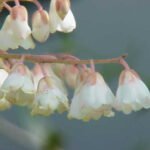
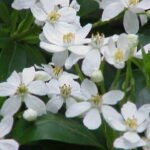
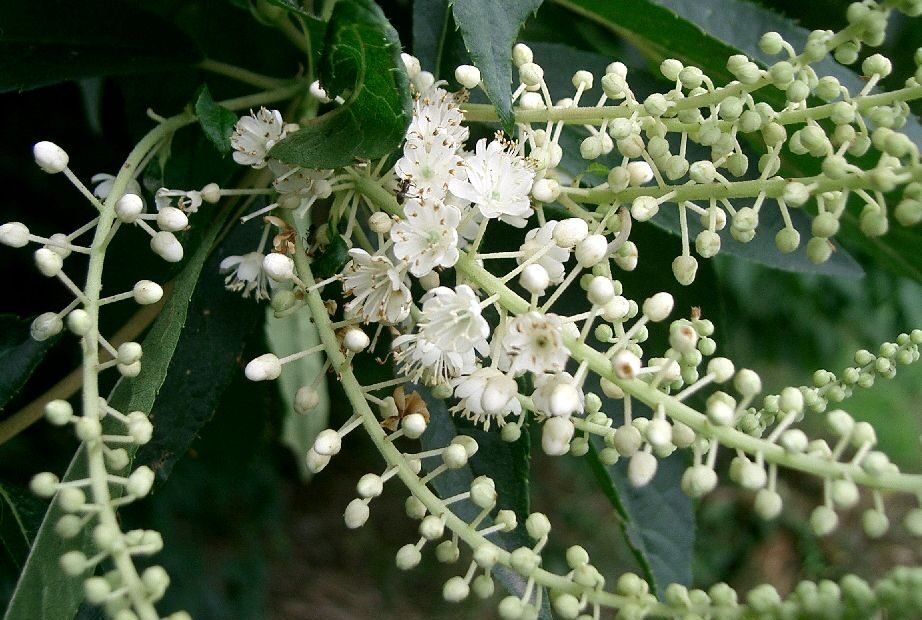
Flowers are produced on the current season’s growth in pendant or horizontally nodding terminal racemes. The individual white flowers have five distinct lobes and a noticeable fragrance. Bloom is characteristically late-summer into early fall in temperate U.S. gardens, though timing varies with latitude, spring temperatures, and plant establishment.
Pollination and visitors
The fragrant, nectar- and pollen-bearing flowers are reported as being visited primarily by bees, and the floral structure is consistent with insect pollination. A specific pollinator species is not sufficiently documented for this exact taxon in the reviewed sources, so the visitor record is kept at group level rather than assigned to a named species.
Clethra barbinervis photos
Click any photo for a larger view. Source, author and license are shown separately.
Diseases and pests
Diseases
Serious disease problems are not prominent in the reviewed horticultural references. Prevent stress-related problems by providing drainage, steady moisture, adequate spacing, and good air movement. Remove damaged foliage and avoid frequent overhead irrigation. Investigate persistent leaf spotting, dieback, or root decline by checking irrigation, soil compaction, winter injury, and planting depth before applying pesticides.
Pests
Spider mites may become troublesome in hot, dry conditions, particularly on stressed plants. Watch for stippling, dull foliage, fine webbing, or leaf drop. Improve irrigation and reduce heat stress first; rinse foliage when practical and conserve predatory mites and other beneficial organisms. Use a labeled miticide only if monitoring shows that nonchemical measures are insufficient.
Toxicity and pollen
No reliable, species-specific human or veterinary toxicity assessment was identified in the reviewed authoritative sources. This absence is not proof of safety. Treat the plant as ornamental, avoid deliberate ingestion, and keep unfamiliar plant material away from children and pets. Seek professional medical or veterinary advice after significant ingestion or if symptoms occur.
- Typical season
- Typically July–September in much of the United States
- Pollination / pollen
- Insect-dispersed pollen from open flowers
No species-specific airborne-pollen or allergy studies were located in the reviewed sources. The flowers are insect-pollinated, which generally limits long-distance pollen dispersal compared with wind-pollinated plants, but it does not demonstrate zero allergy risk. People with strong pollen sensitivity should avoid direct contact with flowers and monitor personal symptoms during bloom.
Native habitat
In its native range, Japanese Clethra occurs in temperate mountain forests, open woodland, and disturbed forest habitats. It is associated with climates that provide summer moisture and winter chilling. Garden performance is best in cool, humus-rich, acidic soils with dependable moisture and protection from severe late-spring or winter exposure.
Interesting fact
The epithet barbinervis refers to the beard-like hairs associated with the leaf veins. Mature bark exfoliates and remains ornamental after leaf fall. The species may develop a small-tree form rather than remaining a conventional shrub. Its capsules can persist into winter, extending seasonal interest after flowering.