Source:
 Hosta ‘Halcyon’ short overview
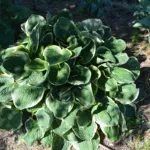
Hosta 'Halcyon' is a compact, clump-forming perennial valued for thick blue foliage with a pronounced waxy coating. Pale lavender, tubular flowers rise above the leaves in summer. It performs best in partial shade to shade with evenly moist, fertile, well-drained soil and works especially well in woodland borders, shaded beds, and containers. Protect it from harsh afternoon sun, slugs, and browsing pets.
Taxonomic classification
Hosta ‘Halcyon’ care guide
Light and placement
Give 'Halcyon' bright open shade, dappled light, or gentle morning sun, especially with protection from hot afternoon exposure. Too much direct sun can bleach or scorch the blue leaves; too little light may produce looser growth and weaker scapes. North- and east-facing beds or filtered light beneath high trees are suitable.
Watering and humidity
Water deeply when the top inch of soil begins to dry, keeping the root zone evenly moist during active growth. Increase frequency during hot, dry weather and reduce it after dormancy. Morning watering at the soil surface helps limit foliar disease. Do not allow containers or heavy soil to remain waterlogged.
Soil and growing medium
Use fertile, humus-rich soil that holds moisture without becoming waterlogged. A loamy, well-drained substrate is ideal, with a slightly acidic to neutral reaction. Incorporate compost before planting, but avoid compacted clay and sites that remain saturated around the crown.
Feeding
Apply a balanced, slow-release perennial fertilizer in spring as shoots emerge, or top-dress with compost. Avoid heavy nitrogen, which can produce softer foliage and encourage pest damage. Do not fertilize late in the season, when new growth may be vulnerable before dormancy.
Growth and habit
This cultivar forms a dense, symmetrical crown of overlapping leaves and dies back to the crown in winter. Keep mulch away from the crown, divide only when needed, and remove spent scapes or frost-damaged foliage for tidiness rather than to control size.
Planting and repotting
Plant in spring or early fall, setting the crown at about the same depth as it was growing in its container. Spread the roots naturally, water thoroughly, and mulch lightly without covering the crown. Allow roughly 18–24 inches between plants for a full mature clump.
Repot container-grown plants in early spring as growth begins, or divide and replant when the crown has clearly outgrown its container. Use a sturdy pot with drainage holes and a moisture-retentive but open potting mix. Avoid burying the crown deeply.
Propagation and pruning
Propagation
Division is the practical method. Divide established crowns in early spring as shoots emerge or in early fall, keeping several buds and healthy roots in each section. Seed is not recommended for preserving cultivar traits because seedlings may not reproduce 'Halcyon' reliably.
Pruning
Remove flower scapes after flowering if seed production is unwanted or leave them for seasonal interest. Cut the foliage to the ground after a hard frost or once it collapses naturally. Remove damaged leaves during the season for appearance and sanitation.
Overwintering
Leave the dormant crown outdoors in the ground in suitable USDA Zones 3–9. After frost collapses the foliage, remove debris and apply a light mulch in exposed or very cold sites, keeping it off the crown. Container plants are more vulnerable to root freezing and should be sheltered or insulated.
Uses
Primarily an ornamental foliage perennial for shaded beds, woodland gardens, edging, and large containers. Its dense leaves provide textural contrast and seasonal ground-level structure. Do not treat it as edible in pet-accessible areas because hostas are toxic to dogs and cats.
Appearance
Leaves are thick, rounded to broadly heart-shaped, blue-green to blue with a conspicuous waxy coating and strong ribbing. They overlap to form a tidy, low clump, while smooth flower scapes rise above the foliage in summer. The blue surface can fade somewhat with heat, rain, or strong sun.
Flowering
Pale lavender, tubular flowers appear on upright, leafless scapes in early to midsummer, usually June and July in much of the United States. The flowers are secondary to the foliage display but add vertical contrast above the clump.
Pollination and visitors
The tubular flowers may be visited by bees and bumblebees, but strong cultivar-specific visitor data are limited. Attraction is best regarded as incidental to low-level garden value rather than a primary pollinator planting.
Hosta 'Halcyon' photos
Click any photo for a larger view. Source, author and license are shown separately.
Diseases and pests
Diseases
Watch for crown rot, leaf spots, and foliar fungal problems in poorly drained or overcrowded conditions. Improve air circulation, water at the soil surface, remove badly affected foliage, and avoid working among wet plants. Good drainage and sanitation are the main preventive measures.
Pests
Slugs and snails are the principal pests, leaving irregular holes or shredded leaf margins. Reduce hiding places, water in the morning, remove debris, and use barriers or an appropriately labeled control when needed. Deer and rabbits may also browse the foliage; fencing or repellents may be necessary where pressure is high.
Related diseases and pests
Only Plant Doctor profiles whose host data indicate this plant may be affected are shown here.
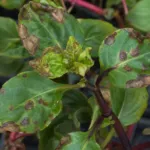 DiseaseImpatiens necrotic spot virus diseaseImpatiens necrotic spot orthotospovirus
 DiseaseSouthern blightAthelia rolfsii
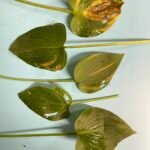 PestStrawberry foliar nematodeAphelenchoides fragariae
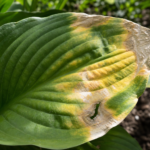 Environmental stressExcess light stress
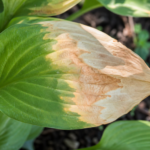 Environmental stressLeaf sunburn
 DiseaseAlternaria leaf spot and fruit rotAlternaria alternata
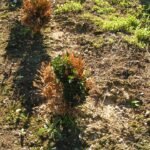 DiseasePhytophthora root and crown rotPhytophthora nicotianae
Toxicity and pollen
Hostas contain saponins and are listed by veterinary poison-control resources as toxic to dogs and cats. Ingestion can cause gastrointestinal upset such as vomiting, diarrhea, or depression. Keep pets from chewing the foliage or flowers and contact a veterinarian if ingestion occurs or symptoms persist.
- Typical season
- June–July during flowering
- Pollination / pollen
- Insect-dispersed pollen
Hosta flowers produce pollen during bloom, but the plant is insect-pollinated and is not generally regarded as a major source of airborne seasonal pollen. Sensitive individuals should still avoid handling flowers if they notice a personal reaction.
Native habitat
Garden hostas derive from temperate East Asian woodland flora, where related plants occupy shaded habitats with humus-rich soils and dependable moisture. In cultivation, 'Halcyon' prefers protected sites that resemble those conditions without standing water.
Interesting fact
'Halcyon' is associated with the Tardiana Group of hostas.
Frequently asked questions (FAQ)
The most relevant questions about this plant, with short and direct answers.
🌱Quick care
What is Hosta 'Halcyon' best known for?⌄
Hosta 'Halcyon' is best known for its thick, blue-gray foliage and dependable performance in shady gardens. It is a compact-to-medium clumping perennial that is also considered relatively slug-resistant for a hosta.
How much light does Hosta 'Halcyon' need?⌄
Hosta 'Halcyon' grows best in partial shade to shade, especially filtered or dappled light. Morning sun is usually tolerated, but hot afternoon sun can scorch or fade the leaves.
How often should I water Hosta 'Halcyon'?⌄
Water Hosta 'Halcyon' whenever the soil surface begins to dry, keeping the root zone evenly moist but not waterlogged. It needs more frequent watering during hot, dry weather and its first growing season.
Is Hosta 'Halcyon' easy to grow?⌄
Yes, Hosta 'Halcyon' is generally easy to grow when planted in shade, fertile soil, and consistent moisture. Its thick leaves and low-maintenance growth habit make it a reliable choice for woodland borders and shade gardens.
🌤️Environment and placement
Where should I plant Hosta 'Halcyon'?⌄
Plant Hosta 'Halcyon' in a sheltered spot such as a shady border, woodland garden, walkway edge, or container. Protect it from hot afternoon sun and cold, drying winds.
Can Hosta 'Halcyon' grow in full shade?⌄
Yes, Hosta 'Halcyon' can grow in full shade, although its growth may be slower and flowering less noticeable. Filtered shade or a few hours of gentle morning light usually produces stronger growth and better foliage color.
Can Hosta 'Halcyon' tolerate morning sun?⌄
Yes, Hosta 'Halcyon' generally tolerates morning sun, particularly when the soil remains moist. Avoid intense afternoon sun, which can bleach the blue color and cause leaf scorch.
What soil is best for Hosta 'Halcyon'?⌄
Use fertile, humus-rich, moisture-retentive soil that drains well. A slightly acidic to neutral soil, roughly pH 5.5 to 7.5, is suitable.
What USDA hardiness zones are suitable for Hosta 'Halcyon'?⌄
Hosta 'Halcyon' is commonly grown across USDA Zones 3 through 8, with some references extending it into Zone 9 where summer conditions are suitable. In warmer regions, deep shade and reliable moisture are especially important.
💧Care and problems
Why are the leaves of my Hosta 'Halcyon' turning brown?⌄
Brown leaf edges or patches usually indicate drought stress, excessive sun, heat, or wind exposure. Move or shade the plant if necessary and keep the soil consistently moist without making it soggy.
Does Hosta 'Halcyon' resist slugs?⌄
Hosta 'Halcyon' has relatively good slug resistance because its leaves are thick and textured, but it is not slug-proof. Slugs can still damage new growth, especially in wet gardens with heavy mulch.
How can I protect Hosta 'Halcyon' from slugs?⌄
Reduce slug habitat by removing fallen foliage, avoiding dense wet mulch around the crown, and keeping the planting area open and tidy. Hand-picking, traps, or a pet-safe slug control product can be used when damage appears.
Should I fertilize Hosta 'Halcyon'?⌄
Apply a balanced slow-release fertilizer in spring if the soil is poor or growth is weak. Avoid heavy late-season fertilizing, which can encourage tender growth before dormancy.
Why is my Hosta 'Halcyon' not growing well?⌄
Poor growth is commonly caused by insufficient moisture, excessive sun, compacted soil, root competition, or damage from slugs and voles. Check the planting conditions before adding fertilizer, because shade and consistent moisture are usually more important.
Do deer eat Hosta 'Halcyon'?⌄
Yes, deer may browse Hosta 'Halcyon' even though its thick leaves can be less appealing than those of some hostas. Use fencing or a labeled deer-repellent strategy if deer are common in your area.
Can Hosta 'Halcyon' grow in a container?⌄
Yes, Hosta 'Halcyon' grows well in a container placed in shade or filtered light. Use a moisture-retentive but well-drained potting mix, water regularly, and choose a container with room for the mature clump.
🪴Planting and repotting
When is the best time to plant Hosta 'Halcyon'?⌄
Plant Hosta 'Halcyon' in spring or early fall when temperatures are moderate and soil moisture is reliable. Avoid planting during periods of extreme summer heat or before the ground freezes.
How far apart should I plant Hosta 'Halcyon'?⌄
Space Hosta 'Halcyon' about 24 to 36 inches apart, depending on how quickly you want the plants to fill in. Mature clumps can reach roughly 18 to 24 inches tall and about 3 feet wide.
How deep should I plant Hosta 'Halcyon'?⌄
Plant Hosta 'Halcyon' with the crown at soil level, positioning the emerging buds just beneath or level with the surrounding soil. Planting too deeply can encourage crown and root problems.
Can Hosta 'Halcyon' be grown indoors?⌄
Hosta 'Halcyon' is primarily an outdoor perennial and usually does not thrive as a long-term indoor plant. It requires a winter dormancy period and typically performs best outdoors in a cool, shaded location.
✂️Propagation and pruning
How do I divide Hosta 'Halcyon'?⌄
Divide Hosta 'Halcyon' by lifting the clump and separating it into sections, ensuring that each division has roots and several growing buds or eyes. Early spring or late summer is generally suitable, followed by thorough watering.
Can Hosta 'Halcyon' be propagated from leaf cuttings?⌄
No, ordinary leaf cuttings will not reliably produce new Hosta 'Halcyon' plants. Propagation is normally done by dividing the crown, while commercial growers may use tissue culture.
Should I cut back Hosta 'Halcyon' in the fall?⌄
Cut back Hosta 'Halcyon' after frost has killed the foliage and the plant has gone dormant. Removing the old leaves helps tidy the planting and reduces hiding places for slugs and some pests.
Should I remove the flower stalks from Hosta 'Halcyon'?⌄
Remove the flower stalks after blooming if you prefer a tidier appearance or want to emphasize the foliage. Leaving them in place does not usually harm a healthy plant.
⚠️Toxicity and safety
Is Hosta 'Halcyon' toxic to dogs?⌄
Yes, Hosta 'Halcyon' should be considered toxic to dogs because hostas contain saponins. Ingestion can cause signs such as vomiting, diarrhea, or depression, so contact a veterinarian if a dog eats the plant.
Is Hosta 'Halcyon' toxic to cats?⌄
Yes, Hosta 'Halcyon' should be considered toxic to cats because hostas contain saponins. Keep cats from chewing the foliage and contact a veterinarian or animal poison service if ingestion occurs.
Is Hosta 'Halcyon' poisonous to people?⌄
Hosta 'Halcyon' is not generally treated as a major human-poisoning concern, but it should not be eaten and may cause stomach upset. Keep plant material away from young children and do not use it as an edible plant.
🌸Flowering and special interest
When does Hosta 'Halcyon' bloom?⌄
Hosta 'Halcyon' typically blooms in midsummer to late summer. Its pale lavender to blue-violet, bell-shaped flowers rise on tall, upright scapes above the foliage.
Does Hosta 'Halcyon' have fragrant flowers?⌄
Hosta 'Halcyon' is grown mainly for its blue foliage, and its flowers are not generally considered strongly fragrant. The blooms provide seasonal color and may attract hummingbirds.
How tall do the flower stalks of Hosta 'Halcyon' get?⌄
The flower stalks of Hosta 'Halcyon' can reach about 26 to 28 inches tall, standing above the lower foliage. Their height may vary with soil fertility, moisture, age, and growing conditions.