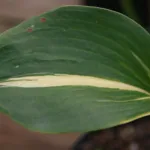
AI-generated illustration
Hosta ‘Golden Meadows’ short overview
Hosta 'Golden Meadows' is a medium-to-large deciduous perennial prized for broad, corrugated leaves with creamy yellow to pale gold centers and blue-green margins. It forms a substantial clump for woodland borders, shaded beds, and containers, then sends up summer scapes bearing near-white to pale lavender, bell-shaped flowers. Give it moist, well-drained soil, consistent water during growth, and protection from hot afternoon sun.
Taxonomic classification
Hosta ‘Golden Meadows’ care guide
Light and placement
Choose bright filtered light, dappled shade, or gentle morning sun, especially in an east-facing bed. Protect the plant from hot afternoon sun, reflected heat, and drying wind; pale or yellow-centered leaves can scorch at the margins. Very deep shade may produce slower growth and weaker flowering, although the plant remains useful in woodland conditions.
Watering and humidity
Water deeply when the upper inch of soil begins to dry, aiming for steady moisture rather than repeated shallow sprinkling. Increase frequency during hot, dry weather and reduce it after dormancy, when the crown needs little water. Morning irrigation is preferable; keep foliage and crown from staying wet overnight.
Soil and growing medium
Use fertile, humus-rich soil that holds steady moisture but drains freely. Loam or improved clay is suitable; incorporate compost before planting. A slightly acidic to neutral reaction is preferred, although hostas tolerate a moderately broad soil-pH range. Avoid chronically waterlogged ground, which can damage the crown and roots.
Feeding
Apply compost or a balanced, slow-release fertilizer in early spring as shoots emerge. A light feed is sufficient; excessive nitrogen can produce soft, lush foliage and increase pest or disease problems. Keep granular fertilizer away from the crown, water after application, and stop feeding by late summer so the plant can begin dormancy naturally.
Growth and habit
This hosta develops from a short rhizomatous crown into a broad, dense clump. It fills out gradually and becomes more impressive as the crown gains divisions. Keep competing roots and aggressive groundcovers away from the planting area, and divide only when the clump has outgrown its space or needs rejuvenation.
Planting and repotting
Plant in spring or early fall when soil is workable. Set the crown with growing points at or just below the soil surface; do not bury it deeply. Space about 30–43 inches apart for a mature clump, allowing extra room where a broad display is desired. Water thoroughly after planting and keep evenly moist during establishment.
Repot container plants in early spring as growth begins, or transplant while dormant in fall. Move the plant into a container only modestly larger than the root mass, refresh the potting mix, and keep the crown at its original level. Containers dry and heat faster than garden soil, so monitor moisture closely during summer.
Propagation and pruning
Propagation
Divide established clumps in early spring as shoots emerge or in early fall. Lift carefully, separate sections with several growing points and healthy roots, and replant immediately at the original depth. Division is the dependable method for preserving the cultivar; seed will not reproduce its named variegation true to type.
Pruning
Cut flower scapes to the crown after flowering if seed production and fading stems are unwanted. Remove yellowed or frost-killed leaves after dormancy in late fall or early spring. Cleaning old foliage helps reduce overwintering shelter for slugs and improves spring sanitation.
Overwintering
Leave the plant outdoors in the ground through winter in suitable USDA zones. After frost turns the foliage yellow, cut it back and remove debris. In colder or exposed gardens, a light mulch can reduce frost heaving, but avoid piling wet mulch directly over the crown. Containers need extra insulation because roots are less protected than in-ground plants.
Uses
Use as a foliage specimen, shaded border plant, woodland-garden accent, mass planting, or large-container perennial. Its broad leaves provide seasonal cover around fading spring bulbs. It is ornamental rather than culinary, and the foliage should be kept away from dogs and cats because hostas contain saponins.
Appearance
The plant is identified by broad, thick, rounded to ovate leaves with a corrugated surface, slightly wavy margins, pale creamy yellow to gold centers, and dark blue-green edging. Foliage emerges brighter in spring and may mature toward muted gold. Upright scapes create a contrasting vertical element above the low, spreading leaf mound.
Flowering
Upright scapes rise above the foliage in summer and carry loose racemes of nodding, bell-shaped flowers. Sources differ slightly on flower color, describing them from near-white to pale lavender; the foliage is the cultivar's primary ornamental feature. Remove spent scapes if a tidier appearance is preferred, or leave them briefly for seasonal interest.
Pollination and visitors
The summer flowers are open to general insect visitors, including bees, bumblebees, butterflies, and other small insects. Documentation for a cultivar-specific pollinator species is limited, so no single Latin-named pollinator is assigned. Flower visitors are separate from human allergy risk.
Diseases and pests
Diseases
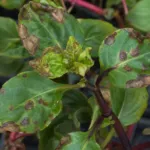
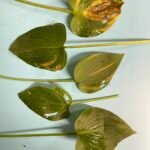
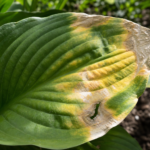
Watch for crown and root rots in poorly drained soil, foliar fungal spotting during prolonged wet weather, and hosta virus symptoms such as abnormal mottling or streaking. Improve air circulation, water at the soil surface, remove badly affected foliage, and obtain virus-free plants. Do not compost plants suspected of systemic virus infection.
Pests
Slugs and snails are the main routine pests, leaving ragged holes in emerging leaves. Reduce hiding places, water in the morning, hand-pick where practical, and use an iron-phosphate bait according to its label when needed. Deer and rabbits may also browse hosta foliage; physical exclusion is the most dependable protection.
Related diseases and pests
Only Plant Doctor profiles whose host data indicate this plant may be affected are shown here.

Toxicity and pollen
Hostas contain saponins and are listed by the ASPCA as toxic to dogs and cats; ingestion may cause vomiting, diarrhea, or depression. Evidence for serious human toxicity is limited, but the plant should not be eaten. Keep pets from chewing foliage, flowers, or roots and seek veterinary advice after significant ingestion.
- Typical season
- Summer flowering period
- Pollination / pollen
- Insect-associated, not strongly wind-dispersed
Hosta pollen is primarily released from exposed anthers within insect-visited flowers rather than carried in large windborne clouds. Airborne allergy relevance is therefore expected to be low, but not necessarily zero for highly sensitive individuals. The plant's pet toxicity is unrelated to pollen exposure.
Native habitat
The cultivar is a garden selection rather than a wild population. Its reported parentage links it to Hosta sieboldiana, a shade-adapted East Asian hosta associated with moist, humus-rich woodland conditions. In cultivation, it performs best where soil remains evenly moist and summer heat is moderated by filtered light.
Interesting fact
This cultivar is recorded as a sport of Hosta sieboldiana 'Elegans'.
Its foliage combines pale centers with blue-green margins.
The leaves are broad, thick, slightly wavy, and corrugated.
The named cultivar is not reliably reproduced from seed.
Hostas can be divided while actively growing with limited setback.
Frequently asked questions (FAQ)
The most relevant questions about this plant, with short and direct answers.
🌱Quick care
What is Hosta 'Golden Meadows' known for?⌄
Hosta 'Golden Meadows' is known for heavily textured, puckered foliage with golden centers, blue-green margins, and pale green streaking. It forms a medium-large mound and is primarily grown for its foliage.
How big does Hosta 'Golden Meadows' get?⌄
Hosta 'Golden Meadows' typically grows about 18–24 inches tall and 22–36 inches wide. Give it enough room to form a broad clump without crowding nearby perennials.
🌤️Environment and placement
How much light does Hosta 'Golden Meadows' need?⌄
Hosta 'Golden Meadows' grows best in part shade to shade, especially with protection from hot afternoon sun. A few hours of gentle morning sun can help develop stronger gold coloring if the soil stays evenly moist.
Can Hosta 'Golden Meadows' grow in full shade?⌄
Yes, Hosta 'Golden Meadows' can grow in full shade, but its gold centers may appear more yellow-green. Bright filtered light or limited morning sun generally produces stronger foliage contrast.
Can Hosta 'Golden Meadows' tolerate afternoon sun?⌄
It is best protected from hot afternoon sun because direct heat can scorch or bleach the leaves. If afternoon sun is unavoidable, provide reliable moisture and monitor the leaf edges for browning.
What soil is best for Hosta 'Golden Meadows'?⌄
Plant Hosta 'Golden Meadows' in humus-rich, moist but well-drained loam. Improve poor soil with compost, but avoid locations that remain waterlogged after rain.
What USDA hardiness zones suit Hosta 'Golden Meadows'?⌄
Hosta 'Golden Meadows' is generally listed as a cold-hardy perennial for approximately USDA Zones 3–8. Exact performance can vary with winter exposure, drainage, and the reliability of summer moisture.
💧Care and problems
How often should I water Hosta 'Golden Meadows'?⌄
Water Hosta 'Golden Meadows' whenever the soil begins to dry, aiming for consistent moisture rather than soggy conditions. Newly planted specimens may need watering several times per week during hot or dry weather.
How much water does Hosta 'Golden Meadows' need in summer?⌄
Keep Hosta 'Golden Meadows' evenly moist during summer, particularly during heat waves or when planted beneath trees. Deep watering is preferable to frequent shallow sprinkling, and dry leaf margins indicate moisture stress.
Should I mulch around Hosta 'Golden Meadows'?⌄
Yes, apply a 2–3 inch layer of organic mulch around Hosta 'Golden Meadows' to conserve moisture and moderate soil temperature. Keep mulch slightly away from the crown to reduce rot risk.
Does Hosta 'Golden Meadows' need fertilizer?⌄
Hosta 'Golden Meadows' usually needs only fertile soil and a spring application of compost or balanced fertilizer. Avoid heavy feeding late in the season because it can encourage soft growth before dormancy.
Why are the leaves of my Hosta 'Golden Meadows' turning brown?⌄
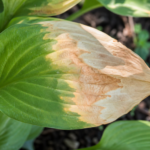
Brown leaf edges usually indicate drought, hot sun, reflected heat, or wind exposure. Move the plant toward more shade if necessary and keep the root zone consistently moist but well drained.
Do slugs eat Hosta 'Golden Meadows'?⌄
Yes, slugs and snails can chew holes in Hosta 'Golden Meadows' leaves, especially in damp, shaded gardens. Reduce hiding places, water at the soil line, and use a locally approved slug-control method when needed.
🪴Planting and repotting
When is the best time to plant Hosta 'Golden Meadows'?⌄
Early spring or early fall is generally the best time to plant Hosta 'Golden Meadows'. It can also be planted during the growing season if it receives careful watering while establishing.
How do I plant Hosta 'Golden Meadows' in the ground?⌄
Plant Hosta 'Golden Meadows' with the crown at soil level and the roots spread through loosened, compost-enriched soil. Water thoroughly after planting and maintain even moisture until new growth is established.
Can Hosta 'Golden Meadows' grow in a container?⌄
Yes, Hosta 'Golden Meadows' can grow in a large container with drainage holes and moisture-retentive, well-drained potting mix. Choose a container wide enough for its mature clump and protect the roots from severe winter temperature swings.
✂️Propagation and pruning
How do I propagate Hosta 'Golden Meadows'?⌄
Propagate Hosta 'Golden Meadows' by dividing the crown in early spring as shoots emerge or in early fall. Each division should include healthy roots and at least one growing point; seedlings will not reliably reproduce the cultivar.
When should I divide Hosta 'Golden Meadows'?⌄
Divide Hosta 'Golden Meadows' in early spring or early fall, when temperatures are moderate and soil moisture is easier to maintain. Division is usually unnecessary until the clump becomes crowded or you want additional plants.
Should I cut back Hosta 'Golden Meadows' after flowering?⌄
Cut the flower stalks back after blooming if you want to keep the plant looking tidy or direct energy toward the foliage. Removing the stalks is optional and does not replace removing dead foliage at the end of the season.
⚠️Toxicity and safety
Is Hosta 'Golden Meadows' toxic to dogs?⌄
Yes, Hosta 'Golden Meadows' is toxic to dogs if eaten. Keep pets away from the foliage and contact a veterinarian promptly if a dog consumes the plant or develops vomiting, diarrhea, or lethargy.
Is Hosta 'Golden Meadows' toxic to cats?⌄
Yes, Hosta 'Golden Meadows' is toxic to cats if ingested. Prevent access to the plant and seek veterinary advice if a cat chews the leaves or shows signs of gastrointestinal distress.
Is Hosta 'Golden Meadows' safe for children?⌄
Hosta 'Golden Meadows' is not generally considered a major human poisoning hazard, but the foliage should not be eaten. Supervise young children around the plant and contact a poison-control service if ingestion occurs.
🌸Flowering and special interest
What color flowers does Hosta 'Golden Meadows' produce?⌄
Hosta 'Golden Meadows' produces pale flowers that are commonly described as white to pale lavender. Flower color can vary somewhat with growing conditions and how the cultivar is labeled by the nursery.
When does Hosta 'Golden Meadows' bloom?⌄
Hosta 'Golden Meadows' generally blooms in midsummer to late summer. The flowers rise above the foliage on upright scapes, but the plant is valued more for its textured leaves than for heavy flowering.
Should I remove the flowers from Hosta 'Golden Meadows'?⌄
Remove the flower stalks after flowering if you prefer a cleaner appearance or want to prevent seed formation. Leaving them in place does not usually harm an established plant.