 Source:
 Hosta ‘Striptease’ short overview
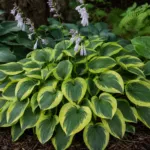
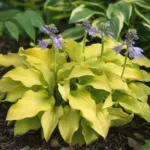
Hosta 'Striptease' is a distinctive, medium-sized perennial valued for its layered leaf pattern: a chartreuse to gold center, a narrow irregular white stripe, and a broad dark-green margin. The clumping mound is especially effective in partly shaded borders, woodland gardens, and containers. Pale lavender flowers rise above the foliage in summer. Grow it in consistently moist, well-drained soil and shelter the leaves from harsh afternoon sun and persistent slug pressure.
Taxonomic classification
Hosta ‘Striptease’ care guide
Light and placement
Provide bright filtered light, morning sun, or part shade; dense shade can reduce vigor, while strong afternoon sun may scorch the lighter leaf center and increase moisture stress. In hot regions, orient the plant to receive morning light with afternoon protection. Pale, bleached patches suggest excess sun; stretched growth and weaker color suggest overly dark conditions.
Watering and humidity
Water deeply when the upper inch of soil begins to dry, keeping the root zone evenly moist rather than alternately saturated and dry. Increase frequency during hot, windy weather and reduce it after dormancy begins. Mulch lightly to moderate soil temperature, but keep mulch away from the crown. Average outdoor humidity is adequate when soil moisture is consistent.
Soil and growing medium
Use fertile, moisture-retentive soil that still drains freely. Loam enriched with compost is ideal; clay can work if improved with organic matter and drainage. A slightly acidic to neutral pH is suitable, although hostas tolerate a moderately broad soil range. Avoid chronically waterlogged planting sites, where crown and root problems become more likely.
Feeding
Apply a balanced slow-release fertilizer or a modest layer of compost in early spring as shoots emerge. A second light feeding is optional on poor soil, but stop by midsummer so the plant can harden before dormancy. Avoid heavy nitrogen, which can produce soft foliage and increase pest pressure.
Growth and habit
This cultivar forms a steadily enlarging, mounded clump of basal leaves. Mature plants can become broad and visually dense, so leave generous space and divide only when the crown is overcrowded or propagation is desired. Variegated plants may occasionally produce off-type green shoots that can be removed to preserve the cultivar’s pattern.
Planting and repotting
Plant in spring or early fall, setting the crown at the soil surface or only slightly below it; do not bury emerging eyes deeply. Space about 36–50 inches apart for a mature display, allowing room for the broad mound. Water regularly during the first season so new divisions establish before winter.
Repot container plants in spring, before vigorous leaf expansion, when the crown is crowded or roots fill the pot. Move into a container only modestly larger with fresh, moisture-retentive but well-drained potting mix. Keep the crown at the same depth and water thoroughly after transplanting.
Propagation and pruning
Propagation
Divide established clumps in spring as shoots emerge or in early fall. Separate crowns with several eyes and healthy roots using a sharp, disinfected knife or spade. Seed does not reliably reproduce the named cultivar, so division or clean clonal nursery propagation is preferred.
Pruning
Cut flower scapes after flowering if seed production is not wanted, or leave them for a short period of seasonal interest. Remove yellowing foliage after frost or once it collapses in late fall. Do not cut healthy leaves repeatedly during the growing season.
Overwintering
Leave the dormant crown outdoors in the ground in suitable USDA zones. After a hard freeze, remove collapsed foliage and apply a light mulch in exposed sites, keeping the crown uncovered enough to prevent rot. Container plants are more vulnerable to root freezing and should be sheltered in an unheated protected location or sunk into the ground.
Uses
Use as a foliage specimen, edging plant, mass planting, woodland perennial, or large container subject in shaded settings. The contrasting leaf colors brighten dark borders without relying on flowers. Keep it away from pets that chew plants because hostas are toxic if eaten.
Appearance
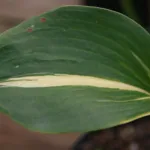
Leaves are oval to broadly heart-shaped, slightly wavy, and typically satiny to lightly textured. The unusual tricolor pattern places a thin irregular white stripe between the lighter center and the wide dark-green edge. Upright scapes rise above the mound and carry pale lavender flowers. Off-type green shoots may appear and can be removed during division.
Flowering
Pale lavender to violet, pendulous, six-tepaled flowers are carried in terminal racemes on upright scapes above the foliage. Flowering is mainly a summer event, commonly around July in much of the United States. The cultivar is grown primarily for its foliage rather than for fragrance or floral display.
Pollination and visitors
The summer flowers provide nectar and pollen for generalist flower visitors, including bees, bumblebees, and hoverflies. Evidence for a pollinator species uniquely associated with ‘Striptease’ is not established, so visitor groups are reported rather than a named insect species.
Hosta 'Striptease' photos
Click any photo for a larger view. Source, author and license are shown separately.
Diseases and pests
Diseases
Prevent crown and root rot by avoiding saturated soil and planting the crown shallowly. Remove collapsing or diseased tissue and improve air circulation around crowded clumps. Hosta virus X is a serious concern in infected stock; purchase clean plants, isolate suspicious specimens, and disinfect tools between divisions because there is no curative treatment.
Pests
Slugs and snails commonly chew hosta leaves, especially during cool, damp weather. Reduce hiding places, water at the soil line, remove debris, and inspect plants at night. Use barriers or labeled controls when needed, following product directions and protecting pets and wildlife.
Related diseases and pests
Only Plant Doctor profiles whose host data indicate this plant may be affected are shown here.
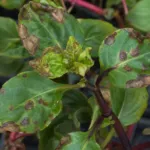 DiseaseImpatiens necrotic spot virus diseaseImpatiens necrotic spot orthotospovirus
 DiseaseSouthern blightAthelia rolfsii
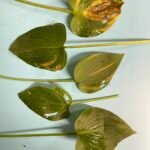 PestStrawberry foliar nematodeAphelenchoides fragariae
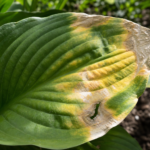 Environmental stressExcess light stress
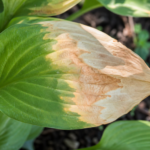 Environmental stressLeaf sunburn
 DiseasePhytophthora cactorum crown, collar, root and fruit rotPhytophthora cactorum
 DiseasePhytophthora root and crown rotPhytophthora nicotianae
Toxicity and pollen
Hostas contain saponins and are recognized as toxic to dogs and cats if eaten. Typical exposure signs include vomiting, diarrhea, and depression. Human toxicity is not well characterized, so avoid deliberate consumption, supervise children around the plant, and seek medical or veterinary advice after ingestion.
- Typical season
- Flowering season, mainly June–August in the United States
- Pollination / pollen
- Mostly insect-carried pollen; not a major wind-dispersed source
Hosta flowers release pollen during bloom, but the plant is primarily insect-pollinated and is not generally regarded as a major source of wind-dispersed seasonal pollen. Sensitive people should still avoid handling flowers during personal allergy symptoms and monitor their own response.
Native habitat
The cultivar itself is of garden origin, while Hosta ancestry comes from temperate East Asian woodland environments. Hostas naturally suit humus-rich soils, filtered light, seasonal moisture, and climates with winter dormancy. In the United States, they perform best where summer heat is moderated and soil does not dry repeatedly.
Interesting fact
‘Striptease’ is a sport of ‘Gold Standard’ selected by C. and R. Thompson. It was named American Hosta Growers Association Hosta of the Year for 2005. The narrow white stripe between the lighter center and dark margin is its defining feature.
Frequently asked questions (FAQ)
The most relevant questions about this plant, with short and direct answers.
🌱Quick care
What is Hosta 'Striptease'?⌄
Hosta 'Striptease' is a hardy herbaceous perennial grown for its variegated foliage. Its leaves typically have a chartreuse-to-yellow center, a narrow white stripe, and a broad dark-green margin.
How big does Hosta 'Striptease' get?⌄
Hosta 'Striptease' can form a mound about 20 inches tall and roughly 45 inches wide at maturity. It may take about 2–5 years to reach its full landscape size.
How fast does Hosta 'Striptease' grow?⌄
Hosta 'Striptease' is generally a moderately vigorous hosta that fills out over several growing seasons. Growth is faster with consistent moisture, fertile soil, and suitable shade.
🌤️Environment and placement
Does Hosta 'Striptease' need shade?⌄
Hosta 'Striptease' grows best in part shade to shade, especially with protection from intense afternoon sun. A location with bright filtered light or gentle morning sun usually supports good color.
Can Hosta 'Striptease' tolerate morning sun?⌄
Yes, Hosta 'Striptease' can usually tolerate a few hours of mild morning sun if the soil stays evenly moist. Protect it from hot afternoon sun, which can fade or scorch the leaves.
Can Hosta 'Striptease' grow in full sun?⌄
Hosta 'Striptease' may survive limited full sun in cool, moist conditions, but full sun is not its preferred exposure. In hotter areas, direct afternoon sun can cause leaf scorch and reduce the quality of the variegation.
What USDA zones are suitable for Hosta 'Striptease'?⌄
Hosta 'Striptease' is generally suitable for cold-winter gardens where hostas are hardy, including many USDA Zones 3–9. Exact performance depends on winter protection, summer heat, and local moisture conditions.
What soil is best for Hosta 'Striptease'?⌄
Use fertile, moist but well-drained loam or improved clay for Hosta 'Striptease'. Incorporating organic matter can improve drainage in heavy clay while helping sandy soil retain moisture.
💧Care and problems
How often should I water Hosta 'Striptease'?⌄
Water Hosta 'Striptease' regularly so the soil remains consistently moist but not waterlogged. Provide extra water during hot, dry periods, particularly for plants exposed to more sun.
Why are the leaves of my Hosta 'Striptease' turning brown?⌄
Brown leaf edges or patches usually indicate heat, drought, sun scorch, or inconsistent watering. Move the plant away from harsh afternoon sun and maintain steady soil moisture, while avoiding permanently soggy conditions.
Why is my Hosta 'Striptease' losing its center stripe?⌄
A changing or weak center stripe can result from seasonal variation, stress, excessive shade, or reversion within the clump. If individual shoots consistently produce plain green leaves, they may be reverting and can be separated.
How do I protect Hosta 'Striptease' from slugs?⌄
Reduce slug hiding places, keep the area free of dense debris, and inspect plants regularly, especially after rain. Hand-picking, barriers, or a locally approved slug control can help when feeding is severe.
Do deer eat Hosta 'Striptease'?⌄
Yes, deer commonly browse hostas, including Hosta 'Striptease'. Use fencing, deer repellents, or protective netting if deer pressure is significant in your garden.
🪴Planting and repotting
When is the best time to plant Hosta 'Striptease'?⌄
Plant Hosta 'Striptease' in spring or early fall while temperatures are moderate. Water thoroughly after planting and keep the root zone evenly moist while it becomes established.
How far apart should I plant Hosta 'Striptease'?⌄
Space Hosta 'Striptease' about 3–4 feet apart from center to center when allowing room for a mature clump. Closer spacing is possible for faster coverage, but it will require division sooner.
Can Hosta 'Striptease' grow in clay soil?⌄
Yes, Hosta 'Striptease' can grow in clay soil when it is improved with organic matter and does not remain waterlogged. Plant slightly high or improve drainage if the site holds standing water.
Can Hosta 'Striptease' be grown in a container?⌄
Yes, Hosta 'Striptease' can be grown in a large container with drainage holes and fertile, moisture-retentive potting mix. Container plants dry out faster than in-ground plants and need protection from extreme winter temperatures.
✂️Propagation and pruning
How do I divide Hosta 'Striptease'?⌄
Divide Hosta 'Striptease' in early spring as shoots emerge or in early fall. Lift the clump, separate sections with healthy roots and at least one or two shoots, and replant them promptly at the original depth.
Can Hosta 'Striptease' be grown from seed?⌄
It can produce seed, but seedlings may not reproduce the distinctive appearance of Hosta 'Striptease'. Division is the preferred method when you want plants that remain true to the named cultivar.
Should I remove plain green shoots from Hosta 'Striptease'?⌄
Remove consistently plain green shoots if you want to preserve the variegated appearance of Hosta 'Striptease'. Dig down and separate the entire reverting shoot or crown section rather than simply cutting off the leaves.
⚠️Toxicity and safety
Is Hosta 'Striptease' poisonous to dogs and cats?⌄
Yes, Hosta 'Striptease' is toxic to dogs and cats if eaten. Keep pets from chewing the leaves or flowers and contact a veterinarian promptly if ingestion causes concern.
🌸Flowering and special interest
When does Hosta 'Striptease' bloom?⌄
Hosta 'Striptease' typically blooms in summer. Its pale purple flowers rise above the foliage on upright flower stalks.
Should I cut off the flowers of Hosta 'Striptease'?⌄
Cutting off the flower stalks is optional and mainly improves appearance after flowering. Leave them in place if you enjoy the blooms or want to observe seed development.