Source:
Hosta ‘Rainforest Sunrise’ short overview
Hosta 'Rainforest Sunrise' is an award-winning, deciduous perennial prized for its glossy foliage and strong seasonal color. Leaves emerge light green, then develop dark green margins around radiant gold centers. In midsummer, upright scapes carry light lavender flowers above the clumping mound. Give it rich, evenly moist, well-drained soil and morning sun or dappled shade; in hotter parts of the United States, protect the leaves from intense afternoon sun.
Taxonomic classification
Hosta ‘Rainforest Sunrise’ care guide
Light and placement
Choose morning sun, bright open shade, or dappled shade, especially beneath deciduous trees. The gold-centered foliage can take more light than blue hostas, but intense afternoon sun in hot regions may scorch leaves. Too little light can reduce compactness and color contrast; too much causes bleached patches, brown margins, or midday wilt.
Watering and humidity
Water deeply when the upper inch of soil begins to dry, keeping the root zone evenly moist during active growth. Increase attention during heat, drought, and the first season after planting. Reduce watering after foliage yellows and dormancy begins, but do not allow containers to remain waterlogged.
Soil and growing medium
Use fertile, moisture-retentive but well-drained soil amended with compost or other organic matter. A slightly acidic to neutral reaction is suitable; Walters Gardens lists pH 5.8–6.5 for production. Avoid winter-wet sites, compacted clay, and poorly drained containers.
Feeding
Apply compost or a balanced, diluted fertilizer in early spring as shoots emerge. A light liquid feed is preferable to placing granular fertilizer near the crown; Walters Gardens specifically recommends cautious liquid feeding in production. Stop heavy feeding by late summer so growth can harden before dormancy.
Growth and habit
This is a medium-growing, clumping perennial that expands gradually from rhizomatous crowns. Mature plants form a substantial mound and usually need little intervention beyond watering, seasonal cleanup, slug monitoring, and occasional division when overcrowded.
Planting and repotting
Plant in spring or early fall, setting the crown at soil level and spreading the roots outward. Allow about 18–30 inches between plants for a developed clump, with wider spacing in mass plantings. Water consistently during the first growing season while avoiding standing water.
Repot container plants in early spring as growth emerges, moving to a slightly larger pot only when the root system is crowded. Use a high-quality potting mix with organic matter and reliable drainage. Keep the crown at the same depth and water thoroughly after transplanting.
Propagation and pruning
Propagation
Divide established clumps in early spring as shoots emerge, ensuring each division has roots and at least one growing eye. Seed is possible but will not reliably reproduce this named cultivar. Commercial production commonly uses tissue culture.
Pruning
Cut old foliage to the ground after it collapses in late fall or winter. Remove damaged leaves during the season and cut flower scapes after bloom if a tidier appearance is preferred.
Overwintering
Leave the plant outdoors in USDA Zones 3–8. Allow foliage to die back naturally, then remove it after frost or in late winter. Container plants are more exposed to freeze-thaw injury; shelter pots against a building or overwinter them in an unheated, protected location while maintaining dormancy.
Uses
Use as a specimen or massed foliage plant in shaded beds, woodland gardens, along north or east-facing foundations, and in containers. Its gold-centered leaves provide strong contrast beneath trees and among ferns. It is ornamental rather than a recommended edible plant, and it should be kept away from pets that may chew it.
Appearance
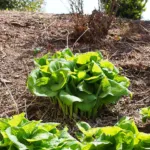
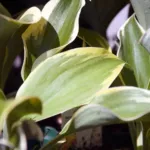
The cultivar forms a low, rounded mound of thick, glossy leaves. New foliage is initially light green, then develops a dramatic dark green margin around a bright gold center. The substantial leaf texture improves presentation through summer and can reduce, but not eliminate, slug damage. Lavender flower scapes rise above the foliage in midsummer.
Flowering
Light lavender flowers appear on upright scapes about 24 inches tall in midsummer. The flowers rise above the foliage and are secondary to the cultivar’s ornamental leaf display. Remove spent scapes if seed production is not wanted, or leave them briefly for seasonal interest.
Pollination and visitors
Hosta flowers are visited by bees, bumblebees, and butterflies. The cultivar’s light lavender midsummer flowers provide a seasonal nectar resource, although foliage—not flowers—is its main ornamental value.
Hosta 'Rainforest Sunrise' photos
Click any photo for a larger view. Source, author and license are shown separately.
Diseases and pests
Diseases
Prevent problems by providing airflow, avoiding overhead irrigation late in the day, and keeping crowns out of saturated soil. Watch for crown rot, petiole rot, and foliar fungal spotting. Remove affected tissue, improve drainage, and avoid replanting hostas in persistently wet soil.
Pests
Slugs and snails are the main foliage pests; thick leaves offer some resistance but are not immune. Deer and rabbits may browse the foliage. Reduce hiding places, water in the morning, use barriers where appropriate, and protect young shoots during spring emergence.
Related diseases and pests
Only Plant Doctor profiles whose host data indicate this plant may be affected are shown here.
 DiseaseImpatiens necrotic spot virus diseaseImpatiens necrotic spot orthotospovirus
 DiseaseSouthern blightAthelia rolfsii
 PestStrawberry foliar nematodeAphelenchoides fragariae
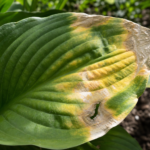 Environmental stressExcess light stress
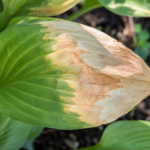 Environmental stressLeaf sunburn
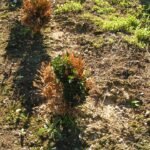 DiseasePhytophthora root and crown rotPhytophthora nicotianae
Toxicity and pollen
ASPCA lists Hosta as toxic to dogs and cats because of saponins, with vomiting, diarrhea, and depression among reported signs. The exact cultivar has not been independently assessed, so treat the whole plant as potentially harmful if chewed or eaten and contact a veterinarian after ingestion.
- Typical season
- Midsummer during flowering
- Pollination / pollen
- Insect-carried flower pollen
Hosta pollen is primarily released from exposed anthers during flowering and is not generally considered a major airborne pollen source. Individual sensitivity is still possible, especially during close contact with flowers; ordinary garden exposure is usually limited.
Native habitat
Hosta is a temperate East Asian genus associated with moist woodland margins, streamside settings, and humus-rich soils. Garden cultivars perform best where the root zone stays evenly moist but drains freely, with protection from intense afternoon heat.
Interesting fact
The cultivar is a sport of Hosta 'Maui Buttercups'. It was named American Hosta Growers Association Hosta of the Year for 2013. Its thick, glossy leaves show useful resistance to slug feeding compared with many thinner-leaved hostas. Foliage emerges greener before the gold-centered pattern develops.
Frequently asked questions (FAQ)
The most relevant questions about this plant, with short and direct answers.
🌱Quick care
What is Hosta 'Rainforest Sunrise'?⌄
Hosta 'Rainforest Sunrise' is a compact, clump-forming perennial grown for its golden-yellow to yellow-green leaves with darker green margins. It is a deciduous hosta that dies back in fall and returns in spring.
How big does Hosta 'Rainforest Sunrise' get?⌄
Hosta 'Rainforest Sunrise' usually grows about 8–12 inches tall and 16–23 inches wide at maturity. Its exact size varies with climate, soil, moisture, and plant age.
What USDA hardiness zones are suitable for Hosta 'Rainforest Sunrise'?⌄
Hosta 'Rainforest Sunrise' is generally suitable for USDA Zones 3–9. In warmer zones, protection from hot afternoon sun and consistent moisture are especially important.
Is Hosta 'Rainforest Sunrise' easy to grow?⌄
Yes, Hosta 'Rainforest Sunrise' is generally easy to grow when planted in moist, rich, well-drained soil and protected from intense afternoon sun. Its main routine problems are drought stress, slugs, and snails.
🌤️Environment and placement
Does Hosta 'Rainforest Sunrise' need full shade?⌄
No, it does not need full shade; morning sun or dappled shade usually produces the best foliage color. Avoid hot afternoon sun, which can scorch the leaves, especially when the soil is dry.
How much sun can Hosta 'Rainforest Sunrise' tolerate?⌄
Hosta 'Rainforest Sunrise' can tolerate a few hours of gentle morning sun, but it performs best in partial to full shade. More sun may intensify the gold color only when moisture is consistent and afternoon heat is limited.
Where should I plant Hosta 'Rainforest Sunrise'?⌄
Plant it in a sheltered bed, woodland garden, border edge, or container receiving morning sun or filtered light. Keep it away from hot reflected heat, strong drying winds, and poorly drained locations.
What soil is best for Hosta 'Rainforest Sunrise'?⌄
The best soil is rich, organic, moisture-retentive soil that drains well. Improve compact or sandy soil with compost, but do not plant it where water remains stagnant around the roots.
Can Hosta 'Rainforest Sunrise' grow under trees?⌄
Yes, it can grow under trees if it receives adequate filtered light and regular moisture. Avoid planting directly in dense tree-root competition unless you can irrigate during dry periods.
💧Care and problems
How often should I water Hosta 'Rainforest Sunrise'?⌄
Water Hosta 'Rainforest Sunrise' whenever the top inch of soil begins to dry, aiming to keep the root zone evenly moist. Plants in containers, sandy soil, or hot climates may need water more often.
Why are the leaves of my Hosta 'Rainforest Sunrise' turning brown?⌄
Brown leaf edges or patches are usually caused by drought, hot sun, wind, or heat reflected from paving or walls. Move the plant to gentler light and keep the soil evenly moist, but avoid overwatering poorly drained soil.
How do I protect Hosta 'Rainforest Sunrise' from slugs and snails?⌄
Reduce slug and snail damage by watering at the soil line, removing hiding debris, and checking plants after dark or early in the morning. The cultivar's thicker leaves may offer some resistance, but no hosta is completely immune.
Does Hosta 'Rainforest Sunrise' need fertilizer?⌄
A spring application of a balanced, slow-release fertilizer can support growth, but heavy feeding is usually unnecessary in fertile soil. Avoid applying high-nitrogen fertilizer late in the season, since it can encourage tender growth.
Should I mulch Hosta 'Rainforest Sunrise'?⌄
Yes, apply a thin layer of organic mulch to conserve moisture and moderate soil temperature. Keep mulch a few inches away from the crown to reduce the risk of rot and pest problems.
Is Hosta 'Rainforest Sunrise' deciduous?⌄
Yes, it is deciduous and normally dies back after frost in fall. Remove the collapsed foliage in late fall or before new growth emerges in spring.
🪴Planting and repotting
When is the best time to plant Hosta 'Rainforest Sunrise'?⌄
The best planting times are spring and early fall, when temperatures are moderate and soil moisture is easier to maintain. Water newly planted divisions or nursery plants regularly until they establish.
Can Hosta 'Rainforest Sunrise' grow in a container?⌄
Yes, Hosta 'Rainforest Sunrise' grows well in a container with drainage holes and rich, moisture-retentive potting mix. Choose a pot at least 2 inches wider than the root ball and monitor moisture more closely than for plants in the ground.
How far apart should I plant Hosta 'Rainforest Sunrise'?⌄
Space plants about 16–24 inches apart, depending on whether you want the clumps to touch at maturity. Allow extra room around each crown for airflow and easy maintenance.
✂️Propagation and pruning
How do I propagate Hosta 'Rainforest Sunrise'?⌄
Propagate Hosta 'Rainforest Sunrise' by dividing the clump in early spring as shoots emerge or in late summer. Separate sections with healthy roots and at least one growing point, then replant them at the original depth.
Can Hosta 'Rainforest Sunrise' be grown from seed?⌄
It can produce seed, but seedlings may not retain the distinctive foliage of the named cultivar. Division is the preferred method when you want plants true to 'Rainforest Sunrise'.
Should I cut back Hosta 'Rainforest Sunrise' after flowering?⌄
Cut flower stalks back after flowering if you prefer a tidier appearance or want the plant to focus on foliage. Removing the flower stalks is optional and does not usually determine whether the plant returns the following year.
⚠️Toxicity and safety
Is Hosta 'Rainforest Sunrise' toxic to dogs and cats?⌄
Yes, Hosta 'Rainforest Sunrise' is toxic to dogs and cats if eaten. Ingestion can cause gastrointestinal upset, so contact a veterinarian promptly if a pet consumes part of the plant.
🌸Flowering and special interest
When does Hosta 'Rainforest Sunrise' bloom?⌄
Hosta 'Rainforest Sunrise' usually blooms in early to mid-summer, with timing varying by climate. It produces pale lavender to mauve, bell-shaped flowers on upright stalks above the foliage.
Are the flowers of Hosta 'Rainforest Sunrise' fragrant?⌄
The flowers are generally grown for their color rather than fragrance, and strong fragrance is not typically reported for this cultivar. The plant's main ornamental feature is its bright, variegated foliage.
Why is my Hosta 'Rainforest Sunrise' not blooming?⌄
A young plant, excessive shade, drought, transplant stress, or removal of flower stalks before buds open can explain a lack of blooms. Give it consistent moisture and suitable filtered light, then allow time for the clump to mature.