Source:
 Hosta ‘Pilgrim’ short overview
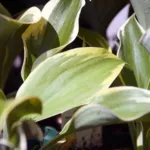
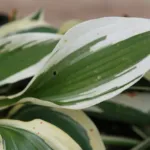
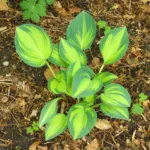
Hosta 'Pilgrim' is a compact, clump-forming perennial selected for its attractive variegated foliage. Heart-shaped gray-green leaves carry broad margins that emerge yellow and gradually soften to creamy white during summer. Upright scapes rise above the mound in midsummer, bearing loose clusters of pale lavender, bell-shaped flowers. It performs best in partial to full shade with consistently moist, well-drained soil.
Taxonomic classification
Hosta ‘Pilgrim’ care guide
Light and placement
Grow in partial shade to full shade, ideally with morning sun or bright open shade and protection from hot afternoon rays. Too much intense sun can scorch or bleach the leaves and dry the soil quickly. Too little light may reduce vigor and soften the yellow-to-cream margin contrast, although full shade is tolerated when moisture and fertility are adequate.
Watering and humidity
Water deeply when the upper inch of soil begins to dry, keeping the root zone consistently moist but never waterlogged. Increase frequency during hot, dry summer weather and reduce it in cool fall conditions without allowing newly planted divisions to dry. Mulch lightly with compost or shredded leaves to moderate soil moisture.
Soil and growing medium
Use fertile, humus-rich soil that remains evenly moist but drains freely. Loam or amended clay is suitable; sandy soil benefits from added organic matter. Hosta tolerates a broad pH range from acidic through alkaline, but extreme conditions are less desirable than a stable, well-structured soil.
Feeding
Apply a balanced, slow-release perennial fertilizer in spring as shoots emerge, following the product label. Compost or leaf mold can be used as a light surface mulch. Avoid heavy nitrogen feeding late in the season, which can encourage soft growth and does not improve the characteristic variegation.
Growth and habit
This is a compact, clump-forming perennial that enlarges gradually from a crown and underground rhizomatous structure. Its spreading habit makes it useful as an edging or low mass planting. Divide overcrowded clumps rather than pruning healthy leaves during the growing season.
Planting and repotting
Plant in spring or early fall, setting the crown at soil level rather than burying it. Space plants about 18–24 inches apart, allowing room for the spreading mound. Water deeply after planting and maintain even moisture while roots establish.
Repot container-grown plants in spring as new shoots emerge, or divide and refresh the potting mix before active summer growth. Choose a container with drainage and only modestly increase its size to avoid persistently wet soil.
Propagation and pruning
Propagation
Divide established clumps in spring as shoots emerge or in early fall. Division is the most reliable way to preserve the cultivar. Seed can be produced, but seedlings will not reliably reproduce the named cultivar’s foliage pattern.
Pruning
Remove spent flower scapes after flowering if you do not want seed production. Cut the foliage to the ground after it collapses naturally in fall or after a hard freeze. Do not remove healthy leaves early, since they continue feeding the crown.
Overwintering
Leave the plant dormant outdoors in the ground in suitable USDA zones. After foliage collapses, remove debris and apply a light mulch in exposed or very cold locations. Container plants are more vulnerable to root freezing and should be sheltered in an unheated protected space or insulated outdoors.
Uses
Use for shaded borders, edging, woodland gardens, mass planting, containers, and as a foliage contrast near paths or patios. Its flowers can be left for visiting insects or removed when a foliage-only display is preferred. It is ornamental rather than an edible or medicinal plant.
Appearance
The plant forms a low, dense mound of heart-shaped, gray-green leaves with broad, irregular margins. Margins emerge yellow and commonly mature toward creamy white, creating a bright edge around the darker center. Upright scapes carry small lavender bells above the foliage, making the cultivar easy to recognize when in bloom.
Flowering
Pale lavender flowers are carried in loose clusters on upright, leafless scapes that rise above the foliage in midsummer. The individual blooms are small, bell-shaped, and usually secondary to the cultivar’s ornamental leaves. Flower scapes may be removed after blooming if seed production is not wanted.
Pollination and visitors
Hosta flowers provide nectar and pollen for visiting bees and bumblebees. The lavender, bell-shaped blooms are most useful to insects during the summer flowering period; documented visitor activity should not be confused with airborne allergy risk.
Hosta 'Pilgrim' photos
Click any photo for a larger view. Source, author and license are shown separately.
Diseases and pests
Diseases
Watch for crown or root rot in poorly drained soil, along with foliar diseases during prolonged wet weather. Improve drainage, water at the soil surface, remove badly damaged foliage, and avoid working among plants when leaves are wet. Good spacing and sanitation reduce recurring problems.
Pests
Slugs and snails are the main pests, leaving irregular holes or ragged margins. Reduce hiding places, improve air circulation, hand-pick during active periods, and use barriers or labeled controls where necessary. Deer and rabbits may also browse foliage, especially in untreated landscapes.
Related diseases and pests
Only Plant Doctor profiles whose host data indicate this plant may be affected are shown here.
 DiseaseImpatiens necrotic spot virus diseaseImpatiens necrotic spot orthotospovirus
 DiseaseSouthern blightAthelia rolfsii
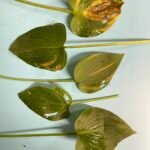 PestStrawberry foliar nematodeAphelenchoides fragariae
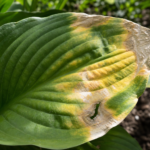 Environmental stressExcess light stress
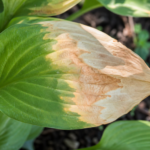 Environmental stressLeaf sunburn
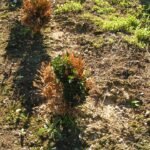 DiseasePhytophthora root and crown rotPhytophthora nicotianae
Toxicity and pollen
Hostas contain saponins and are recognized as toxic to dogs and cats if eaten. Typical signs include gastrointestinal upset such as vomiting or diarrhea. Keep pets from chewing the foliage or flowers and contact a veterinarian if ingestion causes symptoms.
- Typical season
- June–August during flowering
- Pollination / pollen
- Insect-carried pollen
Hosta pollen is primarily transferred by insects rather than dispersed in large airborne clouds. Airborne allergy risk is therefore generally low, although sensitive individuals may still react to plant contact or nearby flowering plants.
Native habitat
Hostas are woodland-edge perennials associated with the temperate regions of East Asia. In cultivation, they favor cool, shaded positions with organic, moisture-retentive soil and protection from hot afternoon sun. The cultivar is a garden selection rather than a wild North American native.
Interesting fact
The leaf margin begins yellow and commonly lightens toward creamy white as summer progresses.
The cultivar forms a compact mound but can spread wider than it grows tall.
Lavender scapes rise well above the foliage and provide midsummer contrast.
Hostas expand by underground rhizomatous crowns and are readily divided.
The cultivar is especially useful for edging shaded beds and woodland paths.
Frequently asked questions (FAQ)
The most relevant questions about this plant, with short and direct answers.
🌱Quick care
What is Hosta 'Pilgrim'?⌄
Hosta 'Pilgrim' is a compact, clump-forming perennial grown for heart-shaped gray-green leaves with irregular yellow-to-creamy-white margins. It typically reaches about 8–12 inches tall and 20–30 inches wide.
Is Hosta 'Pilgrim' easy to grow?⌄
Yes, Hosta 'Pilgrim' is generally easy to grow when planted in shade or partial shade and kept evenly moist. It is a low-maintenance, cold-hardy perennial once established.
How much light does Hosta 'Pilgrim' need?⌄
Hosta 'Pilgrim' grows best in partial shade to full shade. A little gentle morning sun may be tolerated, but hot afternoon sun can scorch the cream margins and dry the plant.
How often should I water Hosta 'Pilgrim'?⌄
Water Hosta 'Pilgrim' whenever the soil surface begins to dry, keeping the root zone evenly moist but not soggy. Newly planted divisions need more frequent watering until established, especially during hot or dry weather.
How big does Hosta 'Pilgrim' get?⌄
Hosta 'Pilgrim' usually forms a small mound about 8–12 inches tall and 20–30 inches wide. Its flower scapes can rise to roughly 18–22 inches above the foliage.
🌤️Environment and placement
What USDA hardiness zones are suitable for Hosta 'Pilgrim'?⌄
Hosta 'Pilgrim' is cold hardy in much of the United States, with published listings generally placing it in approximately USDA Zones 3–9. Actual performance can vary with winter exposure, snow cover, and local growing conditions.
Can Hosta 'Pilgrim' grow in full shade?⌄
Yes, Hosta 'Pilgrim' can grow in full shade, provided the soil remains moist and well drained. Growth may be slower and flowering may be lighter than in bright filtered shade.
Can Hosta 'Pilgrim' tolerate morning sun?⌄
Hosta 'Pilgrim' can usually tolerate mild morning sun if moisture is consistent. Protect it from intense afternoon sun, which may bleach or scorch the variegated leaf margins.
What is the best soil for Hosta 'Pilgrim'?⌄
The best soil for Hosta 'Pilgrim' is moist, well-drained loam enriched with organic matter. Compost or leaf mold can improve moisture retention while helping prevent waterlogged conditions.
Can Hosta 'Pilgrim' grow in a container?⌄
Yes, Hosta 'Pilgrim' is well suited to a container kept in shade or partial shade. Use a container with drainage holes and a moisture-retentive potting mix, and protect the roots from severe winter temperature swings.
💧Care and problems
Why are the leaves of my Hosta 'Pilgrim' turning brown?⌄
Brown leaf edges on Hosta 'Pilgrim' are commonly caused by drought, hot sun, wind, or heat stress. Move container plants to a more protected location and maintain consistent soil moisture without leaving the roots waterlogged.
Why is my Hosta 'Pilgrim' not growing well?⌄
Poor growth may result from insufficient moisture, excessive sun, compacted soil, root competition, or slug damage. Check the planting site, improve organic matter, and keep the soil evenly moist during the growing season.
Does Hosta 'Pilgrim' need fertilizer?⌄
Hosta 'Pilgrim' usually needs only modest fertilization in average garden soil. A balanced slow-release fertilizer or compost applied in spring as growth begins is generally sufficient; avoid heavy feeding late in the season.
How do I protect Hosta 'Pilgrim' from slugs and snails?⌄
Protect Hosta 'Pilgrim' by reducing damp hiding places, watering at the soil line, and checking plants regularly for feeding damage. Hand-picking, barriers, or a slug control product labeled for ornamental gardens can be used when necessary.
Should I mulch around Hosta 'Pilgrim'?⌄
Yes, a thin layer of organic mulch helps Hosta 'Pilgrim' conserve moisture, moderate soil temperature, and reduce weeds. Keep mulch a few inches away from the crown to reduce the risk of rot.
When should I cut back Hosta 'Pilgrim'?⌄
Cut back Hosta 'Pilgrim' after the foliage collapses in fall or before new growth emerges in early spring. Removing dead leaves helps tidy the plant and reduces places where pests may overwinter.
🪴Planting and repotting
When is the best time to plant Hosta 'Pilgrim'?⌄
The best planting times are spring and early fall, when temperatures are moderate and soil moisture is easier to maintain. Avoid planting during extreme summer heat unless you can provide reliable irrigation.
How far apart should I plant Hosta 'Pilgrim'?⌄
Space Hosta 'Pilgrim' about 18–24 inches apart for a connected planting, or allow up to 30 inches for each mature clump to develop fully. The exact spacing depends on whether you want an edging effect or distinct plants.
How deep should I plant Hosta 'Pilgrim'?⌄
Plant Hosta 'Pilgrim' with the crown at the soil surface or only slightly below it, and spread the roots outward in the planting hole. Planting the crown too deeply can encourage rot and slow establishment.
Can Hosta 'Pilgrim' be planted under trees?⌄
Hosta 'Pilgrim' can grow beneath trees if it receives filtered shade and enough water. Avoid locations with dense, dry tree-root competition unless you can regularly irrigate and amend the soil.
✂️Propagation and pruning
How do you propagate Hosta 'Pilgrim'?⌄
The usual way to propagate Hosta 'Pilgrim' is by dividing the clump. Lift the plant, separate sections with roots and viable buds or eyes, and replant the divisions promptly at the original depth.
When should I divide Hosta 'Pilgrim'?⌄
Divide Hosta 'Pilgrim' in early spring as new shoots emerge or in early fall after flowering. These periods reduce heat stress and give the divisions time to establish before harsh weather.
Can Hosta 'Pilgrim' be grown from seed?⌄
Hosta 'Pilgrim' can produce viable seed, but seedlings may not closely reproduce the parent’s distinctive variegation. Division or tissue-cultured plants are preferred when you want an exact copy of the cultivar.
Should I remove the flowers from Hosta 'Pilgrim'?⌄
You may remove spent flower stalks from Hosta 'Pilgrim' to improve appearance, but it is not essential for plant health. Cutting the stalk near its base after flowering prevents seed formation and keeps the clump looking tidy.
⚠️Toxicity and safety
Is Hosta 'Pilgrim' toxic to dogs and cats?⌄
Yes, Hosta 'Pilgrim' is toxic to dogs and cats if eaten. Ingestion can cause gastrointestinal upset, so contact a veterinarian promptly if a pet consumes the plant or develops symptoms.
Is Hosta 'Pilgrim' deer resistant?⌄
Hosta 'Pilgrim' is not reliably deer resistant. Deer may browse the leaves and flower stalks, especially where populations are high or other food sources are limited.
🌸Flowering and special interest
When does Hosta 'Pilgrim' bloom?⌄
Hosta 'Pilgrim' typically blooms in midsummer, often around July in many U.S. gardens. Timing varies with climate, spring temperatures, and the plant’s growing conditions.
What color are the flowers of Hosta 'Pilgrim'?⌄
Hosta 'Pilgrim' produces pale lavender to pale purple, bell-shaped flowers on upright scapes. The flowers rise above the compact foliage and provide a seasonal contrast to the variegated leaves.
Is Hosta 'Pilgrim' fragrant?⌄
Hosta 'Pilgrim' is not generally grown as a strongly fragrant hosta, and fragrance reports are inconsistent. Its main ornamental feature is the variegated foliage rather than the flowers.