Source:
Hosta ‘Patriot’ short overview
Hosta 'Patriot' is a medium-sized, clump-forming perennial grown for its glossy dark-green leaves edged with broad, irregular white margins. It prefers partial to full shade, evenly moist well-drained soil, and protection from hot afternoon sun. Lavender, bell-shaped flowers rise on tall scapes in summer. This long-lived hosta suits woodland borders, shaded beds, containers, and mass plantings, and is hardy through much of the United States.
Taxonomic classification
Hosta ‘Patriot’ care guide
Light and placement
Grow in partial shade to full shade, ideally with morning light or filtered light beneath deciduous trees. An east- or north-facing position is often suitable. Excessive afternoon sun can bleach or scorch the white margins, while very deep shade may reduce vigor and flowering.
Watering and humidity
Water deeply when the upper inch of soil begins to dry, keeping the root zone evenly moist through spring and summer. Increase frequency during heat or drought and reduce it after dormancy begins. Water the soil rather than repeatedly wetting the foliage.
Soil and growing medium
Use fertile, humus-rich soil that remains evenly moist but does not stay waterlogged. A loamy structure with added compost supports strong leaf growth and reduces drought stress. Slightly acidic to neutral soil is suitable; avoid compacted sites with poor drainage, especially in containers.
Feeding
Apply compost or a balanced slow-release perennial fertilizer in spring as shoots emerge. Avoid heavy nitrogen feeding, which can produce soft, lush foliage and increase pest damage. Stop routine feeding by late summer so growth can mature before dormancy.
Growth and habit
Forms a long-lived, slowly enlarging crown of overlapping leaves. Growth is most reliable when soil moisture is steady and roots are protected from intense afternoon heat. Mature clumps can be divided when they become crowded or lose vigor at the center.
Planting and repotting
Plant in spring or early fall, with the crown at soil level and roots spread naturally. Space plants about 24–36 inches apart depending on the intended display and local growing conditions. Water deeply after planting and maintain even moisture while roots establish.
Repot container-grown plants in early spring as growth resumes, or divide and refresh the root zone when the crown becomes crowded. Use a container with drainage holes and a moisture-retentive but well-aerated potting mix.
Propagation and pruning
Propagation
Divide established clumps in early spring as shoots emerge or in early fall. Separate crowns with a sharp, clean knife while retaining roots and viable buds. Seed is possible but will not reliably reproduce the named cultivar.
Pruning
Cut flower scapes after flowering if seed development is not desired. Remove yellowing foliage after frost or once dormancy is established. Avoid cutting healthy leaves prematurely because they continue to replenish the crown.
Overwintering
Leave the crown outdoors in USDA Zones 3–8, where the plant naturally becomes dormant after frost. Remove collapsed foliage after dormancy and keep mulch light and loose around, not over, the crown. Containers may need extra insulation in exposed cold locations.
Uses
Use as a foliage specimen, shaded border plant, woodland groundcover, foundation planting, or container perennial. The high-contrast leaves pair well with ferns, heucheras, astilbes, and spring bulbs. It is ornamental only; do not treat it as an edible or medicinal plant.
Appearance
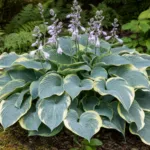
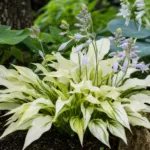
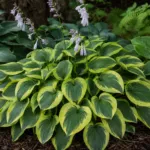
The plant forms a rounded mound of glossy, ovate leaves with dark-green centers and broad, irregular white margins. Leaves are medium-sized and strongly contrasting, making the cultivar easy to distinguish from solid-green hostas. Tall scapes rise above the foliage in summer.
Flowering
Tall scapes emerge above the foliage in summer and carry one-sided racemes of funnel- to bell-shaped lavender flowers. The flowers are secondary to the strongly variegated foliage, and bloom timing is usually July through August in much of the United States.
Pollination and visitors
The lavender flowers can be visited by bees during the summer bloom period. Documentation for this exact cultivar is limited, so pollinator attraction is rated low rather than high.
Hosta 'Patriot' photos
Click any photo for a larger view. Source, author and license are shown separately.
Diseases and pests
Diseases
Good spacing, moderate airflow, and watering at the soil surface help reduce crown and leaf diseases. Remove badly damaged foliage and clear fallen leaves in autumn. Suspect crown rot when leaves collapse from the base; improve drainage and avoid planting crowns too deeply.
Pests
Slugs and snails commonly damage the leaves, especially in cool, damp conditions. Hand-pick, reduce hiding places, keep mulch away from the crown, and use iron phosphate bait where appropriate. Deer and rabbits may also browse hosta foliage; fencing or repellents may be needed.
Related diseases and pests
Only Plant Doctor profiles whose host data indicate this plant may be affected are shown here.
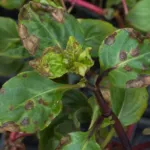 DiseaseImpatiens necrotic spot virus diseaseImpatiens necrotic spot orthotospovirus
 DiseaseSouthern blightAthelia rolfsii
 PestStrawberry foliar nematodeAphelenchoides fragariae
 Environmental stressExcess light stress
 Environmental stressLeaf sunburn
 DiseasePhytophthora cactorum crown, collar, root and fruit rotPhytophthora cactorum
 DiseasePhytophthora root and crown rotPhytophthora nicotianae
Toxicity and pollen
Hostas contain saponins and are listed as toxic to dogs and cats by the ASPCA for Hosta generally. Evidence is not cultivar-specific, so avoid allowing pets to chew substantial amounts of leaves or flowers. Possible signs include vomiting, diarrhea, and depression.
- Typical season
- Summer flowering period
- Pollination / pollen
- Insect-borne pollen
Hosta flowers are insect-pollinated and do not usually release large quantities of pollen into the air. Airborne allergy exposure is therefore expected to be low, though individual sensitivity cannot be ruled out during bloom.
Native habitat
The cultivar derives from Asian woodland hosta material and is adapted to cool, moist, organically enriched soils beneath filtered canopy light. In gardens, it performs best where summer moisture is dependable and the soil does not bake or remain saturated.
Interesting fact
‘Patriot’ is a sport of Hosta ‘Francee’. It was named Hosta of the Year by the American Hosta Growers Association in 1997. Its broad white margins can brighten deeply shaded planting beds.
Frequently asked questions (FAQ)
The most relevant questions about this plant, with short and direct answers.
🌱Quick care
How do you care for Hosta 'Patriot'?⌄
Grow Hosta 'Patriot' in partial shade to shade, fertile well-drained soil, and consistently moderate moisture. It is generally easy-care and hardy in USDA Zones 3–8, with some sources listing a wider range.
Is Hosta 'Patriot' easy to grow?⌄
Yes, Hosta 'Patriot' is generally considered an easy, long-lived perennial. Keep the soil evenly moist, provide afternoon shade in hot climates, and protect the foliage from slugs and deer.
🌤️Environment and placement
How much sun does Hosta 'Patriot' need?⌄
Hosta 'Patriot' grows best in partial shade to full shade, although it has better sun tolerance than many hostas. In hotter regions, avoid strong afternoon sun to reduce leaf scorch.
Can Hosta 'Patriot' grow in full sun?⌄
Hosta 'Patriot' can tolerate more sun than many hostas if the soil stays consistently moist. Full sun is most successful in cooler climates; hot afternoon exposure can bleach or scorch the leaves.
What soil is best for Hosta 'Patriot'?⌄
Use moist, fertile, well-drained loam enriched with organic matter. The plant can tolerate several soil types, but compacted or chronically wet soil increases the risk of root problems.
What USDA hardiness zones are suitable for Hosta 'Patriot'?⌄
Hosta 'Patriot' is commonly listed for USDA Zones 3–8, while some horticultural sources extend its range to Zone 9. In warmer zones, dependable shade and regular moisture are especially important.
How much space does Hosta 'Patriot' need?⌄
Allow approximately 30–48 inches of space for a mature Hosta 'Patriot', depending on growing conditions and the source’s size estimate. Its foliage forms a medium to medium-large mound that expands gradually.
💧Care and problems
How often should you water Hosta 'Patriot'?⌄
Water Hosta 'Patriot' whenever the soil surface begins to dry, keeping the root zone evenly and moderately moist. Water more often during hot, dry weather and less when rainfall is sufficient.
Why are the leaves of Hosta 'Patriot' turning brown?⌄
Brown leaf edges on Hosta 'Patriot' commonly result from drought, hot sun, wind, or heat stress. Keep the soil consistently moist and provide afternoon shade, especially in hot or dry climates.
What is eating holes in Hosta 'Patriot' leaves?⌄
Slugs and snails are the most common cause of holes in Hosta 'Patriot' leaves. Reduce hiding places, avoid wet mulch directly against the crown, and use a control method labeled for hostas if damage is severe.
Do deer eat Hosta 'Patriot'?⌄
Yes, deer may eat Hosta 'Patriot', although this cultivar is sometimes described as slightly less palatable than other hostas. It should not be considered deer-proof where deer pressure is high.
Does Hosta 'Patriot' have pest or disease problems?⌄
The main problems are slugs and snails, with occasional damage from deer and rabbits. Hostas can also be affected by viruses or foliar nematodes, so remove and discard plants with persistent, unusual streaking or distorted foliage.
Should Hosta 'Patriot' be fertilized?⌄
Apply a balanced, slow-release fertilizer in spring if the soil is not already fertile. Avoid excessive nitrogen, which can produce softer foliage and encourage lush growth more vulnerable to pests.
Does Hosta 'Patriot' die back in winter?⌄
Yes, Hosta 'Patriot' is deciduous and normally goes dormant after frost. Remove collapsed foliage in fall or before mid-spring to tidy the planting and reduce overwintering pest habitat.
🪴Planting and repotting
When is the best time to plant Hosta 'Patriot'?⌄
Plant Hosta 'Patriot' in spring or early fall when temperatures are moderate and soil moisture is reliable. Avoid planting during periods of extreme heat or drought unless irrigation is available.
How do you plant Hosta 'Patriot' in the ground?⌄
Set Hosta 'Patriot' at the same depth it was growing in its container, spread the roots, backfill with amended soil, and water thoroughly. Keep the crown at soil level rather than burying it under mulch.
Can Hosta 'Patriot' grow in containers?⌄
Yes, Hosta 'Patriot' grows well in a container that has drainage holes and enough room for its expanding crown. Use a moisture-retentive but well-drained potting mix and water whenever the mix begins to dry.
How often should Hosta 'Patriot' be repotted?⌄
Repot Hosta 'Patriot' when the roots fill the container, the crown becomes crowded, or the plant dries out unusually quickly. Spring is usually the easiest time to divide or move it into a larger pot.
✂️Propagation and pruning
How do you propagate Hosta 'Patriot'?⌄
Propagate Hosta 'Patriot' by dividing the crown in early spring or late summer. Separate sections with roots and shoots, replant them promptly, and keep the divisions evenly moist while they establish.
Can Hosta 'Patriot' be grown from seed?⌄
Hosta 'Patriot' can produce seed, but seedlings may not reproduce its distinctive white-edged foliage. Division is the preferred method when you want plants that remain true to the cultivar.
Should Hosta 'Patriot' be divided every year?⌄
No, Hosta 'Patriot' does not need annual division and can remain in place for years. Divide it only when the clump becomes overcrowded, outgrows its space, or you want additional plants.
Should you cut back Hosta 'Patriot' after flowering?⌄
Cut flower stalks back after blooming if you prefer a tidier appearance or want the plant to focus energy on foliage. Removing the stalks is optional and is not required for healthy growth.
⚠️Toxicity and safety
Is Hosta 'Patriot' toxic to dogs and cats?⌄
Yes, Hosta 'Patriot' is potentially toxic to dogs and cats if eaten. Keep pets from consuming the leaves, flowers, or other plant parts, and contact a veterinarian promptly if ingestion occurs.
🌸Flowering and special interest
When does Hosta 'Patriot' bloom?⌄
Hosta 'Patriot' usually blooms in mid to late summer, commonly from July into August in the United States. Lavender flowers rise above the foliage on tall scapes.
What color are the flowers on Hosta 'Patriot'?⌄
Hosta 'Patriot' produces pale lavender to mauve, funnel-shaped flowers. The cultivar is grown mainly for its dark green leaves with broad, irregular white margins rather than for its flowers.
Does Hosta 'Patriot' attract pollinators?⌄
The lavender flowers of Hosta 'Patriot' can provide nectar for visiting pollinators such as bees. Its primary ornamental value, however, is the contrasting variegated foliage.