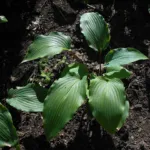
AI-generated illustration
Hosta ‘Victory’ short overview
Hosta ‘Victory’ is a spectacular giant hosta selected for its glossy, broadly heart-shaped green leaves edged with creamy yellow margins that fade toward cream white as summer progresses. The upright-to-spreading clump becomes a substantial shade-garden specimen, while very tall summer scapes carry near-white to pale lavender tubular flowers. Give it rich, consistently moist, well-drained soil and protection from harsh afternoon sun; keep foliage away from chewing pets because hostas are toxic to dogs and cats.
Taxonomic classification
Hosta ‘Victory’ care guide
Light and placement
Grow in bright shade or part shade, ideally with morning sun and protection from hot afternoon rays. East, north, or filtered woodland exposures are suitable. Too much direct sun can scorch or bleach the margins and cause premature summer decline; too little light may produce looser growth and less vigorous flowering. Morning light is generally safer than intense western exposure.
Watering and humidity
Water deeply when the upper inch of soil begins to dry, keeping the root zone evenly moist rather than alternating between drought and saturation. Increase frequency during hot weather and the first growing season. Mulch helps stabilize moisture, but keep mulch away from the crown. Container plants may need daily checks during summer heat.
Soil and growing medium
Use deep, fertile soil amended with organic matter and capable of holding even moisture without becoming stagnant. Loam or improved clay is suitable when drainage is adequate. A slightly acidic to neutral soil is ideal, though established plants tolerate a broader pH range. Mulch lightly to conserve moisture, keeping it away from the crown.
Feeding
Apply compost or a balanced slow-release perennial fertilizer in early spring as growth begins. A light second feeding may be useful in poor soil, but heavy nitrogen can produce soft, overly lush foliage and increase pest pressure. Do not fertilize drought-stressed, newly divided, or dormant plants.
Growth and habit
This cultivar forms a broad, substantial clump from a crown of herbaceous shoots and usually becomes more impressive with age. It is best given permanent space rather than treated as a small edging plant. Divide only when necessary, because frequent disturbance delays the development of a full specimen.
Planting and repotting
Plant in spring or early fall, setting the crown at soil level with the buds just below or at the surface. Space about 4 to 6 feet apart for a mature specimen, allowing extra room where maximum spread is desired. Water thoroughly after planting and maintain even moisture through the first growing season.
Repot container-grown plants in early spring as new shoots emerge, or divide and refresh the container when the clump becomes root-bound. Use a sturdy, wide container with drainage holes and a moisture-retentive but well-aerated potting mix. Avoid burying the crown deeply.
Propagation and pruning
Propagation
Division is the practical method and is best done in early spring as shoots emerge or in early fall. Lift the clump, separate sections with roots and viable buds, and replant promptly. The cultivar can set viable seed, but seedlings will not reliably reproduce the named cultivar.
Pruning
Cut flower scapes after flowering if seed production is not wanted, or leave them until frost for late-season structure. Remove yellowed foliage after a hard freeze and clear debris from the crown. Avoid cutting healthy leaves during the growing season unless they are damaged or diseased.
Overwintering
Leave the plant outdoors in the ground through winter within its hardiness range. After a hard freeze, remove collapsed foliage and keep the crown covered only with a light mulch in exposed sites. Container plants are more vulnerable to root freezing; move them to a sheltered unheated location or insulate the pot rather than bringing the plant into a warm indoor room.
Uses
Use as a large specimen in shade gardens, a bold foliage anchor in woodland borders, or a dramatic planting for the north side of buildings. It also works in very large containers with dependable irrigation. Flowers can be used as cut material, but this is primarily an ornamental foliage plant and is not recommended for edible use.
Appearance
The plant forms a dramatic mound of thick, glossy, broadly ovate leaves with cordate bases and gently wavy margins. Leaves are medium green with a broad, flat creamy yellow margin that often lightens toward cream white as the season advances. Tall, light-green scapes rise far above the foliage and carry tubular blooms.
Flowering
Flowers are borne on exceptionally tall, arching scapes that rise well above the foliage in mid to late summer. The individual blooms are tubular and near white to pale lavender, opening in succession along the raceme. Flower color descriptions vary slightly among sources, so the cultivar is best treated as near-white through pale lavender rather than a single fixed shade.
Pollination and visitors
The tubular summer flowers provide nectar for insect visitors and may also be visited by hummingbirds. Visitor records are not sufficiently specific to assign a single documented pollinator species to this cultivar. Pollinator value is secondary to its ornamental foliage.
Diseases and pests
Diseases
Reduce risk of crown rot and foliar disease by planting in well-drained soil, watering at the base, and removing spent foliage after frost. Avoid prolonged wetness around the crown. Hosta Virus X and other viruses can cause mottling or distorted leaves; remove and destroy symptomatic plants and disinfect tools before working on healthy clumps.
Pests
Slugs and snails are the principal pests, especially in damp beds. Inspect at night or after rain, remove hiding places, and use barriers or labeled controls where needed. Deer and rabbits may also browse foliage. Avoid overhead watering late in the day and keep dense debris away from the crown.
Related diseases and pests
Only Plant Doctor profiles whose host data indicate this plant may be affected are shown here.
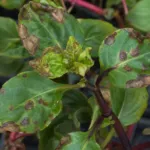 DiseaseImpatiens necrotic spot virus diseaseImpatiens necrotic spot orthotospovirus
 DiseaseSouthern blightAthelia rolfsii
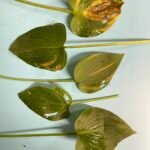 PestStrawberry foliar nematodeAphelenchoides fragariae
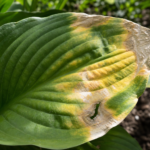 Environmental stressExcess light stress
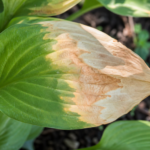 Environmental stressLeaf sunburn
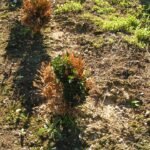 DiseasePhytophthora root and crown rotPhytophthora nicotianae
 DiseaseOnion downy mildewPeronospora destructor
Toxicity and pollen
Hostas are listed by the ASPCA as toxic to dogs and cats because of saponins. Ingestion may cause vomiting, diarrhea, depression, or related gastrointestinal upset. Evidence is for Hosta generally rather than this individual cultivar, so prevent pets from chewing leaves, flowers, or other plant parts and contact a veterinarian if ingestion occurs.
- Typical season
- July–August in much of the United States
- Pollination / pollen
- Insect-dispersed floral pollen
Hosta flowers release pollen during bloom, but the large, insect-pollinated flowers are not generally regarded as major airborne pollen sources. Individual sensitivity is still possible, especially during flowering. Keep spent scapes trimmed after bloom if reducing nearby flower exposure is desirable.
Native habitat
The cultivar has garden origin rather than a wild native distribution. Like other hostas, it performs best in cool to temperate conditions, humus-rich woodland-style soil, and sites with regular moisture and protection from intense afternoon sun.
Interesting fact
‘Victory’ was selected as the 2015 Hosta of the Year by the American Hosta Growers Association. It originated as a sport of Hosta ‘Elatior’ and was registered in 2003. The cultivar is notable for unusually tall flowering scapes and very large glossy variegated leaves.
Frequently asked questions (FAQ)
The most relevant questions about this plant, with short and direct answers.
🌱Quick care
What is Hosta 'Victory'?⌄
Hosta 'Victory' is a large, clump-forming herbaceous perennial grown for its thick, glossy green leaves with broad creamy-yellow margins. It is a shade-loving hosta in the Asparagaceae family.
How big does Hosta 'Victory' get?⌄
Hosta 'Victory' typically grows about 30 inches tall and 48 to 72 inches wide when mature. Its flower scapes can rise to roughly 54 inches above the foliage.
Is Hosta 'Victory' easy to grow?⌄
Yes, Hosta 'Victory' is generally easy to grow when planted in shade or part shade with consistently moist, fertile soil. Its thick leaves can offer better slug tolerance than thin-leaved hostas, but pests may still occur.
What USDA zones are suitable for Hosta 'Victory'?⌄
Hosta 'Victory' is commonly listed as hardy in USDA Zones 2 through 9. Actual performance can vary with winter exposure, soil drainage, and local summer heat.
🌤️Environment and placement
Does Hosta 'Victory' prefer sun or shade?⌄
Hosta 'Victory' prefers part shade to full shade, especially protection from strong afternoon sun. Gentle morning sun may be tolerated if the soil stays consistently moist.
Can Hosta 'Victory' grow in full shade?⌄
Yes, Hosta 'Victory' can grow in full shade, although growth and flowering may be somewhat reduced. Bright filtered light or several hours of gentle morning light usually supports stronger variegation and a fuller clump.
How much sunlight can Hosta 'Victory' tolerate?⌄
Hosta 'Victory' can tolerate limited morning sun, but hot afternoon sunlight may scorch or bleach its leaves. In warmer U.S. climates, more shade and reliable moisture are usually needed.
What soil is best for Hosta 'Victory'?⌄
The best soil is rich, moisture-retentive, well-drained loam or improved clay. Add compost or other organic matter to poor or compacted soil, but avoid locations that remain waterlogged.
How much water does Hosta 'Victory' need?⌄
Hosta 'Victory' needs moderate, consistent moisture, particularly while establishing and during hot weather. Water deeply when the soil begins to dry, and use mulch to reduce evaporation without covering the crown.
Can Hosta 'Victory' grow under trees?⌄
Yes, Hosta 'Victory' can grow beneath trees if it receives filtered light and enough water. Avoid planting directly in the dense root zone of thirsty trees, where competition can cause drought stress.
Is Hosta 'Victory' suitable for containers?⌄
Yes, Hosta 'Victory' can be grown in a large container with drainage holes and rich, moisture-retentive potting mix. Choose a container wide enough for its eventual spread and protect the roots from extreme winter temperature swings.
💧Care and problems
How often should Hosta 'Victory' be fertilized?⌄
Apply a balanced, slow-release fertilizer in spring as new shoots emerge, following the product label. Excess fertilizer can produce soft growth and is usually less helpful than consistent moisture and fertile soil.
Why are Hosta 'Victory' leaves turning brown?⌄
Brown leaf edges on Hosta 'Victory' usually indicate drought, excessive sun, heat stress, or wind exposure. Check soil moisture and afternoon light first, and improve watering or shade before removing damaged leaves.
Why is Hosta 'Victory' not growing as large as expected?⌄
Hosta 'Victory' may need several growing seasons to reach its mature size. Insufficient moisture, excessive shade, root competition, poor soil, or repeated slug damage can also limit the clump.
Are Hosta 'Victory' leaves naturally wavy or wrinkled?⌄
Yes, mature Hosta 'Victory' leaves are typically thick, broadly oval, and somewhat wavy, with prominent veins. Younger plants may show less pronounced texture until the clump matures.
How do I protect Hosta 'Victory' from slugs and snails?⌄
Reduce hiding places, avoid frequent shallow watering, and inspect plants at night or after rain for slugs and snails. Barriers or labeled slug controls can be used when damage is persistent, even though 'Victory' has relatively substantial foliage.
Should I cut back Hosta 'Victory' in fall?⌄
Remove flower stems after blooming if you do not want seed development, and clear away dead foliage after it collapses in late fall. Leaving healthy leaves in place until they naturally decline allows the plant to continue storing energy.
🪴Planting and repotting
When is the best time to plant Hosta 'Victory'?⌄
Plant Hosta 'Victory' in spring or early fall when temperatures are moderate and soil moisture is dependable. Spring planting is especially useful in areas with severe winters or hot, dry summers.
How far apart should Hosta 'Victory' be planted?⌄
Space Hosta 'Victory' about 4 to 6 feet apart for mature specimen-sized clumps. Use closer spacing only when a temporary massed planting is intended and future crowding is acceptable.
How deep should Hosta 'Victory' be planted?⌄
Plant Hosta 'Victory' with the crown at soil level, keeping the buds and growing points just at or slightly below the surface. Planting too deeply can encourage crown problems, while exposed roots should be covered with soil.
Can Hosta 'Victory' be transplanted?⌄
Yes, Hosta 'Victory' transplants well when moved with a substantial root ball and watered consistently afterward. Early spring or early fall is generally easier on the plant than the hottest part of summer.
How long does Hosta 'Victory' take to reach mature size?⌄
Hosta 'Victory' commonly takes about 2 to 5 years to develop its mature size and characteristic foliage. Growth is faster when the plant has adequate moisture, fertile soil, and limited root competition.
✂️Propagation and pruning
How do you propagate Hosta 'Victory'?⌄
The reliable way to propagate Hosta 'Victory' is by dividing the clump. Divide in early spring as shoots emerge or in late summer to early fall, ensuring each section has roots and at least one viable bud.
Can Hosta 'Victory' be grown from seed?⌄
Hosta 'Victory' can produce seed after flowering, but seedlings may not retain the cultivar’s exact leaf color, margin, or growth habit. Division is preferred when you want plants true to 'Victory'.
When should Hosta 'Victory' be divided?⌄
Divide Hosta 'Victory' in early spring or late summer to early fall. Division is most useful when the clump has become crowded, outgrown its space, or needs rejuvenation.
Does dividing Hosta 'Victory' hurt the plant?⌄
Proper division usually does not permanently harm Hosta 'Victory', although divided sections may look smaller and need extra water during recovery. Use a sharp spade or knife and replant the divisions promptly.
⚠️Toxicity and safety
Is Hosta 'Victory' toxic to dogs and cats?⌄
Yes, Hosta 'Victory' is toxic to dogs and cats if eaten. Ingestion can cause gastrointestinal signs such as vomiting or diarrhea, so contact a veterinarian or animal poison service if a pet consumes the plant.
🌸Flowering and special interest
When does Hosta 'Victory' bloom?⌄
Hosta 'Victory' generally blooms in mid to late summer, often from July into August depending on the climate. Pale lavender to white tubular flowers appear on tall scapes above the foliage.
What color are Hosta 'Victory' flowers?⌄
Hosta 'Victory' flowers are usually described as white to very pale lavender. Flower color can appear slightly different with local conditions, plant maturity, and light exposure.
Should I remove the flowers from Hosta 'Victory'?⌄
Remove the flower scapes after blooming if you prefer a foliage-focused display or want to prevent seed formation. Leaving the flowers in place is also harmless and provides seasonal interest.