 Source:
 Hosta ‘Sun Power’ short overview
Hosta 'Sun Power' is a large, deciduous hosta prized for its glowing golden-yellow to chartreuse leaves, graceful vase-shaped habit, and tall midsummer scapes of pale lavender flowers. It is among the more sun-tolerant hostas, but the foliage still performs best with morning sun or bright filtered light, consistent moisture, and protection from intense afternoon heat. Use it in woodland borders, beds, or large containers.
Taxonomic classification
Hosta ‘Sun Power’ care guide
Light and placement
Give bright filtered light, partial shade, or gentle morning sun. 'Sun Power' tolerates more light than many hostas, especially with abundant moisture, but hot afternoon sun can bleach or scorch the leaves. Too little light may produce weaker petioles and less saturated foliage; too much heat and dryness cause browned margins, fading, or wilt.
Watering and humidity
Water deeply when the upper inch of soil begins to dry, aiming for steady moisture rather than repeated shallow sprinkling. Increase frequency during hot weather, in containers, and during the first growing season. Water at the soil surface and avoid chronic saturation around the crown. Air humidity is usually unimportant outdoors if the root zone does not dry out.
Soil and growing medium
Use fertile, humus-rich soil that holds moisture without remaining waterlogged. A loam amended with compost is ideal; heavier clay should be improved with organic matter and drainage. Hosta tolerates acid, neutral, or mildly alkaline conditions, so pH adjustment is usually unnecessary unless a soil test identifies a problem.
Feeding
Top-dress with compost in spring and apply a balanced slow-release fertilizer as growth begins if soil fertility is modest. Water after feeding and avoid heavy nitrogen late in the season, which can produce lush, softer growth and delay dormancy. Do not fertilize drought-stressed, newly divided, or dormant plants.
Growth and habit
Forms a broad, clumping mound from a crown of basal leaves and gradually increases in size through rhizomatous crown growth. It typically takes several years to reach mature scale. Maintain airflow, divide only when needed, and keep competing roots and dense weeds away from the crown.
Planting and repotting
Plant in spring or early fall when soil is workable. Set the crown at the same depth it was growing, with buds just at or slightly below the soil surface. Space about 3–4 feet apart for a mature specimen. Water deeply after planting and keep the root zone evenly moist during establishment.
Repot container plants in early spring as growth begins, moving to a pot only one size larger. Refresh part of the mix rather than aggressively disturbing the crown. Ensure generous drainage holes and avoid burying the crown beneath fresh substrate.
Propagation and pruning
Propagation
Divide established clumps in early spring as shoots emerge or in late summer after flowering. Lift the crown, separate sections with several eyes and healthy roots, and replant promptly. Seed is not a reliable way to reproduce the named cultivar because seedlings may not come true.
Pruning
Remove flower scapes after flowering if seed formation or visual cleanup is desired. Cut back yellowing or frost-killed foliage after it collapses in late fall. Do not remove healthy leaves prematurely during the growing season because they continue feeding the crown.
Overwintering
Leave the crown in the ground outdoors in USDA Zones 3–8. After frost kills the foliage, remove the debris and apply a light mulch in exposed or very cold sites, keeping mulch away from the crown. Container plants are more vulnerable to root freezing; move them to a sheltered location or insulate the pot.
Uses
Use as a foliage specimen, woodland-border accent, edging plant, groundcover, or large container plant. Its gold foliage brightens shaded compositions and contrasts well with ferns, heucheras, astilbes, and blue- or green-leaved hostas. Do not treat this ornamental cultivar as a food plant, and keep it away from pets that may chew leaves.
Appearance
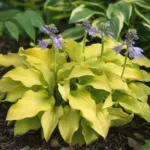
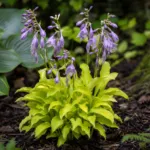
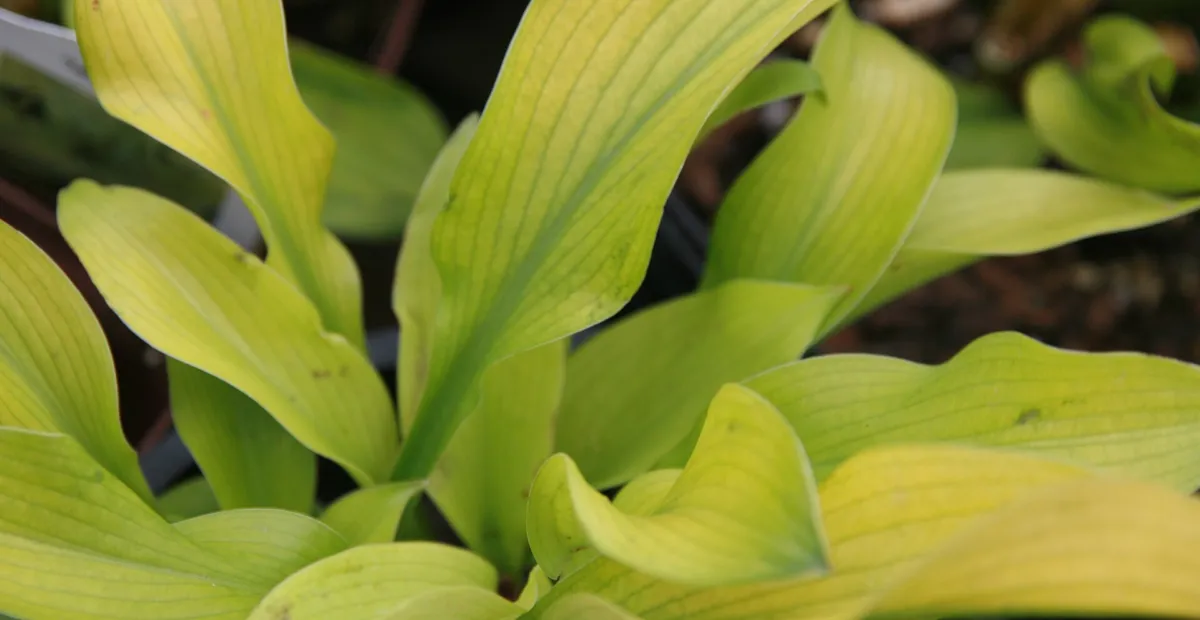
The plant makes a broad vase-shaped clump of long, pointed, golden-yellow to light chartreuse leaves. Blades are strongly wavy along the margins and may twist slightly, giving the foliage movement and texture. Tall, arching scapes carry pale lavender flowers above the leaves.
Flowering
Tall, slightly arching scapes rise above the foliage in midsummer and carry racemes of pale lavender, funnel-shaped flowers. The cultivar is grown mainly for its foliage, but the flowers add seasonal height and provide nectar and pollen for visiting insects and hummingbirds.
Pollination and visitors
Hosta flowers are visited by bees, bumblebees, butterflies, and hummingbirds. The cultivar is ornamental rather than a specialist pollinator plant, but its midsummer flowers can provide nectar and pollen when open.
Hosta 'Sun Power' photos
Click any photo for a larger view. Source, author and license are shown separately.
Diseases and pests
Diseases
Generally trouble-free, but crown rot and foliar diseases can develop in poorly drained or crowded conditions. Plant in well-drained soil, water at the soil line, remove heavily infected leaves, and clear dying foliage in autumn. Avoid working among wet plants to reduce disease spread.
Pests
Slugs and snails commonly rasp holes in the leaves, especially during wet weather. Deer and rabbits may also browse the foliage. Use mulch that does not touch the crown, remove hiding places, hand-pick pests, and use wildlife-appropriate barriers or labeled controls where necessary. Vine weevil can damage container roots.
Related diseases and pests
Only Plant Doctor profiles whose host data indicate this plant may be affected are shown here.
 DiseaseImpatiens necrotic spot virus diseaseImpatiens necrotic spot orthotospovirus
 DiseaseSouthern blightAthelia rolfsii
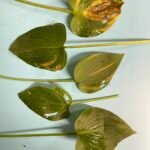 PestStrawberry foliar nematodeAphelenchoides fragariae
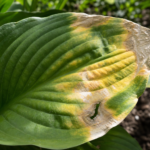 Environmental stressExcess light stress
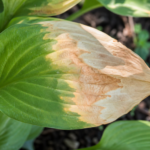 Environmental stressLeaf sunburn
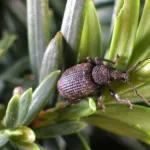 PestBlack Vine WeevilOtiorhynchus sulcatus
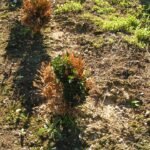 DiseasePhytophthora root and crown rotPhytophthora nicotianae
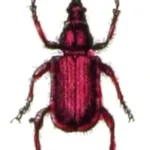 PestPeach weevilRhynchites bacchus
Toxicity and pollen
Hosta is listed by ASPCA as toxic to dogs and cats because of saponins. Ingestion may cause vomiting, diarrhea, depression, or other gastrointestinal upset. Keep pets from chewing the plant and contact a veterinarian or animal poison service after suspected ingestion. Evidence for serious human poisoning from ordinary garden contact is limited, but the plant should not be eaten casually.
- Typical season
- During flowering, usually July–August
- Pollination / pollen
- Heavy insect-associated pollen with limited wind dispersal
Hosta is insect-pollinated, so its relatively heavy pollen is not normally dispersed widely by wind. Airborne allergy exposure is therefore expected to be low, although direct handling of flowers or plant material can still affect unusually sensitive individuals.
Native habitat
Hostas are woodland-edge and forest-floor perennials associated with cool, seasonally moist soils rich in organic matter. In gardens, they perform best where roots stay evenly moist but crowns are not waterlogged. 'Sun Power' is a cultivated selection rather than a wild population and has no native US distribution.
Interesting fact
The cultivar was introduced in 1986 and is classified as a large-leaved hosta. Its light chartreuse leaves are notably wavy and can tolerate more sun than many hostas when moisture is maintained. 'Paradise Power' originated as a sport of 'Sun Power'.
Frequently asked questions (FAQ)
The most relevant questions about this plant, with short and direct answers.
🌱Quick care
How do you care for Hosta 'Sun Power'?⌄
Grow Hosta 'Sun Power' in partial shade or bright filtered light, fertile moisture-retentive soil, and provide medium to high water so the soil stays evenly moist. Protect it from harsh afternoon sun and avoid constantly soggy conditions.
Is Hosta 'Sun Power' easy to grow?⌄
Yes, Hosta 'Sun Power' is generally easy to grow when given moist, well-drained soil and partial shade. Its main maintenance concerns are watering during dry periods, slug and snail control, and removing declining foliage in fall.
How big does Hosta 'Sun Power' get?⌄
Hosta 'Sun Power' typically forms a large mound about 1.5 to 3 feet tall and wide, with flower scapes that can reach roughly 3 feet. Mature size varies with climate, soil fertility, moisture, and growing conditions.
🌤️Environment and placement
Does Hosta 'Sun Power' prefer sun or shade?⌄
Hosta 'Sun Power' performs best in partial shade to bright filtered light, especially with morning sun and afternoon protection. It can tolerate more light than many hostas if moisture is consistent, but intense afternoon sun may scorch the leaves.
Can Hosta 'Sun Power' grow in full sun?⌄
Hosta 'Sun Power' may tolerate limited full sun in cooler climates when the soil remains evenly moist, but full afternoon sun is risky. In much of the United States, filtered light or morning sun with afternoon shade gives more reliable foliage quality.
What USDA hardiness zones are suitable for Hosta 'Sun Power'?⌄
Hosta 'Sun Power' is a cold-hardy perennial suited to many temperate parts of the United States, commonly listed for USDA Zones 3 through 9. Local heat, humidity, winter drainage, and exposure can affect performance within those zones.
What soil is best for Hosta 'Sun Power'?⌄
Use fertile, organic-rich loam that retains moisture while draining excess water. Hosta 'Sun Power' tolerates a range of soil reactions, but compacted or waterlogged soil can encourage crown and root problems.
Can Hosta 'Sun Power' grow in a container?⌄
Yes, Hosta 'Sun Power' can grow in a large container with drainage holes, quality potting mix, and regular watering. Choose a container wide enough for its mature clump and protect the roots from severe winter temperature swings.
💧Care and problems
How often should you water Hosta 'Sun Power'?⌄
Water Hosta 'Sun Power' whenever the surface soil begins to dry, aiming to keep the root zone evenly moist rather than saturated. During hot or dry weather, container plants and plants exposed to more sun may need water more frequently.
Why are the leaves of Hosta 'Sun Power' turning brown?⌄
Brown leaf edges or patches on Hosta 'Sun Power' usually result from sun scorch, drought stress, wind, or physical damage. Move or shade plants exposed to harsh afternoon sun and keep the soil consistently moist, while avoiding poor drainage.
How do you protect Hosta 'Sun Power' from slugs and snails?⌄
Reduce slug and snail habitat by removing debris, improving air circulation, and watering the soil rather than the foliage. Hand-picking, barriers, traps, or a pet-safe control labeled for slugs and snails can be used when damage is persistent.
What pests commonly attack Hosta 'Sun Power'?⌄
Slugs and snails are the most common pests on Hosta 'Sun Power', while deer and rabbits may also browse the foliage. Container plants can additionally experience vine weevil problems, and stressed plants may show more disease or pest damage.
Why is my Hosta 'Sun Power' not growing well?⌄
Poor growth usually results from insufficient moisture, excessive sun, competition from nearby roots, compacted soil, or crown damage. Check the planting depth and drainage, water during dry periods, and give the clump room to expand.
Does Hosta 'Sun Power' die back in winter?⌄
Yes, Hosta 'Sun Power' is deciduous and normally dies back to the crown after frost or hard freezes. The foliage returns from dormant underground structures in spring, provided the crown remains healthy and the winter soil is not waterlogged.
🪴Planting and repotting
When is the best time to plant Hosta 'Sun Power'?⌄
Plant Hosta 'Sun Power' in spring or early fall, when temperatures are moderate and soil moisture is easier to maintain. Water thoroughly after planting and continue regular irrigation until the root system is established.
How do you plant Hosta 'Sun Power' in the garden?⌄
Plant Hosta 'Sun Power' with the crown at or just slightly above soil level, spreading the roots into a broad hole amended with organic matter. Backfill firmly, water deeply, and apply a light mulch without covering the crown.
How far apart should Hosta 'Sun Power' be planted?⌄
Space Hosta 'Sun Power' about 2 to 3 feet apart, depending on the desired fullness and available room. Use the wider spacing for mature specimen growth and the closer spacing for a faster-forming mass planting.
Can Hosta 'Sun Power' be grown indoors?⌄
Hosta 'Sun Power' is primarily an outdoor perennial and is not well suited to long-term indoor culture. It needs seasonal dormancy, outdoor light conditions, and sufficient space, although it can be temporarily displayed in a cool, bright location.
✂️Propagation and pruning
How do you propagate Hosta 'Sun Power'?⌄
Propagate Hosta 'Sun Power' most reliably by division in early spring as shoots emerge or in late summer. Dig up the clump, separate sections with healthy roots and buds, and replant them promptly at the original depth.
Can Hosta 'Sun Power' be grown from seed?⌄
Hosta 'Sun Power' can produce seed, but seedlings may not reproduce the parent cultivar accurately. Division is preferred when you want new plants with the same foliage characteristics as the original clump.
How often should Hosta 'Sun Power' be divided?⌄
Divide Hosta 'Sun Power' when the clump becomes overcrowded, weak in the center, or too large for its location; this is often about every 3 to 5 years. Division is not required on a fixed schedule if the plant remains vigorous.
Should you cut back Hosta 'Sun Power' in fall?⌄
Remove Hosta 'Sun Power' foliage after it has yellowed or been damaged by frost, usually in late fall. Cutting healthy leaves too early can reduce the energy stored for next season, while leaving diseased foliage in place may increase cleanup concerns.
⚠️Toxicity and safety
Is Hosta 'Sun Power' toxic to dogs?⌄
Yes, Hosta 'Sun Power' should be considered toxic to dogs if eaten. Ingestion may cause gastrointestinal signs such as vomiting, diarrhea, or depression, so contact a veterinarian or animal poison service if your dog consumes the plant.
Is Hosta 'Sun Power' toxic to cats?⌄
Yes, Hosta 'Sun Power' is toxic to cats if eaten. Keep cats away from the foliage, flowers, roots, and other plant material, and seek veterinary guidance promptly if ingestion occurs or symptoms develop.
Is Hosta 'Sun Power' safe for children?⌄
Hosta 'Sun Power' is not intended for consumption, so children should be taught not to eat any part of the plant. The main documented concern is ingestion by pets, but normal gardening precautions and handwashing are appropriate.
🌸Flowering and special interest
When does Hosta 'Sun Power' bloom?⌄
Hosta 'Sun Power' generally blooms in summer, producing pale lavender to nearly white, funnel-shaped flowers on arching scapes. Bloom timing can vary with climate and spring temperatures, and the foliage remains its primary ornamental feature.
What do Hosta 'Sun Power' flowers look like?⌄
Hosta 'Sun Power' produces pale lavender to whitish flowers held above the foliage on slightly arching stems. The flowers are attractive but usually less prominent than the cultivar’s large yellow to chartreuse leaves.
Should you remove the flower stalks from Hosta 'Sun Power'?⌄
Remove flower stalks from Hosta 'Sun Power' after flowering if you prefer a tidier appearance or want the plant’s energy directed toward foliage and roots. Leaving them in place does not normally harm a healthy plant.