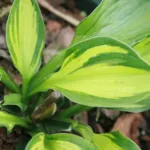
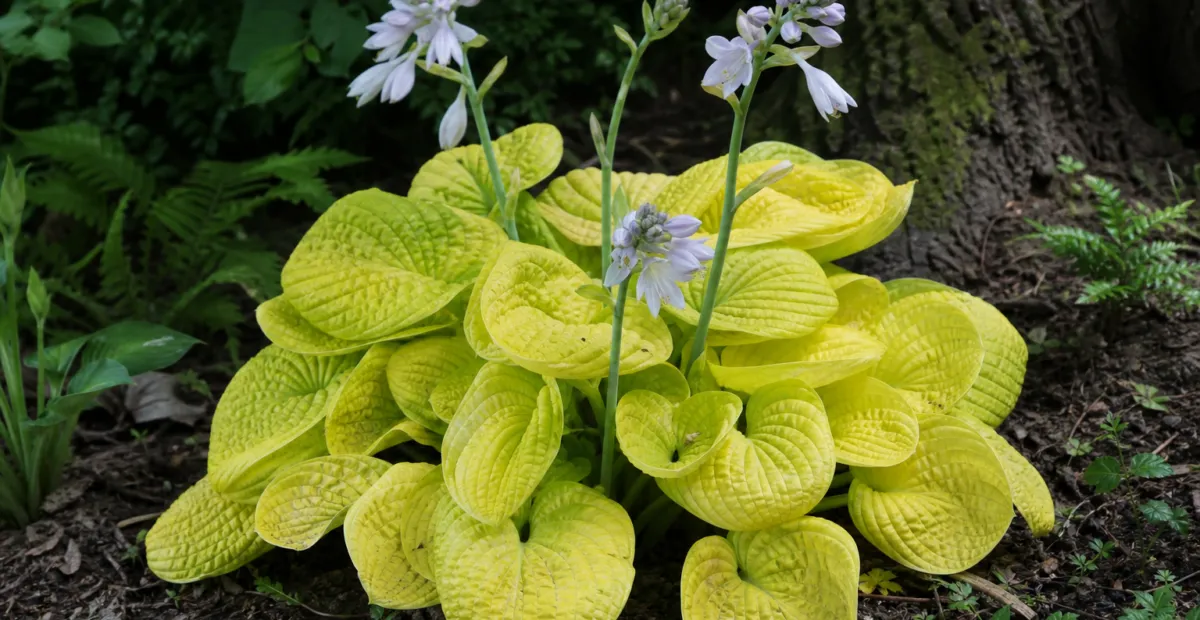
 AI-generated illustration
Hosta ‘Maui Buttercups’ short overview
Hosta ‘Maui Buttercups’ is a compact hybrid prized for thick, bright golden leaves with a rounded outline, deep cups, heavy corrugation, and a leathery texture that helps resist slug damage. Registered by Bill Vaughn in 1991 from ‘Frances Williams’ × ‘August Moon’, it forms a tidy mound for shaded borders, woodland plantings, edging, and containers. Pale lavender to near-white flowers rise above the foliage in midsummer.
Taxonomic classification
Hosta ‘Maui Buttercups’ care guide
Light and placement
Grow in bright filtered light, part shade, or shade. A site with morning sun and afternoon shade can preserve the golden foliage while limiting scorch. Too much intense afternoon sun may bleach or scorch leaves; too little light can produce weaker growth and less vivid foliage. In hot climates, favor dappled shade and cool root conditions.
Watering and humidity
Water deeply and consistently when the upper inch of soil begins to dry, keeping the root zone evenly moist but never waterlogged. Increase frequency during hot, windy weather and container culture; reduce only after dormancy begins in fall. Mulch with organic material to moderate soil temperature, keeping mulch away from the crown.
Soil and growing medium
Use a moisture-retentive but well-drained loam enriched with compost or leaf mold. Hostas tolerate a moderately broad soil reaction, but perform best in fertile soils that are slightly acidic to neutral. Avoid compacted sites and standing water, especially in containers.
Feeding
Top-dress with compost or leaf mold in spring as growth begins. If foliage is pale or growth is weak, apply a balanced, slow-release fertilizer at label rate. Avoid heavy nitrogen late in the season, which can produce soft growth and delay dormancy. Do not fertilize drought-stressed or newly divided plants until they resume growth.
Growth and habit
Forms a compact, low, mounded clump from a crown and expands gradually. It may grow slowly during the establishment period, then reach a moderate rate. Thick leaves reduce some slug damage, but steady moisture and regular monitoring remain important.
Planting and repotting
Plant in spring or early fall, setting the crown at soil level rather than burying it deeply. Space about 14–18 inches apart for a continuous grouping, allowing wider spacing where a more distinct mound is wanted. Water thoroughly after planting and mulch lightly without covering the crown.
Repot container plants in early spring as new shoots emerge, moving them into a slightly wider container with fresh, moisture-retentive potting mix. Divide only when necessary; frequent disturbance can slow establishment.
Propagation and pruning
Propagation
Division is the practical method and is best done in early spring as shoots emerge or in early fall. Separate crowns with a sharp, clean knife, retain viable roots and buds on each division, and replant promptly. Seed is not a reliable way to reproduce the named cultivar.
Pruning
Remove spent flower scapes after flowering if seed production is not desired. Allow foliage to yellow naturally after frost, then cut it back to the crown and remove debris to reduce overwintering pest and disease habitat.
Overwintering
Leave foliage in place until it collapses after frost, then cut it back and remove debris. Established plants are hardy in much of USDA Zones 3–8. Containers are more exposed to freeze-thaw injury; overwinter them in a sheltered location or plunge the pot into the ground and mulch around it.
Uses
Useful as a specimen, edging plant, small-scale groundcover, woodland accent, shaded border plant, or container subject. Its gold foliage brightens dark planting areas. It is ornamental rather than edible, and pet access should be restricted because Hosta is reported toxic to dogs and cats.
Appearance
The plant forms a neat, low mound of rounded golden leaves, typically about 5 inches long and wide in mature specimens. Leaves are strongly cupped, puckered, corrugated, and leathery, giving the cultivar a sculptural appearance and useful visual texture. Upright scapes carry contrasting pale flowers above the foliage.
Flowering
Flowers are borne in terminal racemes on upright scapes that rise well above the foliage. Sources describe the flowers as pale lavender, violet, near white, or white, indicating some variation in color reporting. Bloom is generally midsummer, with July commonly documented and some US garden references extending into August.
Pollination and visitors
The elevated, tubular hosta flowers can be visited by bees and bumblebees, but documentation for this exact cultivar is limited and attraction should be considered low rather than guaranteed. Pollinator value is secondary to its ornamental foliage.
Diseases and pests
Diseases
Watch for Hosta Virus X, tobacco rattle virus, tomato ringspot virus, and other virus-like symptoms such as mottling, streaking, or distorted leaves. Buy clean stock, disinfect tools, remove symptomatic plants, and avoid propagating from questionable divisions. Good drainage and airflow help limit crown and foliar problems.
Pests
Slugs and snails are the main concerns, although the thick leaf substance offers some resistance. Deer may browse hostas heavily. Inspect new growth, remove hiding places, use barriers or traps where appropriate, and keep plants evenly watered without creating soggy conditions.
Related diseases and pests
Only Plant Doctor profiles whose host data indicate this plant may be affected are shown here.
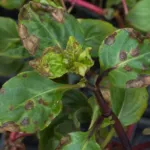 DiseaseImpatiens necrotic spot virus diseaseImpatiens necrotic spot orthotospovirus
 DiseaseSouthern blightAthelia rolfsii
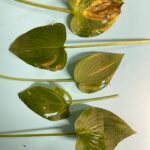 PestStrawberry foliar nematodeAphelenchoides fragariae
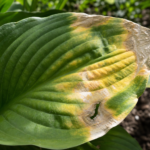 Environmental stressExcess light stress
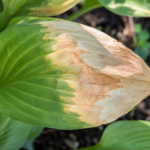 Environmental stressLeaf sunburn
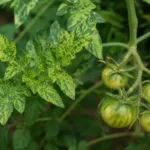 DiseaseTomato mosaic virusTobamovirus tomatotessellati
 DiseaseTobacco mosaic virusTobamovirus tabaci
 DiseasePapaya ringspot virusPapaya ringspot virus
Toxicity and pollen
ASPCA lists Hosta as toxic to dogs and cats because of saponins, with vomiting, diarrhea, and depression reported after ingestion. Evidence is generally based on Hosta rather than this specific cultivar, so prevent pets from chewing the foliage or flowers and contact a veterinarian if symptoms follow ingestion. Human toxicity data for this cultivar are limited; do not eat it.
- Typical season
- During flowering, mainly July–August in much of the United States
- Pollination / pollen
- Insect-carried pollen
Hosta flowers are insect-pollinated and generally release less freely airborne pollen than wind-pollinated plants. That suggests low airborne exposure, not zero allergy risk. People with known flower allergies should avoid rubbing the flowers or handling pollen directly during bloom.
Native habitat
This cultivated hybrid is not native to a natural wild habitat. In gardens it performs like woodland-edge hostas: best in fertile, humus-rich, moisture-retentive soil with filtered light, cool roots, and protection from prolonged hot afternoon exposure.
Interesting fact
Registered by Bill Vaughn in 1991 from ‘Frances Williams’ × ‘August Moon’. The cultivar’s thick, leathery leaves are unusually deeply cupped and corrugated. ‘Rainforest Sunrise’ is documented as a sport of ‘Maui Buttercups’.
Frequently asked questions (FAQ)
The most relevant questions about this plant, with short and direct answers.
🌱Quick care
What is Hosta 'Maui Buttercups' like?⌄
Hosta 'Maui Buttercups' is a small hosta with bright golden-yellow, rounded leaves that are deeply cupped, puckered, and heavily corrugated. It typically forms a mound about 8–10 inches tall and 14–18 inches wide.
Is Hosta 'Maui Buttercups' easy to grow?⌄
Yes, Hosta 'Maui Buttercups' is generally easy to grow when planted in shade or part shade with consistently moist, fertile soil. Its thick leaf texture also gives it better slug resistance than many thin-leaved hostas.
🌤️Environment and placement
How much light does Hosta 'Maui Buttercups' need?⌄
Hosta 'Maui Buttercups' grows best in part shade to full shade, with about 2–6 hours of direct sun depending on climate. In hot or dry regions, protect the yellow leaves from strong afternoon sun to reduce scorch.
Can Hosta 'Maui Buttercups' grow in full shade?⌄
Yes, Hosta 'Maui Buttercups' can grow in full shade, although its foliage may be less brightly colored and growth may be slower. Bright filtered light or morning sun usually produces better golden foliage.
Can Hosta 'Maui Buttercups' tolerate morning sun?⌄
Yes, Hosta 'Maui Buttercups' usually tolerates gentle morning sun well, especially when the soil stays evenly moist. Avoid intense afternoon sun, which can bleach or scorch the yellow leaves.
What USDA hardiness zones are suitable for Hosta 'Maui Buttercups'?⌄
Hosta 'Maui Buttercups' is commonly listed as hardy in USDA Zones 3–9. In colder areas, the foliage dies back naturally in fall and the crown remains dormant until spring.
What soil is best for Hosta 'Maui Buttercups'?⌄
Use fertile, humus-rich, moisture-retentive soil that drains well, such as improved loam. Avoid permanently waterlogged soil, because hosta roots need moisture without standing water.
How much space does Hosta 'Maui Buttercups' need?⌄
Allow about 14–18 inches of planting space for a mature Hosta 'Maui Buttercups' clump. Give it more room if you want the mound to develop without touching nearby plants.
💧Care and problems
How often should I water Hosta 'Maui Buttercups'?⌄
Water Hosta 'Maui Buttercups' regularly so the soil remains evenly moist, especially during hot weather and its first growing season. Container-grown plants usually need more frequent watering than plants in the ground.
Why are the leaves of my Hosta 'Maui Buttercups' turning brown?⌄
Brown leaf edges on Hosta 'Maui Buttercups' most often indicate drought stress, excessive sun, hot wind, or irregular watering. Move plants receiving harsh afternoon sun to a shadier location and keep the root zone consistently moist.
Does Hosta 'Maui Buttercups' resist slugs?⌄
Hosta 'Maui Buttercups' has thick, leathery, corrugated leaves that are relatively slug-resistant. It is not slug-proof, so slugs may still damage young leaves during cool, wet weather.
Why is my Hosta 'Maui Buttercups' not growing well?⌄
Poor growth is commonly caused by insufficient moisture, excessive sun, compacted soil, root competition, or a recently divided crown. Improve the soil, water consistently, and allow the plant time to establish before expecting a full mound.
Should I fertilize Hosta 'Maui Buttercups'?⌄
A light spring application of a balanced, slow-release fertilizer is usually sufficient for Hosta 'Maui Buttercups' in fertile soil. Avoid heavy late-season fertilizing, which can encourage tender growth before dormancy.
Can Hosta 'Maui Buttercups' be grown under trees?⌄
Yes, Hosta 'Maui Buttercups' is well suited to the bright or dappled shade beneath trees. Keep it away from tree roots that aggressively compete for water, and provide supplemental irrigation during dry periods.
🪴Planting and repotting
When is the best time to plant Hosta 'Maui Buttercups'?⌄
Plant Hosta 'Maui Buttercups' in spring or early fall while temperatures are moderate and soil moisture is reliable. Spring planting is especially useful in colder USDA Zones because it gives the crown more time to establish before winter.
Can Hosta 'Maui Buttercups' grow in a container?⌄
Yes, Hosta 'Maui Buttercups' grows well in a container with drainage holes and rich, moisture-retentive potting mix. Choose a pot at least 12 inches wide and monitor moisture closely because containers dry out faster than garden soil.
How deep should I plant Hosta 'Maui Buttercups'?⌄
Plant Hosta 'Maui Buttercups' with the crown at soil level, not deeply buried. Cover the roots with soil, firm gently, and water thoroughly after planting.
✂️Propagation and pruning
How do I divide Hosta 'Maui Buttercups'?⌄
Divide Hosta 'Maui Buttercups' in early spring as shoots emerge or in early fall after the hottest weather has passed. Dig up the clump, separate sections with viable roots and buds, and replant them at the original depth.
Can Hosta 'Maui Buttercups' be grown from seed?⌄
Hosta 'Maui Buttercups' can produce seed, but seedlings may not reproduce the parent’s exact leaf color, shape, or texture. Division is the reliable method for making genetically identical plants.
Should I cut back Hosta 'Maui Buttercups' in fall?⌄
Remove the spent foliage of Hosta 'Maui Buttercups' after it collapses in fall or before new growth begins in spring. Cutting back too early can reduce the plant’s ability to move nutrients into its crown.
⚠️Toxicity and safety
Is Hosta 'Maui Buttercups' toxic to dogs?⌄
Yes, Hosta 'Maui Buttercups' is toxic to dogs if ingested and may cause gastrointestinal upset. Keep dogs from chewing the foliage, flowers, or other plant parts and contact a veterinarian if ingestion occurs.
Is Hosta 'Maui Buttercups' toxic to cats?⌄
Yes, Hosta 'Maui Buttercups' is toxic to cats if eaten. Prevent access to the plant and seek veterinary advice promptly if a cat chews or consumes it.
Is Hosta 'Maui Buttercups' deer resistant?⌄
Hosta 'Maui Buttercups' is not reliably deer resistant, and deer may browse the leaves or flower stalks. Use fencing or a deer deterrent where browsing pressure is high.
🌸Flowering and special interest
When does Hosta 'Maui Buttercups' bloom?⌄
Hosta 'Maui Buttercups' typically blooms in midsummer, often around July in temperate U.S. gardens. Flowering time varies with climate, spring temperatures, and growing conditions.
What color are the flowers of Hosta 'Maui Buttercups'?⌄
The flowers of Hosta 'Maui Buttercups' are usually white to very pale lavender, with some references describing light lavender or mauve tones. They appear on upright scapes that commonly reach about 18 inches.
Should I remove the flower stalks from Hosta 'Maui Buttercups'?⌄
Remove the flower stalks from Hosta 'Maui Buttercups' after flowering if you prefer a tidy foliage display or want to prevent seed formation. Leaving them in place does not harm a healthy plant.