
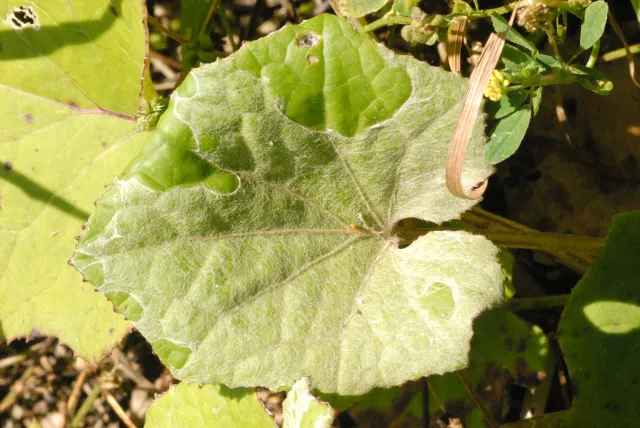
Powdery mildew caused by Golovinomyces cichoracearum
Golovinomyces cichoracearumPowdery mildew caused by Golovinomyces cichoracearum overview
Golovinomyces cichoracearum is an obligate powdery mildew fungus associated with cucurbits and several other documented hosts. It produces white, flour-like colonies on living foliage and may cause yellowing, premature leaf death, reduced canopy protection, and smaller or sunburned fruit. In the United States, similar symptoms on cucurbits are often caused by Podosphaera xanthii, so species-level confirmation may require laboratory testing.
Typical conditions
Overview
Powdery mildew caused by Golovinomyces cichoracearum appears as white to gray, powder-like fungal growth on living leaves and sometimes on petioles, stems, buds, flowers, or young fruit. The fungus feeds through specialized structures inside epidermal cells while most of its mycelium remains on the plant surface.
On cucurbits, the disease commonly begins on older or shaded leaves and can progress toward extensive canopy coverage. Severely affected leaves yellow, become dull, dry, and papery, and die prematurely. Reduced foliage can expose fruit to sunburn and may reduce fruit size or quality.
In the United States, the same common name often refers to infections caused by more than one powdery mildew species. A laboratory identification is needed when the exact pathogen matters for host linkage, breeding, epidemiology, or resistance-management decisions.
Symptoms and identification
Early symptoms are small, pale yellow or dull-green spots that develop into white, fluffy or flour-like colonies. The growth may occur on the upper or lower leaf surface and can spread across large portions of the blade.
- White to gray powdery patches on leaves, petioles, or stems
- Yellowing, dull coloration, curling, or distortion of affected foliage
- Premature browning, drying, and death of leaves
- Afternoon wilting when damaged foliage can no longer supply water efficiently
- Sunscald or reduced fruit development after loss of protective leaf cover
- Occasional direct infection of young fruit or other tender tissues
Powdery mildew usually lacks the water-soaked lesions and rapid foliar collapse typical of downy mildew. However, visual diagnosis cannot reliably distinguish the causal powdery mildew species.
Causes and spread
Spread occurs primarily through airborne conidia released from active powdery mildew colonies. Wind, dense plant-to-plant contact, handling, clothing, tools, transplants, and movement of infected plant material can transfer inoculum.
Risk increases when susceptible plants are crowded, shaded, overfertilized with nitrogen, or grown in humid canopies with limited airflow. The disease does not require rain or standing water for infection, so dry summer weather does not necessarily prevent it. The exact host range should be interpreted cautiously because older records may have grouped several morphologically similar powdery mildew species under E. cichoracearum or G. cichoracearum.
Life cycle and persistence
Golovinomyces cichoracearum survives and reproduces only on living susceptible plant tissue. Powdery surface colonies produce chains of airborne conidia, which are carried by air currents, plant contact, workers, tools, and handling of infected foliage. Conidia germinate when temperature and humidity are favorable and establish new colonies on susceptible tissue.
On some hosts and in some regions, the fungus forms dark sexual fruiting bodies called chasmothecia late in the season. These structures can persist through unfavorable weather on infected plant material and release spores when conditions again support infection. In protected cultivation, the pathogen can persist by moving continuously between living plants; a crop-free interval can help eliminate it when no alternate susceptible host remains.
Host specialization is important. A powdery mildew population from one plant family or genus should not automatically be assumed to infect unrelated plants, even when symptoms look identical.
Treatment and control
Confirm that the symptom is powdery mildew before treating. If only a few leaves are affected, remove and discard them and improve spacing and airflow. Once colonies are widespread, treatment is more effective when started early, before extensive yellowing or leaf death.
- Use a product specifically labeled in the United States for powdery mildew on the crop involved.
- Rotate fungicides among effective FRAC groups when repeated applications are needed, following the label and local extension guidance.
- Apply protectants or suppressants with thorough coverage of susceptible foliage; newly expanding tissue may require continued protection.
- Do not apply sulfur or horticultural oils during heat stress or in combinations prohibited by the label, because leaf injury can occur.
- Do not expect fungicides to restore leaves that are already brown or dead; the objective is to protect healthy tissue and slow further spread.
Where the pathogen identity is uncertain, submit a representative sample to a state or university plant disease diagnostic laboratory, particularly when symptoms occur on an unusual host.
Low-impact and biological control
Begin with nonchemical measures and use products only when disease threatens plant function, harvest, or valuable specimens.
- Grow cultivars described as resistant or tolerant to powdery mildew when suitable varieties are available for the crop.
- Provide adequate spacing, trellising, and pruning of excessively dense growth to improve air movement and light penetration.
- Water the root zone rather than repeatedly wetting foliage; avoid creating prolonged canopy humidity through unnecessary irrigation.
- Scout lower, shaded, and interior leaves at least weekly. Remove and discard heavily infected leaves when practical, avoiding work among healthy plants afterward.
- Remove volunteer cucurbits and diseased crop residue at the end of the season, and control weeds that may maintain susceptible plant material.
- For organic production, sulfur, potassium bicarbonate, horticultural oils, and registered biological products may provide suppression when applied early and according to the current U.S. organic and crop label requirements. Test sprays on a small area first, especially during hot weather or on sensitive cultivars.
Organic products are generally protectants or suppressants rather than dependable cures for advanced infections. Coverage and repeat timing must follow the label.
Prevention
Choose resistant or tolerant cucumber, melon, pumpkin, and squash cultivars when available and appropriate for the growing region. Start with clean seed, transplants, and greenhouse stock, and isolate or reject plants showing powdery colonies.
- Space plants according to the crop recommendation and use trellises where appropriate.
- Keep foliage out of prolonged shade and manage weeds and volunteer cucurbits.
- Scout regularly, especially from fruit set onward and during warm, humid periods.
- Remove badly infected leaves and clean hands and tools before moving to healthy plants.
- At season’s end, remove susceptible volunteer plants and crop debris rather than carrying living infected tissue into the next crop.
- In greenhouses, maintain air movement and avoid large swings between warm days and cool, humid nights.
Interesting facts
- The name Golovinomyces cichoracearum has historically been associated with the former name Erysiphe cichoracearum.
- Powdery mildew fungi are obligate parasites: they require living host tissue and cannot normally complete their life cycle on dead plant material alone.
- Several races or host-adapted populations may occur, so resistance in one cultivar or host does not guarantee resistance elsewhere.
- On U.S. cucurbits, Podosphaera xanthii is often more common than G. cichoracearum; exact identification is therefore important when a diagnostic record names the species.
- Loss of cucurbit foliage can indirectly damage fruit by removing shade and increasing exposure to intense sunlight.
Use only fungicides legally authorized in the United States for powdery mildew on the specific crop being treated, and follow the current product label for application rate, timing, personal protective equipment, reentry interval, preharvest interval, and resistance-management instructions. Product registrations and labels vary by crop and state. Do not assume that a product labeled for one cucurbit or ornamental host is legal for another.
Affected plants
The plants below are linked to this problem by structured host-plant data. The list updates automatically as new plant profiles are added.
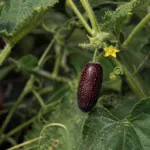 Maroon cucumbe (Cucumis anguria) care guideCucumis anguria
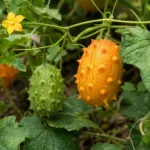 Horned Melon (Cucumis metuliferus) care guideCucumis metuliferus
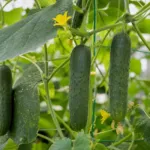 Cucumber (Cucumis sativus) care guideCucumis sativus
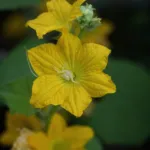 Melon or true melo (Cucumis melo) care guideCucumis melo
 Cantalupensis Group (Cucumis melo Cantalupensis Group)Cucumis melo Cantalupensis Group
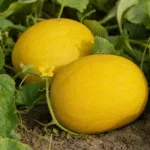 Mango melon (Cucumis melo Chito Group)Cucumis melo Chito Group
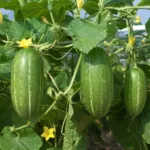 Oriental pickling melon (Cucumis melo Conomon Group)Cucumis melo Conomon Group
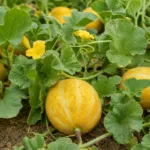 Dudaim melon (Cucumis melo Dudaim Group)Cucumis melo Dudaim Group
 Flexuosus Group (Cucumis melo Flexuosus Group)Cucumis melo Flexuosus Group
 Inodorus Group (Cucumis melo Inodorus Group)Cucumis melo Inodorus Group
 Makuwa Group (Cucumis melo Makuwa Group)Cucumis melo Makuwa Group
 Momordica Group (Cucumis melo Momordica Group)Cucumis melo Momordica Group