
 Source:
 Phomopsis cane and leaf spot of grape
Diaporthe ampelinaPhomopsis cane and leaf spot of grape overview
Phomopsis cane and leaf spot is a fungal disease of grapevines caused primarily by Diaporthe ampelina, historically known as Phomopsis viticola. It produces dark lesions on young shoots, leaves, petioles and cluster stems, bleaches dormant canes, and may cause rachis breakage or berry rot. Disease pressure is greatest after cool, wet weather around budbreak and bloom, especially where infected wood remains in the vineyard.
Typical conditions
Overview
Phomopsis cane and leaf spot, also called Phomopsis dieback in some disease-management guides, is primarily a disease of grapevines (Vitis spp.). The current name Diaporthe ampelina corresponds to the historically used name Phomopsis viticola; other Diaporthe species may also be recovered from grapevine wood, so laboratory confirmation can be important in complex trunk-disease situations.
In the United States, the disease is most consequential where cool, wet weather follows budbreak and continues through early shoot growth, bloom or fruit set. Severe infections can reduce photosynthetic leaf area, weaken shoots and cluster stems, and predispose berries to rot.
Symptoms and identification
- Young shoots and petioles: small dark spots enlarge into elongated black or brown lesions, commonly near basal internodes. Older lesions may crack the epidermis and give shoots a scabby appearance.
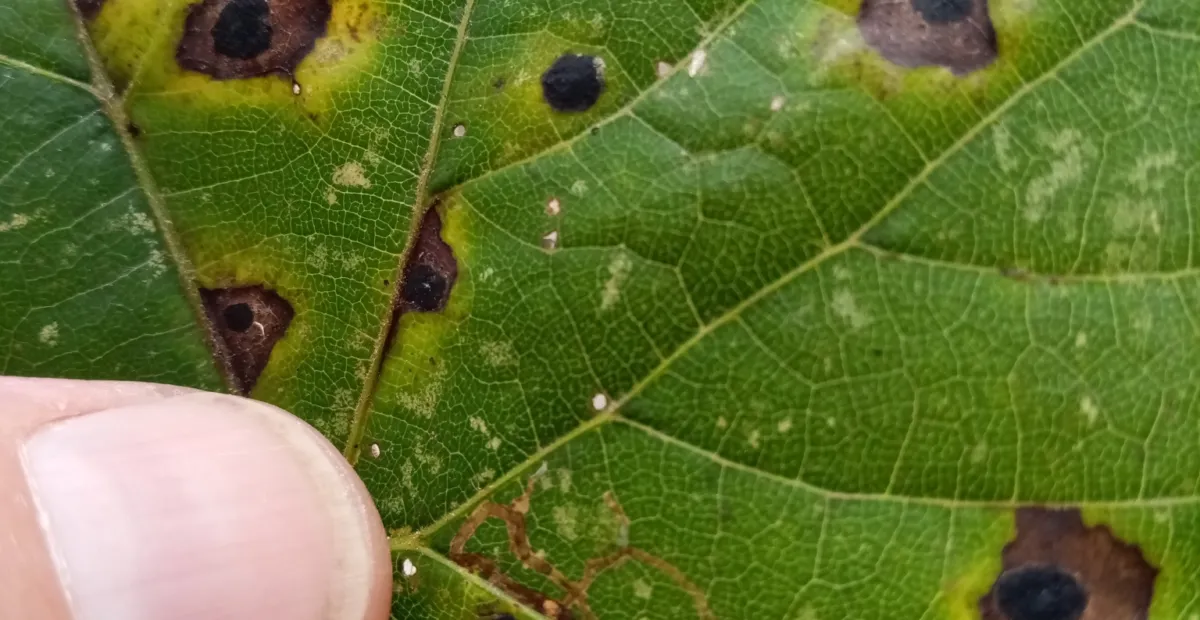
- Leaves: numerous tiny dark spots, often with yellowish margins or halos; severe spotting can cause premature leaf drop.
- Rachises and pedicels: sunken black lesions may girdle tissues, making cluster stems brittle and causing partial or complete cluster loss.
- Berries: near harvest, infected berries may turn brown, shrivel, detach easily or develop roughened surfaces with black fungal fruiting bodies; secondary rots may follow.
- Dormant canes and spurs: infected wood may appear bleached or show irregular dark-brown discoloration with black, pimple-like pycnidia.
Symptoms can resemble spray injury, anthracnose, black rot or other grapevine trunk diseases. A diagnosis based only on a single leaf spot is unreliable; examine shoots, rachises and dormant wood together.
Causes and spread
The pathogen survives mainly in infected grape canes, spurs and other woody tissues left in the vineyard. During late winter and spring, pycnidia produce spores that ooze from the wood and are dispersed chiefly by rain splash. Infection is favored when susceptible green tissues remain wet for several hours, especially during cool weather after budbreak.
Risk rises when infected pruning wood is retained in the canopy, when vines have dense or slow-drying foliage, and when susceptible cultivars are grown in rainy sites. Infected propagation material can introduce the pathogen into new plantings. Disease distribution within a vineyard is often associated with the proximity of infected wood and the direction of splash during rain.
Life cycle and persistence
- Overwintering: the fungus persists in infected canes, spurs, cordons and other grapevine wood.
- Spore production: black pycnidia become active in late winter or spring and release pycnidiospores in wet conditions.
- Primary infection: rain splashes spores onto tender shoots, leaves, petioles, rachises and other green tissues soon after budbreak.
- Symptom development: lesions may become visible several weeks after infection; bloom and early fruit development are important periods for rachis and cluster injury.
- Late-season damage: lesions on fruit may become evident near harvest, particularly after additional rain.
- Return to dormancy: infected tissues and dead wood provide the next season's inoculum source.
Unlike diseases with repeated airborne secondary cycles throughout summer, Phomopsis pressure is often concentrated in the early wet season, although late-season rain can reactivate fruit infections and promote rot.
Treatment and control
There is no treatment that reliably removes established lesions from living grape tissues. Management is preventive and should begin with sanitation. In dry weather during dormancy, prune out infected canes and spurs and remove the material from the vineyard. If cordons or trunks are extensively affected, consult a viticulture specialist before making large structural cuts or retraining the vine.
Where disease has been important in previous seasons, a locally recommended dormant or early-season protectant program may be used to reduce infection of new tissue. Coverage and timing are critical: protection is most useful before infection during early shoot growth and wet periods. Fungicides should supplement, not replace, removal of inoculum and canopy management. Severely damaged clusters or fruit should be removed when practical to reduce secondary rots and improve harvest sanitation.
Low-impact and biological control
For home vineyards and organic systems, emphasize clean planting stock, rigorous dormant pruning, removal of infected wood, destruction of pruning debris, open canopy management and avoidance of overhead irrigation that prolongs leaf and cluster wetness. Copper- or sulfur-based products may be permitted in some US organic production systems, but product legality, crop registration, formulation, residue restrictions and phytotoxicity risks vary by label and state.
Apply any permitted product preventively and according to the current label; do not expect organic products to cure established lesions. Avoid sulfur close to oil applications unless the label specifically permits the interval, because vine injury can occur.
Prevention
- Start with clean, pathogen-free cuttings, rooted vines and grafting material from reputable suppliers.
- During dormant pruning, remove bleached or visibly spotted canes, spurs and badly affected cordon sections. Cut well below symptomatic tissue where practical.
- Remove prunings from the vineyard, shred them thoroughly or otherwise manage them so they cannot remain as a source of spores. Do not leave infected wood beneath vines.
- Train, thin and position shoots to improve sunlight, air movement and drying, while avoiding excessive vigor and dense shade.
- Use site- and region-appropriate cultivars with better tolerance where available; susceptibility differs substantially among grape cultivars.
- Time scouting and protection around budbreak through the first several weeks after bloom, especially when rain is forecast.
- Use weather information and regional university Extension disease-risk tools when available, rather than applying routine treatments on a calendar without assessing risk.
Interesting facts
- Diaporthe ampelina is the currently accepted scientific name associated with the grapevine pathogen historically known as Phomopsis viticola.
- The disease is often called Phomopsis cane and leaf spot, while Phomopsis dieback emphasizes its symptoms in perennial grapevine wood.
- Early-season infections can remain inconspicuous until rachises weaken or fruit symptoms appear much later.
- All grape species and cultivars should not be assumed equally susceptible; cultivar response varies and other Diaporthe species can complicate diagnosis.
- Black pycnidia on bleached dormant grape wood are a particularly useful diagnostic clue, but laboratory identification may be needed when several wood-colonizing fungi are present.
Use only fungicides legally authorized for grapes and this disease in your state and production setting. Follow the current product label for crop, rate, timing, re-entry interval, preharvest interval, personal protective equipment, resistance-management instructions and maximum seasonal use. Current recommendations differ among US states and between table, juice and wine grapes; consult your state university Extension grape guide or licensed crop adviser before treating.