
Alder Phytophthora
Phytophthora alniAlder Phytophthora overview
Alder Phytophthora is a serious root and collar disease associated mainly with alder trees (*Alnus* spp.). The water-mold pathogen *Phytophthora alni* can cause fine-root decay, basal cankers, bleeding bark, sparse yellow foliage, crown dieback and eventual tree death. In the United States, documented findings are geographically limited and vary among subspecies, so laboratory confirmation is important before making management or regulatory decisions.
Typical conditions
Overview
Phytophthora alni is a fungus-like water mold associated primarily with lethal root and collar rot of alder trees (Alnus spp.). The name encompasses closely related hybrid lineages or subspecies, commonly discussed as P. alni subsp. alni, subsp. uniformis and subsp. multiformis. Their aggressiveness and geographic behavior are not identical.
The disease has caused extensive decline of alder populations in parts of Europe. In the United States, P. alni subsp. uniformis has been detected in Alaska, but surveys found little corresponding root damage at many sites; the status and risk of the complex elsewhere in the country should therefore be assessed locally rather than assumed.
Because basal bleeding, crown thinning and dieback can also result from other Phytophthora species, flooding injury, root damage or secondary organisms, confirmation should use an accredited plant diagnostic laboratory.
Symptoms and identification
- Small, pale yellow, sparse summer leaves and a thin crown.
- Progressive twig and branch dieback, often preceded by reduced growth.
- Heavy or unusually early cone production on stressed trees.
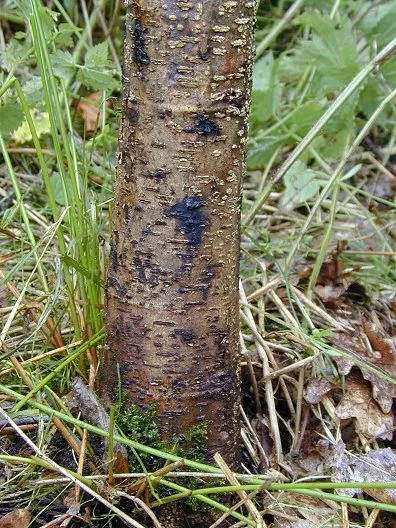
- Rust-colored, black or tarry bleeding spots and streaks at the base of the trunk, root collar or exposed surface roots.
- Sunken necrotic lesions beneath the bark that may extend upward from the collar.
- Brown, decayed or missing fine roots, especially in young trees.
- Advanced infections can disrupt water-conducting tissues, destabilize the tree and cause death.
Symptoms may remain inconspicuous until substantial collar or root damage has occurred. Similar symptoms occur with other root and collar pathogens, so inspect the root collar and submit symptomatic tissue and appropriate soil or water samples for testing.
Causes and spread
The pathogen is soil- and waterborne. A major route of local spread is the movement of infected water through streams, drainage ditches, irrigation systems, runoff and floodwater. Swimming zoospores are released under wet conditions and can infect fine roots, the collar or lower stem, particularly where tissue is submerged or repeatedly wetted.
Long-distance introduction is strongly associated with infected or symptomless nursery stock, including roots carrying contaminated soil or pathogen propagules. Soil on equipment, footwear, vehicles and excavation machinery can also move inoculum between sites. Flood-prone alder stands, saturated soils, slow-moving drainage and repeated wetting of the root collar increase risk.
Life cycle and persistence
Phytophthora alni grows through infected root and collar tissues and produces asexual sporangia when moisture is favorable. Sporangia release motile zoospores, which move through saturated soil or surface water, encyst near susceptible alder roots or bark, germinate and establish new infections.
The complex can produce sexual structures in culture and infected tissue, but the importance and persistence of oospores in the field are uncertain and appear limited in comparison with the water-dispersed phase. The pathogen therefore depends heavily on infected hosts, wet soil and connected water pathways for persistence and spread. Disease pressure commonly rises during prolonged wet periods, flooding and active growing-season water movement.
Treatment and control
There is no dependable curative treatment that restores extensively rotted roots or girdled collars. First confirm the diagnosis, assess tree stability and determine whether the site is part of a connected riparian or nursery pathway.
- Correct avoidable drainage problems where this can be done without redirecting contaminated water toward healthy alders.
- Prevent further soil disturbance, flooding of the collar and mechanical injury to roots and basal bark.
- Remove or isolate severely declining nursery plants and handle them under local plant-health and disposal guidance.
- For selected riparian trees with viable root systems, professional coppicing may stimulate replacement shoots, but it does not eradicate the pathogen from soil or water.
- Remove hazardous dead trees only with a site-specific plan that limits movement of infested soil, roots and water; large-scale removal in natural riparian habitats may be impractical and environmentally damaging.
Because the causal complex and symptoms overlap with other pathogens, consult a certified arborist, extension diagnostician or plant pathologist before major tree removal.
Low-impact and biological control
Management is primarily preventive and cultural rather than curative. Improve site drainage only where hydrologically appropriate, avoid unnecessary irrigation and soil disturbance, maintain clean tools and footwear, and use pathogen-free planting material. Remove severely infected nursery stock rather than composting it or planting it elsewhere.
In natural or semi-natural riparian systems, complete sanitation is often unrealistic because the pathogen may already be distributed through connected waterways and symptoms can appear late. Coppicing can preserve alder regeneration in some managed stands, but regrowth success depends on remaining root health, site conditions and the disease lineage. No universally proven home-scale biological control program is established specifically for P. alni.
Prevention
- Buy alder plants only from reputable nurseries with documented sanitation and plant-health practices; avoid visibly declining or poorly rooted stock.
- Do not move alder root balls, soil, water, mulch or machinery from a suspect site to an uninfested site.
- Use clean irrigation water in nurseries and avoid recirculating water from drainage areas containing alder.
- Keep the root collar exposed and avoid piling soil or mulch against the trunk.
- Do not establish new alder plantings in flood-prone or poorly drained areas connected to known infested waterways.
- Clean soil from boots, tires, tools and excavation equipment, then disinfect according to nursery or arboricultural biosecurity protocols.
- Report unusual alder mortality or suspected regulated detections to the state plant-health authority or USDA APHIS before moving plant material.
Interesting facts
- The alder Phytophthora complex is unusual because it consists of closely related hybrid lineages with different levels of aggressiveness and geographic patterns.
- In Europe, the disease has been linked to major mortality of common alder (Alnus glutinosa) and gray alder (Alnus incana).
- US Forest Service surveys detected P. alni subsp. uniformis in Alaska, yet extensive surveys there found little root-collar disease at many sampled sites.
- Alders can appear healthy while infected roots or nursery-associated fine roots carry the pathogen.
- Water movement is central to epidemiology: streams, floods, drainage and irrigation can spread infective zoospores over distances.
No unverified pesticide program should be used. Do not apply a fungicide or oomycete-targeting product unless it is legally authorized for the specific crop or tree, disease and use site in the United States. If a product is considered, follow the current EPA-approved label exactly, including crop/site restrictions, application method, personal protective equipment, reentry interval and environmental precautions. Chemical treatment cannot reliably cure advanced root or collar rot and should never replace diagnosis, sanitation and water-management measures.
Affected plants
The plants below are linked to this problem by structured host-plant data. The list updates automatically as new plant profiles are added.
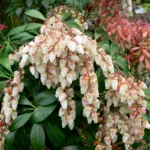 Pieris japonica care guidePieris japonica
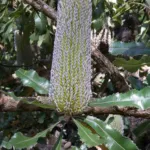 He saw banksia (Banksia serrata) care guideBanksia serrata
 He showy banksia (Banksia speciosa) care guideBanksia speciosa
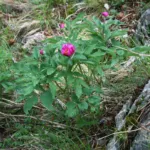 Garden Peony (Paeonia officinalis) care guidePaeonia officinalis
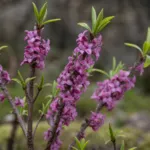 Mezereon (Daphne mezereum) care guideDaphne mezereum
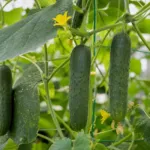 Cucumber (Cucumis sativus) care guideCucumis sativus
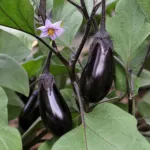 Eggplant (Solanum melongena) care guideSolanum melongena
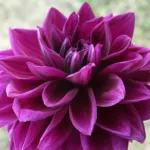 Dahlia ‘Thomas Edison’Dahlia 'Thomas Edison'
 Shasta Daisy (Leucanthemum superbum) care guideLeucanthemum superbum
 Mesa Yellow (Gaillardia aristata ‘Mesa Yellow’)Gaillardia aristata 'Mesa Yellow'