
 Source:
 Shasta Daisy (Leucanthemum superbum) short overview
Shasta Daisy (Leucanthemum superbum) is a garden-origin herbaceous perennial valued for its crisp white rays, yellow centers, long summer flowering, and useful performance in perennial borders and cutting gardens. Give it full sun, fertile but sharply drained soil, and moderate water while it establishes. Deadheading can extend the display, while dividing clumps every few years helps maintain vigor. The flowers provide documented value for bees, butterflies, and other pollinating insects.
Taxonomic classification
Shasta Daisy (Leucanthemum superbum) care guide
Light and placement
Grow in full sun for the strongest stems and heaviest flowering; light afternoon shade can help in very hot, dry climates. An east- or south-facing position with open air is suitable. Too little light produces floppy growth and fewer flowers, while excessive heat combined with drought may scorch foliage or shorten bloom.
Watering and humidity
Water deeply when the upper several inches of soil begin to dry during establishment, then taper as roots mature. Established plants tolerate short dry periods but flower best with moderate, consistent moisture. Reduce watering in cool or rainy weather and never allow the crown to sit in saturated soil. Average humidity is adequate; airflow matters more than misting.
Soil and growing medium
Use fertile, humus-enriched soil that drains freely, especially in regions with wet winters. Loam or amended sandy loam is suitable; avoid compacted clay and sites that remain saturated. A near-neutral to slightly acidic soil reaction is generally suitable. Good drainage is more important than unusually rich soil.
Feeding
Top-dress with a modest layer of compost in spring or apply a balanced, slow-release fertilizer at label rates as growth begins. Avoid heavy nitrogen feeding, which can produce lush foliage and weaker stems with fewer flowers. Stop routine fertilizing late in the growing season so plants can harden before winter.
Growth and habit
Plants form upright, slowly expanding clumps from a basal crown. Mature clumps benefit from division before they become crowded, open in the center, or lose flowering vigor. Deadheading helps maintain a tidy display and may extend bloom. Winter survival is strongly reduced by saturated soil, even where temperatures are within the hardiness range.
Planting and repotting
Plant nursery divisions or potted plants in spring or early fall after severe heat has passed. Set the crown at soil level, water thoroughly, and mulch lightly without covering the crown. Allow about 18–24 inches between typical plants; compact cultivars may need less and tall cultivars more.
For container plants, repot in spring when roots have filled the container. Move the crown into fresh, well-drained potting mix and use a pot with drainage holes. Choose a container large enough for a mature clump, but do not place the crown deeper than it was previously growing.
Propagation and pruning
Propagation
Divide established clumps in spring or early fall every 2–3 years, separating healthy crowns with roots and shoots. Seed propagation is possible, but named cultivars may not come true from seed. Plant divisions promptly and keep them evenly watered while roots re-establish.
Pruning
Deadhead spent flower heads to encourage a longer display and possible rebloom. After flowering, cut stems back to the basal foliage to tidy the plant and help conserve energy. Remove diseased leaves promptly and avoid cutting into the crown.
Overwintering
Leave a light layer of mulch over the root zone in cold climates after the ground cools, keeping mulch away from the crown. Avoid heavy, moisture-holding mulch and winter irrigation in poorly drained soil. In containers, protect roots from repeated freeze-thaw cycles by moving pots to a sheltered location or insulating them.
Uses
Use in perennial borders, cottage gardens, containers, and cutting gardens. Stems are suitable for fresh flower arrangements. The open flower heads provide documented resources for bees, butterflies, and other pollinating insects. Do not promote the plant as an edible or medicinal crop; ingestion may cause irritation or gastrointestinal upset.
Appearance
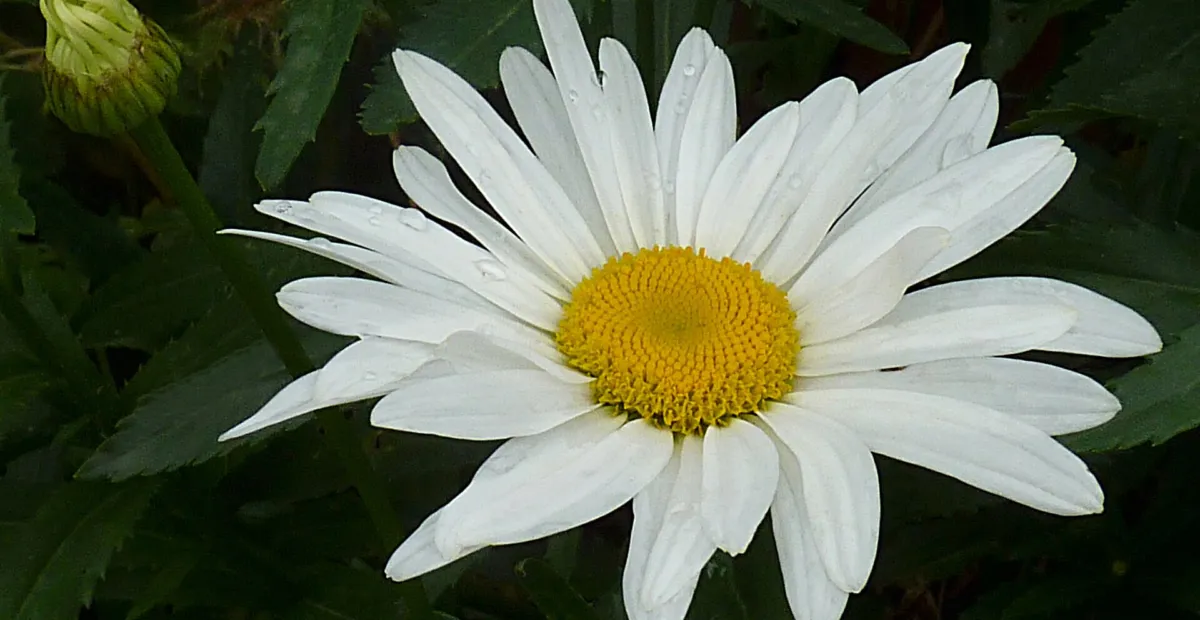
The plant has dark green, lance-shaped to oblong leaves with toothed margins and sturdy upright stems. Its most recognizable feature is the classic white-ray, yellow-disc flower head. Single, semidouble, and double cultivars exist, so flower density and the visibility of the yellow center can vary considerably.
Flowering
The plant produces solitary, daisy-like flower heads on upright stems. Each head has white ray florets around a yellow central disc. Typical garden selections flower from early or midsummer into late summer, with deadheading often encouraging additional flowers. Exact timing and duration vary by cultivar, latitude, and summer conditions.
Pollination and visitors
The open yellow-centered flower heads are visited by bees, butterflies, and other pollinating insects. Attraction is moderate rather than exceptional and depends on cultivar, flower availability, weather, and surrounding plant diversity. Double-flowered selections may provide less accessible floral resources than single forms.
Leucanthemum superbum photos
Click any photo for a larger view. Source, author and license are shown separately.
Diseases and pests
Diseases
Possible problems include leaf spot, powdery mildew, verticillium wilt, stem rot, and phytophthora in poorly drained conditions. Improve air circulation, water at the soil line, remove badly affected foliage, and avoid chronic winter wet. Do not routinely use fungicides unless a confirmed disease and local label support justify treatment.
Pests
Watch for aphids, leaf miners, spider mites, and four-lined plant bug. Inspect new growth and leaf undersides, encourage beneficial insects, and use a strong water spray for light infestations. Remove heavily damaged leaves and avoid broad-spectrum insecticides during bloom whenever possible.
Toxicity and pollen
Extension guidance describes Shasta Daisy as mildly toxic to humans and pets if ingested and advises gloves because sap or plant contact may cause dermatitis. Symptoms are expected to be limited in ordinary exposure, but ingestion can cause gastrointestinal upset or irritation. Seek veterinary or medical advice after significant ingestion or a persistent reaction.
- Typical season
- Late spring through summer flowering
- Pollination / pollen
- Insect-associated pollen; limited airborne dispersal
Shasta Daisy pollen is primarily presented within insect-pollinated flower heads rather than released as a prominent wind-borne cloud. That suggests relatively low airborne exposure for most gardeners, but it does not guarantee allergy-free handling. Sensitive people may also react to plant contact; gloves can reduce dermatitis risk.
Native habitat
This is a cultivated garden hybrid rather than a naturally occurring wild species with a single native habitat. Its parentage combines European and Mediterranean Leucanthemum taxa. In cultivation it performs best in open, sunny sites with average moisture during establishment and rapid drainage during winter.
Interesting fact
This is an artificial hybrid involving Leucanthemum lacustre, L. maximum, and L. vulgare. The hybrid was developed in the late nineteenth century near Mount Shasta, California. Many modern selections differ substantially in height, flower form, and reblooming ability. Plants can become short-lived when overcrowded or exposed to winter-wet soil.
Frequently asked questions (FAQ)
The most relevant questions about this plant, with short and direct answers.
🌱Quick care
What is Leucanthemum superbum called in the United States?⌄
Leucanthemum superbum is commonly called Shasta Daisy in the United States. It is a hardy herbaceous perennial in the Asteraceae family, grown for its white, yellow-centered flowers.
Is Shasta Daisy a perennial?⌄
Yes, Shasta Daisy is a hardy perennial that dies back or becomes dormant in winter and regrows from its crown in spring. Its longevity is often improved by dividing crowded clumps every few years.
How much sunlight does Shasta Daisy need?⌄
Shasta Daisy grows best in full sun, generally meaning at least 6 hours of direct light daily. It tolerates light partial shade, but flowering may be reduced.
How often should I water Shasta Daisy?⌄
Water Shasta Daisy when the soil begins to dry, providing medium moisture during establishment and active growth. Once established, it tolerates short dry periods, but consistently wet soil can cause root problems.
What USDA hardiness zones can grow Shasta Daisy?⌄
Most Shasta Daisy cultivars are hardy in USDA Zones 5 through 9. Exact performance can vary by cultivar and by whether the planting site remains well drained during winter.
🌤️Environment and placement
What is the best soil for Shasta Daisy?⌄
Plant Shasta Daisy in fertile, well-drained loam or amended sandy loam. It performs poorly in waterlogged or heavy clay soil, especially where winter drainage is poor.
Can Shasta Daisy grow in partial shade?⌄
Shasta Daisy can grow in light partial shade, particularly in hot climates or dry sites. Full sun usually produces stronger stems and more abundant flowers.
Is Shasta Daisy drought tolerant?⌄
Established Shasta Daisy is moderately drought tolerant once its roots are developed. Water it more regularly during the first growing season and during prolonged heat or drought.
Can Shasta Daisy grow in containers?⌄
Yes, Shasta Daisy can grow in containers if the pot has drainage holes and enough room for its roots. Use a quality potting mix, water when the surface begins to dry, and protect the container from severe winter exposure.
Is Shasta Daisy deer resistant?⌄
Shasta Daisy is generally considered deer resistant, although deer may browse it when preferred food is scarce. No ornamental plant is completely deer proof.
💧Care and problems
Why is my Shasta Daisy turning yellow?⌄
Yellowing leaves commonly result from excess moisture, poor drainage, insufficient sunlight, or disease. Check that the soil drains freely, allow the surface to dry slightly between waterings, and improve airflow around crowded plants.
Why is my Shasta Daisy falling over?⌄
Shasta Daisy may flop because of excessive shade, rich or overly wet soil, dense growth, or heavy flower heads. Move or divide crowded plants, improve light and drainage, and stake tall cultivars if necessary.
How do I keep Shasta Daisy blooming all summer?⌄
Remove spent flowers promptly to encourage additional blooms and prevent energy from going into seed production. Flowering is also strongest when plants receive full sun and are not stressed by waterlogged soil.
What pests affect Shasta Daisy?⌄
Shasta Daisy may occasionally be affected by aphids, leaf miners, spider mites, or whiteflies. Inspect the foliage regularly and address infestations early with non-harmful controls appropriate for the pest.
What diseases affect Shasta Daisy?⌄
Common problems include leaf spot, powdery mildew, Verticillium wilt, Botrytis, and stem or root rot. Good drainage, full sun, adequate spacing, and watering at the soil level help reduce disease pressure.
How should I prepare Shasta Daisy for winter?⌄
After flowering, you can cut Shasta Daisy back to basal foliage or leave the stems until late fall for winter interest and then cut them down in early spring. Avoid keeping the crown in saturated soil over winter.
🪴Planting and repotting
When is the best time to plant Shasta Daisy?⌄
Plant Shasta Daisy in spring after the soil can be worked or in early fall, giving it time to establish before extreme weather. Greenhouse-grown plants should be hardened off gradually before outdoor planting.
How far apart should I plant Shasta Daisy?⌄
Space Shasta Daisy according to the mature size of the cultivar, commonly about 18 to 24 inches apart for standard varieties. Allow additional room for large cultivars and maintain airflow between plants.
How deep should I plant Shasta Daisy?⌄
Plant Shasta Daisy at the same depth it was growing in its nursery container, with the crown at or just above the soil surface. Planting too deeply can encourage crown and stem problems.
Can Shasta Daisy grow in heavy clay soil?⌄
Shasta Daisy can survive in improved clay soil, but it needs reliable drainage. Amend the planting area with organic matter or use a raised bed rather than placing the crown in a persistently wet site.
✂️Propagation and pruning
How do I divide Shasta Daisy?⌄
Divide Shasta Daisy in spring or early fall by lifting the clump, separating it into healthy sections with roots and shoots, and replanting them promptly. Division every 2 to 3 years can help maintain vigor and reduce overcrowding.
Can I grow Shasta Daisy from seed?⌄
You can grow Shasta Daisy from seed, but named cultivars may not come true to the parent plant. Division or cuttings are more reliable when you want to preserve a particular cultivar’s flower form and size.
Can Shasta Daisy be propagated from cuttings?⌄
Yes, Shasta Daisy can be propagated from stem cuttings, although division is the more common home-garden method. Use healthy, nonflowering shoots and keep the rooting medium evenly moist but not saturated.
When should I divide Shasta Daisy?⌄
Divide Shasta Daisy in early spring as new growth begins or in early fall after flowering. Avoid dividing during heat, drought, or periods when the soil is waterlogged.
Should I deadhead Shasta Daisy?⌄
Yes, deadheading Shasta Daisy is recommended to extend flowering and improve the plant’s appearance. Remove each spent flower just above a healthy leaf or branching point.
⚠️Toxicity and safety
Is Shasta Daisy toxic to dogs and cats?⌄
Shasta Daisy has low toxicity but may cause mild gastrointestinal upset or skin irritation if eaten or handled by sensitive pets. Contact a veterinarian if a pet consumes a large amount or develops symptoms.
Is Shasta Daisy poisonous to people?⌄
Shasta Daisy is considered mildly toxic or irritating if ingested and may cause skin irritation in sensitive people. Do not eat the plant, and wear gloves when handling it if you are prone to contact dermatitis.
Is Shasta Daisy safe to plant around children?⌄
Shasta Daisy is generally suitable for ornamental gardens around children when it is not eaten. Teach children not to consume plant parts and wash hands after handling unfamiliar plants.
🌸Flowering and special interest
When does Shasta Daisy bloom?⌄
Shasta Daisy typically blooms from early or midsummer into late summer, with timing varying by cultivar and climate. Regular deadheading can help extend the display.
Why is my Shasta Daisy not blooming?⌄
Insufficient sunlight, excessive nitrogen, drought stress, overcrowding, or poor drainage can reduce flowering. Provide full sun, avoid consistently wet soil, and divide aging clumps when they become congested.
Is Shasta Daisy good for cut flowers?⌄
Yes, Shasta Daisy is a useful cut flower with long, sturdy stems on many cultivars. Harvest stems when the flowers are opening and place them in clean water immediately.
Does Shasta Daisy attract bees and butterflies?⌄
Yes, the open flower centers can provide forage for bees, butterflies, and other pollinating insects. Single-flowered forms generally offer easier access to the central disk than densely double forms.
Similar plants
 Argyranthemum frutescens care guideArgyranthemum frutescens
 He oxeye daisy (Leucanthemum ircutianum) care guideLeucanthemum ircutianum
 Max chrysanthemum (Leucanthemum maximum) care guideLeucanthemum maximum
 Grass-leaved Oxeye Daisy (Leucanthemum graminifolium) care guideLeucanthemum graminifolium
 Oxeye daisy (Leucanthemum vulgare) care guideLeucanthemum vulgare
 Creeping daisy or mini marguerite (Mauranthemum paludosum) care guideMauranthemum paludosum