
 Source:
 Delphinium ‘Blue Bird’ short overview
Delphinium 'Blue Bird' is a classic Pacific Giant delphinium valued for its tall, upright spikes of vibrant blue, semi-double flowers with pale centers. It performs best in full sun, fertile soil, steady moisture, and a sheltered position where stems can be staked against wind and rain. This short-lived herbaceous perennial is especially useful at the back of borders and in cutting gardens, but every part should be treated as poisonous if eaten.
Taxonomic classification
Delphinium ‘Blue Bird’ care guide
Light and placement
Give full sun, ideally six or more hours daily, with morning through afternoon exposure and protection from prevailing wind. An east, southeast, or open south-facing position can work if stems are supported; in hot climates, light afternoon shade may reduce stress. Too little light produces weak, floppy stems and fewer flowers, while intense heat combined with reflected afternoon sun can cause rapid decline.
Watering and humidity
Water deeply when the upper inch of soil begins to dry, keeping the root zone consistently moist but never saturated. Apply water at the soil line and mulch lightly without covering the crown. Increase frequency during bud formation and flowering, and reduce only after foliage dies back. Good spacing and morning irrigation help limit foliar disease in humid weather.
Soil and growing medium
Use fertile, humus-enriched soil that drains freely but does not dry rapidly. Loam or improved sandy or clay soil is suitable when drainage is corrected. Reported pH tolerance is broad, from acidic through alkaline, although a slightly acidic to neutral garden soil is a practical target. Avoid heavy, waterlogged ground because poorly drained soil promotes crown rot.
Feeding
Mix finished compost into the planting area before growth begins. During spring and early summer, apply a balanced fertilizer at the label rate or use a controlled-release product. Container plants may need regular light feeding, but avoid excess nitrogen, which encourages lush stems and foliage that are more prone to lodging and disease. Stop routine feeding as growth begins to slow.
Growth and habit
Plants form a basal mound of divided foliage and send up tall, upright flowering stems. The stems become top-heavy as the spikes develop, so install supports early or grow the plant beside a fence or other shelter. In hot, humid climates, plants may decline after only a few seasons even when winter survival is reliable.
Planting and repotting
Plant after the last hard frost in spring, or in early fall where plants have time to root before winter. Set the crown at soil level; planting too deeply increases crown-rot risk. Allow about 18–24 inches between plants and position them where wind and heavy rain are reduced.
Container-grown plants can be moved in early spring or early fall. Use a deep, heavy container with drainage holes and refresh compacted potting mix rather than disturbing the root system unnecessarily. Tall plants may become unstable in lightweight pots.
Propagation and pruning
Propagation
Sow seed in cool conditions according to the supplier's instructions, or take pencil-thick basal cuttings in early spring. Seedlings may not reproduce the parent exactly, while vegetative propagation better preserves cultivar traits. Keep young plants evenly moist during establishment.
Pruning
Thin emerging shoots when they are about 3 inches tall, leaving roughly 2–3 strong shoots on young plants and 5–7 on established plants. Deadhead spent spikes back to flowering side shoots or the basal foliage to encourage possible rebloom. Cut remaining stems to ground level after they yellow and wither in fall.
Overwintering
Leave the crown in the ground in USDA Zones 3–7, cutting back only after the foliage has died naturally. Apply a light winter mulch after the soil cools, keeping it away from the crown. In warm humid regions, winter protection is less important than summer drainage and airflow; container plants need protection from repeated freeze-thaw cycles.
Uses
Use at the back of perennial borders, in cottage gardens, mass plantings, and cutting gardens. Tall flower spikes are valuable as cut flowers. It can be grown in a large container if supported. Do not use for food, medicine, or unsupervised children's gardens because the plant is poisonous if eaten.
Appearance
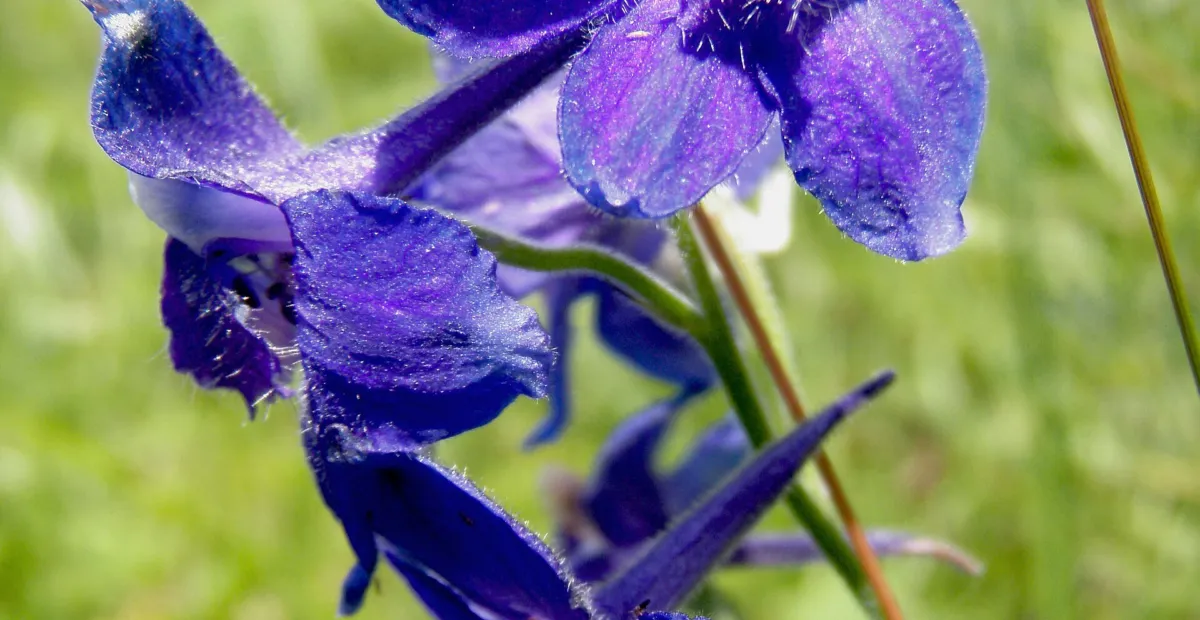
The plant has glossy, deeply divided or palmately lobed basal leaves and tall, mostly unbranched hollow stems. Its defining feature is the upright spike carrying numerous vibrant blue, semi-double blooms with contrasting pale centers. The overall form is architectural and columnar, but the stems are fragile without support.
Flowering
The Pacific Giant type produces tall terminal racemes or spikes of dense, semi-double flowers in early to mid-summer. Promptly removing faded spikes can encourage a later flush, although repeat flowering is less reliable in hot or stressful conditions. Staking is usually necessary before the stems become top-heavy.
Pollination and visitors
The open, conspicuous flower spikes provide nectar and pollen resources for documented garden visitors including bees, bumblebees, butterflies, and hummingbirds. Evidence is stronger for Delphinium and the cultivar group than for this individual clone, so visitor intensity should be considered moderate rather than certain.
Delphinium 'Blue Bird' photos
Click any photo for a larger view. Source, author and license are shown separately.
Diseases and pests
Diseases
Powdery mildew, botrytis blight, leaf spots, crown rot, black blotch, and viral problems may occur. Improve air circulation, avoid overhead irrigation, remove diseased debris, and never bury the crown. Cut back badly mildewed plants after flowering if fresh basal growth remains healthy.
Pests
Slugs and snails can shred young foliage. Aphids, earwigs, leaf miners, stem borers, mites, caterpillars, and delphinium moth larvae may also occur. Reduce hiding places, inspect new growth, hand-pick larger pests, use barriers for slugs and snails, and choose targeted controls only when damage is significant.
Toxicity and pollen
Delphinium contains diterpenoid alkaloids and should be treated as poisonous if eaten. Ingestion can cause burning or numbness of the mouth and throat, vomiting, weakness, spasms, respiratory paralysis, convulsions, and potentially fatal poisoning. Keep plant material away from children and pets, wear gloves when handling, and seek poison-control or veterinary advice after ingestion.
- Typical season
- Late spring through summer during flowering
- Pollination / pollen
- Insect-carried floral pollen
As an insect-pollinated flowering perennial, its pollen is generally released from flowers rather than dispersed in large quantities by wind. Cultivar-specific allergy studies are not available, so a low airborne-pollen rating is a cautious horticultural assessment, not a guarantee of no allergy risk.
Native habitat
This cultivated hybrid reflects the ecology of tall Delphinium types associated with cool temperate meadows, woodland margins, and mountain or river-bank settings. It prefers fertile soils with regular moisture, good drainage, and moderate summer temperatures. The cultivar is not native to the United States and should be treated as an ornamental garden plant rather than a regional wildflower.
Interesting fact
‘Blue Bird’ is associated with the Pacific Giant delphinium group. Its flowers are described as vibrant or medium blue with contrasting light centers. The tall hollow stems are easily bent by wind and rain, making early staking important. Warm, humid summers may reduce longevity even where winter hardiness is adequate.
Frequently asked questions (FAQ)
The most relevant questions about this plant, with short and direct answers.
🌱Quick care
What is Delphinium 'Blue Bird'?⌄
Delphinium 'Blue Bird' is a tall Pacific Giant delphinium with clear blue flowers and contrasting white centers. It is a cold-hardy perennial commonly grown in USDA Zones 3–7, although longevity can be shorter in hot, humid regions.
How much sun does Delphinium 'Blue Bird' need?⌄
Grow Delphinium 'Blue Bird' in full sun, ideally with at least 6 hours of direct sunlight daily. In very hot climates, light afternoon shade may help protect flowering and foliage.
How often should I water Delphinium 'Blue Bird'?⌄
Water Delphinium 'Blue Bird' whenever the top inch of soil begins to dry, keeping the soil evenly moist but not waterlogged. Consistent moisture is especially important during active growth and flowering.
How tall does Delphinium 'Blue Bird' get?⌄
Delphinium 'Blue Bird' typically grows about 3 to 6 feet tall and 1 to 2 feet wide. Its tall flower spikes usually need support in exposed gardens.
🌤️Environment and placement
What USDA hardiness zone is Delphinium 'Blue Bird' suitable for?⌄
Delphinium 'Blue Bird' is generally suited to USDA Zones 3–7, with some references extending its range into Zone 8 or colder Zone 2 conditions. Performance is usually best where summers are cool or moderate.
What type of soil does Delphinium 'Blue Bird' prefer?⌄
Plant Delphinium 'Blue Bird' in fertile, well-drained loam that retains steady moisture without becoming soggy. Amended sandy or clay soil can also work if drainage and fertility are improved.
Can Delphinium 'Blue Bird' tolerate clay soil?⌄
Delphinium 'Blue Bird' can grow in clay soil when it is amended with organic matter and drains adequately. Avoid planting it where winter water collects, because wet roots can cause rot.
Where is the best place to plant Delphinium 'Blue Bird'?⌄
Place Delphinium 'Blue Bird' toward the back of a sunny border or in the center of a bed where its tall spikes will be visible. Choose a sheltered location protected from strong winds and provide support before the stems become tall.
Can Delphinium 'Blue Bird' grow in containers?⌄
Delphinium 'Blue Bird' can grow in a large, deep container with fertile, well-drained potting mix and reliable watering. The container must be heavy or sheltered because the tall stems can become top-heavy.
💧Care and problems
Does Delphinium 'Blue Bird' need staking?⌄
Yes, Delphinium 'Blue Bird' commonly needs staking because its flower spikes can reach several feet tall. Install stakes or a support grid early in the season so the stems grow through the support naturally.
How do I fertilize Delphinium 'Blue Bird'?⌄
Feed Delphinium 'Blue Bird' in early spring with compost or a balanced slow-release fertilizer. Avoid excessive nitrogen, which can produce weak leafy growth and increase the risk of floppy stems.
Why are the leaves of my Delphinium 'Blue Bird' turning yellow?⌄
Yellow leaves on Delphinium 'Blue Bird' may result from overwatering, poor drainage, root problems, nutrient deficiency, or natural decline after flowering. Check soil moisture and roots first, and remove damaged foliage to improve air circulation.
How do I prevent powdery mildew on Delphinium 'Blue Bird'?⌄
Reduce powdery mildew on Delphinium 'Blue Bird' by providing full sun, good spacing, steady watering at the soil line, and strong air circulation. Remove infected leaves and cut the plant back after flowering if the foliage declines heavily.
What pests commonly attack Delphinium 'Blue Bird'?⌄
Slugs and snails commonly damage young Delphinium 'Blue Bird' foliage, while aphids and mites may also occur. Inspect plants regularly and use barriers, hand removal, or a labeled control appropriate for the pest.
🪴Planting and repotting
When should I plant Delphinium 'Blue Bird' in the United States?⌄
Plant Delphinium 'Blue Bird' in spring after the soil can be worked, or in early fall at least several weeks before the ground freezes. In warmer regions, fall or winter planting can help the plant establish before summer heat.
How far apart should I plant Delphinium 'Blue Bird'?⌄
Space Delphinium 'Blue Bird' about 18 to 24 inches apart to allow mature foliage and flower stems to develop. Wider spacing is helpful in humid areas where air circulation is important.
Can I transplant Delphinium 'Blue Bird'?⌄
Transplant Delphinium 'Blue Bird' in early spring or early fall when temperatures are mild. Move the plant with as much of the root ball as possible, water it thoroughly, and keep the soil evenly moist while it reestablishes.
✂️Propagation and pruning
Can Delphinium 'Blue Bird' be grown from seed?⌄
Yes, Delphinium 'Blue Bird' can be grown from seed, although seedlings may not reproduce every characteristic of the parent plant exactly. Start seed indoors in early spring or sow it outdoors when conditions are cool.
How should I start Delphinium 'Blue Bird' seeds?⌄
Sow Delphinium 'Blue Bird' seeds shallowly in a sterile seed-starting mix and keep them cool, lightly moist, and in bright light. A cool period may improve germination, and seedlings should be transplanted carefully once they are large enough to handle.
Can Delphinium 'Blue Bird' be divided?⌄
Delphinium 'Blue Bird' can sometimes be divided in early spring, but division may stress the plant and is generally less reliable than purchasing young plants or starting seed. Divide only vigorous, established clumps and replant the sections immediately.
Should I deadhead Delphinium 'Blue Bird'?⌄
Yes, remove spent flower spikes from Delphinium 'Blue Bird' at the base after the first flush of flowers. Deadheading can encourage a second bloom later in the season, provided the plant remains healthy and temperatures are not excessively hot.
⚠️Toxicity and safety
Is Delphinium 'Blue Bird' poisonous?⌄
Yes, all parts of Delphinium 'Blue Bird' are highly toxic if eaten by people or animals. Keep it away from children, pets, and livestock, and wear gloves when handling the foliage if your skin is sensitive.
Can handling Delphinium 'Blue Bird' irritate the skin?⌄
Delphinium 'Blue Bird' foliage may irritate sensitive skin in some people. Wear gloves and long sleeves when pruning, dividing, or handling the plant, and wash exposed skin afterward.
Is Delphinium 'Blue Bird' safe for dogs, cats, or horses?⌄
No, Delphinium 'Blue Bird' should be treated as unsafe for dogs, cats, horses, and other animals if eaten. Keep plant material and fallen leaves away from grazing or browsing animals, and contact a veterinarian promptly after suspected ingestion.
🌸Flowering and special interest
When does Delphinium 'Blue Bird' bloom?⌄
Delphinium 'Blue Bird' usually blooms from early to midsummer, with timing varying by climate and planting date. In favorable conditions, cutting back spent spikes can encourage additional flowers later in the season.
What color are Delphinium 'Blue Bird' flowers?⌄
Delphinium 'Blue Bird' produces tall spikes of clear to medium blue flowers with a contrasting white center, often called a white bee. The flowers are especially effective in borders and cut-flower arrangements.
Is Delphinium 'Blue Bird' good for cut flowers?⌄
Yes, Delphinium 'Blue Bird' is an excellent cut flower because its tall blue spikes add height and strong color to arrangements. Cut stems when the lower flowers are open and keep the foliage away from the vase water.
Why is my Delphinium 'Blue Bird' not flowering?⌄
Poor flowering in Delphinium 'Blue Bird' can result from insufficient sunlight, excess nitrogen, drought, overcrowding, immature plants, or hot weather. Provide full sun, even moisture, fertile soil, and support while avoiding waterlogged conditions.
Similar plants
 Delphinium ‘Magic Fountains’Delphinium 'Magic Fountains'
 Delphinium ‘Black Knight’Delphinium 'Black Knight'
 Delphinium elatum care guideDelphinium elatum elatum
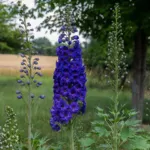 Delphinium ‘New Zealand’Delphinium 'New Zealand'
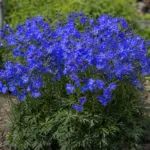 Delphinium ‘Blue Mirror’Delphinium 'Blue Mirror'
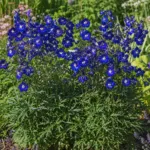 Delphinium ‘Summer Nights’Delphinium 'Summer Nights'