
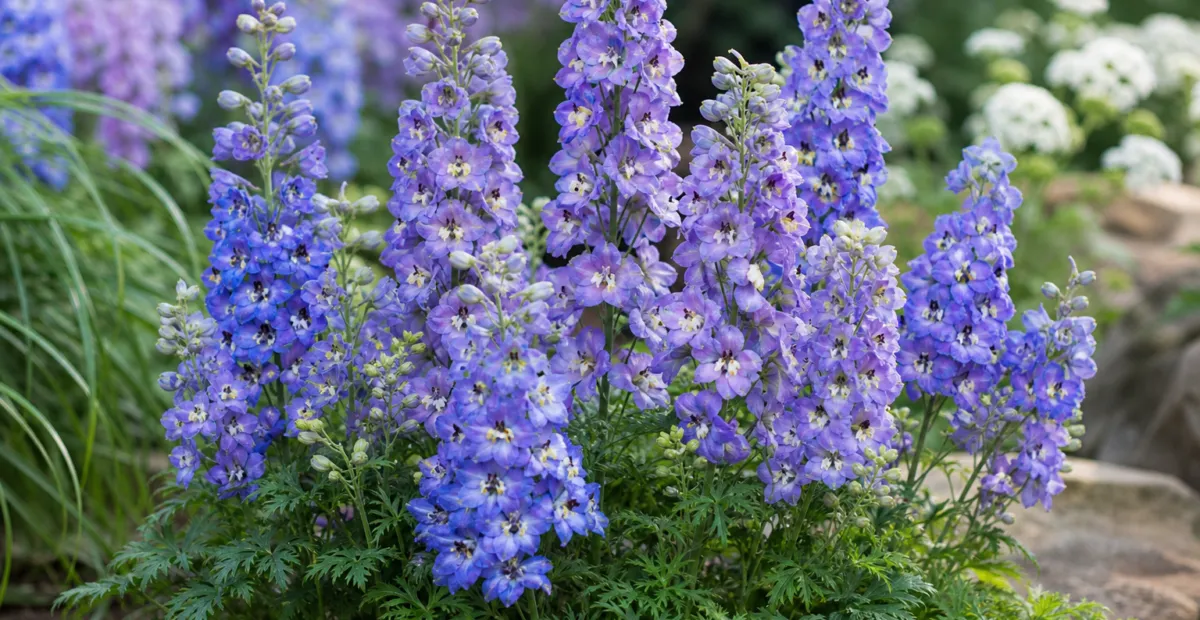
 AI-generated illustration
 Delphinium ‘Magic Fountains’ short overview
Delphinium 'Magic Fountains' is a compact, upright perennial bred for dense spikes of richly colored, often bee-marked flowers. It suits sunny borders and containers, and its sturdy stems are useful for cutting. Give it fertile, moisture-retentive but well-drained soil, protection from strong wind, and support if flower stems lean. The plant is toxic when eaten, so keep it away from children and pets.
Taxonomic classification
Delphinium ‘Magic Fountains’ care guide
Light and placement
Provide at least 6 hours of direct sun, ideally with morning and midday exposure and shelter from strong afternoon wind. In hot climates, some afternoon shade may reduce stress, but excessive shade produces weak, floppy stems and fewer flowers. Pale foliage, scorching, or collapsed stems can indicate heat or exposure problems.
Watering and humidity
Water deeply when the upper inch of soil begins to dry, keeping moisture steady during active growth and flowering. Reduce watering in cool autumn weather but do not let container plants dry completely. Water at the soil line and avoid prolonged wetness around the crown, especially in humid or rainy periods.
Soil and growing medium
Use fertile loam enriched with compost, but avoid heavy, stagnant clay. The root zone should remain evenly moist without becoming waterlogged. A slightly acidic to neutral soil reaction is suitable; excellent drainage is especially important in winter and during humid weather.
Feeding
Apply compost or a balanced slow-release perennial fertilizer in spring as growth begins. A light follow-up feeding after the first flowering can support regrowth, especially in poor soil. Avoid heavy nitrogen applications, which can produce lush weak growth and increase disease pressure.
Growth and habit
Plants form a basal clump of divided foliage and send up strong, leafy flowering stems. Stems may need support in exposed sites or when carrying heavy spikes. Cutting spent stems to the base can improve appearance and may encourage additional flowering.
Planting and repotting
Plant in spring after the soil can be worked, or in early fall where plants have time to establish before winter. Set the crown at soil level rather than burying it. Water deeply after planting and keep the root zone consistently moist while new roots develop.
Repot container plants in early spring when new growth begins, moving them into fresh fertile, well-drained mix. Handle the crown and roots carefully, and choose a pot with drainage holes. Large plants may be easier to divide and replant in the garden than to keep in undersized containers.
Propagation and pruning
Propagation
Start from seed in cool conditions; many delphiniums benefit from a period of chilling for reliable germination. Division can be done in early spring or early fall, but divided plants should be replanted promptly and kept evenly moist. Seed-grown plants may not reproduce a particular color or form exactly.
Pruning
Remove spent flower spikes after flowering, cutting them back to the basal foliage or crown. If a second flush is desired, cut promptly after the first bloom and continue watering. Remove yellowing or diseased foliage and clear debris at season's end.
Overwintering
Leave the crown outdoors in Zones 3–7 after the foliage dies back. Cut stems down after frost and keep the crown well drained. In colder or exposed sites, apply a loose winter mulch after the ground freezes, removing excess mulch in spring. Container plants need extra root protection from repeated freezing and thawing.
Uses
Use in sunny borders, cottage gardens, containers, and cut-flower plantings. The flower spikes provide vertical structure and can be harvested for arrangements. Do not use for food, teas, or home remedies because the plant is poisonous.
Appearance
The plant forms a low basal mound of deeply divided, palmate leaves with upright flowering stems rising above it. Dense terminal spikes carry many rounded, spurred flowers, often with a contrasting central bee marking. Stems can be compact and relatively sturdy compared with taller delphinium strains, but support is still useful in wind.
Flowering
This group produces upright racemes or dense flower spikes in late spring and summer. Individual flowers have prominent backward-pointing spurs and contrasting central structures often described horticulturally as bees. Cutting back the first flower stems after bloom may encourage a later flush where the growing season is long.
Pollination and visitors
Horticultural sources document bees and butterflies visiting Magic Fountains delphiniums. Flower structure and available nectar may favor long-tongued visitors, while visitation varies with weather, surrounding plants, and the specific color selection.
Delphinium 'Magic Fountains' photos
Click any photo for a larger view. Source, author and license are shown separately.
Diseases and pests
Diseases
Common problems include powdery mildew, bacterial diseases, and crown or root rots. Improve air circulation, avoid wetting the foliage late in the day, remove infected leaves, and provide well-drained soil. Do not overwater or mulch directly against the crown.
Pests
Slugs and snails may damage emerging foliage. Aphids and other sap-feeders can occur on new growth. Use hand removal, barriers, sanitation, and targeted controls only when needed; avoid broad-spectrum insecticides during bloom.
Toxicity and pollen
Delphinium species contain diterpenoid alkaloids and are poisonous if eaten. All parts should be treated as hazardous, with particular care around leaves, flowers, and seeds. Wear gloves if sensitive, prevent ingestion, and seek professional medical or veterinary advice after suspected consumption.
- Typical season
- During flowering, typically June through August in much of the United States
- Pollination / pollen
- Insect-presented pollen
Delphinium pollen is primarily presented within insect-visited flowers rather than released in large windborne clouds. Airborne exposure is therefore generally considered low, but sensitive individuals may still react to direct contact with flowers or cut stems.
Native habitat
The horticultural background is linked to tall perennial delphiniums associated with cool, open mountain and meadow environments. In cultivation, plants prefer cool-to-moderate summers, fertile soils, reliable moisture, and excellent drainage rather than hot, stagnant, humid conditions.
Interesting fact
Magic Fountains is associated with the shorter, more compact delphinium types rather than the tallest border forms. The flowers have spurs, a characteristic Ranunculaceae feature. Delphinium alkaloids help explain why the plant is avoided by many browsing mammals while some specialized insects can still feed on it.
Frequently asked questions (FAQ)
The most relevant questions about this plant, with short and direct answers.
🌱Quick care
What is Delphinium 'Magic Fountains'?⌄
Delphinium 'Magic Fountains' is a compact, upright perennial delphinium grown for dense spikes of blue, purple, pink, or white flowers. It is commonly treated as a short-lived perennial, especially where summers are hot and humid.
How much sun does Delphinium 'Magic Fountains' need?⌄
Grow Delphinium 'Magic Fountains' in full sun, ideally with at least 6 hours of direct light daily. In very hot climates, light afternoon shade can reduce heat stress, but too much shade usually weakens flowering and stems.
How often should I water Delphinium 'Magic Fountains'?⌄
Water when the top inch of soil begins to dry, keeping the root zone evenly moist but never waterlogged. Plants need more frequent watering during hot, dry weather and while forming flower spikes.
What soil is best for Delphinium 'Magic Fountains'?⌄
Use fertile, humus-rich, well-drained loam that holds moderate moisture without staying soggy. Adding compost before planting can improve both fertility and drainage.
How tall does Delphinium 'Magic Fountains' get?⌄
Delphinium 'Magic Fountains' generally reaches about 2 to 3 feet tall, although height varies by color form, growing conditions, and whether it is grown from seed. Plants may spread roughly 1 to 1½ feet.
🌤️Environment and placement
What USDA hardiness zones are suitable for Delphinium 'Magic Fountains'?⌄
Delphinium 'Magic Fountains' is generally grown as a perennial in about USDA Zones 3 through 7. In warmer zones, hot summers and humidity can shorten its lifespan even when winter survival is not a problem.
Can Delphinium 'Magic Fountains' grow in containers?⌄
Yes, Delphinium 'Magic Fountains' can grow in a large container with drainage holes, fertile potting mix, and consistent moisture. Choose a container at least 12 inches wide and deep, and protect it from rapid drying and strong wind.
Does Delphinium 'Magic Fountains' need staking?⌄
Staking is often helpful, even though this compact series is sturdier than taller delphiniums. Support is especially useful in exposed sites, during heavy rain, or when flower spikes become top-heavy.
Where should I plant Delphinium 'Magic Fountains' in the garden?⌄
Plant it in a sunny, sheltered border with fertile, well-drained soil and protection from strong winds. It works well near the middle or back of a perennial bed and is also useful as a cut flower.
💧Care and problems
How do I fertilize Delphinium 'Magic Fountains'?⌄
Feed Delphinium 'Magic Fountains' with compost or a balanced fertilizer in spring, then provide a light supplemental feeding during active growth if plants are weak. Avoid excessive nitrogen, which can produce leafy growth and less sturdy flower stems.
Why is my Delphinium 'Magic Fountains' falling over?⌄
Falling stems are usually caused by wind, heavy flower spikes, insufficient light, excess nitrogen, or irregular watering. Use a ring or discreet stake before the spikes elongate, and keep plants evenly watered.
Why are the leaves of Delphinium 'Magic Fountains' turning white or gray?⌄
White or gray leaf coating is commonly powdery mildew, which is encouraged by poor air circulation, crowding, and humid conditions. Remove badly affected foliage, water at the soil line, and improve spacing and airflow.
What pests attack Delphinium 'Magic Fountains'?⌄
Common pests include aphids, slugs, snails, earwigs, caterpillars, and delphinium leaf miners. Check new growth and the undersides of leaves regularly, and use the least-toxic control appropriate for the pest.
Why is my Delphinium 'Magic Fountains' not blooming?⌄
Poor flowering is usually linked to insufficient sunlight, drought stress, excessive nitrogen, overcrowding, or a plant that is still establishing. Give it full sun, fertile but well-drained soil, even moisture, and adequate spacing.
🪴Planting and repotting
When should I plant Delphinium 'Magic Fountains' outdoors?⌄
Plant nursery-grown Delphinium 'Magic Fountains' after the danger of hard frost has passed and the soil is workable. In suitable climates, fall planting can also work if plants have time to establish roots before the ground freezes.
How far apart should I plant Delphinium 'Magic Fountains'?⌄
Space plants about 12 to 18 inches apart to allow mature foliage and flower stems to develop without excessive crowding. Use the wider spacing in humid areas where airflow is especially important.
Can Delphinium 'Magic Fountains' be grown from seed?⌄
Yes, Delphinium 'Magic Fountains' can be started from seed, although germination and flower color can be variable. Sow indoors about 10 to 16 weeks before outdoor planting, or follow the packet directions for your specific strain.
✂️Propagation and pruning
Do Delphinium 'Magic Fountains' seeds need cold stratification?⌄
Cold treatment often improves germination of Delphinium 'Magic Fountains' seed, particularly when germination is poor. Refrigerate moist seed or a seeded tray for about 2 weeks, then sow shallowly and provide cool conditions and darkness until sprouts appear.
Can I divide Delphinium 'Magic Fountains'?⌄
Established Delphinium 'Magic Fountains' may be divided in early spring or early fall, but division is generally less dependable than seed or purchasing young plants. Replant divisions promptly and keep them evenly moist while they recover.
How should I prune Delphinium 'Magic Fountains' after flowering?⌄
Cut the spent flower spike down to a strong side shoot or near the base as soon as most flowers fade. This can encourage a second flush of flowers, especially when the plant is watered and lightly fed afterward.
When should I cut back Delphinium 'Magic Fountains' for winter?⌄
Cut the foliage to ground level after it has naturally withered in fall, then remove the debris from around the crown. In areas with wet winters, avoid piling heavy mulch directly against the crown because excess moisture can encourage rot.
⚠️Toxicity and safety
Is Delphinium 'Magic Fountains' poisonous to people?⌄
Yes, all parts of Delphinium 'Magic Fountains' are highly toxic if ingested, especially the seeds. Keep it away from children, and wear gloves when handling the plant if you are sensitive to its sap.
Is Delphinium 'Magic Fountains' toxic to dogs and cats?⌄
Yes, Delphinium 'Magic Fountains' can be toxic to dogs, cats, livestock, and other animals if eaten. Prevent access to the plant and contact a veterinarian or animal poison service promptly if ingestion is suspected.
Can I plant Delphinium 'Magic Fountains' in a garden with children or pets?⌄
You can grow it in such a garden only if children and pets cannot reach or chew the plant. Clearly label the planting, remove fallen seed heads, and avoid using the flowers or foliage in food-related displays.
🌸Flowering and special interest
When does Delphinium 'Magic Fountains' bloom?⌄
Delphinium 'Magic Fountains' usually blooms in late spring or early summer, depending on local climate and planting time. Prompt deadheading may produce a second flush in late summer or early fall.
What colors does Delphinium 'Magic Fountains' come in?⌄
The Magic Fountains group includes shades of blue, lavender, purple, pink, and white, often with contrasting light or dark central bees. Exact color depends on the named cultivar or seed mixture.
Is Delphinium 'Magic Fountains' good for cut flowers?⌄
Yes, Delphinium 'Magic Fountains' is well suited to cut-flower use because its upright spikes display well in arrangements. Cut stems when roughly one-quarter to one-third of the flowers have opened and place them in water immediately.
How long does Delphinium 'Magic Fountains' live?⌄
Delphinium 'Magic Fountains' is often a short-lived perennial, commonly lasting about 2 to 3 years in difficult conditions and longer where summers are cool and drainage is excellent. Starting replacement plants periodically can maintain a continuous display.
Similar plants
 Delphinium elatum care guideDelphinium elatum elatum
 Delphinium elatum care guideDelphinium elatum
 Delphinium ‘Summer Nights’Delphinium 'Summer Nights'
 Delphinium ‘Black Knight’Delphinium 'Black Knight'
 Delphinium ‘Blue Mirror’Delphinium 'Blue Mirror'
 Doubtful knight’s-spur (Delphinium ajacis) care guideDelphinium ajacis