
 Source:
 Dianthus ‘Sweet William’ short overview
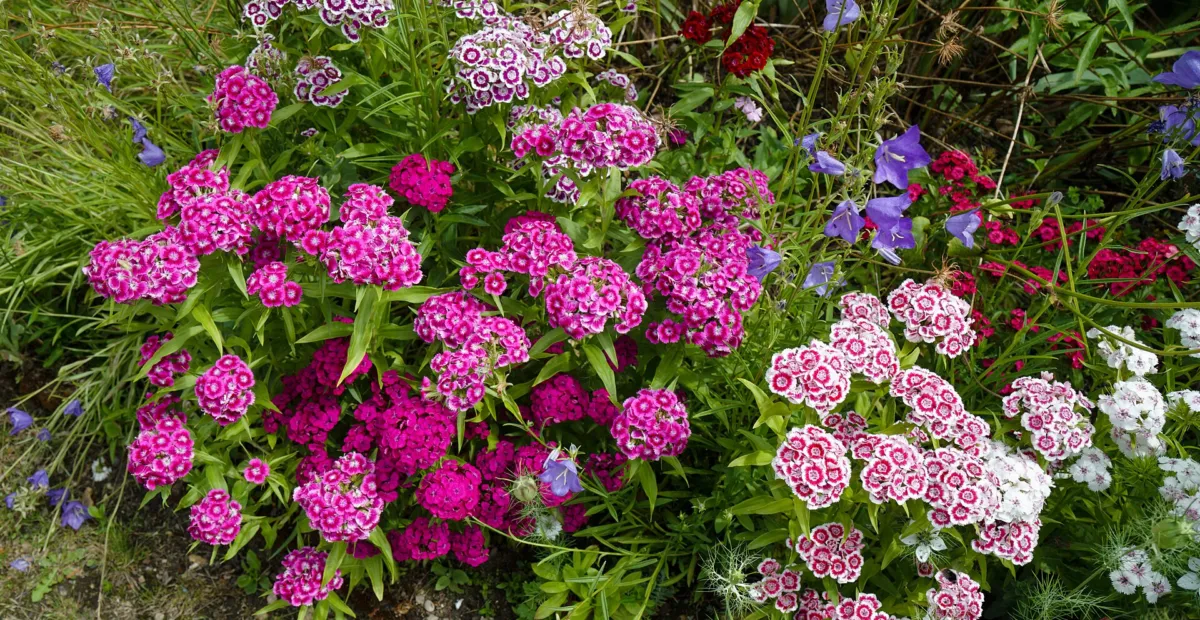
Dianthus 'Sweet William' is a traditional garden dianthus grown for dense, rounded clusters of small flowers in pink, red, white, purple, and bicolored patterns. It is usually treated as a biennial or short-lived perennial, often flowering strongly in its second season. Give it full sun to light afternoon shade, moderately fertile soil with excellent drainage, and steady but restrained watering. The identity may represent a cultivated Sweet William form rather than a formally registered cultivar.
Taxonomic classification
Dianthus ‘Sweet William’ care guide
Light and placement
Provide at least 6 hours of direct sun for sturdy stems and abundant flowering; in hot climates, light afternoon shade can reduce stress. An east- or south-facing position with morning sun and good airflow is suitable. Too little light causes lanky growth and fewer flowers, while excessive reflected heat can scorch foliage and shorten bloom.
Watering and humidity
Water deeply when the upper inch of soil begins to dry, then allow excess water to drain. Keep new plantings evenly moist during establishment; reduce watering in cool weather and during winter dormancy. Avoid frequent shallow watering and saturated crowns, which increase rot risk. Average outdoor humidity is adequate and extra misting is unnecessary.
Soil and growing medium
Use fertile loam or a quality container mix that drains freely yet holds modest moisture. Sweet William tolerates slightly alkaline conditions and generally performs best around neutral to slightly alkaline pH. Avoid heavy, waterlogged clay; amend compact ground with organic matter and coarse mineral material, while keeping the crown above standing water.
Feeding
In fertile garden soil, apply a balanced slow-release fertilizer at spring growth or mix finished compost into the planting area. Container plants may receive a half-strength balanced feed every 3–4 weeks while actively growing. Do not overfeed with high nitrogen, which can produce soft foliage and reduce flowering; stop routine feeding as growth slows in fall.
Growth and habit
Plants form a compact, upright clump and commonly behave as biennials or short-lived perennials. Many garden forms are grown as annuals because the first year may be mainly vegetative. Deadheading extends the display, while leaving some heads to mature can encourage self-sowing.
Planting and repotting
Plant nursery starts in spring after severe freezes or in early fall where plants can establish before winter. Set the crown at soil level. Space plants about 8–12 inches apart for airflow and a full display. Water thoroughly after planting, then keep the root zone evenly but not constantly wet during establishment.
Repot container-grown plants in spring or early fall when roots fill the pot. Move them into only a slightly larger container with drainage holes, disturbing the root ball as little as practical. Avoid keeping the crown buried deeper than it was previously planted.
Propagation and pruning
Propagation
Sow seed in late spring through midsummer for flowering the following year, or start selected strains earlier when first-season bloom is advertised. Surface-sow or barely cover the seed because light can aid germination. Division is possible for established clumps but is less commonly used than seed.
Pruning
Deadhead spent flower clusters to prolong bloom and prevent unwanted self-seeding. After flowering, remove declining stems and tidy damaged foliage. If seed is desired, leave selected heads until capsules mature, then cut them before they shed widely.
Overwintering
In Zones 5–6, protect established plants from alternating freeze-thaw cycles with a light, airy mulch after the ground cools, keeping material away from the crown. Avoid heavy winter mulch or wet coverings. Container plants are more exposed to root freezing and may need a sheltered location or unheated protected storage.
Uses
Use in cottage borders, mixed annual and perennial beds, containers, cutting gardens, and informal pollinator plantings. Flower stems are useful in bouquets. Do not present the plant as edible or medicinal; documented safety information supports ornamental use with ingestion precautions.
Appearance
Narrow, opposite leaves form a low basal rosette and continue up smooth, upright stems. The most distinctive feature is the flat-topped to rounded cluster of many small flowers, often marked in contrasting colors. Some forms have fringed or double blooms, but flower form varies substantially among Sweet William selections.
Flowering
Flowers are borne in dense, rounded terminal clusters on upright stems. Traditional forms commonly bloom in late spring and summer, often most heavily in the second year. Individual cultivars may differ in earliness, flower color, doubleness, fragrance, and whether they bloom reliably in the first season.
Pollination and visitors
Dense flower clusters are documented as attractive to bees and Lepidoptera, including butterflies and moths. The flowers provide nectar and pollen during the late-spring-to-summer garden period. Visitor activity varies with flower form, fragrance, weather, and local insect populations.
Dianthus 'Sweet William' photos
Click any photo for a larger view. Source, author and license are shown separately.
Diseases and pests
Diseases
Crown rot, root rot, rust, and powdery mildew are favored by poor drainage, crowded growth, or wet foliage. Plant in well-drained soil, avoid overhead irrigation, provide air movement, and remove badly affected material. Reduce winter moisture around the crown rather than applying heavy mulch.
Pests
Slugs and snails may damage young foliage, especially in shaded or persistently damp sites. Aphids can cluster on tender stems and flower buds. Improve airflow, remove hiding places, hand-pick slugs, and use insecticidal soap for aphids when necessary; avoid broad-spectrum insecticides during bloom.
Related diseases and pests
Only Plant Doctor profiles whose host data indicate this plant may be affected are shown here.
 PestMelon thripsThrips palmi Karny
 PestEuropean Grapevine MothLobesia botrana
 DiseaseImpatiens necrotic spot virus diseaseImpatiens necrotic spot orthotospovirus
 DiseaseFusarium wiltFusarium oxysporum species complex
 DiseaseGray MoldBotrytis cinerea
 DiseaseMaple powdery mildewSawadaea bicornis
 PestGreen Peach AphidMyzus persicae
 DiseaseCucurbit Powdery MildewPodosphaera xanthii (Castagne) U. Braun & Shishkoff
Toxicity and pollen
Reliable US horticultural sources describe Dianthus barbatus as low toxicity if eaten and capable of causing minor, brief skin irritation. ASPCA lists Sweet William under Dianthus and reports mild gastrointestinal signs and mild dermatitis in dogs and cats. Avoid ingestion, wash sap from skin, and seek veterinary advice after pet ingestion.
- Typical season
- Late spring through summer in most US gardens
- Pollination / pollen
- Insect-dispersed pollen; not typically windborne in large quantities
Sweet William is insect-pollinated, so its pollen is generally deposited by visiting insects rather than released in large airborne clouds. That does not make allergy risk impossible: sensitive people may react to flower contact, sap, or occasionally disturbed pollen. Avoid handling flowers near the face and wash hands after gardening.
Native habitat
The species traditionally associated with Sweet William is native to mountainous and temperate regions of Europe and parts of western Asia. It favors open, well-drained soils and cool to moderate growing conditions, while garden forms tolerate a broader range of climates when summer drainage is reliable.
Interesting fact
The name Sweet William has been used in English garden writing since the sixteenth century. The species epithet barbatus means bearded, referring to bristly structures associated with the flowers. Unchecked plants can self-seed and reappear in later seasons. The flower clusters are also valued by florists as filler material.
Frequently asked questions (FAQ)
The most relevant questions about this plant, with short and direct answers.
🌱Quick care
Is Dianthus 'Sweet William' a perennial or an annual?⌄
Dianthus 'Sweet William' is usually grown as a biennial or short-lived perennial, although many gardeners treat it as an annual. It often flowers in its second year and may reseed itself under favorable conditions.
How much sun does Sweet William need?⌄
Sweet William grows best in full sun, ideally with at least 6 hours of direct light daily. In hot climates, light afternoon shade can help reduce heat stress while preserving flowering.
How often should I water Sweet William?⌄
Water Sweet William moderately, allowing the soil surface to dry slightly between waterings. Keep the root zone evenly moist during establishment and dry spells, but avoid constantly wet soil.
What soil is best for Dianthus 'Sweet William'?⌄
Use fertile, well-drained loam or a quality container mix. Sweet William performs best in soil that drains freely and is near neutral to slightly alkaline rather than heavy, waterlogged ground.
How tall does Sweet William grow?⌄
Sweet William commonly grows about 12 to 24 inches tall, although compact cultivars may be shorter. Flower clusters are held above low, leafy growth on upright stems.
🌤️Environment and placement
Can Sweet William grow in partial shade?⌄
Sweet William can grow in partial shade, but it generally produces stronger stems and more flowers in full sun. In regions with hot summers, afternoon shade may improve performance.
What USDA hardiness zones are suitable for Sweet William?⌄
Sweet William is commonly listed as hardy in USDA Zones 3 through 9, although survival and perennial behavior vary with cultivar, drainage, winter moisture, and local summer heat.
Can Sweet William grow in containers?⌄
Sweet William grows well in containers that have drainage holes and enough depth for a developed root system. Use a fertile, well-drained potting mix and place the container in sun or light afternoon shade.
Does Sweet William tolerate heat?⌄
Sweet William prefers cooler growing conditions and may decline in intense summer heat. In hot regions, provide morning sun, afternoon shade, good air circulation, and careful watering without saturating the soil.
Is Sweet William deer resistant?⌄
Sweet William is generally avoided by deer, although no plant is completely deer-proof. Browsing pressure can still vary depending on local food availability and deer density.
💧Care and problems
Why is my Sweet William not flowering?⌄
The most common reasons are insufficient light, immature plants, excessive nitrogen, or heat stress. Many Sweet William plants naturally produce foliage first and flower the following season.
Should I deadhead Sweet William?⌄
Yes, deadhead spent flower clusters to improve the plant’s appearance and encourage additional flowering. Leave some flower heads in place if you want the plant to produce seed and reseed.
How do I keep Sweet William blooming longer?⌄
Remove faded flower clusters regularly and keep the plant watered during dry weather. Bloom duration also depends on the cultivar and local temperatures, so flowering may shorten during extreme heat.
Why are the leaves on my Sweet William turning yellow?⌄
Yellow leaves can result from overwatering, poor drainage, root or crown disease, nutrient stress, or natural aging. Check the roots and soil moisture first, and improve drainage before adding fertilizer.
What pests commonly attack Sweet William?⌄
Slugs, snails, and aphids are common potential pests. Reduce dense, damp conditions, inspect plants regularly, and use a control method appropriate for the pest and your garden.
What diseases affect Dianthus 'Sweet William'?⌄
Sweet William can develop rust, leaf spot, powdery mildew, gray mold, crown or root rots, and wilt diseases. Good air circulation, well-drained soil, clean watering practices, and removal of diseased tissue help reduce problems.
Why does Sweet William develop rust or leaf spots?⌄
Rust and leaf spot are favored by prolonged leaf wetness, crowded growth, and poor air circulation. Water at the soil line, space plants properly, remove affected leaves, and avoid working among wet plants.
🪴Planting and repotting
When should I plant Sweet William seeds in the United States?⌄
Sow seeds in late spring or summer for flowering the following year, or start them indoors about 6 to 8 weeks before the last spring frost. Exact timing should follow your local frost date and cultivar instructions.
Can I direct-sow Sweet William seeds?⌄
Yes, Sweet William seeds can be sown directly into a prepared garden bed. Press them lightly into the soil, keep the seedbed consistently moist during germination, and thin crowded seedlings as they grow.
How deep should I plant Sweet William seeds?⌄
Sow Sweet William seeds very shallowly, lightly pressing them into the growing medium and covering them only minimally. Consistent moisture and cool-to-moderate temperatures support germination.
How long do Sweet William seeds take to germinate?⌄
Sweet William seeds commonly germinate in about 7 to 14 days under suitable conditions. Germination may be slower or uneven if the seedbed becomes too dry or temperatures are excessively warm.
When should I transplant Sweet William seedlings?⌄
Transplant seedlings after they develop several true leaves and can be handled safely, hardening them off first. Plants sown in spring or summer are often moved to their flowering location in fall or the following spring.
How far apart should I plant Sweet William?⌄
Space Sweet William plants about 6 to 12 inches apart, depending on the cultivar and desired density. Wider spacing improves air circulation, while closer spacing creates a fuller display but increases disease risk.
Can Sweet William survive winter outdoors?⌄
Sweet William can survive winter outdoors in suitable regions, especially when planted in well-drained soil. Winter survival is less reliable in areas with severe cold, prolonged wetness, or poorly adapted cultivars.
Should I mulch Sweet William in winter?⌄
Use only a light, airy mulch if winter protection is needed, and keep it away from the crown. Heavy or moisture-retentive mulch can increase the risk of crown and root rot.
✂️Propagation and pruning
How do I propagate Sweet William from seed?⌄
Sow fresh seed shallowly in a well-drained medium, keep it evenly moist, and grow seedlings in bright light. Move young plants outdoors after hardening them off and transplant them before they become root-bound.
Can Sweet William be propagated from cuttings?⌄
Sweet William can be propagated from cuttings, but seed is the usual and simplest method for home gardeners. Cuttings are more useful when maintaining a particular plant, especially because seed-grown plants may vary.
Does Sweet William self-seed?⌄
Yes, Sweet William often self-seeds when mature flower heads are allowed to develop. Seedlings may appear near the parent plant, but named cultivars and double-flowered forms may not reproduce true to type.
Will Sweet William come back every year?⌄
It may return for more than one season, but Sweet William is usually short-lived rather than reliably perennial. Regular self-sowing or occasional reseeding is often the best way to maintain a continuing display.
⚠️Toxicity and safety
Is Dianthus 'Sweet William' toxic to cats and dogs?⌄
Sweet William has low-severity toxicity if eaten, but ingestion can cause mild digestive upset and contact may irritate sensitive skin. Keep pets from chewing large amounts and contact a veterinarian if concerning symptoms develop.
Can humans eat Sweet William flowers?⌄
Sweet William flowers are sometimes used as edible garnishes, but only flowers grown without pesticides or other unsafe chemicals should be considered. Remove the bitter base of the petals and consume small amounts only.
Can Sweet William irritate the skin?⌄
Yes, Sweet William may cause minor skin irritation or sensitivity in some people. Wear gloves when handling the plant if you have sensitive skin, and wash exposed skin afterward.
🌸Flowering and special interest
When does Sweet William bloom?⌄
Sweet William generally blooms from late spring into summer, with timing varying by climate, planting date, and cultivar. Early-started or first-year flowering cultivars may bloom sooner than traditional biennial types.
What colors do Sweet William flowers come in?⌄
Sweet William flowers occur in shades of white, pink, red, purple, and combinations of these colors. Many cultivars have contrasting eyes, margins, or bicolored flower clusters.
Are Sweet William flowers fragrant?⌄
Many Sweet William plants have a sweet, spicy fragrance, although scent strength varies among cultivars and growing conditions. Fragrance is often most noticeable during warm, calm parts of the day.
Is Sweet William a good cut flower?⌄
Yes, Sweet William is an excellent cut flower with colorful, long-lasting clusters on upright stems. Harvest stems when some flowers in the cluster are open and place them in clean water promptly.
Similar plants
 Azure Monkshood (Aconitum carmichaelii) care guideAconitum carmichaelii
 Monkshood (Aconitum ‘Stainless Steel’)Aconitum 'Stainless Steel'
 Monkshood (Aconitum ‘Bressingham Spire’)Aconitum 'Bressingham Spire'
 Golden full moon maple (Acer shirasawanum ‘Aureum’)Acer shirasawanum 'Aureum'
 Globosum (Acer platanoides ‘Globosum’)Acer platanoides 'Globosum'
 Striped maple (Acer pensylvanicum) care guideAcer pensylvanicum