
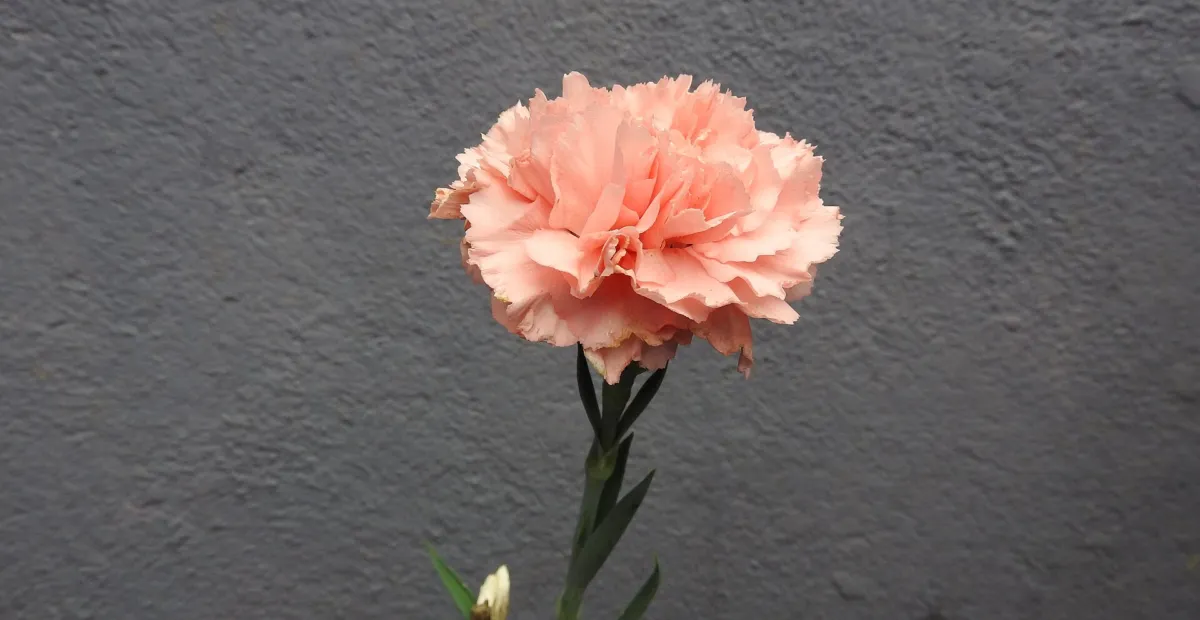
 Source:
 Dianthus ‘Cottage Pink’ short overview
Dianthus 'Cottage Pink' is an evergreen garden pink associated with the classic cottage-pink group: a compact, spreading perennial with narrow blue-green foliage and sweetly clove-scented, deeply fringed flowers. Give it full sun, excellent drainage, and neutral to slightly alkaline soil. The exact cultivar has limited publicly available measurements, so some cultural details are cautiously based on authoritative descriptions of Dianthus plumarius and related cottage pinks.
Taxonomic classification
Dianthus ‘Cottage Pink’ care guide
Light and placement
Grow in full sun with at least 6 hours of direct light, ideally in a south- or west-facing bed, raised border, rock garden, or gravel planting. A little afternoon shade can help in very hot regions, but too much shade causes open growth and fewer flowers. Poor light and wet foliage together increase disease risk.
Watering and humidity
Water deeply after planting and during extended drought, then let the upper soil dry before watering again. Established plants prefer the dry side and dislike standing water, especially in winter. Apply water at the soil line rather than over the foliage. Extra humidity is not needed; ventilation and drainage matter more.
Soil and growing medium
Use lean, sharply drained soil or a gritty container mix. Sandy or loamy ground is suitable; heavier clay should be amended or replaced in the planting zone so crowns do not remain wet. Neutral to slightly alkaline conditions are preferred. Avoid rich, moisture-holding compost around the crown.
Feeding
Feed lightly in spring with a balanced, slow-release fertilizer, or top-dress sparingly with mature compost. Avoid high-nitrogen feeding, which can produce softer foliage and fewer flowers. Do not fertilize drought-stressed, newly divided, or waterlogged plants until they have resumed active growth.
Growth and habit
This perennial forms a dense, spreading mat of basal foliage with flowering stems rising above it. It remains most attractive when the crown is kept open and dry. Shearing spent stems after flowering helps maintain a compact outline; divide aging clumps when the center becomes sparse.
Planting and repotting
Plant in spring or early fall when soil is workable. Set the crown level with the surrounding soil and do not bury the basal foliage. Water thoroughly after planting, then allow the surface to dry between waterings. Leave enough room for the mat to broaden without crowding neighboring plants.
Repot container plants in spring when roots fill the pot, moving only one pot size larger. Refresh much of the gritty mix and keep the crown at its previous level. Choose a container with generous drainage holes; saturated compost is more damaging than restricted roots.
Propagation and pruning
Propagation
Divide established clumps in spring or early fall, ensuring each division has roots and healthy shoots. Root non-flowering stem cuttings in a gritty medium during the growing season. Seed is possible for Dianthus plumarius types, but seedlings may not reproduce the named cultivar faithfully.
Pruning
After the main flush of bloom, shear or cut spent flowering stems back above the foliage. Remove damaged leaves at any time. Avoid cutting deeply into the woody or densely rooted crown, and do not prune hard during prolonged wet or freezing weather.
Overwintering
This is treated as an outdoor hardy perennial in suitable USDA zones. Keep crowns free of soggy mulch and avoid winter irrigation in poorly drained ground. In containers, move pots against a protected wall or insulate them in colder climates because roots experience greater temperature swings than roots in the ground.
Uses
Useful for sunny edging, rock gardens, gravel gardens, borders, stone walls, and containers. Fragrant flowers can be used as cut flowers. Although some Dianthus petals are used decoratively in food, do not eat this cultivar unless it was grown and sold specifically for culinary use without prohibited pesticides.
Appearance
The plant has narrow, linear, blue-green to gray-green leaves arranged in dense basal tufts. Upright, slender flowering stems rise from the mat and carry fragrant, radially symmetrical blooms. Deeply cut or feathered petal margins are a key cottage-pink identification feature.
Flowering
The RHS lists this name as an accepted Dianthus cultivar, but detailed cultivar-specific bloom data are scarce. Cottage-pink types generally flower from late spring into summer, producing saucer-shaped flowers with fringed petals on upright stems. Removing spent flower stems can encourage a tidier appearance and may extend flowering.
Pollination and visitors
North Carolina Extension documents bees, butterflies, and hummingbirds visiting Dianthus plumarius flowers. Visitor records specific to 'Cottage Pink' are limited, so these observations should be treated as characteristic of the associated cottage-pink type rather than as a cultivar-specific survey.
Dianthus 'Cottage Pink' photos
Click any photo for a larger view. Source, author and license are shown separately.
Diseases and pests
Diseases
The main risk is crown or root rot in wet, poorly drained soil. Improve drainage, avoid overhead watering, provide air movement, and remove collapsing foliage promptly. Rust, leaf spots, powdery mildew, and other fungal problems are more likely in crowded or persistently humid conditions.
Pests
Slugs, aphids, thrips, caterpillars, cutworms, and spider mites may occur. Inspect new growth and leaf undersides, reduce dense cover, hand-pick larger pests, and use targeted controls only when damage is significant. Avoid routinely wetting the foliage.
Related diseases and pests
Only Plant Doctor profiles whose host data indicate this plant may be affected are shown here.
 PestMelon thripsThrips palmi Karny
 PestEuropean Grapevine MothLobesia botrana
 DiseaseImpatiens necrotic spot virus diseaseImpatiens necrotic spot orthotospovirus
 DiseaseFusarium wiltFusarium oxysporum species complex
 DiseaseGray MoldBotrytis cinerea
 DiseasePhytophthora cactorum crown, collar, root and fruit rotPhytophthora cactorum
 PestOnion thripsThrips tabaci Lindeman
 PestChilli thripsScirtothrips dorsalis Hood
Toxicity and pollen
Dianthus plumarius is listed by North Carolina Extension as having low-severity poisonous characteristics, associated with triterpenoid saponins. Eating plant material may cause gastrointestinal upset, and contact dermatitis is possible. Exact toxicity data for the named cultivar are limited; prevent consumption and wash sap from skin.
- Typical season
- Typically late spring through summer in the United States
- Pollination / pollen
- Mostly insect-borne pollen; limited airborne dispersal expected
Dianthus flowers are generally insect-pollinated, which limits the amount of pollen released into the air compared with wind-pollinated plants. However, airborne pollen exposure is not necessarily zero, and cultivar-specific allergy data are unavailable. Fragrance sensitivity and contact reactions should be considered separately from pollen allergy.
Native habitat
The associated Dianthus plumarius is native from the eastern Alps to the northwestern Balkan Peninsula. It is adapted to sunny, relatively dry, calcareous or neutral rocky and open habitats, which explains its preference for sharp drainage, lean soil, and abundant light.
Interesting fact
The name cottage pink is strongly associated with Dianthus plumarius and its traditional fragrant garden forms. The word pink refers to the fringed, “pinking-shears” appearance of the petals, not necessarily to their color. Dianthus plumarius has contributed to many historic garden pinks.
Frequently asked questions (FAQ)
The most relevant questions about this plant, with short and direct answers.
🌱Quick care
What is Dianthus 'Cottage Pink'?⌄
Dianthus 'Cottage Pink' is a low-growing, cold-hardy perennial pink in the carnation family, Caryophyllaceae. It forms dense blue-green foliage and produces fragrant, fringed flowers in late spring and summer.
How much sun does Dianthus 'Cottage Pink' need?⌄
Dianthus 'Cottage Pink' grows best in full sun, meaning at least 6 hours of direct sunlight daily. It can tolerate light afternoon shade, but reduced sun may cause fewer flowers and looser growth.
How often should I water Dianthus 'Cottage Pink'?⌄
Water Dianthus 'Cottage Pink' when the soil has dried somewhat, then water deeply and let excess moisture drain away. Established plants need low to moderate water and handle short dry periods better than consistently wet soil.
Is Dianthus 'Cottage Pink' perennial?⌄
Yes, Dianthus 'Cottage Pink' is a perennial that can remain outdoors through winter in suitable climates. Its long-term performance depends heavily on excellent drainage, especially during cold or wet winters.
How big does Dianthus 'Cottage Pink' get?⌄
Dianthus 'Cottage Pink' typically forms a compact, spreading mound about 6 inches to 2 feet tall and 1½ to 2 feet wide. Exact size can vary with the planting site and growing conditions.
🌤️Environment and placement
What USDA hardiness zones can grow Dianthus 'Cottage Pink'?⌄
Dianthus 'Cottage Pink' is reported as cold hardy outdoors in USDA Zones 3 through 9. In warmer or humid regions, protection from summer heat, poor airflow, and winter wetness is especially important.
What soil is best for Dianthus 'Cottage Pink'?⌄
Use well-drained sandy or loamy soil for Dianthus 'Cottage Pink', preferably neutral to slightly alkaline. Heavy, water-retentive soil should be improved with drainage or replaced with a raised or gritty planting area.
Can Dianthus 'Cottage Pink' grow in clay soil?⌄
Dianthus 'Cottage Pink' can survive in clay only when drainage is improved substantially. Planting on a raised mound or in a raised bed is safer than placing the crown in dense, wet clay.
Can Dianthus 'Cottage Pink' grow in partial shade?⌄
Dianthus 'Cottage Pink' can tolerate partial shade, but full sun produces the strongest flowering and most compact growth. Avoid deep shade, where the plant may become sparse and flower poorly.
Is Dianthus 'Cottage Pink' drought tolerant?⌄
Dianthus 'Cottage Pink' is relatively tolerant of dry soil once established, but it is not completely drought-proof. Water during prolonged heat or drought while allowing the soil to dry between waterings.
Where should I plant Dianthus 'Cottage Pink'?⌄
Plant Dianthus 'Cottage Pink' in a sunny, open site with fast drainage, such as a rock garden, border edge, raised bed, slope, path edge, or top of a wall. Good air circulation helps reduce fungal problems.
💧Care and problems
Why is my Dianthus 'Cottage Pink' turning yellow?⌄
Yellowing foliage on Dianthus 'Cottage Pink' is often caused by excess moisture, poor drainage, or root and crown problems. Check that the soil drains quickly and reduce watering if the planting area remains wet.
What are common pests of Dianthus 'Cottage Pink'?⌄
Common pests of Dianthus 'Cottage Pink' include aphids, slugs, cutworms, caterpillars, thrips, and spider mites. Inspect new growth and foliage regularly, and improve sanitation and airflow to reduce recurring problems.
What diseases affect Dianthus 'Cottage Pink'?⌄
Dianthus 'Cottage Pink' is most vulnerable to crown rot and fungal diseases when soil stays wet or foliage remains damp. Use well-drained soil, avoid overhead watering, and provide adequate spacing.
Should I mulch Dianthus 'Cottage Pink'?⌄
Use only a thin, loose mulch layer around Dianthus 'Cottage Pink', keeping the crown and foliage uncovered. Heavy or moisture-retentive mulch can trap dampness and increase the risk of crown rot.
Does Dianthus 'Cottage Pink' need fertilizer?⌄
Dianthus 'Cottage Pink' usually needs little fertilizer when grown in reasonably fertile, well-drained soil. Excess nitrogen can produce soft foliage and fewer flowers, so use a light, balanced feeding only if growth is weak.
🪴Planting and repotting
When should I plant Dianthus 'Cottage Pink' in the United States?⌄
Plant Dianthus 'Cottage Pink' in spring after the main danger of hard frost has passed, or in early fall while roots still have time to establish. In mild climates, fall planting is often particularly effective.
How far apart should Dianthus 'Cottage Pink' be planted?⌄
Space Dianthus 'Cottage Pink' about 12 to 18 inches apart, allowing room for its spreading mound and good air circulation. Use wider spacing in humid areas or where drainage is less than ideal.
Can Dianthus 'Cottage Pink' grow in containers?⌄
Yes, Dianthus 'Cottage Pink' grows well in containers with drainage holes and a gritty, fast-draining potting mix. Containers dry faster than garden beds, so check moisture regularly without keeping the mix constantly wet.
How do I repot Dianthus 'Cottage Pink'?⌄
Repot Dianthus 'Cottage Pink' when roots fill the container or drainage declines, moving it into a slightly larger pot with fresh, well-drained mix. Replant it at the same depth and avoid burying the crown.
✂️Propagation and pruning
How can I propagate Dianthus 'Cottage Pink'?⌄
Dianthus 'Cottage Pink' can be propagated by division, stem cuttings, or seed, although cuttings and division are more likely to preserve the parent plant. Divide established clumps in spring or take suitable cuttings after flowering.
Can I grow Dianthus 'Cottage Pink' from seed?⌄
Yes, Dianthus 'Cottage Pink' can be grown from seed, but seedlings may not reproduce every feature of a named cultivar exactly. Sow seeds shallowly in a well-drained medium and transplant young plants after they are established.
When should I divide Dianthus 'Cottage Pink'?⌄
Divide Dianthus 'Cottage Pink' in spring when new growth begins and the soil is workable. Division every 2 to 3 years can help rejuvenate crowded clumps, although plants should be replanted into sharply drained soil.
Should I deadhead Dianthus 'Cottage Pink'?⌄
Yes, deadheading Dianthus 'Cottage Pink' can extend flowering and keep the plant tidy. Shear or trim off spent flower stems after the main flush, taking care not to damage the evergreen foliage or crown.
When should Dianthus 'Cottage Pink' be pruned?⌄
Prune Dianthus 'Cottage Pink' lightly after flowering to remove spent stems and shape the mound. Avoid cutting deeply into old, woody centers because established plants may produce new growth poorly from bare wood.
⚠️Toxicity and safety
Is Dianthus 'Cottage Pink' toxic to dogs and cats?⌄
Dianthus 'Cottage Pink' is considered low toxicity if eaten, but chewing the plant can still cause mild stomach upset. Prevent pets from consuming large quantities and contact a veterinarian if symptoms are severe or persistent.
Is Dianthus 'Cottage Pink' safe for people?⌄
Dianthus 'Cottage Pink' has low toxicity if eaten, but it should not be consumed casually because individual reactions are possible. Do not eat flowers treated with pesticides, and remove the bitter white base if petals are used as a garnish.
🌸Flowering and special interest
When does Dianthus 'Cottage Pink' bloom?⌄
Dianthus 'Cottage Pink' generally blooms from late spring into summer, with timing varying by climate. Deadheading after the first flush may encourage additional flowers.
Are Dianthus 'Cottage Pink' flowers fragrant?⌄
Yes, Dianthus 'Cottage Pink' is valued for fragrant flowers with a spicy, clove-like scent. Fragrance is usually strongest in warm, sunny conditions and may vary among individual plants.
What do Dianthus 'Cottage Pink' flowers look like?⌄
The flowers of Dianthus 'Cottage Pink' are typically pink, white, or bicolored with ruffled or fringed petals. They rise above narrow blue-green foliage and may be single or double depending on the plant.
How do I make Dianthus 'Cottage Pink' bloom more?⌄
Give Dianthus 'Cottage Pink' full sun, sharply drained soil, moderate fertility, and regular deadheading. Avoid excess nitrogen and wet soil, both of which can encourage foliage or disease at the expense of flowers.
Similar plants
 Azure Monkshood (Aconitum carmichaelii) care guideAconitum carmichaelii
 Monkshood (Aconitum ‘Stainless Steel’)Aconitum 'Stainless Steel'
 Monkshood (Aconitum ‘Bressingham Spire’)Aconitum 'Bressingham Spire'
 Golden full moon maple (Acer shirasawanum ‘Aureum’)Acer shirasawanum 'Aureum'
 Globosum (Acer platanoides ‘Globosum’)Acer platanoides 'Globosum'
 Striped maple (Acer pensylvanicum) care guideAcer pensylvanicum