
 Source:
 Delphinium elatum short overview
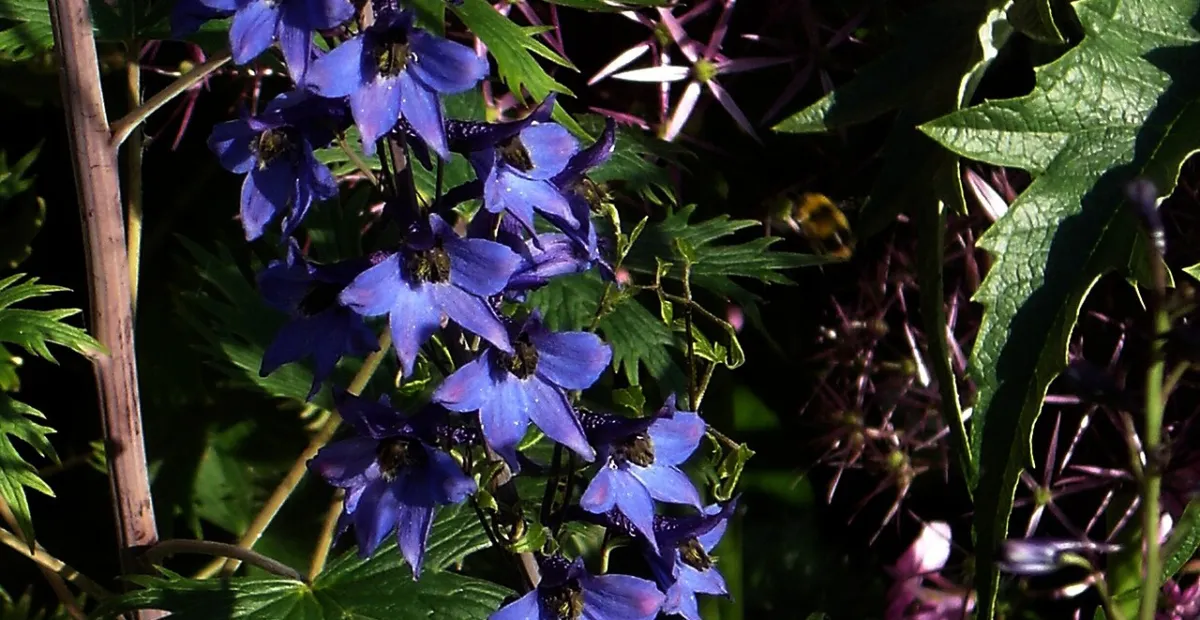
Delphinium elatum subsp. elatum is a statuesque herbaceous perennial native to mountain regions of Europe and Asia. It develops an upright clump of deeply divided green leaves and tall summer racemes in rich blue, purplish-blue, pink, or white forms, depending on the population or horticultural selection. In U.S. gardens, give it full sun, fertile but sharply drained soil, shelter from wind, and early support for its flower stems. The plant is harmful if eaten.
Taxonomic classification
Delphinium elatum care guide
Light and placement
Give full sun, ideally six or more hours of direct light, with morning-to-afternoon exposure and shelter from strong prevailing winds. East, south, or west-facing borders can work when the soil drains well. Too little light produces weak stems and poor flowering; excessive reflected heat and drought can scorch foliage and shorten bloom.
Watering and humidity
Water deeply when the upper soil begins to dry, keeping moisture steady during stem extension and flowering. Do not let the crown sit in saturated soil, particularly in winter. Mulch around, not over, the crown to moderate summer moisture. Established plants tolerate brief dry spells better than repeated drought, but they perform best with consistent moisture.
Soil and growing medium
Use fertile, humus-enriched soil that drains freely yet does not dry rapidly. Loam or amended clay is suitable if compaction and winter waterlogging are corrected. A slightly acidic to slightly alkaline reaction is tolerated. Avoid stagnant moisture around the crown, especially in cold seasons, because crown and root rots become more likely.
Feeding
In fertile ground, incorporate well-rotted compost before planting and avoid excessive high-nitrogen fertilizer, which can produce weak, floppy growth. Container plants have fewer nutrient reserves and may benefit from a diluted balanced feed during active growth, followed by a flowering-oriented feed only according to the product label. Do not feed drought-stressed or dormant plants.
Growth and habit
A cool-season clump-forming perennial sends up strong leafy stems from a crown, then becomes dormant to ground level after the growing season. Tall stems benefit from early staking and from thinning excess shoots so remaining spikes receive better support and air circulation. Crowding and wind rock can weaken the crown.
Planting and repotting
Plant nursery divisions or established plants in spring or early summer, or in fall where establishment before freezing is dependable. Set the crown at soil level rather than deeply burying it. Allow roughly 24–36 inches between plants, with more room for large selections, and install stakes or a support grid before stems elongate.
Container-grown plants can be moved into a larger, deep container in spring before vigorous growth. Use a fertile, free-draining potting mix and avoid burying the crown. Because tall delphiniums are top-heavy and vulnerable to winter wet, in-ground planting is generally more reliable than long-term container culture.
Propagation and pruning
Propagation
Fresh seed can be sown in containers; germination may be erratic from old seed. Named or uniform plants are better increased by division or by basal softwood cuttings taken in early spring. Division is best done when crowns are actively beginning growth, while cuttings should be pencil-thick and not hollow.
Pruning
Thin emerging shoots when they are about 3 inches tall, retaining only the strongest stems for larger spikes. Deadhead by cutting spent racemes back to a developing side shoot. After foliage has withered in fall, cut stems to ground level and remove debris to reduce disease carryover.
Overwintering
Leave plants outdoors in the ground in suitable USDA zones, provided the crown is in free-draining soil. In wet-winter areas, keep mulch off the crown and improve drainage rather than wrapping the plant heavily. Containers are more vulnerable to root freezing and winter saturation; move them to a sheltered, rain-protected location while keeping them cold and dormant.
Uses
Use as a back-of-border accent, in cottage-style and informal perennial beds, wildlife-oriented plantings, and cut-flower gardens. The tall spikes provide strong vertical structure. Do not use for food, home remedies, or animal forage because the plant is toxic if ingested.
Appearance
The plant forms an upright crown with deeply divided, palmately lobed basal leaves and relatively strong flowering stems. The defining display is a narrow-to-full vertical raceme carrying many spurred flowers. Wild material is variable, and cultivated Elatum selections may be more uniform, taller, or more densely flowered than plants from seed.
Flowering
This subspecies belongs to the tall larkspur complex and produces conspicuous vertical racemes, generally in early to midsummer. Individual flowers have prominent backward-pointing spurs and may occur in blue, purple, pink, or white forms. Cutting spent spikes back to developing side shoots can encourage renewed flowering later in the season, although repeat bloom is not guaranteed.
Pollination and visitors
The spurred flowers are visited by bumblebees and other pollinating insects; perennial delphiniums are especially useful to visitors when flowers are single and nectar is accessible. Visitor records and attraction can vary among populations and cultivated forms.
Delphinium elatum elatum photos
Click any photo for a larger view. Source, author and license are shown separately.
Diseases and pests
Diseases
Watch for powdery mildew, black blotch, crown rot, and virus-like symptoms. Improve airflow, avoid overhead irrigation, keep the crown from staying wet, and remove diseased foliage promptly. Cut infected plants back after flowering when appropriate; discard severely diseased material rather than composting it.
Pests
Common problems include slugs and snails on young shoots, aphids, earwigs, leaf miner, caterpillars, and delphinium moth larvae. Inspect emerging growth frequently, encourage airflow, remove heavily damaged leaves, and use barriers or targeted controls for slugs and snails. Avoid broad insecticide use during bloom to reduce harm to visiting insects.
Toxicity and pollen
Delphinium species contain diterpenoid alkaloids and are regarded as harmful if eaten. Risk is greatest after ingestion of plant material; symptoms can include gastrointestinal, neurologic, and cardiac effects. Wear gloves when handling if skin-sensitive, keep prunings away from children and animals, and contact Poison Control or a veterinarian promptly after suspected ingestion.
- Typical season
- Summer flowering period in the United States
- Pollination / pollen
- Primarily insect-carried pollen
The flowers are insect-pollinated, so pollen is not generally released in large windborne clouds. That does not prove zero allergy risk: sensitive people may still react to pollen or plant contact, and the available evidence does not support a precise species-specific airborne allergy rating.
Native habitat
In the wild, the species occurs mainly in temperate mountain environments from Europe eastward to Mongolia. It is associated with cool climates, open grassy or rocky settings, and soils that retain some fertility while draining well. The broad distribution includes substantial geographic variation, so wild plants may differ in stature and flowering behavior.
Interesting fact
The species is native across a broad mountain range extending from Europe toward Mongolia. The subspecies name repeats the species epithet because it is the nominotypical subspecies. Tall Elatum-type delphiniums are among the classic sources of towering cut-flower spikes. Strong wind and winter wet are often greater practical threats than cold alone.
Frequently asked questions (FAQ)
The most relevant questions about this plant, with short and direct answers.
🌱Quick care
What is Delphinium elatum elatum?⌄
Delphinium elatum elatum is a tall, herbaceous perennial in the buttercup family, Ranunculaceae. It forms upright stems with showy summer flower spikes and deeply divided foliage.
How much sun does Delphinium elatum elatum need?⌄
Grow Delphinium elatum elatum in full sun, ideally with at least 6 hours of direct sunlight daily. In hot southern locations, some afternoon shade can reduce heat stress.
How often should I water Delphinium elatum elatum?⌄
Water when the soil surface begins to dry, keeping the root zone evenly moist during active growth. Avoid standing water because constantly wet crowns can rot.
Is Delphinium elatum elatum hard to grow?⌄
Delphinium elatum elatum is moderately demanding rather than effortless. It needs fertile soil, steady moisture, strong air circulation, wind protection, staking, and monitoring for pests and diseases.
How tall does Delphinium elatum elatum get?⌄
Delphinium elatum elatum commonly reaches about 5 to 8 feet when flowering, depending on the strain and growing conditions. Tall stems usually need support before the flower spikes become heavy.
🌤️Environment and placement
What USDA hardiness zones suit Delphinium elatum elatum?⌄
Delphinium elatum elatum is generally suited to USDA Zones 3 through 7, although performance varies with drainage, summer heat, and the specific plant. Hot, humid climates are usually more challenging.
Where should I plant Delphinium elatum elatum?⌄
Plant it in a sunny, sheltered border with fertile, moisture-retentive but well-drained soil. A position protected from strong winds helps prevent the tall flower stems from bending or breaking.
Can Delphinium elatum elatum grow in clay soil?⌄
It can grow in amended clay if drainage is improved before planting. Incorporate organic matter and avoid low spots where winter or irrigation water remains around the crown.
What type of soil does Delphinium elatum elatum prefer?⌄
It prefers fertile, well-drained loam enriched with organic matter, but it can tolerate amended clay, sand, and chalk. The essential requirement is consistent moisture without waterlogged roots.
Can Delphinium elatum elatum tolerate heat and humidity?⌄
It tolerates some warmth but performs best where summers are relatively cool and moist. In hot or humid areas, provide morning sun, afternoon protection, excellent drainage, and generous air circulation.
How much space does Delphinium elatum elatum need?⌄
Allow roughly 2 to 3 feet of space around each plant, with extra room where air circulation is poor. Wider spacing can reduce foliar disease and make staking and maintenance easier.
💧Care and problems
Does Delphinium elatum elatum need staking?⌄
Yes, tall Delphinium elatum elatum usually needs staking or another support system. Install supports early in spring, before the stems become tall and difficult to secure without damage.
How should I fertilize Delphinium elatum elatum?⌄
Feed in early spring as new shoots emerge with a balanced fertilizer or well-rotted compost, then repeat during active growth if the soil is poor. Avoid excessive nitrogen, which can produce weak, leafy growth.
Why is my Delphinium elatum elatum falling over?⌄
Falling stems are usually caused by wind, heavy flower spikes, insufficient light, or inadequate support. Move future plantings to a sheltered sunny site and stake stems before flowering.
Why are the leaves of my Delphinium elatum elatum turning white?⌄
White, powdery patches commonly indicate powdery mildew. Improve air circulation, avoid wetting the foliage, maintain even soil moisture, and remove badly affected leaves.
What pests attack Delphinium elatum elatum?⌄
Common pests include slugs, snails, aphids, leaf miners, earwigs, caterpillars, mites, and stem-boring insects. Inspect new growth frequently and use control measures appropriate for the pest and garden setting.
How do I prevent crown rot on Delphinium elatum elatum?⌄
Prevent crown rot by planting in well-drained soil, keeping mulch away from the crown, and avoiding overwatering. Winter-saturated ground is particularly dangerous because the crown is sensitive to prolonged wetness.
Is Delphinium elatum elatum deer resistant?⌄
It is often left alone by deer because the plant contains toxic alkaloids, but no plant is completely deer-proof. Hungry deer may still browse plants in heavily pressured landscapes.
🪴Planting and repotting
When should I plant Delphinium elatum elatum in the United States?⌄
Plant nursery-grown plants in spring after severe frost has passed or in early fall while soil remains workable. In hot regions, spring planting gives the plant time to establish before peak summer heat.
How do I plant Delphinium elatum elatum?⌄
Set the plant at the same depth it occupied in its container, keeping the crown at or slightly above the surrounding soil level. Backfill with fertile soil, water thoroughly, and add a light mulch without covering the crown.
Can Delphinium elatum elatum grow in containers?⌄
It can grow in a large, heavy container with excellent drainage and enough depth for its vigorous roots. Containers dry out quickly and are more vulnerable to heat, so consistent watering and a stable location are essential.
Can I transplant Delphinium elatum elatum?⌄
Transplant it in early spring or early fall when temperatures are mild. Dig widely around the root ball, disturb the crown as little as possible, and keep the plant evenly watered while it reestablishes.
✂️Propagation and pruning
How can I propagate Delphinium elatum elatum?⌄
Propagate it from fresh seed or by taking basal softwood cuttings in early spring. Seed-grown plants may vary, while cuttings produce clones of the parent plant.
Can Delphinium elatum elatum be grown from seed?⌄
Yes, it can be grown from seed, although germination and plant uniformity may vary. Sow fresh seed under cool conditions and transplant seedlings carefully once they are large enough to handle.
Can I divide Delphinium elatum elatum?⌄
Division is possible when the plant is actively dormant or just beginning growth, but the crown is sensitive to disturbance. Divide only vigorous plants, replant sections promptly, and keep them evenly moist.
How do I deadhead Delphinium elatum elatum?⌄
Cut spent flower spikes back to strong side shoots or basal foliage after flowering. Prompt deadheading may encourage a second, smaller flush later in the summer if the plant remains vigorous.
When should I cut back Delphinium elatum elatum?⌄
Remove spent flowering stems after bloom and cut the remaining foliage to ground level once it has naturally withered in fall. Do not cut healthy foliage prematurely because it helps replenish the crown.
⚠️Toxicity and safety
Is Delphinium elatum elatum poisonous?⌄
Yes, all parts of Delphinium elatum elatum contain toxic alkaloids and are harmful if eaten. Keep it away from children, pets, and livestock, and wear gloves when handling sap or plant material.
What should I do if someone eats Delphinium elatum elatum?⌄
Treat ingestion as potentially serious and contact Poison Control or emergency medical services promptly, especially if symptoms develop. Do not induce vomiting unless a medical professional specifically instructs you to do so.
Is Delphinium elatum elatum safe for dogs, cats, or horses?⌄
No, it should not be considered safe for dogs, cats, or horses because ingestion can cause poisoning. Grow it where animals cannot chew the foliage, flowers, or seeds.
🌸Flowering and special interest
When does Delphinium elatum elatum bloom?⌄
Delphinium elatum elatum usually blooms in early to midsummer, producing tall racemes of blue, purple, pink, cream, or white flowers depending on the strain. A second flush may occur after timely deadheading.
Why is my Delphinium elatum elatum not flowering?⌄
Poor flowering is commonly caused by insufficient sunlight, excessive heat, weak fertility, overcrowding, or young plants that have not established. Give it full sun, fertile soil, steady moisture, and early support.
Are Delphinium elatum elatum flowers good for cutting?⌄
Yes, the tall flower spikes make excellent cut flowers. Harvest when about one-third to one-half of the florets are open, and place the stems in water immediately.
Do Delphinium elatum elatum flowers attract pollinators?⌄
Yes, the flowers can attract hummingbirds and butterflies. Their tall spikes are especially useful in sunny borders and informal pollinator plantings.
Similar plants
 Delphinium ‘New Zealand’Delphinium 'New Zealand'
 Delphinium elatum care guideDelphinium elatum
 Delphinium ‘Summer Nights’Delphinium 'Summer Nights'
 Delphinium ‘Blue Bird’Delphinium 'Blue Bird'
 Delphinium ‘Black Knight’Delphinium 'Black Knight'
 Delphinium ‘Magic Fountains’Delphinium 'Magic Fountains'