
 Source:
 Delphinium ‘Black Knight’ short overview
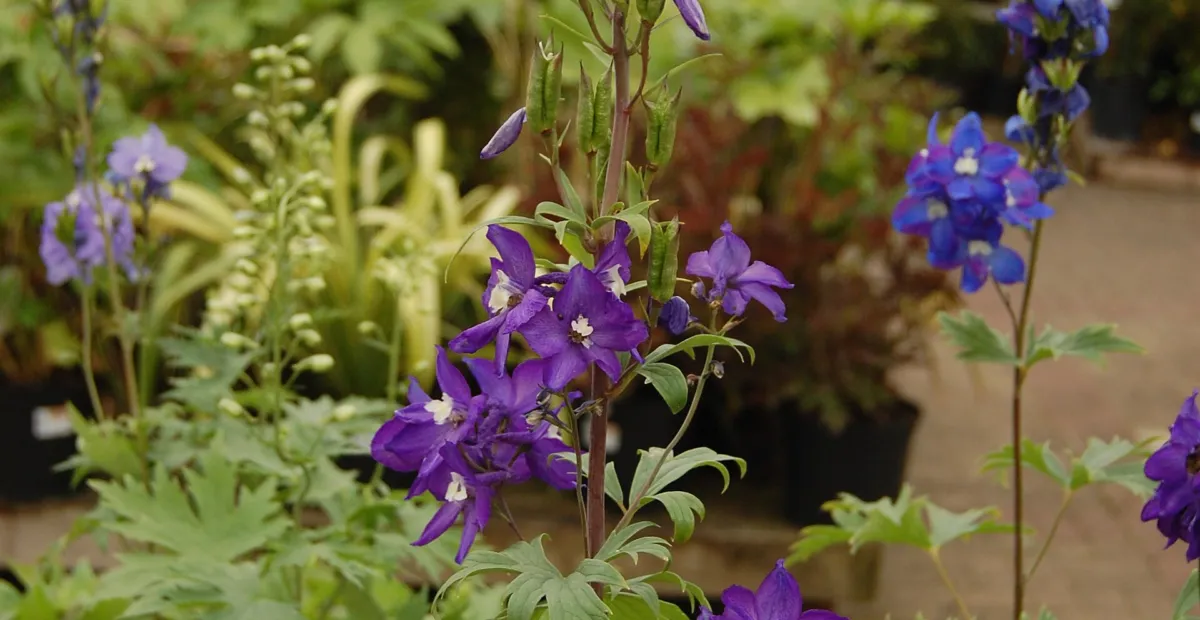
Delphinium 'Black Knight' is a statuesque Pacific Giant delphinium grown for its tall summer spires of deep violet-blue, semi-double flowers with striking dark centers. It performs best in full sun, fertile soil, steady moisture, and a sheltered position where strong stems can be supported. This herbaceous perennial is excellent for cottage borders and cutting gardens, though every part should be handled with care because delphiniums are harmful if eaten.
Taxonomic classification
Delphinium ‘Black Knight’ care guide
Light and placement
Give full sun, ideally six or more hours of direct light, with morning through afternoon exposure. East-, south-, or west-facing borders work well when sheltered from strong winds. Too little light produces weak, floppy stems and fewer flowers; intense heat reflected from pavement can scorch foliage and shorten bloom, so provide afternoon protection in very hot regions.
Watering and humidity
Water deeply when the top inch of soil begins to dry, keeping the root zone consistently moist but never saturated. Increase frequency during active growth, flowering, and hot weather; reduce after foliage dies back, but do not allow newly planted divisions to dry out. Water at the soil surface when possible to limit foliar disease.
Soil and growing medium
Use fertile, deep soil that drains freely while retaining even moisture. Loam enriched with compost is ideal; sandy or clay soils can work if improved with organic matter and drainage is corrected. The cultivar tolerates a broad pH range, from acidic through alkaline, but avoid chronically waterlogged ground.
Feeding
Apply compost or a balanced slow-release perennial fertilizer in early spring as growth begins. A second light feeding may be useful in poor soil before flowering, but avoid heavy nitrogen late in the season because it promotes soft growth and can reduce stem strength. Water after applying granular fertilizer.
Growth and habit
Plants form a basal clump and send up strong, upright flowering stems. The tall habit benefits from early staking, especially in exposed gardens. In hot, humid summer climates, plants may behave as short-lived perennials and often need renewal after a few seasons.
Planting and repotting
Plant after the danger of severe frost has passed in spring, or in early fall where plants have time to establish before winter. Set the crown at soil level rather than burying it. Space plants about 18–24 inches apart, allow room for staking, and water deeply during establishment.
Container-grown plants can be moved in early spring before strong growth begins. Use a deep, stable container with drainage holes and refresh the growing medium when roots fill the pot. Because tall stems are vulnerable to drying and wind, containers need more frequent watering and a sheltered position than plants in the ground.
Propagation and pruning
Propagation
Propagate by basal softwood cuttings in spring or by division in early spring or early fall. Seed may be used, but seedlings may not reproduce the named cultivar reliably. Take cuttings from vigorous, non-flowering basal shoots and keep them evenly moist while rooting.
Pruning
Remove individual spent flowers or cut the first flower spikes down after bloom to encourage possible rebloom. At the end of the growing season, cut stems to ground level once foliage has declined. Remove diseased leaves promptly during the season.
Overwintering
Leave established plants outdoors in suitable USDA zones. After frost blackens the stems, cut them back and maintain a light mulch over the root zone without covering the crown. In colder or exposed areas, use winter mulch only after the ground begins to freeze and remove excess mulch in spring to prevent crown rot.
Uses
Use as a back-of-border accent, in cottage and informal gardens, mixed perennial beds, and cutting gardens. Its tall spikes provide strong vertical structure and are useful as cut flowers. It is ornamental only; do not use any part for food, tea, or home remedies.
Appearance
The plant forms a low basal mound of deeply lobed green leaves and sends up rigid, closely flowered stems. The defining feature is the tall spike of rich violet-blue to blue-purple blooms, each with a conspicuously dark central eye. The overall silhouette is narrow, upright, and strongly architectural.
Flowering
Flower spikes rise above a basal mound in early to midsummer, with a possible second flush after spent spikes are removed. Flowers are semi-double and densely arranged, creating tall, architectural columns. Staking is usually needed before the spikes become heavy or exposed to wind.
Pollination and visitors
The open flower spikes are reported to attract bees, bumblebees, butterflies, and hummingbirds or other visiting birds in garden settings. The dark, nectar-bearing flowers are most useful to visitors during the main summer bloom period; exact visitor composition varies with region and nearby habitat.
Delphinium 'Black Knight' photos
Click any photo for a larger view. Source, author and license are shown separately.
Diseases and pests
Diseases
Improve air circulation, avoid overhead watering, and remove diseased foliage promptly. Powdery mildew and gray mold are common concerns in humid or crowded conditions; delphinium black blotch and other fungal problems can also occur. Cut affected growth back and dispose of badly infected material rather than composting it.
Pests
Watch for slugs and snails on young growth, aphids on stems and buds, earwigs, caterpillars, and delphinium leaf miner. Use hand removal, barriers, sanitation, and targeted controls only when necessary. Avoid dense planting and excessive nitrogen, which can produce weak, disease-prone growth.
Toxicity and pollen
Delphinium plants contain toxic diterpenoid alkaloids, and authoritative horticultural references classify this cultivar as harmful if eaten. Risk is primarily from ingestion rather than ordinary garden contact. Keep plant material away from children, dogs, cats, livestock, and edible crops; wear gloves when handling sap or damaged foliage and wash hands afterward.
- Typical season
- Usually June through July in much of the United States
- Pollination / pollen
- Mostly insect-carried pollen; limited airborne dispersal expected
This is an insect-pollinated flowering perennial, so pollen is generally transferred close to the flowers rather than released in large windborne clouds. Specific allergy data for the named cultivar are limited, and insect pollination does not prove zero allergy risk. Avoid rubbing eyes after handling and monitor individual sensitivity during bloom.
Native habitat
The cultivar is horticultural rather than wild, but its Delphinium background reflects cool-temperate meadow and mountain-border plants that favor fertile, moisture-retentive yet well-drained soils. Good airflow, cool root conditions, and protection from drying winds are important in cultivation.
Interesting fact
‘Black Knight’ belongs to the tall Pacific Giant type and is noted for unusually dark violet-blue flowers. The named selection has also been listed under Delphinium elatum in US horticultural records, while modern horticultural databases may place it within a broader Black Knight Group. Cutting spent spikes can encourage a later flush of bloom.
Frequently asked questions (FAQ)
The most relevant questions about this plant, with short and direct answers.
🌱Quick care
What is Delphinium 'Black Knight'?⌄
Delphinium 'Black Knight' is a tall herbaceous perennial in the Ranunculaceae family, commonly sold as a larkspur or Pacific Giant delphinium. It produces upright spikes of deep indigo-blue to violet flowers with dark, nearly black centers.
How much sun does Delphinium 'Black Knight' need?⌄
Grow Delphinium 'Black Knight' in full sun, ideally with at least 6 hours of direct sunlight daily. In very hot climates, some afternoon protection may help reduce heat stress, but too much shade usually causes weak, floppy stems and fewer flowers.
How often should I water Delphinium 'Black Knight'?⌄
Water Delphinium 'Black Knight' whenever the soil surface begins to dry, keeping the root zone evenly moist but never waterlogged. Consistent moisture is especially important during active growth, flowering, and hot summer weather.
How tall does Delphinium 'Black Knight' get?⌄
Delphinium 'Black Knight' commonly reaches about 4 to 6 feet tall in favorable garden conditions, although size varies with climate, soil, and whether it is grown from seed or as a young plant. Its tall flower spikes usually need support.
🌤️Environment and placement
What USDA hardiness zones are suitable for Delphinium 'Black Knight'?⌄
Delphinium 'Black Knight' is generally grown in USDA Zones 3 through 8, with some listings extending the range slightly. Longevity is often reduced in hot, humid regions, where excellent drainage and afternoon protection are particularly important.
What type of soil is best for Delphinium 'Black Knight'?⌄
Plant Delphinium 'Black Knight' in fertile, moisture-retentive but well-drained loam. Improve poor soil with compost, and avoid low spots or heavy clay that remain saturated because wet crowns can develop rot.
Can Delphinium 'Black Knight' tolerate heat and humidity?⌄
Delphinium 'Black Knight' can grow in warm areas but generally performs best where summers are moderate and nights are relatively cool. In hot, humid regions it may suffer from mildew, crown rot, and a shorter perennial lifespan.
Where should I plant Delphinium 'Black Knight' in the garden?⌄
Place Delphinium 'Black Knight' toward the back of a sunny border, where its tall flower spikes can be seen without shading shorter plants. Choose a sheltered location protected from strong winds, while maintaining good air circulation around the foliage.
💧Care and problems
Does Delphinium 'Black Knight' need staking?⌄
Yes, Delphinium 'Black Knight' usually benefits from staking because its tall flower stems can topple in wind or heavy rain. Install supports early in spring, before the stems become tall, rather than trying to support them after they bend.
Why is my Delphinium 'Black Knight' falling over?⌄
Falling stems are usually caused by the plant’s tall growth, wind, heavy blooms, insufficient light, or overly rich and soft growth. Move it to full sun if necessary and add stakes or a discreet plant-support ring before flowering.
What fertilizer does Delphinium 'Black Knight' need?⌄
Feed Delphinium 'Black Knight' in early spring with compost or a balanced perennial fertilizer, following the product label. Avoid excessive nitrogen, which can produce lush, weak foliage at the expense of sturdy flowering stems.
What pests attack Delphinium 'Black Knight'?⌄
Common pests include aphids, slugs, snails, earwigs, caterpillars, leaf miners, and delphinium moth larvae. Inspect new growth and flower stems regularly, and use the least-toxic control appropriate for the pest and local pollinator activity.
What diseases affect Delphinium 'Black Knight'?⌄
Delphinium 'Black Knight' may develop powdery mildew, gray mold, black blotch, crown or root rot, and occasionally virus problems. Reduce risk by spacing plants well, watering at the soil line, removing diseased foliage, and providing excellent drainage.
How do I prevent crown rot in Delphinium 'Black Knight'?⌄
Prevent crown rot by planting Delphinium 'Black Knight' in well-drained soil, avoiding consistently wet conditions, and keeping mulch away from the crown. In rainy or humid regions, planting on a slightly raised mound can improve drainage.
🪴Planting and repotting
When should I plant Delphinium 'Black Knight' outdoors?⌄
Plant Delphinium 'Black Knight' in spring after the danger of severe frost has passed, or in early fall where plants have time to establish before winter. In colder USDA Zones, spring planting is usually the safer choice for young plants.
How far apart should Delphinium 'Black Knight' plants be spaced?⌄
Space Delphinium 'Black Knight' about 18 to 24 inches apart, adjusting for the mature width of your specific plant. Good spacing improves air circulation and gives the large flower spikes enough room to develop without crowding.
Can Delphinium 'Black Knight' be grown in a container?⌄
Delphinium 'Black Knight' can be grown in a large, deep container, but it needs strong support, fertile potting mix, regular watering, and excellent drainage. Container plants dry out faster and may require winter protection in colder climates.
✂️Propagation and pruning
How do I grow Delphinium 'Black Knight' from seed?⌄
Sow Delphinium 'Black Knight' seeds on or barely beneath the surface of a moist seed-starting mix, because light can support germination. Spring-sown seed often benefits from several weeks of cold, moist stratification, and seedlings may not flower fully in their first year.
Can Delphinium 'Black Knight' be propagated by division?⌄
Yes, divide established Delphinium 'Black Knight' in early spring or early fall, separating healthy sections with roots and shoots attached. Division is useful for maintaining a named cultivar, although plants can be sensitive to disturbance while young.
Can Delphinium 'Black Knight' be propagated from cuttings?⌄
Delphinium 'Black Knight' can be propagated from basal softwood cuttings taken in spring. Use young shoots from the base, keep the cuttings evenly moist, and protect them from intense sun until roots form.
Should I deadhead Delphinium 'Black Knight'?⌄
Yes, remove spent flower spikes at their base as soon as the main flush fades. Deadheading can encourage a second, smaller display later in the season, provided the plant remains healthy and receives adequate moisture.
When should I cut back Delphinium 'Black Knight'?⌄
Cut Delphinium 'Black Knight' stems back to ground level after flowering has finished or after the foliage declines at the end of the growing season. Remove only damaged or diseased foliage earlier, because healthy leaves help replenish the roots.
⚠️Toxicity and safety
Is Delphinium 'Black Knight' poisonous to people?⌄
Yes, Delphinium 'Black Knight' is harmful if eaten, and all plant parts should be treated as potentially toxic. Keep it away from children and pets, avoid ingestion, and wear gloves or wash your hands after handling the plant.
Is Delphinium 'Black Knight' safe for dogs, cats, or horses?⌄
No, Delphinium 'Black Knight' should not be considered safe for dogs, cats, horses, or other animals if eaten. Prevent access to the plant and contact a veterinarian or animal poison service promptly if ingestion is suspected.
🌸Flowering and special interest
When does Delphinium 'Black Knight' bloom?⌄
Delphinium 'Black Knight' usually blooms in early to mid-summer, with timing varying by USDA Zone and local weather. In favorable conditions, cutting back the first spent flower spikes may encourage a later rebloom.
What color are Delphinium 'Black Knight' flowers?⌄
The flowers are typically deep indigo-blue, dark violet, or blue-purple with a contrasting black center, often called a black bee. Exact color can vary with light, temperature, growing conditions, and the plant’s genetic source.
Is Delphinium 'Black Knight' good for cut flowers?⌄
Yes, Delphinium 'Black Knight' is an excellent cut flower for tall arrangements because it produces long, dramatic spikes. Harvest stems when roughly one-quarter to one-third of the flowers are open, and place them in water immediately.
Does Delphinium 'Black Knight' attract pollinators?⌄
Yes, the flowers can attract bees, butterflies, and hummingbirds while in bloom. Its value for pollinators is greatest when flowers are grown without broad-spectrum insecticides that can harm visiting insects.
Similar plants
 Delphinium elatum care guideDelphinium elatum
 Delphinium ‘Magic Fountains’Delphinium 'Magic Fountains'
 Doubtful knight’s-spur (Delphinium ajacis) care guideDelphinium ajacis
 Delphinium ‘Summer Nights’Delphinium 'Summer Nights'
 Delphinium elatum care guideDelphinium elatum elatum
 Delphinium ‘Blue Bird’Delphinium 'Blue Bird'