
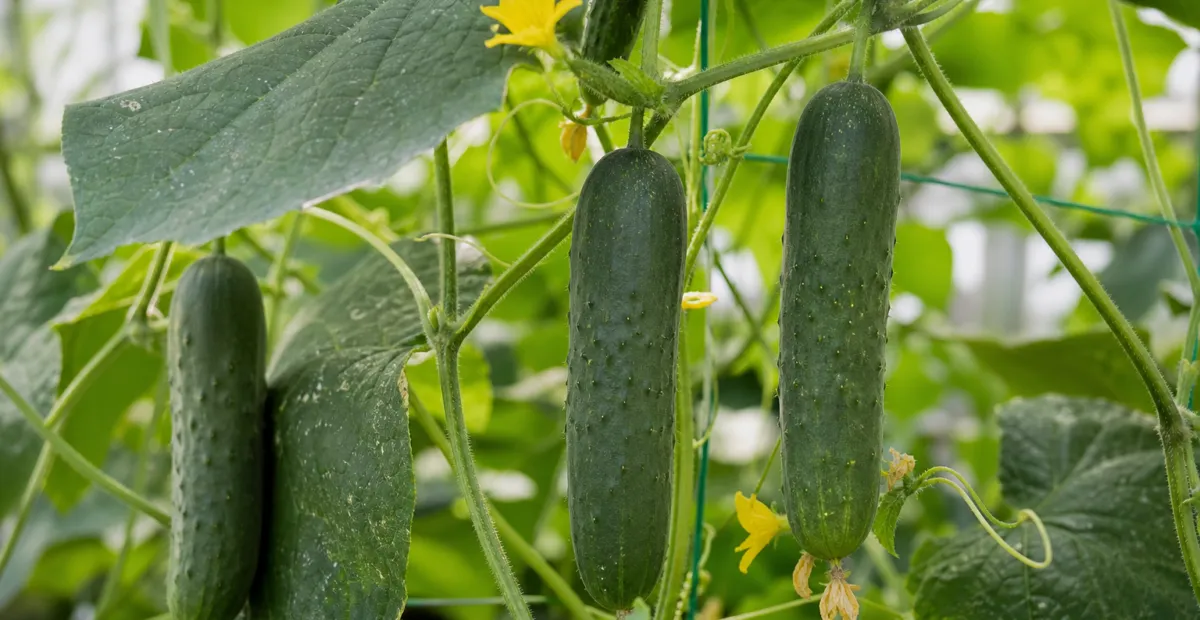
 AI-generated illustration
Cucumber (Cucumis sativus) short overview
Cucumber (Cucumis sativus) is a fast-growing warm-season annual vine cultivated throughout the United States for fresh eating and pickling. It produces separate male and female yellow flowers on the same plant, with bees commonly transferring pollen between them. Plants perform best in full sun, fertile well-drained soil, and consistently moist conditions after the soil has warmed. Trellising improves airflow and helps produce straighter fruit.
Taxonomic classification
Cucumber (Cucumis sativus) care guide
Light and placement
Provide at least 6–8 hours of direct sun, preferably in a south- or west-facing bed with good air movement. Trellises should not be placed where buildings or dense crops cast afternoon shade. Excessive shade produces weak, leafy growth and poor fruiting; intense heat combined with drought can cause flower and fruit abortion.
Watering and humidity
Keep the shallow root zone evenly moist with deep, regular watering rather than frequent light splashes. About 1–2 inches of water per week may be needed, adjusted for rainfall, soil, heat, and container size. Water at the soil surface in the morning or use drip irrigation. Maintain consistent moisture during flowering and fruit development to reduce misshapen or bitter fruit.
Soil and growing medium
Use fertile, loose soil rich in organic matter and capable of holding moisture without becoming waterlogged. A loam amended with compost is suitable. Good drainage is important because saturated soil reduces root oxygen and encourages root and crown problems. Cucumbers generally perform well in mildly acidic to neutral soil.
Feeding
Mix finished compost or well-rotted manure into the planting area before sowing. If growth is weak, apply a balanced vegetable fertilizer according to the label. A nitrogen side-dressing can be useful when vines begin to run, but excessive nitrogen encourages leaves at the expense of flowers and fruit. Do not use fresh manure or weed-and-feed products.
Growth and habit
This annual cucurbit develops rapidly in warm weather and produces branching vines with tendrils that can climb supports. Trailing plants need substantial horizontal room, while trellising keeps foliage and fruit off wet soil, improves air circulation, and makes harvesting easier. Harvest frequently to maintain continued production.
Planting and repotting
Direct-sow after the danger of frost has passed and the soil is warm, usually when soil temperatures are at least about 60°F. Plant seeds 1/2–1 inch deep. Thin to one plant about every 12 inches in rows, or grow several plants in spaced hills. Handle transplants gently because cucumbers dislike root disturbance.
Container-grown cucumbers should be moved carefully while young, before roots become crowded. Use a large container with drainage holes and avoid disturbing the root ball. Bush or compact cultivars are more practical for containers than vigorous long-vining types.
Propagation and pruning
Propagation
Sow seed directly after the soil warms, or start seed indoors about 3–4 weeks before the local frost-free date. Transplant young seedlings carefully. Save seed only from open-pollinated plants isolated from other cucumber cultivars if maintaining varietal purity matters.
Pruning
No routine pruning is required. Guide young vines onto a trellis and remove severely diseased leaves or damaged growth with clean tools. Avoid excessive cutting because the plant needs substantial foliage to support fruit production.
Overwintering
Cucumbers are frost-tender annuals and normally are not overwintered outdoors. Remove spent vines after harvest and clear plant debris to reduce carryover of pests and disease. In cold climates, start new plants the following season rather than attempting indoor overwintering.
Uses
A major U.S. garden vegetable for fresh slicing, salads, sandwiches, fermented pickles, and other preserved foods. Fruits are harvested immature, before seeds fully develop. Vines can be trained vertically where space is limited. Flowers provide short-lived pollen and nectar resources for visiting bees, although cucumber is primarily grown as a food crop.
Appearance
Cucumber has rough, broad, heart-shaped to shallowly lobed leaves on succulent green stems. Forked tendrils coil around nearby supports. Yellow five-lobed flowers arise in the leaf axils, and female flowers show a conspicuous small ovary beneath the corolla. Fruits vary widely among cultivars, from short pickling types to long smooth or ridged slicing forms.
Flowering
Cucumber is monoecious: male and female flowers occur separately on the same plant. Male flowers commonly appear first, followed by female flowers with a small ovary at the base. Individual flowers open for only a few morning hours. Some parthenocarpic cultivars can develop fruit without pollination, often producing few or no seeds.
Pollination and visitors
Bees are common cucumber pollinators, and bumblebees may also visit the yellow flowers. Insect movement of pollen from male to female flowers is important for conventional cultivars. Cold, rainy, cloudy, or excessively hot conditions can reduce visits and fruit set.
Cucumis sativus photos
Click any photo for a larger view. Source, author and license are shown separately.
Diseases and pests
Diseases
Common problems include bacterial wilt, angular leaf spot, anthracnose, downy mildew, powdery mildew, gummy stem blight, scab, Phytophthora blight, Fusarium wilt, and mosaic viruses. Reduce risk with resistant cultivars, crop rotation, clean seed, good spacing, drip irrigation, morning watering, and removal of infected debris. Control cucumber beetles promptly because they can transmit bacterial wilt.
Pests
Cucumber beetles are the key early-season pest and may spread bacterial wilt. Aphids, squash bugs, spider mites, leafminers, and caterpillars may also occur. Inspect undersides of leaves and young stems, use floating row cover before flowering, hand-remove larger pests, encourage beneficial insects, and apply labeled controls only when needed. Avoid spraying open flowers when pollinators are active.
Related diseases and pests
Only Plant Doctor profiles whose host data indicate this plant may be affected are shown here.
 DiseaseFusarium wiltFusarium oxysporum species complex
 DiseasePhytophthora blightPhytophthora capsici
 DiseaseCucumber mosaic virusCucumber mosaic virus
 DiseaseTobacco mosaic virusTobamovirus tabaci
 PestPea LeafminerLiriomyza huidobrensis
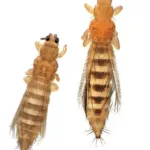 PestOnion thripsThrips tabaci Lindeman
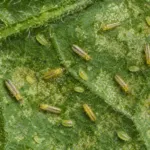 PestMelon thripsThrips palmi Karny
 PestTwo-spotted spider miteTetranychus urticae
Toxicity and pollen
Cucumber is widely eaten as a food, and ASPCA lists Cucumis sativus as non-toxic to dogs and cats. Normal garden contact is not considered a poisoning hazard. Extremely bitter cucurbit fruits or unusual wild cucurbits should not be eaten because high cucurbitacin levels can cause gastrointestinal illness.
- Typical season
- Late spring through summer during flowering
- Pollination / pollen
- Heavy, insect-carried pollen
Cucumber pollen is relatively heavy and is mainly moved by insects rather than carried widely by wind, so it is generally a low airborne-pollen concern. People with specific food allergies can experience reactions to cucumber, but that is different from inhaling cucumber pollen.
Native habitat
The species is native from the Himalaya through parts of China and northern Thailand, where it occurs in warm seasonal climates. Cultivated cucumbers are adapted to fertile, regularly moist soils and warm summers rather than frost or prolonged waterlogging.
Interesting fact
Cucumber flowers open for only a few morning hours, making timing important for pollination.
Male flowers usually appear before female flowers on the same plant.
Some modern cultivars develop fruit without pollination and may be nearly seedless.
Cucurbitacin concentration can increase bitterness during plant stress.
Trellising often produces straighter fruit and improves airflow.
Frequently asked questions (FAQ)
The most relevant questions about this plant, with short and direct answers.
🌱Quick care
What is Cucumis sativus?⌄
Cucumis sativus is the cucumber, a frost-tender annual vine in the Cucurbitaceae family. It is grown for its edible fruits, which are eaten fresh or pickled.
How much sun does a cucumber plant need?⌄
Cucumbers need full sun, ideally at least 6–8 hours of direct sunlight daily. More light generally supports stronger vines, flowering, and fruit production.
How often should I water cucumbers?⌄
Water cucumbers whenever the soil surface begins to dry so the root zone stays consistently moist. Regular moisture is especially important during flowering and fruit development because drought or fluctuating moisture can cause misshapen or bitter fruit.
Are cucumbers annuals or perennials?⌄
Cucumbers are frost-tender annuals in the United States. They complete their life cycle in one growing season and are usually replanted from seed each year.
🌤️Environment and placement
What is the best soil for growing cucumbers?⌄
Use fertile, moist, well-drained loam enriched with organic matter. Cucumbers perform best when the soil holds moisture without becoming waterlogged.
What soil pH do cucumbers prefer?⌄
Cucumbers generally prefer slightly acidic soil with a pH around 6.0–6.5. A soil test can help determine whether amendments are needed.
What temperature is best for cucumbers?⌄
Cucumbers grow best in warm conditions, roughly 65–95°F. Growth slows in cool weather, and frost or prolonged temperatures near 50°F can injure the plants.
Can cucumbers grow in containers?⌄
Yes, cucumbers can grow in large containers, especially compact or bush varieties. Choose a container with drainage, fertile potting mix, consistent moisture, and enough support for the chosen plant.
Do cucumber plants need a trellis?⌄
Vining cucumbers benefit from a trellis, although trellising is optional for many varieties. Vertical support saves space, improves air circulation, and keeps fruit cleaner and straighter.
💧Care and problems
How do I fertilize cucumber plants?⌄
Prepare the soil with compost or a balanced fertilizer, then fertilize again only if plants show a need or a soil test recommends it. Excess nitrogen can produce abundant leaves and vines while delaying flowering and fruiting.
Why are my cucumber leaves turning yellow?⌄
Yellow leaves can result from overwatering, nutrient stress, aging foliage, insect damage, or disease. Check soil drainage and moisture first, then inspect the undersides of leaves and stems for pests or symptoms of wilt.
Why are my cucumber plants wilting?⌄
Wilting may be caused by dry soil, root damage, heat stress, cucumber beetles, or bacterial wilt. If the soil is moist and a vine wilts suddenly, inspect for beetle damage and remove severely diseased plants.
Why are my cucumber leaves covered with white powder?⌄
White powdery patches on cucumber leaves are commonly a sign of powdery mildew. Improve air circulation, avoid wetting the foliage, and choose disease-resistant varieties in future plantings.
Why are my cucumbers bitter?⌄
Cucumber bitterness is usually associated with genetic differences and plant stress, especially inconsistent moisture, heat, or drought. Bitterness is often strongest near the blossom end and just beneath the skin.
What are the most common cucumber pests?⌄
Common cucumber pests include striped and spotted cucumber beetles, aphids, and spider mites. Monitor plants frequently and use physical or least-disruptive controls that protect flowering pollinators.
How can I prevent cucumber beetles?⌄
Use floating row covers over young plants, remove covers when flowering begins, and select varieties with appropriate pest and disease resistance. Promptly remove plant debris after harvest to reduce places where beetles may persist.
🪴Planting and repotting
When should I plant cucumber seeds outdoors?⌄
Sow cucumber seeds outdoors after frost danger has passed and the soil has warmed to at least 60–65°F. Cucumbers dislike root disturbance, so direct sowing is often preferable when conditions are suitable.
How deep should cucumber seeds be planted?⌄
Plant cucumber seeds about 1 inch deep in warm, prepared soil. Keep the seedbed evenly moist until seedlings emerge.
How far apart should cucumbers be planted?⌄
Spacing depends on the variety and growing method. Bush types commonly need about 18–24 inches between plants, while vining types require more room unless they are trained onto a trellis.
Can cucumber seedlings be transplanted?⌄
Yes, but transplant cucumbers carefully because their roots are easily disturbed. Start transplants only a few weeks before planting and move them outdoors after the soil is warm and frost danger has passed.
✂️Propagation and pruning
How do you propagate cucumbers?⌄
Cucumbers are most commonly propagated from seed. Sow fresh seeds directly in the garden or start them indoors in individual containers for later transplanting.
Should cucumber vines be pruned?⌄
Light training or pruning can be useful, particularly for greenhouse or trellised plants, but extensive pruning is usually unnecessary. Remove damaged or diseased growth and guide vigorous vines onto their support.
How do I hand-pollinate cucumber flowers?⌄
Transfer pollen from an open male flower to the center of an open female flower using a small brush or by touching the flowers together. Female flowers have a small swelling behind the blossom, while male flowers sit on thin stems.
⚠️Toxicity and safety
Are cucumber plants toxic to people or pets?⌄
Cucumbers are considered non-toxic in normal garden and food use. As with any plant, avoid consuming unusually bitter fruits or material treated with pesticides unless the product label allows harvest and gives the required waiting period.
🌸Flowering and special interest
Why does my cucumber plant have flowers but no cucumbers?⌄
The plant may be producing male flowers before female flowers, or female flowers may not be receiving enough pollen. Cold, rainy, cloudy weather and low pollinator activity can reduce fruit set.
Do cucumbers need bees to produce fruit?⌄
Most traditional cucumber varieties need insect pollination, usually by bees, for normal fruit development. Some parthenocarpic varieties can produce fruit without pollination and are often suited to greenhouse growing.
How can I tell male and female cucumber flowers apart?⌄
Male flowers grow on thin stems, while female flowers have a small swollen ovary directly behind the blossom. The ovary becomes the cucumber if the flower is successfully pollinated.
Why are my cucumber fruits small or misshapen?⌄
Small or misshapen cucumbers commonly result from incomplete pollination, inconsistent watering, nutritional stress, or disease. Maintain even moisture and avoid insecticide applications when pollinators are actively visiting flowers.
When are cucumbers ready to harvest?⌄
Harvest cucumbers when they reach the typical size and color for their variety but are still young, firm, and tender. Pick regularly because oversized fruits develop tougher skin, larger seeds, and reduced flavor.
Similar plants
 Azure Monkshood (Aconitum carmichaelii) care guideAconitum carmichaelii
 Monkshood (Aconitum ‘Stainless Steel’)Aconitum 'Stainless Steel'
 Monkshood (Aconitum ‘Bressingham Spire’)Aconitum 'Bressingham Spire'
 Golden full moon maple (Acer shirasawanum ‘Aureum’)Acer shirasawanum 'Aureum'
 Globosum (Acer platanoides ‘Globosum’)Acer platanoides 'Globosum'
 Striped maple (Acer pensylvanicum) care guideAcer pensylvanicum