
Phytophthora blight
Phytophthora capsiciPhytophthora blight overview
Phytophthora capsici causes a destructive, water-driven disease of cucurbits, peppers, eggplant, tomatoes, beans and other crops. It can attack roots, crowns, stems, leaves and fruit, producing damping-off, sudden wilting, crown collapse and rapidly expanding water-soaked rots. Poor drainage, flooding, contaminated irrigation water and movement of infested soil greatly increase risk in U.S. gardens and vegetable fields.
Typical conditions
Overview
Phytophthora capsici is not a true fungus but an oomycete pathogen. It can infect seedlings, roots, crowns, stems, petioles, leaves and fruit, although the most obvious symptoms depend on the host and disease stage.
In the United States, serious outbreaks are most likely in low-lying or poorly drained sites, fields affected by flooding or runoff, and gardens repeatedly planted with susceptible vegetables. Summer squash, pumpkin, other cucurbits and pepper are commonly affected, but tomato, eggplant, beans and additional hosts can also be diseased.
Suspect this disease when plants wilt in patches after wet weather, crowns become dark and water-soaked, or fruit develops a rapidly enlarging soft rot. Similar symptoms may be caused by other Phytophthora species, Pythium, Fusarium, bacterial wilt or abiotic root injury.
Symptoms and identification
- Seedlings: damping-off, stunting and rapid death.
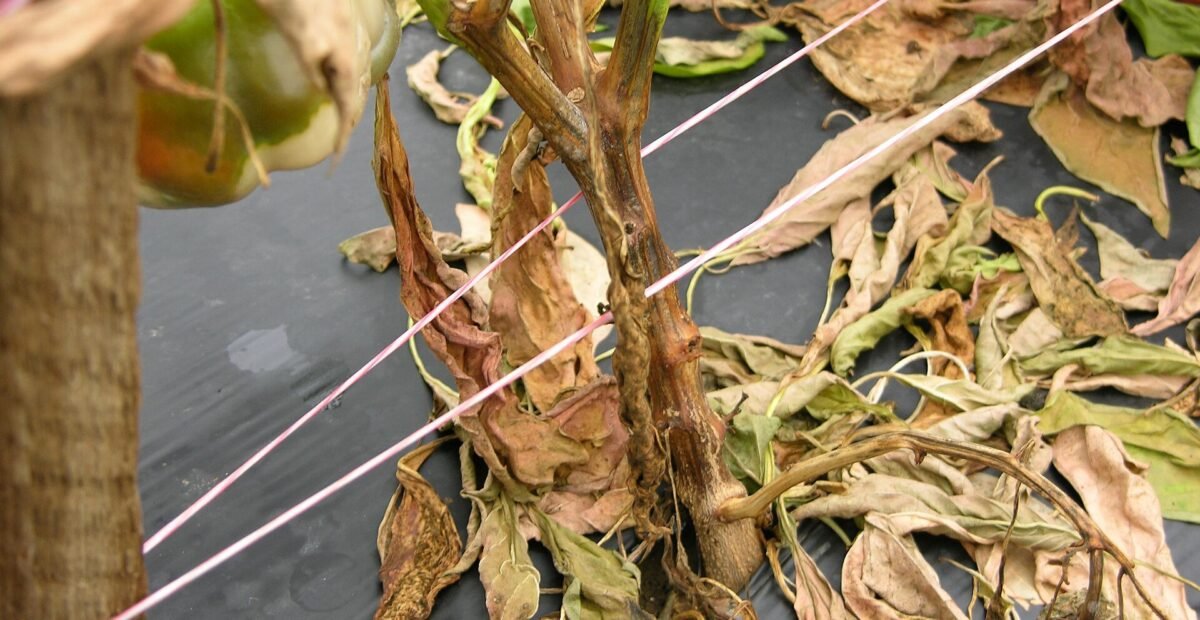
- Roots and crowns: water-soaked tan to dark-brown tissue, root loss, crown lesions beginning near the soil line, collapse and easy lifting from the soil.
- Leaves and stems: wilted foliage, water-soaked petiole or stem lesions, and light-green leaf spots that enlarge and become necrotic, especially on squash, pumpkin, pepper and eggplant.
- Fruit: depressed or water-soaked spots that expand into soft brown rot. Under humid conditions, infected squash, pumpkin and pepper fruit may develop a conspicuous white, powdered-sugar-like or yeast-like coating.
- Pattern: symptoms often begin in wet low spots or follow the direction of drainage and surface-water movement. Cucumber foliage may appear relatively healthy while fruit under the canopy rots.
Causes and spread
The pathogen survives in infested soil and crop debris. Water is the principal driver of local spread: swimming zoospores move through saturated soil and surface-water films, while sporangia and contaminated soil can be carried by rain splash, irrigation, runoff, boots, tools, vehicles, transplants and harvest equipment.
Infected fruit and plant debris can produce abundant inoculum. Surface water from ponds, ditches, streams or neighboring fields may introduce the pathogen. Working wet soil can spread infested mud and create compaction that worsens drainage. Seed transmission is not the usual primary route, but contaminated transplants, containers and growing media can introduce the pathogen.
Life cycle and persistence
Phytophthora capsici persists between crops as durable oospores when compatible mating types are present, and as other surviving pathogen structures or infected debris. Oospores can remain viable for several years, making a single short rotation unreliable in a heavily infested field.
When soil becomes warm and wet, survival structures germinate and produce sporangia. Sporangia may germinate directly or release motile zoospores into water. Zoospores swim toward susceptible tissue, encyst, germinate and penetrate roots, crowns, stems, leaves or fruit. New sporangia form on infected tissue, particularly rotting fruit, and are dispersed by water and wind-driven rain.
Disease development is favored by repeated wetting and warm conditions, commonly around 75–85°F. The exact duration of survival and aggressiveness varies with isolate, mating type, crop, soil and environmental conditions.
Treatment and control
Once crown tissue has collapsed or fruit is actively rotting, recovery is unlikely. Remove and dispose of severely diseased plants and fruit promptly, together with surrounding soil clumps that may carry inoculum. Avoid moving healthy-looking fruit or equipment from an infested patch into clean areas.
Improve drainage immediately, stop water from flowing into the planting, and reduce leaf and fruit wetting. In containers or small gardens, discard heavily infested soil or relocate future susceptible crops to clean, well-drained beds; do not redistribute soil from the affected area.
For commercial crops, obtain a professional diagnosis and use a crop-specific integrated program developed with the state extension service. Fungicides or oomycete-targeted products work best preventively or very early and generally cannot reverse advanced crown rot. Resistance to some chemistries, including metalaxyl or mefenoxam in some populations, has been documented.
Low-impact and biological control
There is no dependable organic rescue treatment for plants with advanced Phytophthora crown rot. Organic IPM should emphasize exclusion and water management: raised beds, clean irrigation water, drip irrigation, sanitation, removal of infected material, adequate spacing and long rotations.
Use only biological products that are registered or otherwise legally permitted for the intended crop and disease in the United States, and treat them as supplemental tools rather than substitutes for drainage and sanitation. Product performance varies by formulation, timing, pathogen population and crop; follow the current U.S. label and local extension recommendations.
Prevention
- Choose well-drained sites and use raised beds or ridges where practical.
- Use drip irrigation or carefully directed irrigation rather than overhead watering; avoid irrigation with potentially contaminated surface water.
- Do not enter or cultivate infested areas while soil is wet. Clean soil from boots, tools, wheels, stakes, containers and harvest equipment before moving between areas.
- Remove diseased plants, nearby suspect plants and rotting fruit from production areas. Do not place them in a cull pile beside the garden or field.
- Use a rotation of at least three years away from susceptible cucurbit and solanaceous crops where local extension guidance supports it; longer rotations may be needed in severely infested ground.
- Control volunteer plants and weeds that may maintain the pathogen, and avoid planting into runoff paths from infested areas.
- Buy healthy transplants from reputable sources and avoid reusing contaminated potting media, trays or irrigation water.
- Select cultivars described by current university trials as having Phytophthora tolerance when available, recognizing that resistance is crop- and isolate-dependent and is rarely complete.
Interesting facts
- Phytophthora capsici belongs to the oomycetes, a fungal-like group that is biologically distinct from true fungi.
- Its zoospores can swim through films of water, explaining why outbreaks often follow drainage patterns.
- Fruit may be infected where it touches wet soil, at the stem attachment, or at another wound or wet surface.
- White growth on a rotting fruit is a useful warning sign but is not sufficient for definitive identification.
- The pathogen has two mating types; when compatible types occur together, long-lived oospores may be produced.
- Phytophthora capsici has a broad and variable host range, so rotation should be planned by documented host families and local diagnostic advice rather than by crop name alone.
Use only products legally authorized for Phytophthora capsici or the applicable disease on the specific crop in your state and country. The label is the law. Follow the current label for crop, disease, rate, application interval, personal protective equipment, preharvest interval and resistance-management requirements. Do not assume that a product labeled for another Phytophthora species, crop or country is legal or effective.