
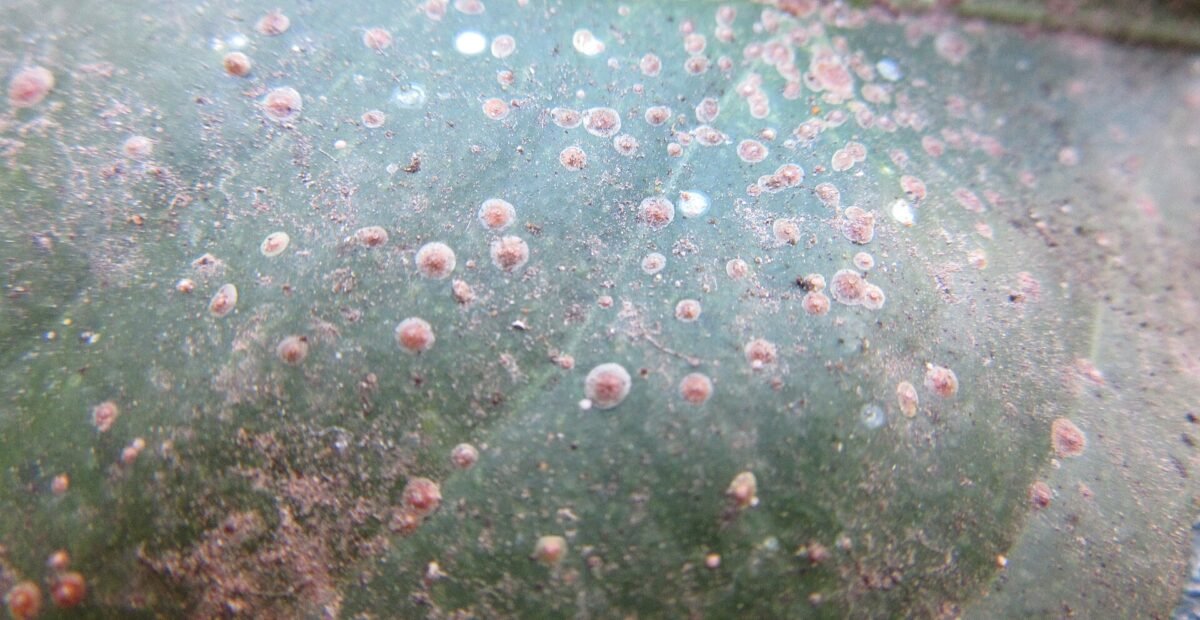
California red scale
Aonidiella aurantiiCalifornia red scale overview
California red scale, Aonidiella aurantii, is a sap-feeding armored scale insect that most seriously affects citrus in warm regions of the United States. Immobile females form tiny reddish-brown shields on leaves, twigs, branches and fruit, while mobile crawlers spread to new feeding sites. Heavy infestations can yellow and shed leaves, weaken branches, reduce yield and cause fruit to be unmarketable.
Typical conditions
Overview
California red scale is a small, flattened armored scale. Adult females remain beneath circular reddish-brown covers that are usually about 0.06–0.10 inch across. Unlike soft scales, armored scales do not produce honeydew, so sooty mold is not a typical symptom.
Citrus is the most important host in the United States, particularly in warm production regions such as California. The pest can also occur on numerous woody fruit, ornamental and landscape plants, but reported host importance varies by plant, region and scale identification. Field appearance alone can be misleading because related armored scales may look similar; confirmation by an experienced diagnostician may be needed.
Symptoms and identification
- Small reddish, reddish-brown or grayish circular shields attached to leaves, twigs, branches and fruit.
- Yellowing, reduced vigor, premature leaf drop and shoot or branch dieback when populations are high.
- Fruit may be covered with scales and downgraded or rendered unmarketable; damage is often mainly cosmetic at low densities.
- Heavy infestations on young trees can stunt growth and, occasionally, contribute to severe decline or tree death.
- Mobile crawlers are tiny, pale yellow to orange insects that move briefly before settling. A hand lens helps distinguish them from debris.
Parasitized scales may appear darker or swollen, and parasitoid emergence holes are useful evidence of biological control. California red scale generally does not cause honeydew or sooty mold.
Causes and spread
The pest is introduced and moved primarily on infested nursery stock, scionwood, branches, leaves and fruit. Within a planting, newly hatched crawlers move to feeding sites and can be carried short distances by wind, birds, workers, clothing, tools and contact between touching canopies.
Outbreaks are favored by dense canopies, dusty foliage, excessive plant stress and disruption of parasitoids by broad-spectrum or persistent insecticides. Ants may interfere with natural-enemy activity, although California red scale itself does not produce honeydew.
Life cycle and persistence
Females remain beneath their protective cover and produce live crawlers or eggs that hatch beneath the cover, depending on population and environmental conditions. Crawlers are the principal mobile stage and the most vulnerable stage for monitoring and control. After settling, a crawler inserts its mouthparts, begins feeding and develops beneath a waxy armored cover.
Adult males are tiny, winged and short-lived; females are wingless and remain attached. Several generations may occur annually in warm US citrus-growing areas. In California citrus and olive production, crawler activity is commonly monitored during spring and again in midsummer, but exact timing varies with location, host, temperature and season.
Treatment and control
Confirm the pest before treating because several armored scales resemble California red scale. On a small plant, prune out badly infested shoots and remove or carefully scrub accessible scales without injuring bark. For citrus and landscape plants, treatment decisions should be based on live scales, crawler activity, plant value, crop stage and the level of natural parasitism rather than on old, empty covers alone.
Horticultural or petroleum oils can suppress exposed stages when applied with thorough coverage, especially when crawlers are active. Avoid spraying drought-stressed, heat-stressed or recently transplanted plants, and follow all crop-safety precautions on the product label. In commercial citrus, local monitoring programs may time applications for crawler emergence or postharvest periods. Broad-spectrum sprays can worsen outbreaks by killing parasitoids and predators.
Low-impact and biological control
Conserve naturally occurring parasitoids, especially Aphytis melinus and Comperiella bifasciata, by avoiding unnecessary broad-spectrum insecticides, controlling disruptive ants, reducing dust and providing suitable flowering resources nearby. Round or irregular exit holes in scale covers can indicate successful parasitism.
Commercial releases of Aphytis melinus may be useful in suitable citrus or nursery situations, but conservation of established natural enemies is often more durable. Horticultural oils and other materials may be acceptable in certified organic production only when the specific product is allowed under the applicable organic standards and is legally labeled for the crop and use.
Prevention
- Buy citrus and other host plants from reputable sources and inspect leaves, twigs, bark and fruit before planting.
- Quarantine and monitor new plants before placing them near established citrus.
- Prune dead or heavily infested material where appropriate, disinfect tools between plants and remove prunings from the growing area.
- Avoid excessive nitrogen and drought stress; maintain irrigation appropriate for the crop and site.
- Keep foliage reasonably clean and reduce dust, which interferes with parasitoids and predators.
- Prevent branches from touching between plants and control ants when they are interfering with natural enemies.
- Use sticky tape, hand lenses and regular inspection of leaves, twigs and fruit to detect crawlers before populations build.
Interesting facts
- The insect’s actual body is hidden beneath a separate armored cover; removing the cover can reveal the living insect underneath.
- California red scale is especially important on citrus, but documented hosts span many plant families and include selected fruit, ornamental and landscape plants.
- Unlike soft scales, it normally does not excrete honeydew, so black sooty mold is not the usual diagnostic clue.
- Aphytis melinus, a tiny parasitoid wasp about 1/16 inch long, is commercially available and an important natural enemy in California citrus systems.
- California red scale and yellow scale can be difficult to separate reliably by unaided field appearance; microscopic examination may be necessary.
Use only products legally authorized and currently labeled in the United States for California red scale on the specific crop or ornamental plant. Follow the current label exactly, including rate, application timing, personal protective equipment, reentry interval, preharvest interval, pollinator precautions and restrictions for oils or heat-stressed plants. Do not rely on a pesticide name alone; registrations and labels vary by crop, state and use site. Favor selective, crawler-targeted and natural-enemy-compatible options within an IPM program.
Affected plants
The plants below are linked to this problem by structured host-plant data. The list updates automatically as new plant profiles are added.
 Apple tree (Malus domestica) care guideMalus domestica
 Musa acuminata care guideMusa acuminata
 Sweet wild banana (Musa balbisiana) care guideMusa balbisiana
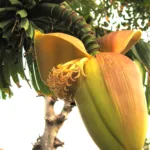 Musa basjoo care guideMusa basjoo
 Musa itinerans care guideMusa itinerans
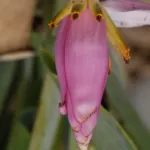 Flowering Banana (Musa ornata) care guideMusa ornata
 Darjeeling banana (Musa sikkimensis) care guideMusa sikkimensis
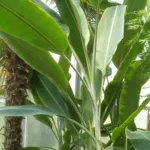 Abaca (Musa textilis) care guideMusa textilis
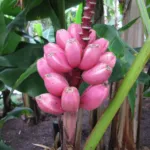 Pink Banana (Musa velutina) care guideMusa velutina
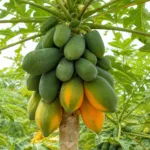 Papaya (Carica papaya) care guideCarica papaya
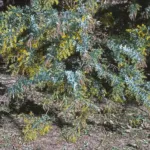 Cootamundra wattle (Acacia baileyana) care guideAcacia baileyana
 Knife-leaf Wattle (Acacia cultriformis) care guideAcacia cultriformis