
 Source:
 Prickly moses or western prickly moses (Acacia pulchella) short overview
Prickly moses, also called western prickly moses, is a distinctive shrub from southwestern Western Australia. Its zig-zag branches carry small spines and finely divided leaves, while rounded yellow flower heads appear mainly from winter into spring. In cultivation it needs excellent drainage, a warm position and protection from hard freezes. It can be useful in native-style, dry-climate and pollinator-focused plantings, although U.S. cold-hardiness, toxicity and pollen-allergy evidence remain limited.
Taxonomic classification
Prickly moses or western prickly moses (Acacia pulchella) care guide
Light and placement
Provide full sun for the best flowering, ideally with a south- or west-facing exposure and shelter from cold winds. Light partial shade is tolerated, particularly in hot climates, but too little light can produce open, weak growth and fewer flower heads. Scorched foliage or rapid wilt can indicate excessive reflected heat combined with dry roots.
Watering and humidity
Water deeply but allow the upper soil to dry between applications once established. During the first growing season, irrigate more regularly to develop a broad root system; reduce watering during cool or wet periods and in the native-style dry summer regime. Containers dry faster and need more frequent checks, but roots should never sit in runoff.
Soil and growing medium
Use a sharply drained sandy, gravelly or light loamy mix. The species is associated with lateritic and other well-drained soils in southwestern Western Australia. Avoid persistently waterlogged substrates; slightly acidic to neutral conditions are a cautious cultivation target because a precise species-specific pH preference is not consistently reported.
Feeding
Feed sparingly in spring with a low-strength, slow-release fertilizer formulated for Australian native plants, or use a thin compost dressing where soils are poor. Avoid heavy phosphorus applications and do not fertilize drought-stressed, newly transplanted or winter-dormant plants.
Growth and habit
A much-branched shrub that may grow upright to spreading, with fine spines along the branch system. Maintain an open framework by removing damaged or crossing growth after flowering, and provide space for the plant’s naturally loose outline rather than forcing a dense formal shape.
Planting and repotting
Plant outdoors after the local danger of hard frost has passed, choosing a sunny, sheltered site. Set the root crown at soil level, keep the initial root zone evenly moist while establishing, and avoid heavy wet soil. Use a wider spacing where a loose, spreading habit is desired.
Repot container plants only when roots have filled the pot, preferably in spring. Disturb the root ball as little as possible, move to a fast-draining native-plant or sandy mix, and avoid keeping the freshly repotted plant saturated.
Propagation and pruning
Propagation
Propagation is chiefly by seed. Acacia seed commonly has a hard coat, so carefully nicking or hot-water treatment may improve germination, but treatment intensity should be tested on a small batch. Sow in a sterile, free-draining medium when temperatures are warm; protect seedlings from excess moisture.
Pruning
Prune lightly after flowering to remove damaged, dead or crossing branches and to maintain a compact outline. Avoid severe cutting into old, leafless wood unless regrowth points are clearly present. Wear gloves because the axillary spines can scratch skin.
Overwintering
In colder U.S. climates, grow in a large container and move it into a bright, cool-to-mild greenhouse or protected room before freezes. In marginal outdoor zones, use a warm microclimate, protect the root zone and cover during brief cold events. Avoid warm, dark indoor storage, which encourages weak growth.
Uses
Useful as an informal native-style shrub, habitat planting or specimen for warm, dry-climate gardens. Its flowers can support insect visitors, and its spiny habit may provide shelter for small wildlife. It is not established here as a culinary or medicinal plant, and the spines require placement away from paths.
Appearance
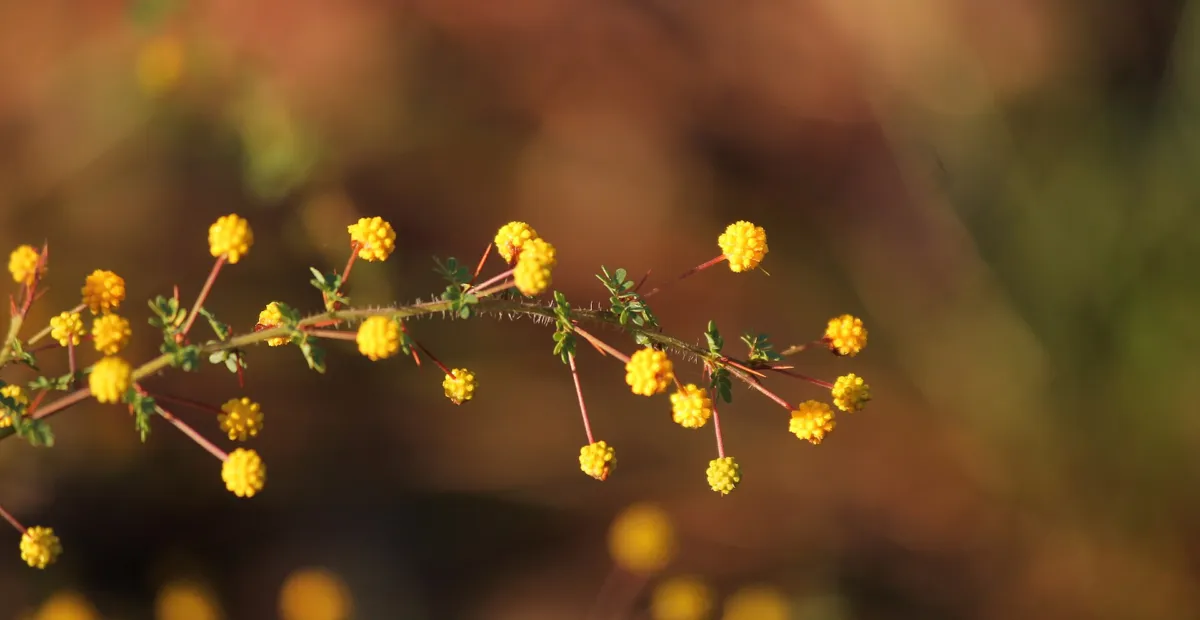
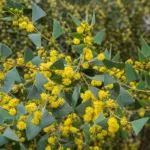
Identification features include zig-zag branches with fine ribbing, small spines at many axils, and bipinnate leaves with one pair of primary branches and several pairs of tiny leaflets. The yellow flower heads are rounded rather than elongated, and the narrow pods are typically a few inches long.
Flowering
Rounded flower heads contain numerous small, five-parted yellow flowers. In southwestern Australia, flowering is principally from late winter through spring, with the strongest documented period around July–October and occasional later flowering.
Pollination and visitors
Yellow flower heads are reported to attract animal visitors, including bees and other insects. No single pollinator species was sufficiently documented for confident designation, so visitor-group identification is used instead.
Acacia pulchella photos
Click any photo for a larger view. Source, author and license are shown separately.
Diseases and pests
Diseases
Avoid chronically wet roots, which can encourage root and crown problems. Use clean tools, improve drainage, remove badly affected tissue, and avoid overhead irrigation when disease is suspected. Species-specific disease susceptibility is not sufficiently documented for a detailed treatment schedule.
Pests
Inspect for scale, sap-feeding insects and caterpillars, especially on stressed container plants. Start with hand removal, pruning of localized infestations and improved plant vigor; use labeled horticultural oils or soaps only when appropriate for the crop and conditions.
Related diseases and pests
Only Plant Doctor profiles whose host data indicate this plant may be affected are shown here.


Toxicity and pollen
No reliable, species-specific human, dog or cat toxicity assessment was located in the reviewed authoritative sources. Do not treat the plant as proven safe: the spines can cause mechanical injury, and children or pets should not chew unidentified plant material. Seek professional advice after ingestion or a significant exposure.
- Typical season
- Typically July–October in southwestern Western Australia; U.S. exposure timing varies with climate.
- Pollination / pollen
- Insect-associated floral pollen; airborne significance uncertain
Acacia flowers release pollen during flowering, but the airborne-allergy importance of this exact species is not well established. Insect visitation does not prove zero allergy risk. Sensitive gardeners should monitor symptoms during bloom and limit direct exposure to flowering material.
Native habitat
Native to southwestern Western Australia, where it occurs in bushland, wetlands and seasonally moist settings including areas with sandy or lateritic soils. It is adapted to a Mediterranean-type climate with winter rainfall and a dry summer period, but cultivated plants still require dependable drainage.
Interesting fact
The species has zig-zag ribbed branches and small spines positioned at many leaf axils. Its globular heads contain roughly two dozen to more than forty small flowers. It is native to southwestern Western Australia and includes several recognized varieties.
Frequently asked questions (FAQ)
The most relevant questions about this plant, with short and direct answers.
🌱Quick care
What is Acacia pulchella commonly called in the United States?⌄
Acacia pulchella is commonly called prickly moses or western prickly moses. It is a Western Australian shrub in the Fabaceae family, also known as a wattle.
How large does western prickly moses get?⌄
Western prickly moses commonly reaches about 5 feet tall, although some references describe plants approaching 6.5 feet. Its final size depends on climate, soil, moisture, and pruning.
🌤️Environment and placement
How much sunlight does prickly moses need?⌄
Prickly moses grows best in full sun but also tolerates partial shade or light, dappled shade. More sun generally supports denser growth and heavier flowering.
Is Acacia pulchella suitable for a small garden?⌄
Acacia pulchella is suitable for a small garden if its mature spread and sharp spines are given enough room. It typically forms a medium shrub rather than a large tree, but growth can be open or somewhat spindly.
Is prickly moses frost hardy?⌄
Prickly moses is frost tender and should be protected from hard freezes. In colder parts of the United States, grow it in a container that can be moved under cover or provide a sheltered, warm microclimate.
What USDA hardiness zone is suitable for Acacia pulchella?⌄
A universally agreed USDA hardiness-zone rating is not well established for Acacia pulchella. Because it is frost tender, treat it as a warm-climate plant and verify local winter temperatures before planting it outdoors year-round.
Is Acacia pulchella useful for wildlife?⌄
Acacia pulchella provides dense, spiny cover for small wildlife and its yellow flowers attract insects. Its protective structure can be especially useful in habitat-style plantings where shelter is desired.
Can prickly moses tolerate partial shade?⌄
Yes, prickly moses tolerates partial shade or light shade, although flowering and compactness may be reduced compared with plants grown in full sun. Bright morning sun or filtered light is preferable to deep shade.
Does Acacia pulchella fix nitrogen?⌄
Yes, Acacia pulchella is a legume that forms nitrogen-fixing relationships with soil microorganisms. This adaptation helps it grow in relatively nutrient-poor soils, but it does not mean the plant can tolerate poor drainage.
💧Care and problems
How often should I water Acacia pulchella?⌄
Water Acacia pulchella regularly while it establishes, then reduce watering once the root system is developed. Established plants are drought-hardy, but occasional deep watering may help during prolonged hot, dry periods.
Does Acacia pulchella need fertilizer?⌄
Acacia pulchella generally does not need routine fertilizer when planted in suitable soil. As a nitrogen-fixing legume, it can perform in relatively poor soils, and excess fertilizer may produce weak, overly lush growth.
Why is my prickly moses turning yellow or declining?⌄
Yellowing or decline is often associated with waterlogged soil, root stress, cold damage, drought, or unsuitable growing conditions. Check drainage first, then review recent frost, watering, and root disturbance.
Why is my Acacia pulchella growing thin and leggy?⌄
Leggy growth usually results from insufficient light, crowded conditions, or the plant’s naturally open habit. Move container plants to brighter light and use light post-flowering pruning to encourage branching.
Is Acacia pulchella drought tolerant?⌄
Yes, established Acacia pulchella is considered drought-hardy and waterwise. It still needs regular irrigation during establishment and may require supplemental water during unusually long periods of heat or drought.
How long does prickly moses live?⌄
Prickly moses is relatively short-lived compared with many woody garden shrubs, and some ecological references report natural stands declining after roughly 6 to 15 years. Longevity in cultivation can vary substantially with climate, drainage, and plant stress.
🪴Planting and repotting
What type of soil is best for western prickly moses?⌄
Use sandy or light loamy soil that drains sharply. Avoid heavy, waterlogged soil because prolonged wetness can encourage root problems.
Can prickly moses grow in a container?⌄
Yes, prickly moses can be grown in a container with generous drainage holes and a sharply draining potting mix. Choose a container large enough for its root system and avoid leaving the pot in standing water.
When should I transplant prickly moses seedlings?⌄
Transplant prickly moses seedlings while they are young and before the roots become tightly bound. Handle the root system gently, plant into sharply drained soil, and keep moisture even while the plant establishes.
✂️Propagation and pruning
How do I grow Acacia pulchella from seed?⌄
Grow Acacia pulchella from mature seed after carefully breaking or softening the hard seed coat, then sow it in a sterile, sharply draining medium. Keep the medium lightly moist and provide warmth and bright light during germination.
Do prickly moses seeds need scarification?⌄
Yes, prickly moses seeds usually benefit from scarification or another treatment that softens their hard outer coat. Use care because excessive filing, cutting, or heat can damage the embryo.
Can Acacia pulchella be propagated from cuttings?⌄
Seed is the better-documented propagation method for Acacia pulchella, while cutting success may be variable. If attempting cuttings, use healthy semi-ripe material, a sterile well-drained medium, and consistently humid but not soggy conditions.
Should I prune Acacia pulchella?⌄
Acacia pulchella generally needs little pruning, but light shaping after flowering can improve its form and may help extend the useful life of older plants. Avoid severe cuts into old, leafless wood unless recovery is known to be reliable.
⚠️Toxicity and safety
Does prickly moses have thorns?⌄
Yes, prickly moses has sharp spines along its branches, including near the bases of the leaves. Place it away from walkways, play areas, and places where people or pets may brush against it.
How should I prune western prickly moses safely?⌄
Wear thick gloves, long sleeves, and eye protection because the branches are sharply spined. Use clean pruners to remove dead or crossing growth and shape the shrub after flowering rather than during bud formation.
Is prickly moses toxic to people or pets?⌄
No species-specific toxicity classification has been established for Acacia pulchella. Because the plant is spiny and species-level toxicity data are limited, prevent children and pets from chewing it and seek professional advice after ingestion.
Is prickly moses invasive in the United States?⌄
There is not enough reliable evidence to describe Acacia pulchella as broadly invasive throughout the United States. Plant it responsibly, prevent unwanted seed spread, and check state and local rules before introducing any nonnative species.
Can I plant western prickly moses near a walkway?⌄
Planting western prickly moses directly beside a walkway is usually a poor choice because its spines can snag clothing or injure passersby. Use it instead as a background, boundary, or wildlife shelter plant with adequate clearance.
🌸Flowering and special interest
When does Acacia pulchella flower?⌄
Acacia pulchella usually flowers from late winter through spring, with regional records commonly placing flowering between May and October in Western Australia. In the United States, timing may shift with climate and day length.
What color are prickly moses flowers?⌄
Prickly moses produces rounded golden-yellow flower heads. The flowers may appear in clusters and can cover much of the shrub during a strong blooming season.
Why is my western prickly moses not flowering?⌄
Lack of flowering is commonly linked to inadequate light, young age, frost injury, excessive nitrogen, or stress from poor drainage. Give the plant bright light, avoid heavy feeding, and allow time for recovery after cold damage.
Similar plants
 Cootamundra wattle (Acacia baileyana) care guideAcacia baileyana
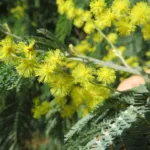 Silver Wattle (Acacia dealbata) care guideAcacia dealbata
 Longleaf Wattle (Acacia longifolia) care guideAcacia longifolia
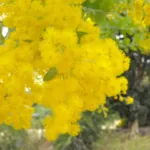 Pearl Wattle (Acacia podalyriifolia) care guideAcacia podalyriifolia
 Knife-leaf Wattle (Acacia cultriformis) care guideAcacia cultriformis
 Acacia pravissima care guideAcacia pravissima