
Botryosphaeria canker and dieback
Botryosphaeria dothidea (Moug. ex Fr.) Ces. & De Not.Botryosphaeria canker and dieback overview
Botryosphaeria dothidea is a wound- and stress-associated fungus that causes cankers, shoot or branch dieback, blights and fruit rots on many woody plants. In the United States it is reported from fruit crops, vines, ornamental trees and native trees. Symptoms overlap with other Botryosphaeriaceae, so host history, symptom progression and laboratory identification may be needed for confirmation.
Typical conditions
Overview
Botryosphaeria dothidea is a widely distributed wood-inhabiting plant-pathogenic fungus. In the United States it is associated with canker and dieback of trees and shrubs, blackberry cane canker, blueberry stem blight, pistachio panicle blight, olive blight, grapevine trunk disease and fruit rots of crops such as apple, pear and almond.
The disease is most important when plants are drought-stressed, winter-injured, weakened by another pathogen or damaged by pruning, insects or mechanical activity. A positive field diagnosis is difficult because several related fungi cause nearly identical symptoms.
Symptoms and identification
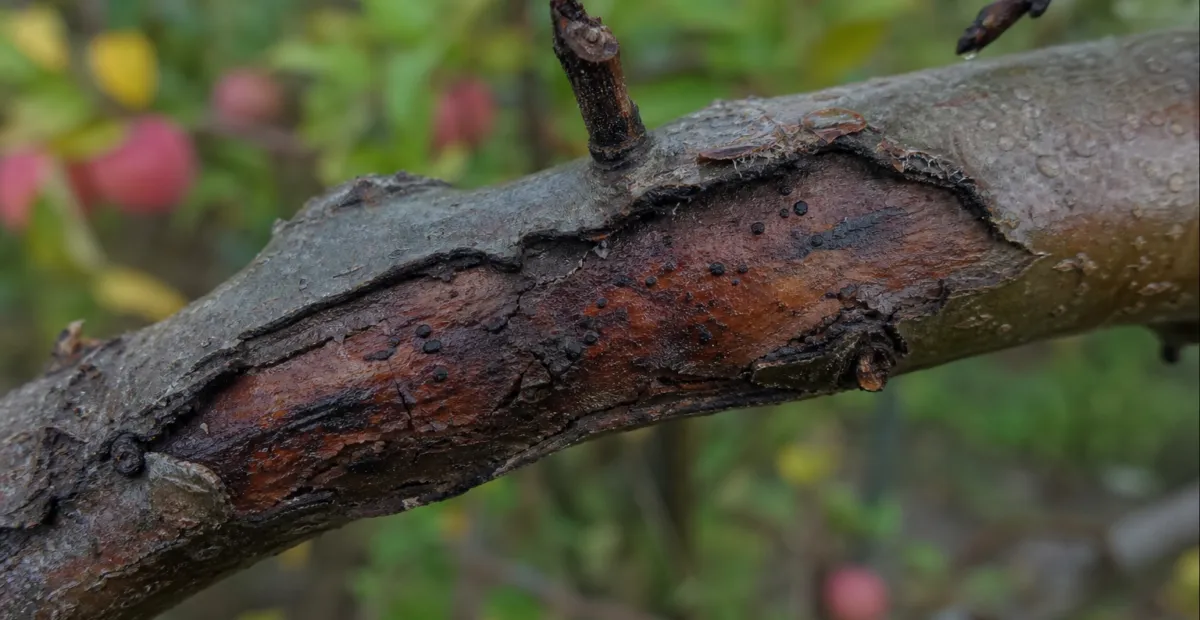
Symptoms vary with host and tissue. Common signs include elongated or sunken reddish-brown to gray cankers on twigs, branches or trunks; internal brown discoloration; dead buds; shoot and branch dieback; and bark cracks or splitting that may expose the pith.
On blackberry, cankers often form around nodes or leaf-petiole scars, kill the associated bud or lateral shoot, develop alternating dark and light zones, and may split longitudinally. On blueberry, affected shoots may show reddening and drying leaves before dieback progresses toward the crown. On fruit and nut crops, the disease can cause fruit rot, blighted clusters or panicles, blackened rachises and shriveled fruiting structures.
Small black fungal fruiting bodies may develop in dead bark or fruit tissue during wet conditions, but their presence alone does not confirm the species.
Causes and spread
The fungus commonly survives in dead twigs, cankers, mummified fruit, retained leaf or flower tissues and other woody debris. Spores are released from fruiting bodies during rain or extended wetting and are moved mainly by rain splash, runoff and contaminated pruning equipment.
Infection usually occurs through wounds, pruning cuts, frost injury, insect injury, natural openings or tissue already damaged by another disease. Disease severity increases when drought, heat, flooding, winter injury, poor root conditions, crop overload or other stresses reduce host defenses. Some infections can remain latent until the host becomes stressed.
Life cycle and persistence
Botryosphaeria dothidea overwinters in infected bark, dead canes, branch cankers and fruit remnants. Under moist conditions, pycnidia or other fruiting structures produce asexual spores; these spores are dispersed by rain and germinate on susceptible wet tissue.
After entering a wound or weakened tissue, the fungus colonizes bark and wood and may remain symptomless for a period. Cankers expand when host defenses are limited, potentially girdling shoots or branches. In fruit crops, infections may remain inconspicuous until fruit maturity or postharvest handling. Fruiting structures then develop in dead or rotting tissue and provide inoculum for subsequent infection cycles.
Reported host associations are broad, but historical records may include misidentified Botryosphaeriaceae. Species-level confirmation is best based on fungal isolation and DNA sequencing interpreted by a qualified diagnostic laboratory.
Treatment and control
There is no practical way to cure deeply colonized wood. On shrubs, vines and small trees, prune out infected branches during dry conditions and remove the material from the site. Make cuts into apparently healthy wood below the canker margin, then monitor regrowth for renewed symptoms. Severely girdled or structurally unsafe plants may need removal.
Correct drought, drainage, root, winter-injury and insect problems that predisposed the plant. Thin dense canopies where appropriate to improve drying, but avoid creating unnecessary wounds. For commercial crops, coordinate diagnosis and timing with the state extension service or a plant disease clinic because management differs substantially among apple, grape, pistachio, olive, blackberry, blueberry and ornamental hosts.
Fungicides generally protect susceptible tissue or reduce infection risk; they do not restore dead wood. Their value depends on host, disease phase, weather and application timing.
Low-impact and biological control
Use an integrated, primarily preventive approach: sanitation, removal of inoculum, dry-weather pruning, irrigation management, protection from mechanical injury, control of insects and other diseases, and selection of well-adapted cultivars or rootstocks when resistance information is available.
Biological products may be available for some commercial crops, but efficacy is product-, host- and timing-specific. Use only products registered or otherwise legally authorized for the particular crop and disease in the United States, and follow the current label. Do not assume that a product labeled for a different Botryosphaeria disease or crop will be effective.
Prevention
- Start with disease-free, inspected nursery stock and avoid establishing new plantings beside heavily diseased woody hosts or unmanaged dead wood.
- Maintain steady irrigation during drought, especially for newly planted trees, vines and cane fruits; use drip or ground-level irrigation where practical.
- Prevent trunk and root injury, manage insects and other diseases, avoid excessive nitrogen, and maintain suitable soil drainage and plant vigor.
- Prune during dry weather when possible. Remove dead, blighted and cankered tissue well below visible discoloration, cutting back to healthy wood.
- Remove prunings, mummified fruit and dead canes from the planting. Do not leave infected debris in contact with healthy plants or place it in home compost unless the process reliably reaches pathogen-killing temperatures.
- Disinfect tools between visibly diseased plants or blocks, and avoid unnecessary large wounds.
Interesting facts
- The name Botryosphaeria dothidea is associated with multiple disease expressions, including canker, dieback, stem blight, panicle blight and fruit rot.
- The fungus is frequently described as a latent or opportunistic pathogen: it may colonize tissue without obvious symptoms and become damaging after drought or other stress.
- Older literature can overstate the host range because visually similar species in the Botryosphaeriaceae were historically difficult to separate.
- In pistachio, infections may remain latent after spring rain and later appear as blighted shoots, rachises or panicles during warmer weather.
- Botryosphaeria-like cankers are not diagnostic by appearance alone; laboratory identification is particularly valuable when a plant is declining rapidly or when regulatory, nursery or commercial decisions depend on the result.
No universal pesticide program is appropriate because host, pathogen population, disease phase and state labels vary. Use only fungicides legally registered for Botryosphaeria dothidea or the applicable disease on the specific crop in your state and country; follow the current product label, reentry interval, preharvest interval, resistance-management instructions and all personal-protection requirements. Chemical treatment should supplement, not replace, sanitation and stress reduction.
Affected plants
The plants below are linked to this problem by structured host-plant data. The list updates automatically as new plant profiles are added.
 Cootamundra wattle (Acacia baileyana) care guideAcacia baileyana
 Knife-leaf Wattle (Acacia cultriformis) care guideAcacia cultriformis
 Silver Wattle (Acacia dealbata) care guideAcacia dealbata
 Longleaf Wattle (Acacia longifolia) care guideAcacia longifolia
 Pearl Wattle (Acacia podalyriifolia) care guideAcacia podalyriifolia
 Acacia pravissima care guideAcacia pravissima
 Prickly moses or western prickly moses (Acacia pulchella) care guideAcacia pulchella
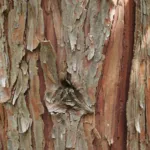 Incense Cedar (Calocedrus decurrens) care guideCalocedrus decurrens
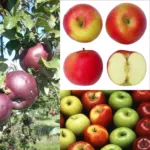 Apple tree (Malus domestica) care guideMalus domestica
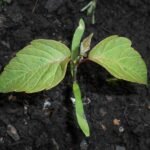 Boxelder (Acer negundo) care guideAcer negundo
 Red maple (Acer rubrum) care guideAcer rubrum
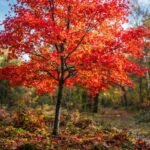 Amur Maple (Acer tataricum ginnala) care guideAcer tataricum ginnala