
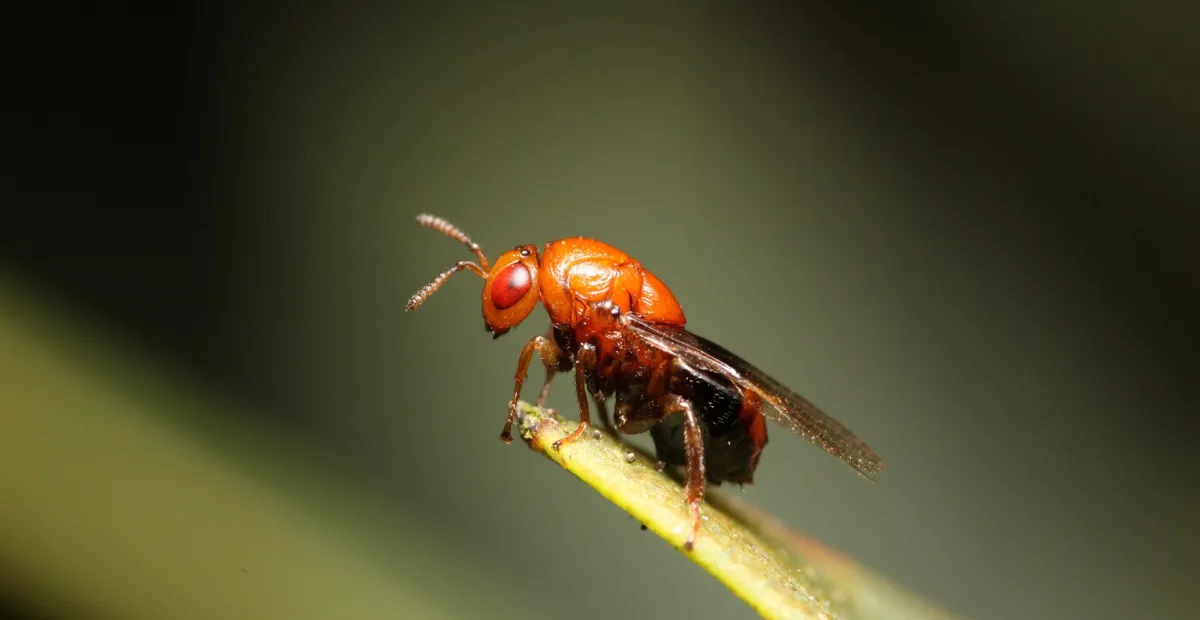
 Source:
 Longleaf Wattle (Acacia longifolia) short overview
Longleaf Wattle is a fast-growing Australian shrub or small tree valued for its flat, leaf-like phyllodes and abundant golden flower spikes in late winter and spring. It suits sunny, well-drained sites and can serve as a screen, hedge, windbreak, or erosion-control plant in frost-free and mildly frosty regions. In the United States, grow it cautiously where escape into natural areas could be a concern.
Taxonomic classification
Longleaf Wattle (Acacia longifolia) care guide
Light and placement
Plant in full sun for the densest growth and heaviest flowering, ideally with southern or western exposure and good air movement. Light shade is tolerated, but plants may become more open and flower less. Pale, stretched growth usually indicates insufficient light; scorched phyllodes or rapid wilting after planting suggest excessive heat combined with inadequate root establishment rather than a need for shade alone.
Watering and humidity
Water deeply when the upper several inches of soil dry during the first growing season, then extend the interval as roots establish. Established plants tolerate moderate dry periods but perform best with occasional deep irrigation during prolonged summer drought. Avoid frequent shallow watering and saturated soil. Humidity is not normally a special requirement outdoors.
Soil and growing medium
Use a free-draining soil or a gritty container mix that does not remain wet after irrigation. Sandy or loamy ground is suitable, and the species tolerates a fairly broad pH range. Improve heavy clay with better drainage rather than adding large amounts of rich organic matter. Avoid permanently waterlogged sites, especially in cool weather.
Feeding
Longleaf Wattle generally needs little fertilizer once established. If growth is weak, apply a low-strength, balanced or native-plant fertilizer in spring after new growth begins, following the product label. A thin compost mulch can help poor soil, but do not pile it against the stem. Avoid heavy nitrogen feeding, which can produce soft, overly vigorous growth and reduce long-term resilience.
Growth and habit
This is a rapid-growing, relatively short-lived woody perennial that can form a dense screen quickly. Branching may become open with age, particularly in shade. Its fast establishment makes it useful for temporary screening and erosion control, but it also means seedlings and unwanted spread should be monitored near wildlands or sensitive coastal vegetation.
Planting and repotting
Plant container-grown specimens after severe frost risk has passed, or in fall where winters are mild enough for root establishment. Set the root ball level with the surrounding soil and water deeply. Mulch broadly but keep mulch away from the trunk. Allow enough space for the mature canopy, and avoid planting beside sensitive natural areas where seed spread could create management problems.
Grow in a deep container while young, using a sharply drained potting mix. Repot when roots fill the container, preferably in spring, moving only one pot size larger. Handle the root ball carefully and water well after transplanting. Because the species grows quickly and can become root-bound, container culture is best treated as a temporary or climate-protection strategy rather than a permanent solution.
Propagation and pruning
Propagation
Seed is the most practical method. Pour boiling water over mature seed and allow it to soak as it cools, or scarify the seed coat before sowing. Use a sterile, well-drained propagation mix and keep it evenly moist but not wet. Sow in warm conditions during the active growing season. Cuttings may root, but they are less consistently used than treated seed.
Pruning
Prune lightly just after flowering to maintain a compact, bushy outline and reduce legginess. Remove dead, damaged, or crossing branches first. Avoid severe cutting into old, leafless wood unless necessary, because recovery can be uneven. Young plants can be lightly tip-pruned to encourage branching, while mature specimens should not be allowed to become too large for the available space.
Overwintering
In USDA Zones 9–11, protect young plants from hard freezes with frost cloth and a sheltered position. Container plants should be moved to a bright, cool, frost-free location when temperatures approach the low 20s°F. Water sparingly during cold weather and avoid feeding while growth is dormant. Mature outdoor plants may tolerate brief frost, but prolonged freezes can cause dieback.
Uses
Useful as a fast screen, hedge, windbreak, coastal planting, or erosion-control shrub where climate and local invasive-plant guidance permit. Its flowers provide resources for insects, and its dense structure can offer cover for small wildlife. Some Australian sources document food and dye uses, but consumption requires exact identification, appropriate preparation, and regionally reliable guidance; do not treat it as a medicinal plant without professional advice.
Appearance
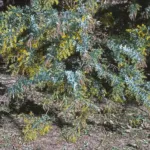
Mature plants have smooth to lightly fissured bark and long, flat, blue-green to bright-green phyllodes rather than conventional leaves. The phyllodes are narrow to broadly elongated and show prominent longitudinal veins. Dense cylindrical yellow flower spikes arise near the phyllode bases, followed by flattened seed pods that darken as they mature.
Flowering
The species produces numerous axillary cylindrical spikes composed of tightly clustered small yellow flowers. Flowering is mainly concentrated in late winter and spring in southeastern Australia, although introduced populations can flower on different schedules. Flowering may be especially conspicuous on mature plants receiving strong light and adequate moisture during bud development.
Pollination and visitors
Documented visitors include honeybees, other bees, bumblebees, wasps, hoverflies, and beetles. Research also describes extrafloral nectaries on the phyllode margins that reward insects and can bring them into contact with the flower spikes. Visitor composition varies by region, and generalist insects are especially important in introduced populations.
Acacia longifolia photos
Click any photo for a larger view. Source, author and license are shown separately.
Diseases and pests
Diseases
Good drainage, spacing, and air circulation help prevent root problems and foliar disease. Watch for root rot in persistently wet soil and remove affected material promptly. Avoid overhead irrigation late in the day. If dark lesions, dieback, or widespread yellowing occur, first check drainage, planting depth, irrigation, and root damage before considering a treatment.
Pests
Possible problems include scale insects, sap-feeding insects, and caterpillars, although serious infestations are not generally characteristic in home gardens. Inspect new growth and the undersides of phyllodes. Use water sprays or hand removal for small infestations, preserve beneficial insects, and use horticultural oil only when the label permits and temperatures are suitable. Monitor for seed or flower galls in areas where introduced biological-control organisms occur.
Related diseases and pests
Only Plant Doctor profiles whose host data indicate this plant may be affected are shown here.
 PestChilli thripsScirtothrips dorsalis Hood
 PestCottony Cushion ScaleIcerya purchasi
 DiseaseBotryosphaeria canker and diebackBotryosphaeria dothidea (Moug. ex Fr.) Ces. & De Not.
 PestCalifornia red scaleAonidiella aurantii
 PestSpotted Tentiform LeafminerPhyllonorycter blancardella
 DiseaseAsh diebackHymenoscyphus fraxineus
 DiseaseAster yellows‘Candidatus Phytoplasma asteris’
Toxicity and pollen
Reliable veterinary and human-toxicology evidence for Acacia longifolia specifically is limited and should not be generalized from other Acacia species. Some Australian sources document edible uses of properly identified plant parts, but that does not establish safety for casual consumption or pets. Prevent children and animals from chewing plant material, and seek Poison Control or veterinary advice after ingestion or concerning symptoms.
- Typical season
- Late winter through spring in much of the United States where it flowers
- Pollination / pollen
- Heavy, granular pollen released from dense flower spikes and commonly moved by insects
Acacia pollen is documented as capable of causing sensitization and respiratory allergy in some people, although the importance varies by region and exposure level. Dense flowering can release substantial pollen locally. People with seasonal respiratory allergies should avoid handling flowering branches, keep windows closed during peak exposure if needed, and use individualized medical advice for persistent symptoms.
Native habitat
In its native range, the species occurs in southeastern Australian subtropical and temperate environments, including coastal scrub, woodland margins, sandy ground, disturbed sites, and other open habitats. It tolerates wind, some salt exposure, and a range of soils provided drainage is adequate. Outside Australia it has naturalized in several regions and can alter vegetation structure and soil conditions through dense stands and nitrogen fixation.
Interesting fact
The mature plant's apparent leaves are flattened phyllodes, which are modified leaf stalks. Longleaf Wattle includes forms associated with both inland and coastal habitats, and some authorities have treated the coastal form as a separate species. The species has been introduced widely for ornamental planting, soil stabilization, and screening, but it is invasive in some countries.
Frequently asked questions (FAQ)
The most relevant questions about this plant, with short and direct answers.
🌱Quick care
What is Acacia longifolia commonly called in the United States?⌄
Acacia longifolia is commonly called Longleaf Wattle. It is an Australian shrub or small tree in the pea family, Fabaceae.
How large does Acacia longifolia get?⌄
Acacia longifolia commonly develops as a medium shrub or small tree, with some plants reaching about 20 feet tall in favorable conditions. Size varies between forms, climate, pruning, and available moisture.
Is Longleaf Wattle evergreen?⌄
Longleaf Wattle is generally evergreen in climates that remain warm enough for continued growth. Cold injury, severe drought, or other stress can cause temporary leaf or phyllode loss.
Does Acacia longifolia have true leaves?⌄
Mature Acacia longifolia mainly has flattened leaf-like stems called phyllodes rather than conventional leaves. The phyllodes are elongated, green, and marked by prominent longitudinal veins.
🌤️Environment and placement
How much sun does Longleaf Wattle need?⌄
Longleaf Wattle grows best in full sun but also tolerates light shade. More sun generally supports denser growth and heavier flowering.
What USDA hardiness zones can grow Longleaf Wattle outdoors?⌄
Longleaf Wattle is best suited to mild-winter regions, roughly USDA Zones 9–11, because established plants tolerate only about 20°F. Protect young plants from freezes and move container specimens to shelter during cold weather.
Can Longleaf Wattle survive frost?⌄
Established Longleaf Wattle can tolerate moderate frost and temperatures near 20°F for short periods. Young plants and new growth are more vulnerable, especially when exposed to repeated or prolonged freezes.
Can Longleaf Wattle be used as a hedge or screen?⌄
Longleaf Wattle can serve as a fast-growing hedge, screen, or low-maintenance landscape plant in climates where it is hardy. Leave enough room for its mature spread and avoid planting it beside sensitive natural areas.
Does Longleaf Wattle fix nitrogen?⌄
As a member of Fabaceae, Longleaf Wattle forms symbiotic root associations that may allow nitrogen fixation. The benefit depends on compatible soil microorganisms and does not mean the plant requires rich or heavily fertilized soil.
Is Longleaf Wattle suitable for coastal gardens?⌄
Longleaf Wattle can perform well in some coastal settings because it tolerates sandy soil and is associated with coastal forms. However, coastal regions are also where its spread can create ecological concerns, so local invasive-plant guidance is important.
💧Care and problems
How often should I water Acacia longifolia?⌄
Water Acacia longifolia moderately while it establishes, then allow the soil to dry somewhat between waterings. Established plants are drought tolerant, but prolonged extreme dryness can reduce growth and flowering.
Should I fertilize Longleaf Wattle?⌄
Longleaf Wattle usually needs little fertilizer when planted in reasonably suitable soil. If growth is weak, use a light application of a balanced, low-nitrogen fertilizer during active growth rather than frequent heavy feeding.
Is Longleaf Wattle drought tolerant?⌄
Longleaf Wattle is drought tolerant once established. Water it more consistently during its first growing season, during extended heat, and whenever the foliage shows persistent stress.
What causes yellowing leaves on Acacia longifolia?⌄
Yellowing foliage can result from waterlogged soil, root damage, severe drought, nutrient imbalance, or cold injury. Check drainage and watering first, then inspect the roots and growing conditions before adding fertilizer.
Why is my Longleaf Wattle losing branches?⌄
Branch loss can follow frost damage, drought, root stress, storm injury, or age-related dieback. Remove dead wood back to healthy tissue and correct drainage or watering problems, but seek local professional diagnosis if decline is rapid.
🪴Planting and repotting
What soil is best for Longleaf Wattle?⌄
Plant Longleaf Wattle in well-drained sandy, loamy, or moderately poor soil. Avoid persistently waterlogged ground, which can damage the roots.
Can Acacia longifolia grow in containers?⌄
Acacia longifolia can be grown in a large container while young, provided the pot has excellent drainage. Because it can become a sizable shrub or small tree, container culture usually requires periodic root management or eventual planting outdoors.
How do I plant Acacia longifolia in the ground?⌄
Plant Acacia longifolia in a sunny, well-drained location after the danger of hard freezes has passed. Set it at the same depth as its nursery container, water it in thoroughly, and keep the root zone moderately moist during establishment.
✂️Propagation and pruning
How do I prune Acacia longifolia?⌄
Prune Acacia longifolia after flowering to remove dead, damaged, or badly placed branches and to maintain the desired shape. Avoid severe cuts into old wood unless necessary, because recovery from hard pruning may be uneven.
How do I grow Acacia longifolia from seed?⌄
Grow Acacia longifolia from seed by scarifying the hard seed coat or treating it with near-boiling water, then sowing in a sterile, well-drained mix. Handle hot-water treatments carefully and avoid overheating or damaging the seed.
Do Longleaf Wattle seeds need scarification?⌄
Longleaf Wattle seeds generally benefit from scarification because Acacia seeds commonly have hard, water-resistant coats. Lightly nick or abrade the coat without injuring the embryo, or use an appropriate hot-water treatment.
Can Acacia longifolia be propagated from cuttings?⌄
Acacia longifolia may sometimes be propagated from cuttings, but seed propagation is the more established and commonly recommended method. Cutting success can vary substantially with the material, timing, and rooting conditions.
⚠️Toxicity and safety
Is Longleaf Wattle invasive in the United States?⌄
Longleaf Wattle has invasive potential in some regions and is documented as invasive or environmentally problematic in parts of California and elsewhere worldwide. Check current state, county, and local invasive-plant guidance before planting near wildlands.
Should I plant Acacia longifolia near natural areas?⌄
Avoid planting Acacia longifolia near preserves, coastal dunes, or other natural habitats where it may spread. Its invasive behavior is region-dependent, so local regulations and invasive-species assessments should guide the decision.
Is Acacia longifolia toxic to dogs, cats, or people?⌄
Species-specific toxicity evidence for Acacia longifolia is insufficient to confirm that it is safe for people or pets. Prevent ingestion of seeds, pods, foliage, and plant material, and contact a poison-control or veterinary professional if ingestion occurs.
🌸Flowering and special interest
When does Longleaf Wattle bloom?⌄
Longleaf Wattle usually blooms from late winter into spring, producing bright yellow cylindrical flower spikes. The exact timing depends on local temperatures and the plant’s growing conditions.
How long are the flowers on Acacia longifolia?⌄
The yellow flower spikes of Acacia longifolia are commonly about 1 to 2 inches long. They arise in the axils of the phyllodes and can appear in clusters along the branches.
Why is my Longleaf Wattle not flowering?⌄
Insufficient sunlight, juvenile age, drought stress, excessive nitrogen, or severe pruning can reduce flowering. Give the plant strong light, well-drained soil, moderate water, and time to mature before expecting a heavy bloom.
Similar plants
 Pearl Wattle (Acacia podalyriifolia) care guideAcacia podalyriifolia
 Prickly moses or western prickly moses (Acacia pulchella) care guideAcacia pulchella
 Acacia pravissima care guideAcacia pravissima
 Knife-leaf Wattle (Acacia cultriformis) care guideAcacia cultriformis
 Silver Wattle (Acacia dealbata) care guideAcacia dealbata
 Cootamundra wattle (Acacia baileyana) care guideAcacia baileyana