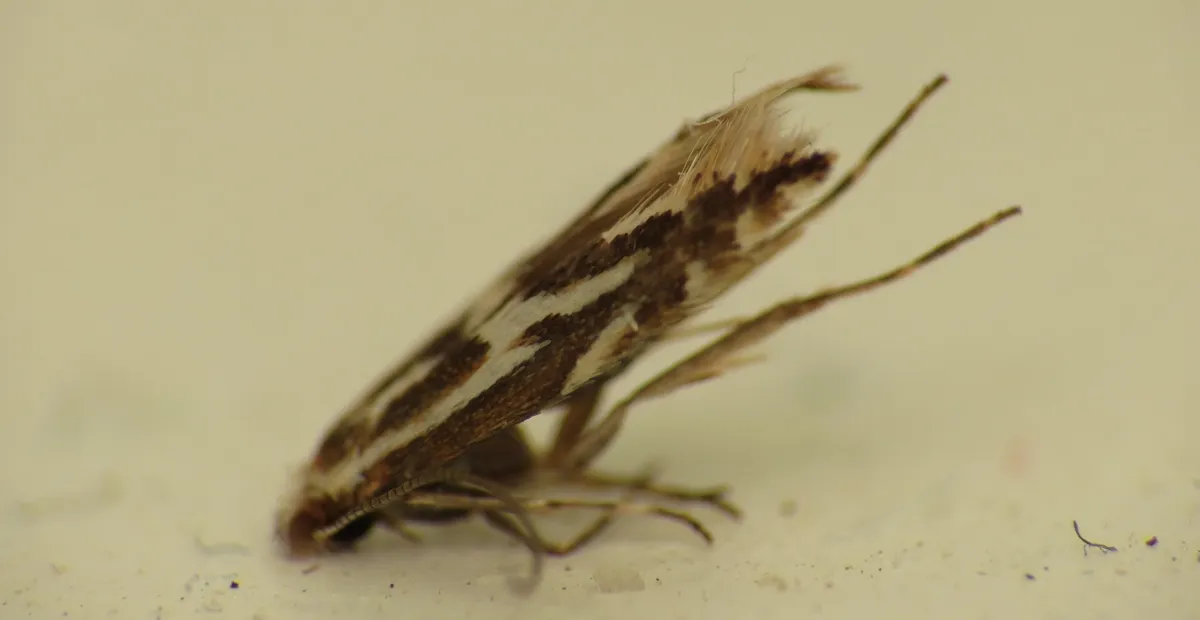
Spotted Tentiform Leafminer
Phyllonorycter blancardellaSpotted Tentiform Leafminer overview
The spotted tentiform leafminer, Phyllonorycter blancardella, is a small moth whose larvae tunnel inside apple leaves and create raised, oval, spotted mines. Light infestations are usually cosmetic, but numerous mines can reduce photosynthesis and cause premature leaf drop, especially on drought-stressed or poorly nourished trees. In U.S. home orchards, conservation of parasitic wasps and careful monitoring usually provide better long-term control than routine broad-spectrum spraying.
Typical conditions
Overview
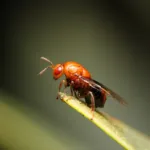
Spotted tentiform leafminer is an insect pest of apple foliage rather than a plant disease. The adult is a tiny moth, about 1/8 inch long, with brown, white and black markings. The larva remains inside the leaf and changes from a sap-feeding form to a tissue-feeding form that expands the mine into a raised, tent-like blotch.
In the United States, the most dependable identification is the characteristic spotted tentiform mine on apple leaves. Similar mines on pear, cherry or other trees may be caused by different Phyllonorycter species, so host and mine appearance should be considered together.
Symptoms and identification
- Raised, oval or elongated blotches on apple leaves, often about 3/4 inch long and 1/2 inch wide.
- Small pale spots or speckling visible within the mine, especially when the leaf is held toward light.
- Puckering, browning and drying of mined tissue as feeding progresses.
- Heavy injury may cause whole leaves to die and drop prematurely.
- Severe, repeated defoliation can contribute to smaller fruit, poorer coloration, earlier ripening, softer fruit and reduced flowering or fruiting the following year.
Do not confuse these mines with apple blotch leafminer, Phyllonorycter crataegella, whose mines are generally more irregular and lack the typical spotted tentiform appearance.
Causes and spread
Damage is caused by larvae feeding between the epidermal layers of apple leaves. Adults mate and deposit very small, pale eggs mainly on the undersides of young leaves. Newly hatched larvae enter the leaf directly, so contact sprays are less effective once larvae are protected inside the mine.
Populations increase when many susceptible young leaves are present and when broad-spectrum insecticides suppress parasitoid wasps and other natural enemies. Drought, poor nutrition and heavy crop load can increase the effect of otherwise moderate mining, but they do not cause the pest.
Life cycle and persistence
The species overwinters primarily as a pupa in mined, fallen apple leaves. Adults emerge in spring around early tree growth and may begin flying near bud break. Eggs are laid on young foliage, and larvae pass through sap-feeding and tissue-feeding stages within the leaf. Mature larvae pupate in the mine or in detached leaves.
Generation number varies with region and temperature. Three generations are typical in parts of the northern United States, while warmer regions may support four or more generations or partial additional generations. Adult flights and development are temperature-dependent; local monitoring is more reliable than using a fixed calendar date.
Treatment and control
Begin with confirmation and monitoring. Examine both leaf surfaces and hold suspect leaves toward the light. In home orchards, light infestations normally do not require treatment. As a practical guide, concern increases when mines are numerous early in the season or when the orchard approaches roughly five accumulated mines per leaf across sampled leaves; local extension thresholds and tree stress should take priority.
In commercial orchards, pheromone or red sticky traps and degree-day or flight monitoring can help time decisions before mines become obvious. If intervention is warranted, target the susceptible adult, egg or early larval period according to current state extension recommendations and the product label. Avoid treating during bloom and protect pollinators.
Low-impact and biological control
Conserve native parasitoid wasps, which can attack all or several generations of the leafminer and often provide effective biological control. Avoid routine pyrethroid and other broad-spectrum applications that may kill parasitoids and trigger secondary pest problems such as mite outbreaks.
Use sanitation, moisture management, canopy inspection and selective, legally permitted products as parts of an integrated program. Products based on spinosad may be used in some U.S. apple settings, including certain organic programs, but formulation, crop registration, pollinator restrictions and organic certification status vary. Verify the current label and local extension guidance before use.
Prevention
- Maintain even soil moisture, especially during hot, dry periods, and correct confirmed nutrient problems rather than applying unnecessary fertilizer.
- Remove or thoroughly shred fallen apple leaves after leaf drop where practical, reducing overwintering pupae.
- Prune and train trees to maintain an open canopy that improves inspection and spray coverage when treatment is justified.
- Inspect young leaves regularly from bud break through summer and record mines per leaf rather than reacting to a few isolated mines.
- Avoid unnecessary broad-spectrum insecticides, particularly around bloom and during the post-bloom period when parasitoids are active.
Interesting facts
- The common name refers to the raised, roof-like or tentiform shape of the mine and the small spots visible within it.
- The larva is a highly specialized internal feeder: early stages consume sap in the leaf, while later stages feed more directly on leaf tissue and use silk to create the tented mine.
- The pest does not tunnel into apple fruit; economic effects are indirect and result from loss of functioning leaf area.
- Parasitic wasps may kill substantial numbers of larvae, which is why preserving beneficial insects is central to management.
- Mine counts should be interpreted across many leaves and in relation to tree vigor, not from one conspicuous damaged leaf.
Use only products legally authorized and currently labeled for spotted tentiform leafminer or the applicable apple-crop use in your state and country. Follow the current label exactly, including rate, timing, preharvest interval, personal protective equipment, reentry interval, resistance-management instructions and pollinator precautions. Do not assume that a product registered for another leafminer, crop or state is legal or effective for this pest.
Affected plants
The plants below are linked to this problem by structured host-plant data. The list updates automatically as new plant profiles are added.