
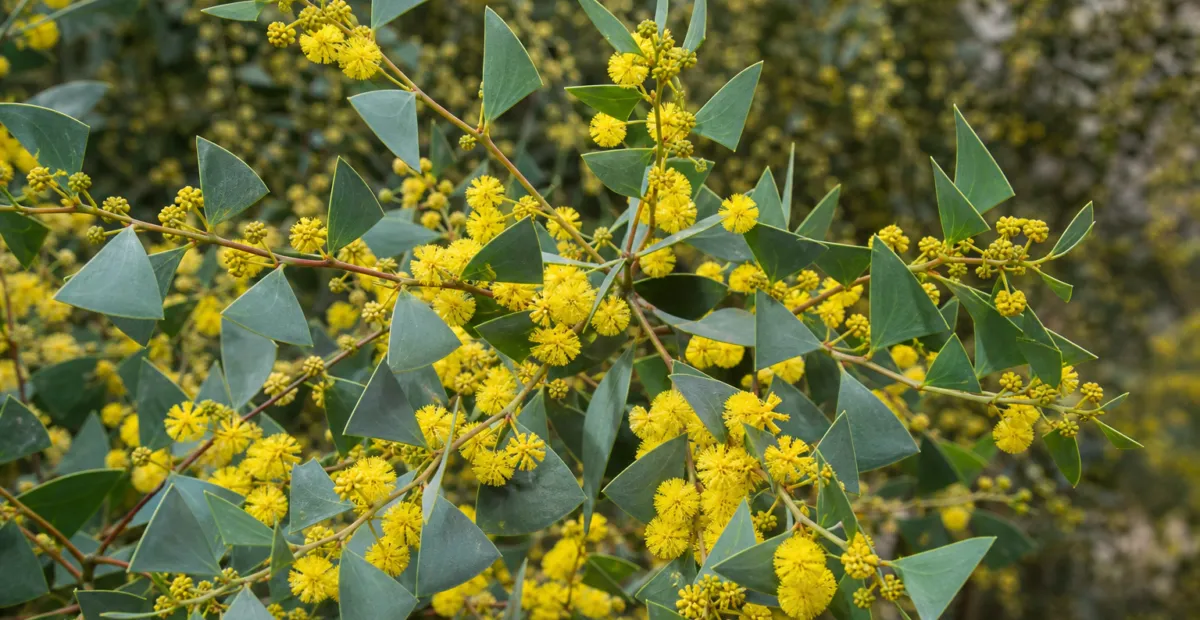
 AI-generated illustration
Acacia pravissima short overview
Acacia pravissima is an Australian shrub or small tree valued for its graceful, pendulous habit, sharply angled blue-green phyllodes, and rich yellow spring flower clusters. Native to southeastern New South Wales and Victoria, it grows best in a sunny, well-drained position and can tolerate moderate frost once established. In much of the United States it is best suited to mild coastal climates, protected sites, or container cultivation where colder winters occur.
Taxonomic classification
Acacia pravissima care guide
Light and placement
Give Acacia pravissima full sun for the strongest flowering and densest habit, ideally in an open south- or west-facing position sheltered from harsh winter wind. Light partial shade is tolerated, especially in hot climates, but heavy shade can produce sparse growth and fewer flowers. Excessive reflected heat combined with drought may scorch phyllodes; weak, stretched shoots usually indicate insufficient light.
Watering and humidity
Water deeply when the upper several inches of soil become dry during the first growing season, then extend the interval as roots establish. In summer drought, provide occasional thorough irrigation rather than frequent shallow watering. Reduce watering in cool weather and allow excess water to drain fully. Container plants need more regular checks but should never stand in a saucer of water.
Soil and growing medium
Use a porous, freely draining soil that does not remain saturated after rain. Sandy loam or amended loam is suitable; improve heavy clay with structural drainage rather than relying only on organic matter. A mildly acidic to mildly alkaline reaction is acceptable. Avoid waterlogged planting pockets, which can cause root decline, particularly in cool conditions.
Feeding
Apply a modest balanced or low-phosphorus fertilizer in spring as new growth begins, or use a thin mulch of mature compost kept away from the trunk. Established plants in reasonably fertile soil need little feeding. Avoid heavy nitrogen applications, which can encourage soft, lanky shoots and reduce the compact ornamental form. Do not fertilize drought-stressed or newly transplanted plants until they recover.
Growth and habit
This species develops a graceful shrub or small-tree outline with pendulous branches and can grow rapidly in favorable conditions. It may flower while still young. The dense, angled foliage can become an effective barrier when plants are maintained close together, but regular formative pruning is needed to preserve access and shape.
Planting and repotting
Plant after the main frost risk has passed in colder parts of the United States, or in fall where winters are mild and soil remains workable. Set the root ball level with the surrounding soil, water deeply, and mulch lightly without touching the stem. Stake only if wind exposure requires it, and keep competing weeds away during establishment.
Grow container specimens in a large pot with substantial drainage holes and a porous mix. Repot in spring when roots fill the container, moving up only one pot size to avoid excess wet soil. Handle the root ball carefully, replant at the original depth, water thoroughly, and protect the plant from severe weather while it re-establishes.
Propagation and pruning
Propagation
Propagate from seed after scarification or hot-water treatment to improve germination. Sow in a clean, freely draining medium and provide warmth, light, and even moisture without saturation. Transplant seedlings before roots become strongly congested. Seed-grown plants may vary somewhat in habit and flowering time.
Pruning
Prune after flowering to maintain a compact outline and remove damaged or crossing branches. Light formative pruning can encourage branching and control height. Avoid severe cuts into old, leafless wood unless necessary, because recovery may be uneven. Wear gloves when handling mature branches, which can form a defensive barrier.
Overwintering
In USDA Zones 9–11, plant in a sheltered site protected from drying winter winds. Young plants benefit from a temporary frost cloth during unusually cold nights. In colder regions, grow in a large container and overwinter in a bright, cool, frost-free space; reduce watering while growth is slow and provide strong light.
Uses
Useful as an ornamental specimen, informal screen, hedge, or feature plant for mild-climate gardens. Its unusual phyllodes provide year-round foliage interest, while spring flower racemes add seasonal color. It can also be grown in a large container where winter protection is needed. No culinary or medicinal use is established here.
Appearance
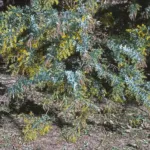
The most distinctive identification feature is the dense covering of dull blue-green phyllodes, each broadly triangular or obtriangular and characteristically asymmetrical. The phyllodes are arranged edge-on along slender angled branchlets and show prominent venation. Branches arch or hang, while rounded yellow flower heads are carried in elongated compound racemes.
Flowering
Flower heads are rounded, rich yellow, and borne in long compound racemes. The principal flowering period is spring, with March–April reported in temperate northern-hemisphere cultivation. Timing can shift with climate, and sheltered plants may open earlier or later than the typical season.
Pollination and visitors
The yellow, conspicuous flower heads are adapted for visitation by insects, especially bees and other small flower visitors. Species-specific pollinator records were not sufficiently documented for a reliable Latin-name entry. Pollinator activity should be greatest during the spring bloom in warm, sunny weather.
Diseases and pests
Diseases
Prevent disease by using well-drained soil, avoiding persistent leaf wetness, and allowing good air movement through the canopy. Root problems are most likely when soil remains saturated. Remove badly affected tissue, sanitize pruning tools, and correct drainage or irrigation issues before considering plant-protection products.
Pests
Inspect new growth and branch junctions for scale, aphids, and other sap-feeding insects. Also check for webbing or distorted shoots during hot, dry weather. Encourage natural predators, wash light infestations away with water, and use horticultural oil only according to its label and when temperatures are suitable.
Related diseases and pests
Only Plant Doctor profiles whose host data indicate this plant may be affected are shown here.

Toxicity and pollen
Reliable species-specific human and pet toxicity information was not located in the authoritative sources checked. Do not assume safety from the absence of a warning. Prevent children and animals from chewing plant material, and seek professional advice after ingestion or an adverse reaction. The plant may also have sharp, defensive branches when mature.
- Typical season
- Typically spring in the United States
- Pollination / pollen
- Insect-dispersed pollen from small clustered flowers
Acacia pravissima produces pollen during flowering, but reliable species-specific airborne-pollen and clinical-allergy data were not found. Its insect-pollinated flowers may limit long-distance pollen movement compared with wind-pollinated plants, but this is not proof of zero allergy risk. People with known pollen sensitivity should avoid handling flowering branches if symptoms occur.
Native habitat
In its native southeastern Australian range, Acacia pravissima occurs as a shrub or small tree in subtropical to temperate landscapes of New South Wales and Victoria. It is associated with well-drained soils and climates with seasonal moisture, and its form reflects adaptation to open, sunny conditions rather than permanently wet ground.
Interesting fact
The species name pravissima refers to the notably crooked or asymmetrical form of its phyllodes. Its foliage consists of flattened leaf stalks rather than typical compound leaflets. The Australian National Botanic Gardens reports frost tolerance to about 19°F. It is among the more cold-tolerant wattles in cultivation, although hardiness varies by site and provenance.
Frequently asked questions (FAQ)
The most relevant questions about this plant, with short and direct answers.
🌱Quick care
How do you care for Acacia pravissima?⌄
Grow Acacia pravissima in full sun or light partial shade, well-drained soil, and moderate water. Once established, it tolerates extended dry periods, but protection from hard freezes and cold, drying winds improves performance.
Is Acacia pravissima evergreen?⌄
Yes, Acacia pravissima is generally an evergreen shrub or small tree. Its unusual gray-green, triangular phyllodes remain on the plant year-round unless it suffers severe cold, drought, or other stress.
Why are the leaves of Acacia pravissima unusual?⌄
The apparent leaves of Acacia pravissima are flattened leaf stalks called phyllodes rather than typical divided leaflets. They are triangular, gray-green, and often slightly asymmetrical, giving the plant its distinctive architectural appearance.
🌤️Environment and placement
How much sun does Acacia pravissima need?⌄
Acacia pravissima grows best in full sun, although it tolerates light partial shade. More shade can produce a looser, leggier plant and reduce the display of yellow flower clusters.
What USDA hardiness zone is Acacia pravissima?⌄
Acacia pravissima is best treated as a protected outdoor plant in mild U.S. climates and may tolerate temperatures around 20°F. Its actual survival depends on plant age, exposure, drainage, and winter wind, so provide shelter in colder areas.
What type of soil does Acacia pravissima need?⌄
Use well-drained loam, sandy loam, or light garden soil for Acacia pravissima. It is adaptable, but persistent waterlogging is more damaging than ordinary soil variation and can lead to root problems.
How large does Acacia pravissima get?⌄
Acacia pravissima can develop into a large shrub or small tree, commonly reaching roughly 10 to 20 feet in favorable cultivation, with a similar or somewhat narrower spread. Size varies with climate, pruning, and cultivar.
💧Care and problems
How often should you water Acacia pravissima?⌄
Water Acacia pravissima moderately while it is establishing, allowing the soil to dry somewhat between deep waterings. Mature plants are drought tolerant, but supplemental water during prolonged heat or drought supports better growth and flowering.
Does Acacia pravissima tolerate drought?⌄
Yes, established Acacia pravissima tolerates drought and long dry periods. Water more consistently during its first one or two growing seasons and during unusually prolonged drought, especially when grown in a container.
Why is my Acacia pravissima turning yellow?⌄
Yellowing foliage on Acacia pravissima is commonly associated with excess moisture, poor drainage, root stress, or severe environmental stress. Check that water drains freely and reduce irrigation if the soil remains wet for extended periods.
Can Acacia pravissima survive frost?⌄
Acacia pravissima tolerates light frost and may survive temperatures near 20°F in a sheltered, well-established planting. Protect young plants, the root zone, and exposed branches when a hard freeze or prolonged cold is forecast.
Does Acacia pravissima need fertilizer?⌄
Acacia pravissima usually needs little fertilizer when grown in reasonably fertile soil. If growth is weak, use a light, balanced, slow-release feed during active growth, but avoid heavy fertilization and chronically wet soil.
What pests affect Acacia pravissima?⌄
Acacia pravissima can be affected by scale insects, mealybugs, red spider mites in protected culture, borers, galls, or leaf miners. Inspect stressed plants regularly and improve light, airflow, watering, and site suitability before using treatment.
🪴Planting and repotting
Can Acacia pravissima grow in containers?⌄
Yes, Acacia pravissima can be grown in a container if the pot has excellent drainage and is large enough for its developing root system. Container plants are less cold-hardy than plants in the ground and may need winter protection.
Where should Acacia pravissima be planted outdoors?⌄
Plant Acacia pravissima in a sunny, sheltered location with sharply draining soil and room for its spreading branches. A warm wall, protected courtyard, or mild coastal or Mediterranean-style garden is generally more suitable than an exposed cold site.
When is the best time to plant Acacia pravissima?⌄
Plant Acacia pravissima in spring after the risk of severe frost has passed, giving the roots a full growing season to establish. In areas with mild winters, early fall planting can also work if drainage is excellent.
Can Acacia pravissima be used as a hedge?⌄
Yes, Acacia pravissima can be shaped into an informal screen or hedge with regular pruning after flowering. Its spreading, sometimes pendulous growth is best suited to a relaxed barrier rather than a tightly clipped formal hedge.
✂️Propagation and pruning
How do you prune Acacia pravissima?⌄
Prune Acacia pravissima lightly after flowering to shape the plant, remove damaged growth, and limit straggling branches. Avoid removing more foliage than necessary, because excessive pruning can weaken the plant and reduce future flowering.
Can Acacia pravissima be cut back hard?⌄
Acacia pravissima can tolerate substantial pruning when necessary, but routine light pruning after flowering is safer and produces a better-shaped plant. Make major cuts selectively and avoid repeatedly cutting into old, leafless wood.
How do you grow Acacia pravissima from seed?⌄
To propagate Acacia pravissima from seed, scarify the hard seed coat or pour boiling water over the seeds and let them soak before sowing. Sow in a well-drained medium and keep the developing seedlings bright and lightly moist.
Can Acacia pravissima be grown from cuttings?⌄
Acacia pravissima may be propagated from semi-hardwood cuttings taken during active growth, although seed propagation is commonly recommended and may be more reliable. Use clean material, a free-draining rooting medium, and consistent moisture without saturation.
⚠️Toxicity and safety
Is Acacia pravissima toxic to people or pets?⌄
The toxicity of Acacia pravissima is not firmly established in the available horticultural references. Keep children and pets from chewing the plant, and seek professional medical or veterinary advice if plant material is ingested.
Is Acacia pravissima invasive in the United States?⌄
The invasive status of Acacia pravissima depends on location, and broad claims should not be made without checking local or state resources. Remove developing seed pods if unwanted seedlings are a concern, particularly in mild climates.
Does Acacia pravissima have thorns?⌄
Acacia pravissima is not generally grown as a prominently thorny acacia. Its pointed, triangular phyllodes can feel sharp, however, so place it away from narrow paths and areas where people frequently brush against plants.
🌸Flowering and special interest
When does Acacia pravissima flower?⌄
Acacia pravissima usually flowers in late winter or spring, producing fragrant, rounded yellow flower heads. The exact timing varies with climate, and plants in the Southern Hemisphere may flower during a different calendar season.
Does Acacia pravissima attract pollinators?⌄
Its yellow flower heads provide pollen and attract insects, so Acacia pravissima can contribute seasonal value to a pollinator-friendly garden. It should still be planted only where its climate, drainage, and potential mature size are appropriate.
Why is Acacia pravissima not flowering?⌄
Insufficient sunlight, excessive nitrogen, young age, drought stress, severe winter damage, or pruning at the wrong time can reduce flowering. Provide strong light, avoid heavy feeding, and prune after flowering rather than just before the expected bloom period.
Similar plants
 Knife-leaf Wattle (Acacia cultriformis) care guideAcacia cultriformis
 Longleaf Wattle (Acacia longifolia) care guideAcacia longifolia
 Silver Wattle (Acacia dealbata) care guideAcacia dealbata
 Prickly moses or western prickly moses (Acacia pulchella) care guideAcacia pulchella
 Cootamundra wattle (Acacia baileyana) care guideAcacia baileyana
 Pearl Wattle (Acacia podalyriifolia) care guideAcacia podalyriifolia