
 Source:
 Silver Wattle (Acacia dealbata) short overview
Silver wattle is an evergreen Australian tree prized for finely divided, silvery gray foliage and abundant rounded yellow flower heads in late winter or early spring. In the United States it is best suited to frost-free or nearly frost-free climates, especially protected coastal gardens, where it can become a fast-growing landscape tree. Colder regions can grow it in a container, but outdoor planting requires reliable winter protection.
Taxonomic classification
Silver Wattle (Acacia dealbata) care guide
Light and placement
Give full sun with at least 6 hours of direct light, ideally in a warm south- or west-facing position protected from cold wind. Bright light supports dense foliage and flowering. Sparse, elongated growth usually indicates insufficient light; scorched leaflets, bleached foliage or sudden canopy dieback can indicate intense reflected heat, drought stress or root problems rather than simple excess sun.
Watering and humidity
Water deeply when the upper few inches of soil have begun to dry, then allow excess water to drain completely. Keep young trees evenly watered through their first growing season; established plants tolerate some summer dryness but flower and grow better without prolonged drought. Reduce watering in cool weather and during winter, especially for container plants. Humidity is not normally limiting outdoors.
Soil and growing medium
Use a porous soil that drains rapidly after rain. Sandy or loamy ground is preferable; heavy clay should be amended by improving the planting area and drainage rather than creating a small isolated pocket. A slightly acidic to slightly alkaline reaction is generally acceptable. Avoid permanently wet soil, which increases root-rot risk and can cause yellowing or premature leaf loss.
Feeding
Apply a balanced, slow-release fertilizer in early spring as growth resumes, following the product label and using a conservative rate. A thin layer of mature compost can be useful on poor soil, but do not bury the trunk flare. Avoid heavy nitrogen feeding, late-season fertilization and feeding drought-stressed or newly transplanted plants until they are re-established.
Growth and habit
This is a fast-growing, branching evergreen that can develop a broad crown and substantial trunk in mild climates. Young plants may need staking until roots anchor them. Its vigorous growth and ability to produce many seedlings make site selection important; remove unwanted seedlings early and avoid planting where spread into natural areas is a concern.
Planting and repotting
Plant during mild weather after severe frost risk has passed, choosing a sunny site with excellent drainage and room for the mature crown. Set the root ball level with the surrounding soil and water deeply after planting. Mulch lightly over the root zone while keeping mulch away from the trunk. Stake only when necessary and remove support once the tree is stable.
Container plants should be shifted into a slightly larger pot when roots fill the container, preferably in spring. Use a free-draining potting mix and a container with ample drainage holes. Avoid excessive pot size, which keeps the root zone wet. Because the species grows quickly, root disturbance should be minimized and large specimens are best transplanted only when necessary.
Propagation and pruning
Propagation
Propagate from seed or semi-ripe cuttings. Seed has a hard coat and is commonly treated with hot water or lightly scarified before sowing; use care to avoid damaging the embryo. Sow in a warm, well-drained medium. Take cuttings during active growth and maintain steady moisture without saturation. Seed-grown plants may vary in vigor and flowering time.
Pruning
Prune after flowering to shape young plants, remove damaged wood and maintain clearance from paths or structures. Avoid severe cutting into old, leafless wood unless necessary, because recovery may be uneven. Remove unwanted seedlings before they become established. Disinfect tools between cuts when working on diseased tissue.
Overwintering
In USDA Zones 9–11, protect young trees from hard freezes with frost cloth and a sheltered planting site. Container plants should be moved before freezing weather to a bright, cool, well-ventilated location. Water sparingly in winter and keep foliage away from cold glass. Plants exposed to temperatures below the low 20s°F may suffer branch or root damage.
Uses
Used as an ornamental evergreen tree, flowering specimen, screen or container-grown patio plant in mild climates. Cut flowering branches are sometimes used in arrangements. Because it is introduced and can naturalize in some regions, check local invasive-plant guidance before outdoor planting, particularly in California and other mild areas.
Appearance
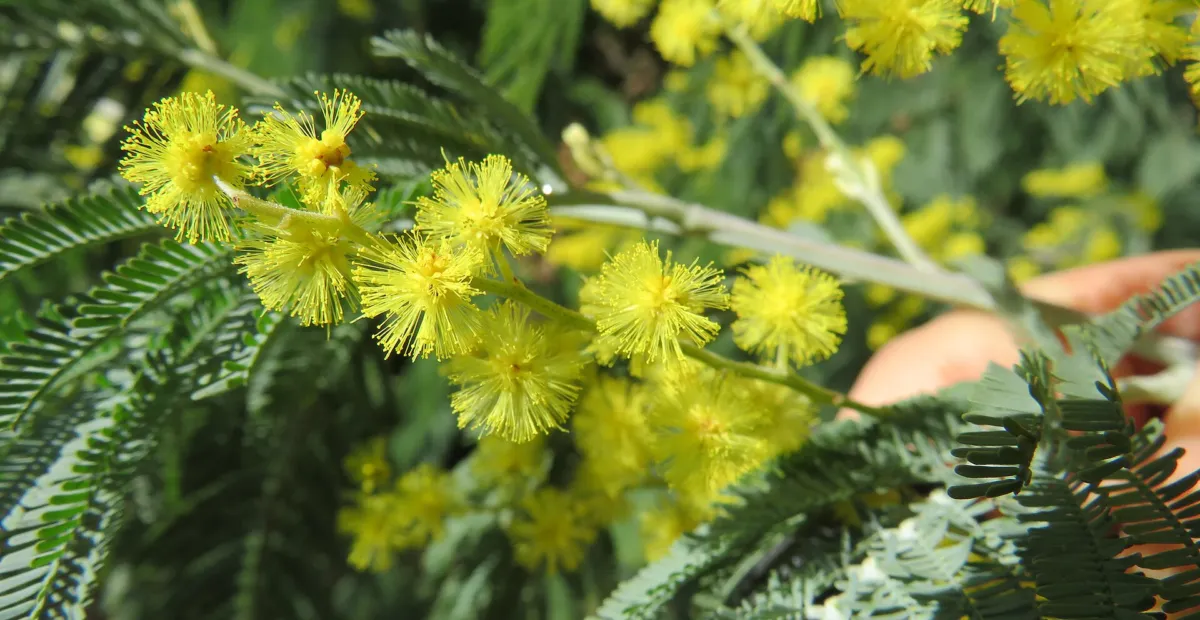
The foliage consists of gray-green to silvery bipinnate leaves with many tiny leaflets, giving the branches a soft, feathery texture. Young stems are often green to gray, while older bark becomes gray and more fissured. Dense rounded yellow flower heads appear in branched sprays, making the species distinctive when in bloom.
Flowering
The small individual flowers are grouped into rounded heads, and many heads are carried together on branched inflorescences. Flowering is often especially conspicuous in late winter or early spring. Exact timing depends on latitude, winter temperatures and local growing conditions; plants in mild western climates may bloom earlier than plants grown under protection elsewhere.
Pollination and visitors
The flower heads are visited by generalist insects, including bees, flies and beetles, and birds may feed on flower heads or forage among them. Research in Tasmania did not identify one dominant pollinator and suggested that birds and possibly wind may also contribute to pollen transfer. Visitors and pollination effectiveness can vary substantially by region and weather.
Acacia dealbata photos
Click any photo for a larger view. Source, author and license are shown separately.
Diseases and pests
Diseases
Watch for root rots in poorly drained soil, branch dieback after severe cold, and fungal leaf or stem problems favored by persistent wetness. Improve drainage, avoid overhead irrigation when foliage remains wet, remove affected branches and sanitize pruning tools. Do not routinely use fungicides without confirming the diagnosis.
Pests
Possible problems include scale insects, aphids, mites and boring insects, especially on stressed plants. Inspect new growth and branch unions regularly. Improve irrigation and site conditions first; use a strong water spray for light infestations, horticultural oil when appropriate, or targeted treatment only when monitoring shows sustained damage.
Related diseases and pests
Only Plant Doctor profiles whose host data indicate this plant may be affected are shown here.


Toxicity and pollen
Reliable U.S. veterinary and poison-control references do not provide a clear, consistent species-specific toxicity classification for Acacia dealbata. Related legumes can contain antinutritional compounds, and chewing large quantities of unfamiliar plant material may cause gastrointestinal upset. Keep pets and children from ingesting seeds, pods or large amounts of foliage, and contact a medical or veterinary professional if ingestion causes symptoms.
- Typical season
- Late winter to spring in the United States
- Pollination / pollen
- Abundant, relatively heavy floral pollen released from massed stamens
Silver Wattle produces substantial pollen during flowering, and Acacia pollen has documented allergenic potential, although the clinical importance varies by person and region. Insect visitation may reduce some airborne movement but does not eliminate exposure. People with known pollen sensitivity should avoid handling flowering branches indoors and may prefer distance from heavily flowering trees during bloom.
Native habitat
In its native range, Silver Wattle grows in temperate southeastern Australia, including forest margins, open woodland and disturbed or recovering sites. It favors well-drained soils and climates with winter or spring moisture. The species has been introduced widely and can establish outside cultivation in some mild regions, especially where disturbance and recurring moisture favor seedling recruitment.
Interesting fact
The specific epithet dealbata refers to the whitish or silvery appearance of the foliage. The species is one of the wattles widely known as mimosa in parts of Europe, although that common usage can be confused with other plants. Its flowers provide conspicuous late-winter resources when relatively few trees are flowering.
Frequently asked questions (FAQ)
The most relevant questions about this plant, with short and direct answers.
🌱Quick care
What is Silver Wattle (Acacia dealbata)?⌄
Silver Wattle is a fast-growing evergreen tree or large shrub in the pea family, Fabaceae. It has gray-green, finely divided foliage and fragrant, rounded yellow flower clusters.
Is Silver Wattle evergreen?⌄
Yes, Silver Wattle is generally evergreen in climates where it is hardy. Frost, severe drought, or root damage can cause partial or substantial leaf loss.
How long does Silver Wattle live?⌄
Silver Wattle is fast growing but is not generally regarded as a particularly long-lived landscape tree. Lifespan varies widely with climate, soil drainage, storm exposure, and disease or pest pressure.
🌤️Environment and placement
How much sun does Silver Wattle need?⌄
Silver Wattle grows best in full sun, receiving at least 6 hours of direct light daily. Strong light supports denser growth and better flowering.
What USDA zones can grow Silver Wattle outdoors?⌄
Silver Wattle is best suited to mild areas where hard freezes are uncommon, generally USDA Zones 9–11. In colder zones, grow it in a container and protect it from freezing temperatures.
How large does Silver Wattle get?⌄
Silver Wattle can become a substantial tree, commonly reaching about 25–40 feet in favorable garden conditions and potentially taller in its native range. Allow adequate room for its trunk, crown, and roots.
Where should I plant Silver Wattle in the landscape?⌄
Plant Silver Wattle in a sunny, sheltered location with excellent drainage and protection from strong cold winds. Keep it away from structures, utility lines, and small spaces because it grows quickly.
Does Silver Wattle fix nitrogen?⌄
As a legume, Silver Wattle can form root partnerships with nitrogen-fixing bacteria. This does not eliminate the need for suitable soil, watering, or other normal tree care.
💧Care and problems
Is Silver Wattle frost hardy?⌄
Silver Wattle is frost tender despite tolerating some brief light frost once established. Protect young plants and container specimens from hard freezes, especially when temperatures approach the mid-20s°F.
How often should I water Silver Wattle?⌄
Water Silver Wattle moderately, allowing the top few inches of soil to dry slightly between waterings. Established trees need less frequent irrigation than young plants, but prolonged drought can cause stress.
How fast does Silver Wattle grow?⌄
Silver Wattle is a fast-growing tree when given full sun, adequate moisture, and well-drained soil. Its rapid growth means young plants may need early structural training and sufficient planting space.
What are common Silver Wattle problems?⌄
Common problems include frost damage, drought stress, root problems from wet soil, and pests such as scale or mealybugs, especially in protected growing conditions. Inspect foliage and stems regularly and correct environmental stress first.
Why are my Silver Wattle leaves turning brown?⌄
Brown foliage commonly results from frost, drought, root damage, or sudden environmental stress. Check soil moisture and drainage, then inspect branches for living buds before removing damaged growth.
Can Silver Wattle survive a hard freeze?⌄
A hard freeze can severely damage or kill Silver Wattle, especially young plants and container-grown specimens. After cold injury, wait for new growth before pruning apparently dead branches.
How do I protect Silver Wattle in winter?⌄
Move container plants to a bright, sheltered location before freezing weather and protect in-ground plants from wind and severe cold. Do not let containers remain saturated during cold conditions.
Should I fertilize Silver Wattle?⌄
Silver Wattle usually needs little fertilizer when planted in reasonably fertile soil. If growth is weak, test the soil first and avoid excessive nitrogen, which can produce soft growth and reduce overall balance.
🪴Planting and repotting
What type of soil is best for Silver Wattle?⌄
Use well-drained loam or sandy loam for Silver Wattle. Avoid heavy, waterlogged soil because poor drainage can damage the roots.
Does Silver Wattle need acidic soil?⌄
Silver Wattle generally tolerates neutral to mildly acidic, well-drained soil. Soil drainage is more important than achieving a narrowly specific pH.
Can Silver Wattle grow in a container?⌄
Silver Wattle can grow in a large container while young or when grown as a patio specimen. Use a fast-draining potting mix, provide full sun, and expect to water more often than an in-ground plant.
How do I plant a Silver Wattle tree?⌄
Plant Silver Wattle in a sunny site with well-drained soil, setting the root flare level with or slightly above the surrounding ground. Water deeply after planting and maintain even moisture while the roots establish.
Can Silver Wattle be transplanted?⌄
Young Silver Wattle plants are more likely to survive transplanting than established trees. Move them with as much intact root ball as possible, replant promptly, and provide consistent moisture during recovery.
✂️Propagation and pruning
When should Silver Wattle be pruned?⌄
Prune Silver Wattle immediately after flowering to remove damaged branches and lightly shape the plant. Avoid severe pruning because mature trees may respond poorly to hard cuts.
Can Silver Wattle be cut back hard?⌄
Hard pruning is generally not recommended for Silver Wattle. Remove no more than necessary, because major cuts can leave the tree weakened and may reduce future flowering.
How do I propagate Silver Wattle from seed?⌄
Propagate Silver Wattle from mature seed after scarifying it or briefly treating it with boiling water to soften the hard seed coat. Sow the treated seed in a sterile, well-drained medium and keep it warm and lightly moist.
Can Silver Wattle grow from cuttings?⌄
Silver Wattle may be propagated from semi-hardwood cuttings, but seed propagation is often the more dependable method. Use healthy nonflowering material and consistently moist, well-drained rooting medium.
⚠️Toxicity and safety
Is Silver Wattle invasive in the United States?⌄
Silver Wattle is introduced in parts of the United States and may naturalize or become invasive in some climates, particularly where conditions are mild. Check your state and local invasive-plant guidance before planting near natural areas.
Is Silver Wattle toxic to dogs, cats, or people?⌄
Species-specific toxicity information for Silver Wattle is insufficient to confirm that it is completely safe for people or pets. Prevent chewing of leaves, bark, or seeds and contact a veterinarian or poison service if ingestion causes symptoms.
Can Silver Wattle damage nearby foundations or pipes?⌄
Silver Wattle should not be planted immediately beside foundations, drains, or underground utilities because it can become a large, fast-growing tree. Plant it with generous clearance and consider mature size before selecting a site.
🌸Flowering and special interest
When does Silver Wattle bloom?⌄
Silver Wattle usually blooms in late winter or spring, although timing varies with climate. Its fragrant yellow flowerheads are produced in clusters near the ends of the branches.
Why is my Silver Wattle not flowering?⌄
Insufficient sunlight, cold injury, drought stress, or pruning at the wrong time can reduce flowering. Give the tree full sun and avoid removing the developing flower-bearing growth in late summer or fall.
Are Silver Wattle flowers fragrant?⌄
Yes, Silver Wattle produces fragrant yellow, ball-shaped flowerheads. The scent is often strongest during warm, calm weather when the flowers are fully open.
Similar plants
 Prickly moses or western prickly moses (Acacia pulchella) care guideAcacia pulchella
 Longleaf Wattle (Acacia longifolia) care guideAcacia longifolia
 Pearl Wattle (Acacia podalyriifolia) care guideAcacia podalyriifolia
 Knife-leaf Wattle (Acacia cultriformis) care guideAcacia cultriformis
 Cootamundra wattle (Acacia baileyana) care guideAcacia baileyana
 Acacia pravissima care guideAcacia pravissima